













Passive Components Blog
No Result
View All Result
  • Home
  • NewsFilter
    • All
    • Aerospace & Defence
    • Antenna
    • Applications
    • Automotive
    • Capacitors
    • Circuit Protection Devices
    • electro-mechanical news
    • Filters
    • Fuses
    • Inductors
    • Industrial
    • Integrated Passives
    • inter-connect news
    • Market & Supply Chain
    • Market Insights
    • Medical
    • Modelling and Simulation
    • New Materials & Supply
    • New Technologies
    • Non-linear Passives
    • Oscillators
    • Passive Sensors News
    • Resistors
    • RF & Microwave
    • Telecommunication
    • Weekly Digest

    Littelfuse Unveils Ultra-Low-Power TMR Magnetic Switches

    DC/DC Push‑Pull Converter vs PSFB Design Guide

    Wk 2 Electronics Supply Chain Digest

    Rubycon PMLCAP DC‑Link Film Capacitors in Mass Production

    Bourns SSD‑1000A AEC‑Q Digital Current Sensors

    YAGEO High‑Capacitance X7R Automotive MLCC Extensions

    How Metal Prices Are Driving Passive Component Price Hikes

    Modelithics COMPLETE Library v25.8 for Keysight ADS

    Taiyo Yuden Releases 165C Automotive Multilayer Metal Power Inductor in 1608 Size

    Trending Tags

    • Ripple Current
    • RF
    • Leakage Current
    • Tantalum vs Ceramic
    • Snubber
    • Low ESR
    • Feedthrough
    • Derating
    • Dielectric Constant
    • New Products
    • Market Reports
  • VideoFilter
    • All
    • Antenna videos
    • Capacitor videos
    • Circuit Protection Video
    • Filter videos
    • Fuse videos
    • Inductor videos
    • Inter-Connect Video
    • Non-linear passives videos
    • Oscillator videos
    • Passive sensors videos
    • Resistor videos

    One‑Pulse Characterization of Nonlinear Power Inductors

    Thermistor Linearization Challenges

    Coaxial Connectors and How to Connect with PCB

    PCB Manufacturing, Test Methods, Quality and Reliability

    Transformer Behavior – Current Transfer and Hidden Feedback

    Choosing the Right Capacitor: The Importance of Accurate Measurements

    RF Inductors: Selection and Design Challenges for High-Frequency Circuits

    Transformer Safety IEC 61558 Standard

    3-Phase EMI Filter Design, Simulation, Calculation and Test

    Trending Tags

    • Capacitors explained
    • Inductors explained
    • Resistors explained
    • Filters explained
    • Application Video Guidelines
    • EMC
    • New Products
    • Ripple Current
    • Simulation
    • Tantalum vs Ceramic
  • Knowledge Blog
  • Suppliers
    • Who is Who
  • PCNS
    • PCNS 2025
    • PCNS 2023
    • PCNS 2021
    • PCNS 2019
    • PCNS 2017
  • Events
  • Home
  • NewsFilter
    • All
    • Aerospace & Defence
    • Antenna
    • Applications
    • Automotive
    • Capacitors
    • Circuit Protection Devices
    • electro-mechanical news
    • Filters
    • Fuses
    • Inductors
    • Industrial
    • Integrated Passives
    • inter-connect news
    • Market & Supply Chain
    • Market Insights
    • Medical
    • Modelling and Simulation
    • New Materials & Supply
    • New Technologies
    • Non-linear Passives
    • Oscillators
    • Passive Sensors News
    • Resistors
    • RF & Microwave
    • Telecommunication
    • Weekly Digest

    Littelfuse Unveils Ultra-Low-Power TMR Magnetic Switches

    DC/DC Push‑Pull Converter vs PSFB Design Guide

    Wk 2 Electronics Supply Chain Digest

    Rubycon PMLCAP DC‑Link Film Capacitors in Mass Production

    Bourns SSD‑1000A AEC‑Q Digital Current Sensors

    YAGEO High‑Capacitance X7R Automotive MLCC Extensions

    How Metal Prices Are Driving Passive Component Price Hikes

    Modelithics COMPLETE Library v25.8 for Keysight ADS

    Taiyo Yuden Releases 165C Automotive Multilayer Metal Power Inductor in 1608 Size

    Trending Tags

    • Ripple Current
    • RF
    • Leakage Current
    • Tantalum vs Ceramic
    • Snubber
    • Low ESR
    • Feedthrough
    • Derating
    • Dielectric Constant
    • New Products
    • Market Reports
  • VideoFilter
    • All
    • Antenna videos
    • Capacitor videos
    • Circuit Protection Video
    • Filter videos
    • Fuse videos
    • Inductor videos
    • Inter-Connect Video
    • Non-linear passives videos
    • Oscillator videos
    • Passive sensors videos
    • Resistor videos

    One‑Pulse Characterization of Nonlinear Power Inductors

    Thermistor Linearization Challenges

    Coaxial Connectors and How to Connect with PCB

    PCB Manufacturing, Test Methods, Quality and Reliability

    Transformer Behavior – Current Transfer and Hidden Feedback

    Choosing the Right Capacitor: The Importance of Accurate Measurements

    RF Inductors: Selection and Design Challenges for High-Frequency Circuits

    Transformer Safety IEC 61558 Standard

    3-Phase EMI Filter Design, Simulation, Calculation and Test

    Trending Tags

    • Capacitors explained
    • Inductors explained
    • Resistors explained
    • Filters explained
    • Application Video Guidelines
    • EMC
    • New Products
    • Ripple Current
    • Simulation
    • Tantalum vs Ceramic
  • Knowledge Blog
  • Suppliers
    • Who is Who
  • PCNS
    • PCNS 2025
    • PCNS 2023
    • PCNS 2021
    • PCNS 2019
    • PCNS 2017
  • Events
No Result
View All Result
Passive Components Blog
No Result
View All Result

Shurter RTS thermal fuse now also available with shunt

8.4.2019
Reading Time: 1 min read
A A

Source: Schurter news

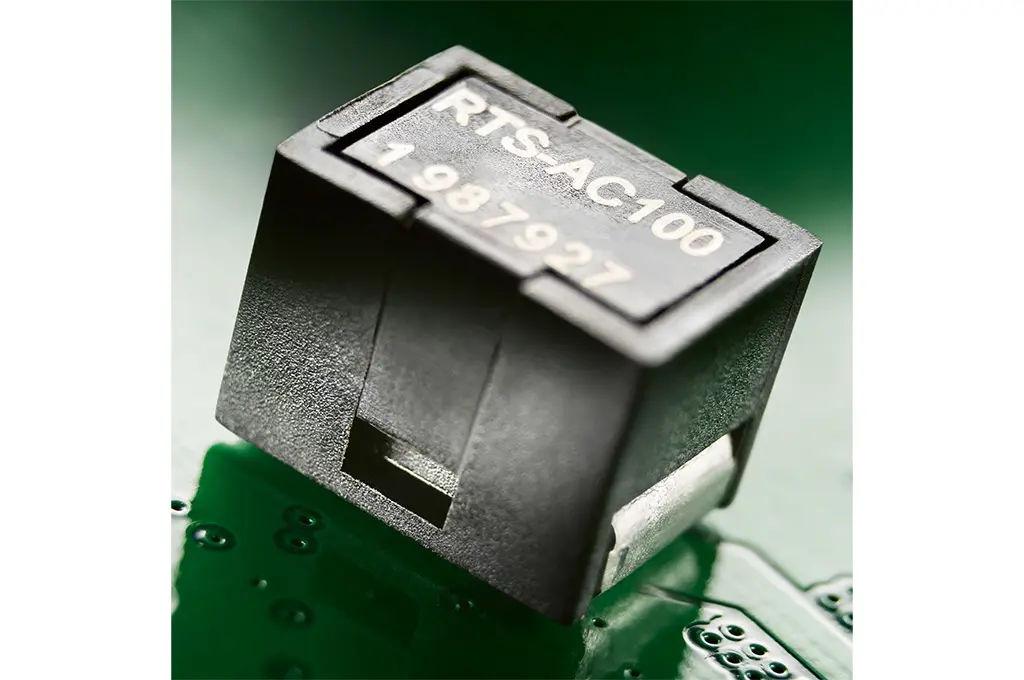
SCHURTERS RTS thermal fuse, successfully launched in 2018, gets a new variant with an integrated shunt. The RTS is a particularly compact over-temperature protection device for power semiconductors in SMD technology for highest demands.

RelatedPosts

Littelfuse Unveils Ultra-Low-Power TMR Magnetic Switches

DC/DC Push‑Pull Converter vs PSFB Design Guide

Wk 2 Electronics Supply Chain Digest

RTS stands for Reflowable Thermal Switch. It was developed to protect highly integrated power semiconductors from overheating. Prior to mechanical activation, the new thermal fuse can be soldered on conventional reflow soldering machines with profiles up to 260 °C.

Minimal footprint

The new overtemperature protection device comes in the same minimal dimensions and maximum breaking capacity despite its additional shunt functionality. On its small 6.6 x 8.8 mm footprint the RTS can handle operating currents of up to 130 A and rated voltages of up to 60 VDC.

Integrated current measuring sensor (shunt)

The shunt version has an integrated resistance with particularly low temperature dependence. This resistance, known as a shunt, enables precise current measurement and enables an additional – non-thermal – circuit protection, e.g. via a controller.

Protection against thermal runaway

Thermal runaway refers to the overheating of a power semiconductor due to a self-reinforcing, heat-producing process. One of the reason is the trend towards increasing power density and miniaturization of electronic circuits. The RTS protects these power semiconductors against thermal runaway. In such an event, the thermal fuse reliably interrupts the circuit at a precisely defined temperature as a fail-safe device.

Unique Features

  • Separates rated voltages up to 60VDC
  • Reflow compatible through mechanical activation procedure
  • Galvanic separation happens inside the RTS housing
  • Space-saving thanks to integrated shunt
 

Related

Recent Posts

Littelfuse Unveils Ultra-Low-Power TMR Magnetic Switches

13.1.2026
2

Rubycon PMLCAP DC‑Link Film Capacitors in Mass Production

9.1.2026
31

Bourns SSD‑1000A AEC‑Q Digital Current Sensors

8.1.2026
42

YAGEO High‑Capacitance X7R Automotive MLCC Extensions

8.1.2026
46

Jianghai Vibration‑Resistant Aluminum Capacitors Guidelines for Industrial Electronics

6.1.2026
28

2025 Top Passive Components Blog Articles

5.1.2026
103

Bourns BTJ Thermal Jumper Chips for PCB Heat Management

22.12.2025
94

Bourns Releases 500VDC 690VAC Fuse to Protect Power Semiconductors

19.12.2025
24

Samsung MLCC Replacing Aluminum Polymer Capacitors in AI Systems

19.12.2025
138

Upcoming Events

Jan 27
16:00 - 17:00 CET

Simplifying Vehicle Development with Automotive Ethernet and Zonal Smart Switch Technologies

Feb 24
16:00 - 17:00 CET

Designing Qi2 Wireless Power Systems: Practical Development and EMC Optimization

View Calendar

Popular Posts

  • Buck Converter Design and Calculation

    0 shares
    Share 0 Tweet 0
  • Boost Converter Design and Calculation

    0 shares
    Share 0 Tweet 0
  • LLC Resonant Converter Design and Calculation

    0 shares
    Share 0 Tweet 0
  • Flyback Converter Design and Calculation

    0 shares
    Share 0 Tweet 0
  • Ripple Current and its Effects on the Performance of Capacitors

    3 shares
    Share 3 Tweet 0
  • MLCC and Ceramic Capacitors

    0 shares
    Share 0 Tweet 0
  • Dual Active Bridge (DAB) Topology

    0 shares
    Share 0 Tweet 0
  • What Electronics Engineer Needs to Know About Passive Low Pass Filters

    0 shares
    Share 0 Tweet 0
  • What is a Dielectric Constant and DF of Plastic Materials?

    4 shares
    Share 4 Tweet 0
  • SEPIC Converter Design and Calculation

    0 shares
    Share 0 Tweet 0

Newsletter Subscription


Passive Components Blog

© EPCI - Leading Passive Components Educational and Information Site

  • Home
  • Privacy Policy
  • EPCI Membership & Advertisement
  • About

No Result
View All Result
  • Home
  • Knowledge Blog
  • PCNS

© EPCI - Leading Passive Components Educational and Information Site

This website uses cookies. By continuing to use this website you are giving consent to cookies being used. Visit our Privacy and Cookie Policy.
Go to mobile version