



Passive Components Blog
No Result
View All Result
  • Home
  • NewsFilter
    • All
    • Aerospace & Defence
    • Antenna
    • Applications
    • Automotive
    • Capacitors
    • Circuit Protection Devices
    • electro-mechanical news
    • Filters
    • Fuses
    • Inductors
    • Industrial
    • Integrated Passives
    • inter-connect news
    • Market & Supply Chain
    • Market Insights
    • Medical
    • Modelling and Simulation
    • New Materials & Supply
    • New Technologies
    • Non-linear Passives
    • Oscillators
    • Passive Sensors News
    • Resistors
    • RF & Microwave
    • Telecommunication
    • Weekly Digest

    Smoltek CNF-MIM Capacitors Hit 1,000x Lower Leakage

    DigiKey Expands Line Card with 108K Stock Parts and 364 Suppliers

    Würth Elektronik Announces Partner Program

    Vishay Releases Compact 0806 Low‑DCR Power Inductor

    Murata Opens New Ceramic Capacitor Manufacturing and R&D Center in Japan

    Murata Publishes Power Delivery Guide for AI Servers

    Selecting Current Sense Transformers with Würth Elektronik REDEXPERT

    Mechanical Drift Indicator of Tantalum Capacitor Anodes Degradation under Reverse Bias

    Enabling Software‑Defined Vehicle Architectures: Automotive Ethernet and Zonal Smart Power

    Trending Tags

    • Ripple Current
    • RF
    • Leakage Current
    • Tantalum vs Ceramic
    • Snubber
    • Low ESR
    • Feedthrough
    • Derating
    • Dielectric Constant
    • New Products
    • Market Reports
  • VideoFilter
    • All
    • Antenna videos
    • Capacitor videos
    • Circuit Protection Video
    • Filter videos
    • Fuse videos
    • Inductor videos
    • Inter-Connect Video
    • Non-linear passives videos
    • Oscillator videos
    • Passive sensors videos
    • Resistor videos

    Enabling Software‑Defined Vehicle Architectures: Automotive Ethernet and Zonal Smart Power

    Calculating Resistance Value of a Flyback RC Snubber 

    One‑Pulse Characterization of Nonlinear Power Inductors

    Thermistor Linearization Challenges

    Coaxial Connectors and How to Connect with PCB

    PCB Manufacturing, Test Methods, Quality and Reliability

    Transformer Behavior – Current Transfer and Hidden Feedback

    Choosing the Right Capacitor: The Importance of Accurate Measurements

    RF Inductors: Selection and Design Challenges for High-Frequency Circuits

    Trending Tags

    • Capacitors explained
    • Inductors explained
    • Resistors explained
    • Filters explained
    • Application Video Guidelines
    • EMC
    • New Products
    • Ripple Current
    • Simulation
    • Tantalum vs Ceramic
  • Knowledge Blog
  • DossiersNew
  • Suppliers
    • Who is Who
  • PCNS
    • PCNS 2025
    • PCNS 2023
    • PCNS 2021
    • PCNS 2019
    • PCNS 2017
  • Events
  • Home
  • NewsFilter
    • All
    • Aerospace & Defence
    • Antenna
    • Applications
    • Automotive
    • Capacitors
    • Circuit Protection Devices
    • electro-mechanical news
    • Filters
    • Fuses
    • Inductors
    • Industrial
    • Integrated Passives
    • inter-connect news
    • Market & Supply Chain
    • Market Insights
    • Medical
    • Modelling and Simulation
    • New Materials & Supply
    • New Technologies
    • Non-linear Passives
    • Oscillators
    • Passive Sensors News
    • Resistors
    • RF & Microwave
    • Telecommunication
    • Weekly Digest

    Smoltek CNF-MIM Capacitors Hit 1,000x Lower Leakage

    DigiKey Expands Line Card with 108K Stock Parts and 364 Suppliers

    Würth Elektronik Announces Partner Program

    Vishay Releases Compact 0806 Low‑DCR Power Inductor

    Murata Opens New Ceramic Capacitor Manufacturing and R&D Center in Japan

    Murata Publishes Power Delivery Guide for AI Servers

    Selecting Current Sense Transformers with Würth Elektronik REDEXPERT

    Mechanical Drift Indicator of Tantalum Capacitor Anodes Degradation under Reverse Bias

    Enabling Software‑Defined Vehicle Architectures: Automotive Ethernet and Zonal Smart Power

    Trending Tags

    • Ripple Current
    • RF
    • Leakage Current
    • Tantalum vs Ceramic
    • Snubber
    • Low ESR
    • Feedthrough
    • Derating
    • Dielectric Constant
    • New Products
    • Market Reports
  • VideoFilter
    • All
    • Antenna videos
    • Capacitor videos
    • Circuit Protection Video
    • Filter videos
    • Fuse videos
    • Inductor videos
    • Inter-Connect Video
    • Non-linear passives videos
    • Oscillator videos
    • Passive sensors videos
    • Resistor videos

    Enabling Software‑Defined Vehicle Architectures: Automotive Ethernet and Zonal Smart Power

    Calculating Resistance Value of a Flyback RC Snubber 

    One‑Pulse Characterization of Nonlinear Power Inductors

    Thermistor Linearization Challenges

    Coaxial Connectors and How to Connect with PCB

    PCB Manufacturing, Test Methods, Quality and Reliability

    Transformer Behavior – Current Transfer and Hidden Feedback

    Choosing the Right Capacitor: The Importance of Accurate Measurements

    RF Inductors: Selection and Design Challenges for High-Frequency Circuits

    Trending Tags

    • Capacitors explained
    • Inductors explained
    • Resistors explained
    • Filters explained
    • Application Video Guidelines
    • EMC
    • New Products
    • Ripple Current
    • Simulation
    • Tantalum vs Ceramic
  • Knowledge Blog
  • DossiersNew
  • Suppliers
    • Who is Who
  • PCNS
    • PCNS 2025
    • PCNS 2023
    • PCNS 2021
    • PCNS 2019
    • PCNS 2017
  • Events
No Result
View All Result
Passive Components Blog
No Result
View All Result

Würth Elektronik Releases Temperature Robust Precise Quartz Oscillators

3.2.2021
Reading Time: 2 mins read
A A

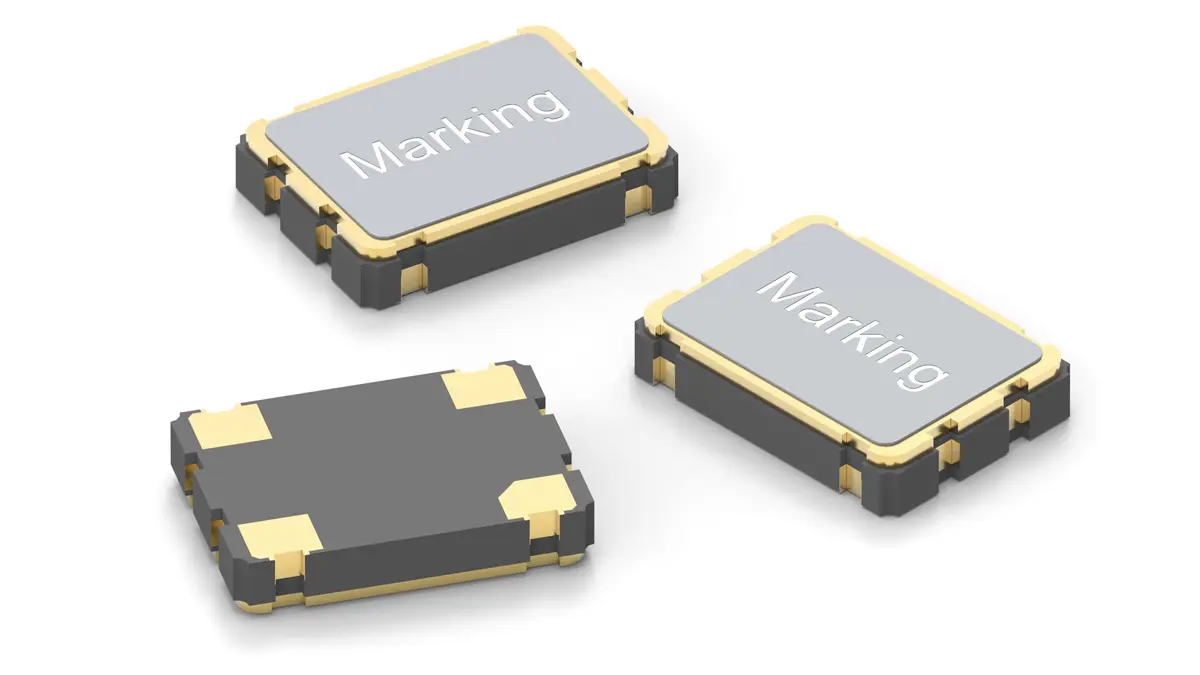
Würth Elektronik launches further WE-SPXO series quartz oscillators onto the market. The additions to the program include a new design with LVDS or LVPECL output signal plus 32.768 kHz oscillators.

While the hermetically sealed oscillators were already outstandingly well specified for a wide range of industrial applications, the new arrivals are even more temperature-stable and also more precisely optimized for specific requirements.

RelatedPosts

NIC Components Extends SMD High Voltage MLCC Offering

Stackpole Offers RoHS Compliant Lead-Free Thick Film Chip Resistors

Smiths Interconnect’s SMD Power Resistors with Heat Sink Qualified to Space Flights

The Würth Elektronik oscillators with LVDS or LVPECL output and frequencies from 100 to 156.25 MHz (models IQXO-618-18, IQXO-618-33, IQXO-623 and IQXO-624) are designed for applications with higher data rates: Gigabit Ethernet, Fibre Channel, PCI Express and SONET/SDH.

The WE-SPXO oscillators—now available with differential LVDS or LVPECL output signal—feature improved jitter performance and higher noise immunity of the output signal. Their temperature range of -40 to +105°C also exceeds the normal standards.

Better than watch quartz

With the new 32.768 kHz oscillators (models CFPS-102, CFPS-104, CFPS-107, CFPS-109, IQXO-402, IQXO-404), Würth Elektronik offers electronic developers an alternative to watch quartz crystals.

Available in three package sizes (3.2 × 2.5, 2.5 × 2.0 and 2.0 × 1.6 mm), the oscillators are very robust with a possible temperature range of -40 to +125°C and offer stability up to ±25 ppm.

The big advantage compared to normal watch quartz crystals is their improved frequency stability over the temperature profile and thus also their accuracy. Unlike watch quartz, no additional oscillation circuitry is necessary. This saves design time and reduces the number of components on the PCB. Thanks to their accuracy and reliability, the new oscillators from Würth Elektronik are ideal for real-time clock microcontrollers and for all kinds of electronic devices in which the time of day is important—from laptops, smartphones and consumer electronics to washing machines, ATMs and industrial control systems.

All WE-SPXO quartz oscillator models are now available from stock without a minimum order quantity. Free samples can be requested.

Related

Source: Würth Elektronik

Recent Posts

Würth Elektronik Announces Partner Program

6.2.2026
6

Vishay Releases Compact 0806 Low‑DCR Power Inductor

5.2.2026
20

Murata Publishes Power Delivery Guide for AI Servers

4.2.2026
74

Selecting Current Sense Transformers with Würth Elektronik REDEXPERT

3.2.2026
18

Würth Elektronik Offers Halogen‑Free EMC Gaskets for Displays and Housings

28.1.2026
16

Binder Unveils M8 Flange Solder Connectors for Flexible Cabling

28.1.2026
18

Stackpole Releases AlN High‑Power Thick Film Chip Resistors

26.1.2026
36

Würth Elektronik Developed a Custom Transformer for Active Hand Orthosis

26.1.2026
45

ROHM Extends 2012 Shunt Resistors Power Rating up to 1.25 W

23.1.2026
31

Upcoming Events

Feb 11
16:00 - 17:00 CET

What’s Next in Power Electronics Design

Feb 24
16:00 - 17:00 CET

Designing Qi2 Wireless Power Systems: Practical Development and EMC Optimization

Mar 3
16:00 - 17:00 CET

Cybersecurity at the Eleventh Hour – from RED to CRA – Information and Discussion

View Calendar

Popular Posts

  • Buck Converter Design and Calculation

    0 shares
    Share 0 Tweet 0
  • Boost Converter Design and Calculation

    0 shares
    Share 0 Tweet 0
  • LLC Resonant Converter Design and Calculation

    0 shares
    Share 0 Tweet 0
  • Flyback Converter Design and Calculation

    0 shares
    Share 0 Tweet 0
  • Ripple Current and its Effects on the Performance of Capacitors

    3 shares
    Share 3 Tweet 0
  • MLCC and Ceramic Capacitors

    0 shares
    Share 0 Tweet 0
  • Dual Active Bridge (DAB) Topology

    0 shares
    Share 0 Tweet 0
  • How Metal Prices Are Driving Passive Component Price Hikes

    0 shares
    Share 0 Tweet 0
  • What is a Dielectric Constant and DF of Plastic Materials?

    4 shares
    Share 4 Tweet 0
  • MLCC Case Sizes Standards Explained

    0 shares
    Share 0 Tweet 0

Newsletter Subscription


Passive Components Blog

© EPCI - Leading Passive Components Educational and Information Site

  • Home
  • Privacy Policy
  • EPCI Membership & Advertisement
  • About

No Result
View All Result
  • Home
  • Knowledge Blog
  • PCNS

© EPCI - Leading Passive Components Educational and Information Site

This website uses cookies. By continuing to use this website you are giving consent to cookies being used. Visit our Privacy and Cookie Policy.
Go to mobile version