




Passive Components Blog
No Result
View All Result
  • Home
  • NewsFilter
    • All
    • Aerospace & Defence
    • Antenna
    • Applications
    • Automotive
    • Capacitors
    • Circuit Protection Devices
    • electro-mechanical news
    • Filters
    • Fuses
    • Inductors
    • Industrial
    • Integrated Passives
    • inter-connect news
    • Market & Supply Chain
    • Market Insights
    • Medical
    • Modelling and Simulation
    • New Materials & Supply
    • New Technologies
    • Non-linear Passives
    • Oscillators
    • Passive Sensors News
    • Resistors
    • RF & Microwave
    • Telecommunication
    • Weekly Digest

    Littelfuse Completes Acquisition of Basler Electric

    Isabellenhütte Releases Automotive Pulse Load Resistors

    Molex Introduces Modular Wire-to-Wire Automotive Connectors

    Vishay Releases Automotive Glass Protected 0402 NTC Thermistor

    Current Sense Transformer and its Calculation

    Samsungs Low ESL MLCCs to Power Next-Generation ADAS SoCs

    TDK Unveils Small Automotive Power Inductors

    YAGEO Launches Hybrid Polymer Radial Capacitor for High-Reliability Automotive and Power Applications

    YAGEO Achieved a Record Revenue in November on Strong AI Demand

    Trending Tags

    • Ripple Current
    • RF
    • Leakage Current
    • Tantalum vs Ceramic
    • Snubber
    • Low ESR
    • Feedthrough
    • Derating
    • Dielectric Constant
    • New Products
    • Market Reports
  • VideoFilter
    • All
    • Antenna videos
    • Capacitor videos
    • Circuit Protection Video
    • Filter videos
    • Fuse videos
    • Inductor videos
    • Inter-Connect Video
    • Non-linear passives videos
    • Oscillator videos
    • Passive sensors videos
    • Resistor videos

    Choosing the Right Capacitor: The Importance of Accurate Measurements

    RF Inductors: Selection and Design Challenges for High-Frequency Circuits

    Transformer Safety IEC 61558 Standard

    3-Phase EMI Filter Design, Simulation, Calculation and Test

    Transformer Design Optimization for Power Electronics Applications

    Common Mode Chokes Selection for RF Circuits in Next-Generation Communication Systems

    Capacitor Self-balancing in a Flying-Capacitor Buck Converter

    How to Select Ferrite Bead for Filtering in Buck Boost Converter

    Power Inductors Future: Minimal Losses and Compact Designs

    Trending Tags

    • Capacitors explained
    • Inductors explained
    • Resistors explained
    • Filters explained
    • Application Video Guidelines
    • EMC
    • New Products
    • Ripple Current
    • Simulation
    • Tantalum vs Ceramic
  • Knowledge Blog
  • Suppliers
    • Who is Who
  • PCNS
    • PCNS 2025
    • PCNS 2023
    • PCNS 2021
    • PCNS 2019
    • PCNS 2017
  • Events
  • Home
  • NewsFilter
    • All
    • Aerospace & Defence
    • Antenna
    • Applications
    • Automotive
    • Capacitors
    • Circuit Protection Devices
    • electro-mechanical news
    • Filters
    • Fuses
    • Inductors
    • Industrial
    • Integrated Passives
    • inter-connect news
    • Market & Supply Chain
    • Market Insights
    • Medical
    • Modelling and Simulation
    • New Materials & Supply
    • New Technologies
    • Non-linear Passives
    • Oscillators
    • Passive Sensors News
    • Resistors
    • RF & Microwave
    • Telecommunication
    • Weekly Digest

    Littelfuse Completes Acquisition of Basler Electric

    Isabellenhütte Releases Automotive Pulse Load Resistors

    Molex Introduces Modular Wire-to-Wire Automotive Connectors

    Vishay Releases Automotive Glass Protected 0402 NTC Thermistor

    Current Sense Transformer and its Calculation

    Samsungs Low ESL MLCCs to Power Next-Generation ADAS SoCs

    TDK Unveils Small Automotive Power Inductors

    YAGEO Launches Hybrid Polymer Radial Capacitor for High-Reliability Automotive and Power Applications

    YAGEO Achieved a Record Revenue in November on Strong AI Demand

    Trending Tags

    • Ripple Current
    • RF
    • Leakage Current
    • Tantalum vs Ceramic
    • Snubber
    • Low ESR
    • Feedthrough
    • Derating
    • Dielectric Constant
    • New Products
    • Market Reports
  • VideoFilter
    • All
    • Antenna videos
    • Capacitor videos
    • Circuit Protection Video
    • Filter videos
    • Fuse videos
    • Inductor videos
    • Inter-Connect Video
    • Non-linear passives videos
    • Oscillator videos
    • Passive sensors videos
    • Resistor videos

    Choosing the Right Capacitor: The Importance of Accurate Measurements

    RF Inductors: Selection and Design Challenges for High-Frequency Circuits

    Transformer Safety IEC 61558 Standard

    3-Phase EMI Filter Design, Simulation, Calculation and Test

    Transformer Design Optimization for Power Electronics Applications

    Common Mode Chokes Selection for RF Circuits in Next-Generation Communication Systems

    Capacitor Self-balancing in a Flying-Capacitor Buck Converter

    How to Select Ferrite Bead for Filtering in Buck Boost Converter

    Power Inductors Future: Minimal Losses and Compact Designs

    Trending Tags

    • Capacitors explained
    • Inductors explained
    • Resistors explained
    • Filters explained
    • Application Video Guidelines
    • EMC
    • New Products
    • Ripple Current
    • Simulation
    • Tantalum vs Ceramic
  • Knowledge Blog
  • Suppliers
    • Who is Who
  • PCNS
    • PCNS 2025
    • PCNS 2023
    • PCNS 2021
    • PCNS 2019
    • PCNS 2017
  • Events
No Result
View All Result
Passive Components Blog
No Result
View All Result

IIT Hyderabad Researchers Use Corn Husk to Produce Carbon Electrode for Supercapacitors

30.7.2020
Reading Time: 3 mins read
A A

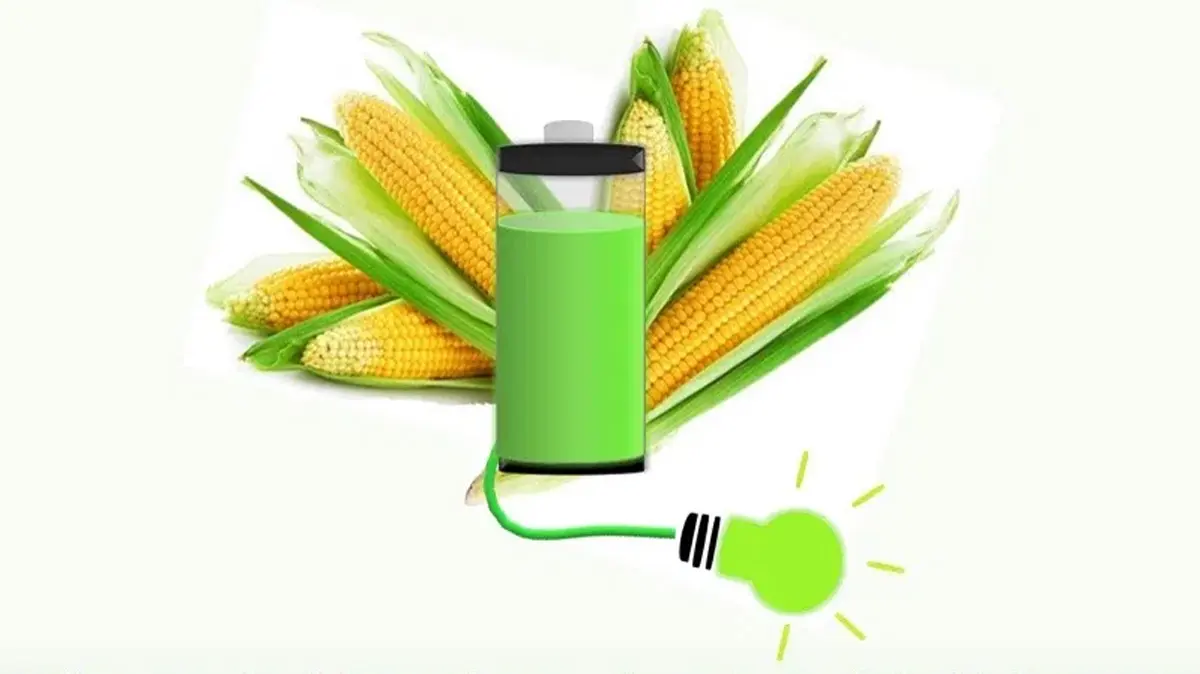
Hyderabad: Indian Institute of Technology Hyderabad Researchers have developed a simple and cost-effective method to derive ‘activated carbon electrode’ material from cornhusk for high-voltage supercapacitors. Their electrode showed better electrochemical performance (High energy density and high-power density) when compared with conventional supercapacitors.

This development is important for India, especially for States such as Uttar Pradesh and the combined Andhra Pradesh-Telangana States, which are the first and second largest producers of corn in the country respectively. They produce a large amount of cornhusk waste, much of which waste is currently burnt as its potential to be converted to valuable electrode material is not harnessed owing to lack of awareness, expertise and technology.

RelatedPosts

Littelfuse Completes Acquisition of Basler Electric

Isabellenhütte Releases Automotive Pulse Load Resistors

Molex Introduces Modular Wire-to-Wire Automotive Connectors

This Research by IIT Hyderabad on affordable and efficient methods can enable this conversion, which would trigger the cascade of additional earning opportunity for the corn-farmer and provision of a sustainable energy source.

The research was led by Dr. Atul Suresh Deshpande, Associate Professor, Department of Materials Science and Metallurgical Engineering, IIT Hyderabad, in collaboration with Dr. T. N. Rao, Associate Director, International Advanced Research Centre for Powder Metallurgy and New Materials (ARCI), Hyderabad, along with their Research students, M. Usha Rani, and K. Nanaji (Project Scientist). Their Research paper detailing the synthesis procedure and the electrochemical performance of the material produced has been recently published in the reputed peer-reviewed Journal of Power Sources.

In the global sector, rapid advancements in adopting new technology and fast evolving green energy systems are trending in the supercapacitor’s market. It is projected to share USD 720 million by 2025 market value, which is expected to grow at a CAGR of 12 per cent from 2020 to 2025.

Carbon based electrodes are playing a crucial role in the development of energy storage devices. Carbon based electrodes are typically derived from expensive, high purity precursors such as polymers, organic precursors, high purity gases using various methods. The production of carbon electrodes from biomass is a simpler straightforward process.

In collaboration with ARCI (Hyderabad), the IIT Hyderabad team has developed activated carbon electrode using simple materials – Corn husk and KOH.

Explaining his research, Dr. Atul Suresh Deshpande, Associate Professor, Department of Materials Science and Metallurgical Engineering, IIT Hyderabad, said, “Activated carbon electrode material with porous sheet-like morphology has been prepared using corn husk through carbonization followed by KOH activation. Due to the low-cost precursors and simple processing method, this process of producing activated carbon can be easily adapted for large-scale commercial production.”

To obtain the high surface area activated carbon with porous sheet-like morphology from corn husk, the researchers added KOH as an activating agent. KOH helps in the formation of sheet-like morphology. The synergy of morphology and high specific surface area (1378 m2 g-1) improve the storage capacity of the activated carbon electrode material.

The storage capability of activated carbon sample tested by using high-operating voltage electrolyte (1M tetraethylammonium tetrafluoroborate (TEABF4) in acetonitrile (AN)). This electrode showed better electrochemical performance (High energy density (20 Wh kg-1) and high-power density (681 W kg-1) at 1 A g-1) than electrodes in conventional supercapacitors.

Explaining further, Dr. T. N. Rao, Associate Director, International Advanced Research Centre for Powder Metallurgy and New Materials (ARCI), Hyderabad, added, “Activated carbon derived from natural sources is very promising electrode material for supercapacitors, and the well-known Maxwell company uses coconut derived activated carbon in their supercapacitors. The key scientific challenge in this research is pore size engineering of activated carbon with high surface area and suitable pore size that allows the electrolyte ions to adsorb into pores to maximum extent which in turn give high capacity. The group at IITH in collaboration with ARCI has succeeded in converting corn husk into high performing activated carbon for supercapacitor application. Corn husk being widely produced waste, it is also scalable from technology point as well.”


Related

Source: India Education Diary

Recent Posts

Samsungs Low ESL MLCCs to Power Next-Generation ADAS SoCs

10.12.2025
17

YAGEO Launches Hybrid Polymer Radial Capacitor for High-Reliability Automotive and Power Applications

10.12.2025
23

Digital Twin of a Tantalum Capacitor Anode: From Powder to Formation

8.12.2025
40

November 2025 Interconnect, Passives and Electromechanical Components Market Insights

4.12.2025
72

Skeleton Opens €220M Supercapacitor Leipzig Factory

3.12.2025
25

TAIYO YUDEN Extends Polymer Hybrid Aluminum Capacitors with Higher Ripple Current and Lower Profile

3.12.2025
29

Würth Elektronik Extends its Safety Film Capacitors

3.12.2025
35

Researchers Present Novel Graphene-Based Material for Supercapacitors

3.12.2025
26

Murata Releases World First 15nF 1.25kV C0G MLCC in 1210 Size

2.12.2025
31

Upcoming Events

Dec 15
December 15 @ 13:00 - December 18 @ 15:15 EST

Pre Cap Visual Inspection per Mil-Std-883 (TM 2017)

Dec 16
17:00 - 18:00 CET

Coaxial Connectors and How to Connect with the PCB

Dec 19
12:00 - 14:00 EST

External Visual Inspection per MIL-STD-883 TM 2009

View Calendar

Popular Posts

  • Buck Converter Design and Calculation

    0 shares
    Share 0 Tweet 0
  • Boost Converter Design and Calculation

    0 shares
    Share 0 Tweet 0
  • Flyback Converter Design and Calculation

    0 shares
    Share 0 Tweet 0
  • LLC Resonant Converter Design and Calculation

    0 shares
    Share 0 Tweet 0
  • What Electronics Engineer Needs to Know About Passive Low Pass Filters

    0 shares
    Share 0 Tweet 0
  • Dual Active Bridge (DAB) Topology

    0 shares
    Share 0 Tweet 0
  • Ripple Current and its Effects on the Performance of Capacitors

    3 shares
    Share 3 Tweet 0
  • What is a Dielectric Constant and DF of Plastic Materials?

    4 shares
    Share 4 Tweet 0
  • MLCC and Ceramic Capacitors

    0 shares
    Share 0 Tweet 0
  • SEPIC Converter Design and Calculation

    0 shares
    Share 0 Tweet 0

Newsletter Subscription


Passive Components Blog

© EPCI - Leading Passive Components Educational and Information Site

  • Home
  • Privacy Policy
  • EPCI Membership & Advertisement
  • About

No Result
View All Result
  • Home
  • Knowledge Blog
  • PCNS

© EPCI - Leading Passive Components Educational and Information Site

This website uses cookies. By continuing to use this website you are giving consent to cookies being used. Visit our Privacy and Cookie Policy.
Go to mobile version