















Passive Components Blog
No Result
View All Result
  • Home
  • NewsFilter
    • All
    • Aerospace & Defence
    • Antenna
    • Applications
    • Automotive
    • Capacitors
    • Circuit Protection Devices
    • electro-mechanical news
    • Filters
    • Fuses
    • Inductors
    • Industrial
    • Integrated Passives
    • inter-connect news
    • Market & Supply Chain
    • Market Insights
    • Medical
    • Modelling and Simulation
    • New Materials & Supply
    • New Technologies
    • Non-linear Passives
    • Oscillators
    • Passive Sensors News
    • Resistors
    • RF & Microwave
    • Telecommunication
    • Weekly Digest

    VINATech Targets AI Data Center Supercapacitor Boom

    Littelfuse NANO2 415 SMD Fuse Wins 2025 Product of the Year

    TDK Introduces 350V Safety Film Capacitors for Compact EMI Suppression

    Molex Extends Cardinal Multi‑Port Coax Assemblies to 145 GHz for AI and 6G Test

    Samsung Launches Worlds First Automotive 47uF 4V MLCC in 0805 Size

    Würth Elektronik Present in IEEE APEC

    Samsung Three Pillars MLCC Strategy for AI Hardware Topology

    Bourns Releases High Clearance Transformer for Isolated DC/DC Supplies

    KYOCERA AVX Extends Ultra‑Broadband RF Capacitor Series

    Trending Tags

    • Ripple Current
    • RF
    • Leakage Current
    • Tantalum vs Ceramic
    • Snubber
    • Low ESR
    • Feedthrough
    • Derating
    • Dielectric Constant
    • New Products
    • Market Reports
  • VideoFilter
    • All
    • Antenna videos
    • Capacitor videos
    • Circuit Protection Video
    • Filter videos
    • Fuse videos
    • Inductor videos
    • Inter-Connect Video
    • Non-linear passives videos
    • Oscillator videos
    • Passive sensors videos
    • Resistor videos

    2026 Power Magnetics Design Trends: Flyback, DAB and Planar

    Enabling Software‑Defined Vehicle Architectures: Automotive Ethernet and Zonal Smart Power

    Calculating Resistance Value of a Flyback RC Snubber 

    One‑Pulse Characterization of Nonlinear Power Inductors

    Thermistor Linearization Challenges

    Coaxial Connectors and How to Connect with PCB

    PCB Manufacturing, Test Methods, Quality and Reliability

    Transformer Behavior – Current Transfer and Hidden Feedback

    Choosing the Right Capacitor: The Importance of Accurate Measurements

    Trending Tags

    • Capacitors explained
    • Inductors explained
    • Resistors explained
    • Filters explained
    • Application Video Guidelines
    • EMC
    • New Products
    • Ripple Current
    • Simulation
    • Tantalum vs Ceramic
  • Knowledge Blog
  • DossiersNew
  • Suppliers
    • Who is Who
  • PCNS
    • PCNS 2025
    • PCNS 2023
    • PCNS 2021
    • PCNS 2019
    • PCNS 2017
  • Events
  • Home
  • NewsFilter
    • All
    • Aerospace & Defence
    • Antenna
    • Applications
    • Automotive
    • Capacitors
    • Circuit Protection Devices
    • electro-mechanical news
    • Filters
    • Fuses
    • Inductors
    • Industrial
    • Integrated Passives
    • inter-connect news
    • Market & Supply Chain
    • Market Insights
    • Medical
    • Modelling and Simulation
    • New Materials & Supply
    • New Technologies
    • Non-linear Passives
    • Oscillators
    • Passive Sensors News
    • Resistors
    • RF & Microwave
    • Telecommunication
    • Weekly Digest

    VINATech Targets AI Data Center Supercapacitor Boom

    Littelfuse NANO2 415 SMD Fuse Wins 2025 Product of the Year

    TDK Introduces 350V Safety Film Capacitors for Compact EMI Suppression

    Molex Extends Cardinal Multi‑Port Coax Assemblies to 145 GHz for AI and 6G Test

    Samsung Launches Worlds First Automotive 47uF 4V MLCC in 0805 Size

    Würth Elektronik Present in IEEE APEC

    Samsung Three Pillars MLCC Strategy for AI Hardware Topology

    Bourns Releases High Clearance Transformer for Isolated DC/DC Supplies

    KYOCERA AVX Extends Ultra‑Broadband RF Capacitor Series

    Trending Tags

    • Ripple Current
    • RF
    • Leakage Current
    • Tantalum vs Ceramic
    • Snubber
    • Low ESR
    • Feedthrough
    • Derating
    • Dielectric Constant
    • New Products
    • Market Reports
  • VideoFilter
    • All
    • Antenna videos
    • Capacitor videos
    • Circuit Protection Video
    • Filter videos
    • Fuse videos
    • Inductor videos
    • Inter-Connect Video
    • Non-linear passives videos
    • Oscillator videos
    • Passive sensors videos
    • Resistor videos

    2026 Power Magnetics Design Trends: Flyback, DAB and Planar

    Enabling Software‑Defined Vehicle Architectures: Automotive Ethernet and Zonal Smart Power

    Calculating Resistance Value of a Flyback RC Snubber 

    One‑Pulse Characterization of Nonlinear Power Inductors

    Thermistor Linearization Challenges

    Coaxial Connectors and How to Connect with PCB

    PCB Manufacturing, Test Methods, Quality and Reliability

    Transformer Behavior – Current Transfer and Hidden Feedback

    Choosing the Right Capacitor: The Importance of Accurate Measurements

    Trending Tags

    • Capacitors explained
    • Inductors explained
    • Resistors explained
    • Filters explained
    • Application Video Guidelines
    • EMC
    • New Products
    • Ripple Current
    • Simulation
    • Tantalum vs Ceramic
  • Knowledge Blog
  • DossiersNew
  • Suppliers
    • Who is Who
  • PCNS
    • PCNS 2025
    • PCNS 2023
    • PCNS 2021
    • PCNS 2019
    • PCNS 2017
  • Events
No Result
View All Result
Passive Components Blog
No Result
View All Result

Magnetism, Ampère’s Law and Magnetic Fields Strength

2.5.2025
Reading Time: 7 mins read
A A

The article introduces basic principles of inductive components – Magnetism, Ampère’s Law and Magnetic Fields Strength.

Magnetism

The basis for understanding inductors is provided by magnetism and a few fundamental electromagnetic field laws, revealing clear and fundamental knowledge of inductors and ferrites. The most important phenomena and laws will still perhaps be there from physics lessons:

RelatedPosts

One‑Pulse Characterization of Nonlinear Power Inductors

Transformer Behavior – Current Transfer and Hidden Feedback

Current Sense Transformer and its Calculation

  • Every magnet has a north and south pole (The earth is an enormous magnet!)
  • If an existing magnet is divided, a new one is created. The magnet so created also has a north and south pole. This division can be performed down to the molecular level without losing the magnetic effect.
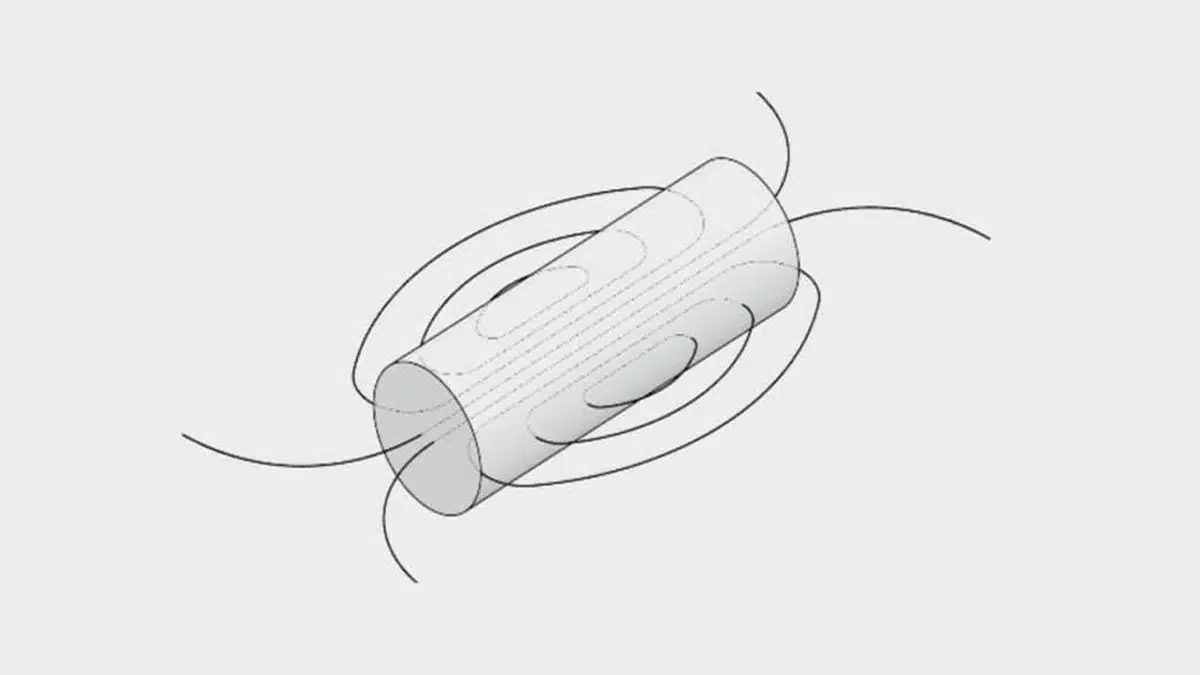
  • Every magnet is surrounded by a magnetic field, which is represented by the field line model.
  • Magnetic field lines are closed. They neither beginning nor end. There are magnetizable materials (e.g. iron) and non-magnetizable materials (e.g. aluminum).
  • The following analysis concerns a class of magnetizable materials, the ferromagnetic materials.

Ferromagnetic materials
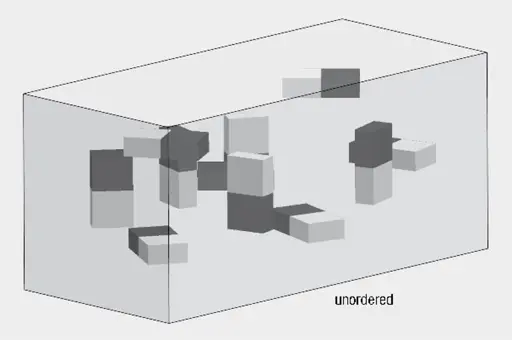
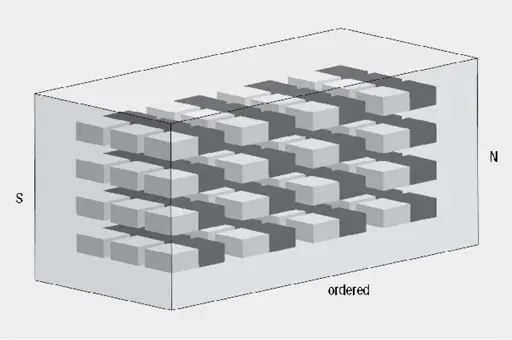
Figure 1. Elementary magnets
Figure 2. magnetic saturation

Every magnetic material is composed of a finite number of the smallest elementary magnets, configured randomly in the unmagnetized state. These orientate themselves under the influence of an external magnetic field.

If all elementary magnets are oriented in the magnetic field, one speaks of saturation of the material.Once the externally applied magnetic field is removed, two effects can occur:

  1. The material becomes nonmagnetic once again: One speaks of a soft magnetic material
  2. The material remains magnetic: One speaks of a hard magnetic material

Ampère’s Law and Magnetic Field Strength
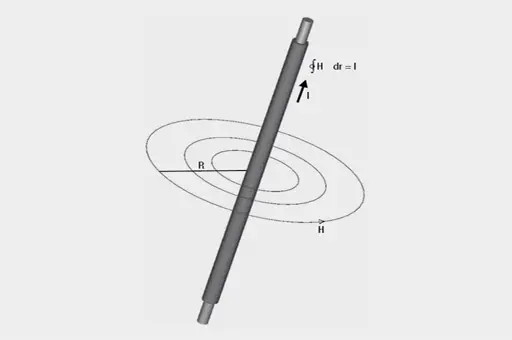
Figure 3. Magnetic field strength H of a long conductor

A magnetic field is created around an electric conductor passing a current. This magnetic force field is a vector quantity perpendicular to the generating current. Field lines represent the magnetic force field. For a current carrying conductor, these form closed concentric circles.

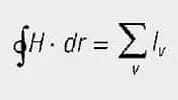
Integrating in a counter clockwise direction along a field line, the H and each distance increment (dr) are always in the same direction. A complete circulation provides the magnetic boundary potential is shown in Figure 3.

If several conductor currents pass through the enclosed area, the sum of the currents must be on the right side of the equation (observing their directional signs):
magnetic field equation [1]

The magnetic field is measured by means of the magnetic field strength H and is defined by the currents generated by the field.

Biot-Savart Law

The field strength of any conductor configuration may be determined from the Biot-Savart Law:
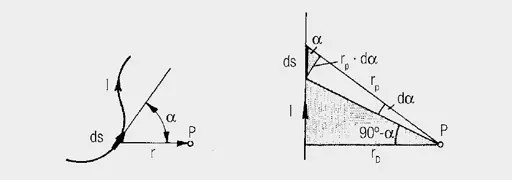
Figure 4. BIOT SAVART’s Law: Describing the field strength outside a straight current conductor

Accordingly, the small section (ds) of the conductor carrying current (I) makes the contribution:

local magnetic field strength equation [2]

(alpha) is the angle between the direction of the line element (ds) and its connection (r) to the point (P) at which the field strength (dH) exists.

Magnetic Field Strength H

The magnetic field strength (H) results from integrating over the entire length of the conductor.

The contour integral of H along a closed line is equal to the total current through the area across this closed path. The magnetic field strength is given by the total current through the surface enclosed by the magnetic field line and the length of this field line.

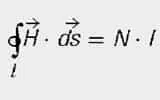
If it is assumed that the same currents flow in N discrete conductors, as in the case of a coil, the equation simplifies to:
total magnetic field strength equation [3]

N = number of conductors within the closed path l
I = current per conductor

The unit of magnetic field strength (H) is A/m.

Examples:

Straight current conductor
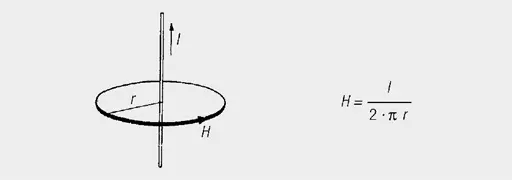
Figure 5. Magnetic field strength (H) of a straight conductor

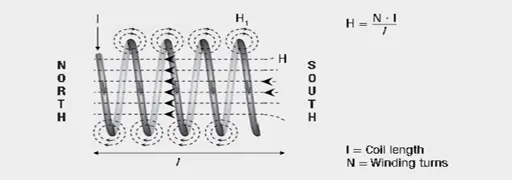
Long solenoid

Figure 6. Magnetic field strength H in a solenoid

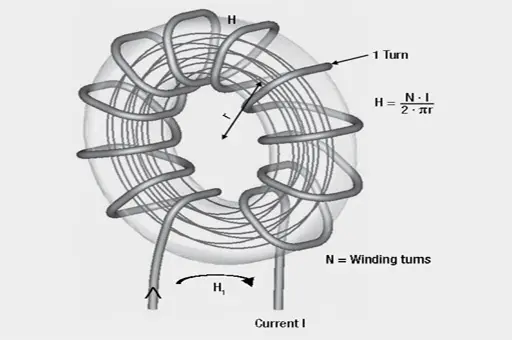
Toroidal coil

Figure 7. Magnetic field strength H of a toroidal coil

The Figure 6. illustration shows the size of the magnetic field strength (H) inside a long solenoid to be dependent on the current I, the coil length l and the winding turns N.
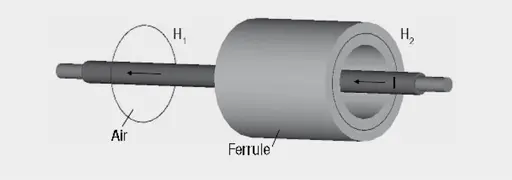
Figure 8. Field strength in air and in a ferrule

Example calculation :
Ferrite sleeve 742 700 9 on a conductor with DC current of I = 10A

Sleeve dimensions:
da = 17.5 mm; di = 9.5 mm; l = 28.5 mm

Question:
What is a field strength H1 in air and field strength H2 in ferrule (centered conductor) on Figure 8.?
Answer:
The field strengths H1 in air and H2 in the ferrule are the same size. The field strength is given by:


Related

Recent Posts

Würth Elektronik Present in IEEE APEC

24.2.2026
16

Bourns Releases High Clearance Transformer for Isolated DC/DC Supplies

24.2.2026
16

Earthing Systems and IEC Classification Explained

26.2.2026
42

Bourns Extends Multilayer Chip Inductors Offer for RF and Wireless Designs

20.2.2026
18

Würth Elektronik Component Data Live in Accuris

19.2.2026
19

Coilcraft Releases Automotive Common Mode Chokes

19.2.2026
23

2026 Power Magnetics Design Trends: Flyback, DAB and Planar

13.2.2026
80

Vishay Releases Compact 0806 Low‑DCR Power Inductor

5.2.2026
40

Murata Publishes Power Delivery Guide for AI Servers

4.2.2026
142

Upcoming Events

Mar 3
16:00 - 17:00 CET

Cybersecurity at the Eleventh Hour – from RED to CRA – Information and Discussion

Mar 21
All day

PSMA Capacitor Workshop 2026

Apr 21
16:00 - 17:00 CEST

Heatsink Solutions: Thermal Management in electronic devices

View Calendar

Popular Posts

  • Buck Converter Design and Calculation

    0 shares
    Share 0 Tweet 0
  • Boost Converter Design and Calculation

    0 shares
    Share 0 Tweet 0
  • Flyback Converter Design and Calculation

    0 shares
    Share 0 Tweet 0
  • LLC Resonant Converter Design and Calculation

    0 shares
    Share 0 Tweet 0
  • MLCC Manufacturers Consider Price Increase as AI Demand Outpaces Supply

    0 shares
    Share 0 Tweet 0
  • Dual Active Bridge (DAB) Topology

    0 shares
    Share 0 Tweet 0
  • Ripple Current and its Effects on the Performance of Capacitors

    3 shares
    Share 3 Tweet 0
  • What is a Dielectric Constant and DF of Plastic Materials?

    4 shares
    Share 4 Tweet 0
  • MLCC and Ceramic Capacitors

    0 shares
    Share 0 Tweet 0
  • MLCC Case Sizes Standards Explained

    0 shares
    Share 0 Tweet 0

Newsletter Subscription


Passive Components Blog

© EPCI - Leading Passive Components Educational and Information Site

  • Home
  • Privacy Policy
  • EPCI Membership & Advertisement
  • About

No Result
View All Result
  • Home
  • Knowledge Blog
  • PCNS

© EPCI - Leading Passive Components Educational and Information Site

This website uses cookies. By continuing to use this website you are giving consent to cookies being used. Visit our Privacy and Cookie Policy.
Go to mobile version