












Passive Components Blog
No Result
View All Result
  • Home
  • NewsFilter
    • All
    • Aerospace & Defence
    • Antenna
    • Applications
    • Automotive
    • Capacitors
    • Circuit Protection Devices
    • electro-mechanical news
    • Filters
    • Fuses
    • Inductors
    • Industrial
    • Integrated Passives
    • inter-connect news
    • Market & Supply Chain
    • Market Insights
    • Medical
    • Modelling and Simulation
    • New Materials & Supply
    • New Technologies
    • Non-linear Passives
    • Oscillators
    • Passive Sensors News
    • Resistors
    • RF & Microwave
    • Telecommunication
    • Weekly Digest

    Enabling Software‑Defined Vehicle Architectures: Automotive Ethernet and Zonal Smart Power

    Calculating Resistance Value of a Flyback RC Snubber 

    Wk 5 Electronics Supply Chain Digest

    Top 10 Connector Vendors by Product Type

    Bourns Releases High‑Q Air Coil Inductors for RF Aplications

    CMSE 2026 Announces Call for Presentations on High-Reliability Military and Space Electronics

    ESA Call for Papers 6th Space Passive Component Days – SPCD 2026

    Würth Elektronik Offers Halogen‑Free EMC Gaskets for Displays and Housings

    Component Distribution Supply Chain January 2026

    Trending Tags

    • Ripple Current
    • RF
    • Leakage Current
    • Tantalum vs Ceramic
    • Snubber
    • Low ESR
    • Feedthrough
    • Derating
    • Dielectric Constant
    • New Products
    • Market Reports
  • VideoFilter
    • All
    • Antenna videos
    • Capacitor videos
    • Circuit Protection Video
    • Filter videos
    • Fuse videos
    • Inductor videos
    • Inter-Connect Video
    • Non-linear passives videos
    • Oscillator videos
    • Passive sensors videos
    • Resistor videos

    Enabling Software‑Defined Vehicle Architectures: Automotive Ethernet and Zonal Smart Power

    Calculating Resistance Value of a Flyback RC Snubber 

    One‑Pulse Characterization of Nonlinear Power Inductors

    Thermistor Linearization Challenges

    Coaxial Connectors and How to Connect with PCB

    PCB Manufacturing, Test Methods, Quality and Reliability

    Transformer Behavior – Current Transfer and Hidden Feedback

    Choosing the Right Capacitor: The Importance of Accurate Measurements

    RF Inductors: Selection and Design Challenges for High-Frequency Circuits

    Trending Tags

    • Capacitors explained
    • Inductors explained
    • Resistors explained
    • Filters explained
    • Application Video Guidelines
    • EMC
    • New Products
    • Ripple Current
    • Simulation
    • Tantalum vs Ceramic
  • Knowledge Blog
  • DossiersNew
  • Suppliers
    • Who is Who
  • PCNS
    • PCNS 2025
    • PCNS 2023
    • PCNS 2021
    • PCNS 2019
    • PCNS 2017
  • Events
  • Home
  • NewsFilter
    • All
    • Aerospace & Defence
    • Antenna
    • Applications
    • Automotive
    • Capacitors
    • Circuit Protection Devices
    • electro-mechanical news
    • Filters
    • Fuses
    • Inductors
    • Industrial
    • Integrated Passives
    • inter-connect news
    • Market & Supply Chain
    • Market Insights
    • Medical
    • Modelling and Simulation
    • New Materials & Supply
    • New Technologies
    • Non-linear Passives
    • Oscillators
    • Passive Sensors News
    • Resistors
    • RF & Microwave
    • Telecommunication
    • Weekly Digest

    Enabling Software‑Defined Vehicle Architectures: Automotive Ethernet and Zonal Smart Power

    Calculating Resistance Value of a Flyback RC Snubber 

    Wk 5 Electronics Supply Chain Digest

    Top 10 Connector Vendors by Product Type

    Bourns Releases High‑Q Air Coil Inductors for RF Aplications

    CMSE 2026 Announces Call for Presentations on High-Reliability Military and Space Electronics

    ESA Call for Papers 6th Space Passive Component Days – SPCD 2026

    Würth Elektronik Offers Halogen‑Free EMC Gaskets for Displays and Housings

    Component Distribution Supply Chain January 2026

    Trending Tags

    • Ripple Current
    • RF
    • Leakage Current
    • Tantalum vs Ceramic
    • Snubber
    • Low ESR
    • Feedthrough
    • Derating
    • Dielectric Constant
    • New Products
    • Market Reports
  • VideoFilter
    • All
    • Antenna videos
    • Capacitor videos
    • Circuit Protection Video
    • Filter videos
    • Fuse videos
    • Inductor videos
    • Inter-Connect Video
    • Non-linear passives videos
    • Oscillator videos
    • Passive sensors videos
    • Resistor videos

    Enabling Software‑Defined Vehicle Architectures: Automotive Ethernet and Zonal Smart Power

    Calculating Resistance Value of a Flyback RC Snubber 

    One‑Pulse Characterization of Nonlinear Power Inductors

    Thermistor Linearization Challenges

    Coaxial Connectors and How to Connect with PCB

    PCB Manufacturing, Test Methods, Quality and Reliability

    Transformer Behavior – Current Transfer and Hidden Feedback

    Choosing the Right Capacitor: The Importance of Accurate Measurements

    RF Inductors: Selection and Design Challenges for High-Frequency Circuits

    Trending Tags

    • Capacitors explained
    • Inductors explained
    • Resistors explained
    • Filters explained
    • Application Video Guidelines
    • EMC
    • New Products
    • Ripple Current
    • Simulation
    • Tantalum vs Ceramic
  • Knowledge Blog
  • DossiersNew
  • Suppliers
    • Who is Who
  • PCNS
    • PCNS 2025
    • PCNS 2023
    • PCNS 2021
    • PCNS 2019
    • PCNS 2017
  • Events
No Result
View All Result
Passive Components Blog
No Result
View All Result

Memristors Support Brain-Like Computing System

11.4.2022
Reading Time: 2 mins read
A A

In a recent paper published in Advanced Intelligent Systems, Yuchao Yang and colleagues at Peking University have shown that human-like memory structures can be constructed using memristors, which is acknowledged as the fourth passive circuit element besides resistors, capacitors and inductors.

A long-standing dream in the semiconductor industry is to construct a brain-like computing system on silicon chips. Recently, neuromorphic computing has been proposed as a means of emulating the working modes of neurons and synapses on hardware, and has been hailed as the next generation computing paradigm for the era of big data and artificial intelligence.

RelatedPosts

Researchers Demonstrated Quantum Memristor as a Link between AI and Quantum Computing

Graphene-based Memristors Show Promise for Brain-Based Computing

Nanometers-thin Niobium Oxide (NbO2) Memristor Can Bring Breakthrough to Neuromorphic AI Hardware Designs

However, a key challenge for building a neuromorphic computing system is recreating content-based memory structures found in the brain, which are dramatically different from the address-based storage in classical computers.

Due to their internal working dynamics, memristors can change their resistance values in response to external electrical stimulation, bearing similarities with biological synapses. In their study, the team have purposed and simulated a memristor-based physical system using discrete attractor networks capable of implementing associative memory, a typical content-based memory phenomenon that can remember the relationship between seemingly unrelated items or recall the whole information precisely from damaged information.

The desired information is encoded at attractors of the network, and through introducing the competition and cooperation among neurons in an online learning method called Oja Rule, the storage capacity of the system can be increased by 10 times compared to previous methods and has better robustness and tolerance for device imperfections.

By extending the discrete attractor neural network to continuous attractor neural network (CANN), working memory based on memristors was made possible for the first time, which demonstrates the potential of dynamically storing and tracking external stimuli. The researchers also systematically investigated the influence of device characteristics on network performance and found that noise from different sources can have different impacts the ability of CANN in maintaining dynamic information. While read noise shifts the center of network activity, write noise can make the center of network activity split.

This work represents a significant advance in memristor-based neuromorphic systems that can approach biologically plausible neural networks and could pave the way for truly intelligent hardware systems. Looking into the future, the team hopes to combine the continuous attractor neural networks with existing supervised learning systems on physical memristor crossbars.

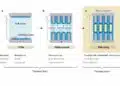
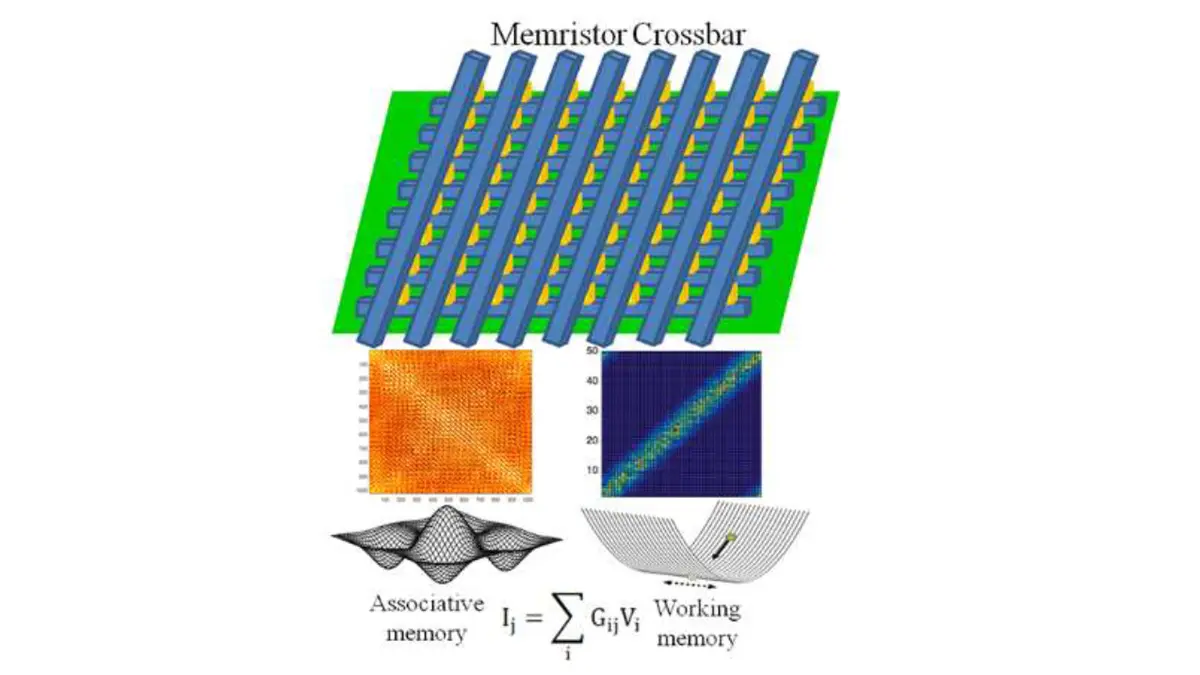
featured image: A physical system based on memristors is used to realize associative memory based on discrete attractor networks, enabling content based storage. By extending it to continuous attractor neural networks, working memory is realized based on memristors. The write and read noises in memristor arrays are found to have different impacts on the ability of network in maintaining dynamic information. Source: Y. Wang, et al. Advanced Intelligent Systems, 2020

Research article available at: Y. Wang, et al. Advanced Intelligent Systems, 2020, doi.org/10.1002/aisy.202000001


Related

Source: Willey Online Library

Recent Posts

Exxelia Publishes Micropen White Papers for Printed Electronics

26.1.2026
32

Würth Elektronik Developed a Custom Transformer for Active Hand Orthosis

26.1.2026
41

Researchers Demonstrated 32nm Aluminum Vacuum Gap Capacitor

20.1.2026
43

Conductive Polymer Capacitor Market and Design‑In Guide to 2035

20.1.2026
159

Littelfuse Unveils Ultra-Low-Power TMR Magnetic Switches

13.1.2026
40
Credit: Institute of Science Tokyo

Researchers Demonstrated 30nm Ferroelectric Capacitor for Compact Memory

2.1.2026
47

Reliability Improvement in BaTiO3 MLCCs Using Ni–Sn and Ni–In Alloy Electrodes

19.12.2025
110

Researchers Present Novel Graphene-Based Material for Supercapacitors

3.12.2025
53

Würth Elektronik Expands its MagI³C-VDMM MicroModules

5.11.2025
47

Upcoming Events

Feb 24
16:00 - 17:00 CET

Designing Qi2 Wireless Power Systems: Practical Development and EMC Optimization

Mar 3
16:00 - 17:00 CET

Cybersecurity at the Eleventh Hour – from RED to CRA – Information and Discussion

Mar 21
All day

PSMA Capacitor Workshop 2026

View Calendar

Popular Posts

  • Buck Converter Design and Calculation

    0 shares
    Share 0 Tweet 0
  • Boost Converter Design and Calculation

    0 shares
    Share 0 Tweet 0
  • LLC Resonant Converter Design and Calculation

    0 shares
    Share 0 Tweet 0
  • Flyback Converter Design and Calculation

    0 shares
    Share 0 Tweet 0
  • Ripple Current and its Effects on the Performance of Capacitors

    3 shares
    Share 3 Tweet 0
  • How Metal Prices Are Driving Passive Component Price Hikes

    0 shares
    Share 0 Tweet 0
  • MLCC and Ceramic Capacitors

    0 shares
    Share 0 Tweet 0
  • Dual Active Bridge (DAB) Topology

    0 shares
    Share 0 Tweet 0
  • What is a Dielectric Constant and DF of Plastic Materials?

    4 shares
    Share 4 Tweet 0
  • Degradation of Capacitors and its Failure Mechanisms

    0 shares
    Share 0 Tweet 0

Newsletter Subscription


Passive Components Blog

© EPCI - Leading Passive Components Educational and Information Site

  • Home
  • Privacy Policy
  • EPCI Membership & Advertisement
  • About

No Result
View All Result
  • Home
  • Knowledge Blog
  • PCNS

© EPCI - Leading Passive Components Educational and Information Site

This website uses cookies. By continuing to use this website you are giving consent to cookies being used. Visit our Privacy and Cookie Policy.
Go to mobile version