












Passive Components Blog
No Result
View All Result
  • Home
  • NewsFilter
    • All
    • Aerospace & Defence
    • Antenna
    • Applications
    • Automotive
    • Capacitors
    • Circuit Protection Devices
    • electro-mechanical news
    • Filters
    • Fuses
    • Inductors
    • Industrial
    • Integrated Passives
    • inter-connect news
    • Market & Supply Chain
    • Market Insights
    • Medical
    • Modelling and Simulation
    • New Materials & Supply
    • New Technologies
    • Non-linear Passives
    • Oscillators
    • Passive Sensors News
    • Resistors
    • RF & Microwave
    • Telecommunication
    • Weekly Digest

    Designing a 2 kW LLC Transformer with Integrated Resonant Inductor

    Middle East Conflict: The Potential Impact to Passive Components

    Inductor Technology Dossier

    Coilcraft Releases TLVR Inductors for High Density VRMs and PoL Converters

    Rutheniums Critical Role in Passive Component Supply Chains

    Bourns Expands its Modular Contacts for Power-Dense Systems

    Murata to Decouple China Rare Earth Supply in 3 Years

    Samtec AcceleRate Slim ARC6 Cable Assemblies with New Signaling Options

    Hirose Electric to Establish Automotive Connector Plant in India

    Trending Tags

    • Ripple Current
    • RF
    • Leakage Current
    • Tantalum vs Ceramic
    • Snubber
    • Low ESR
    • Feedthrough
    • Derating
    • Dielectric Constant
    • New Products
    • Market Reports
  • VideoFilter
    • All
    • Antenna videos
    • Capacitor videos
    • Circuit Protection Video
    • Filter videos
    • Fuse videos
    • Inductor videos
    • Inter-Connect Video
    • Non-linear passives videos
    • Oscillator videos
    • Passive sensors videos
    • Resistor videos

    Thermal Modeling of Magnetics

    Standard vs Planar LLC transformers Comparison for Battery Chargers

    How Modern Tools Model Magnetic Components for Power Electronics

    Advanced Loss Modeling for Planar Magnetics in the Frenetic Planar Tool

    2026 Power Magnetics Design Trends: Flyback, DAB and Planar

    Enabling Software‑Defined Vehicle Architectures: Automotive Ethernet and Zonal Smart Power

    Calculating Resistance Value of a Flyback RC Snubber 

    One‑Pulse Characterization of Nonlinear Power Inductors

    Thermistor Linearization Challenges

    Trending Tags

    • Capacitors explained
    • Inductors explained
    • Resistors explained
    • Filters explained
    • Application Video Guidelines
    • EMC
    • New Products
    • Ripple Current
    • Simulation
    • Tantalum vs Ceramic
  • Knowledge Blog
  • DossiersNew
  • Suppliers
    • Who is Who
  • PCNS
    • PCNS 2025
    • PCNS 2023
    • PCNS 2021
    • PCNS 2019
    • PCNS 2017
  • Events
  • Home
  • NewsFilter
    • All
    • Aerospace & Defence
    • Antenna
    • Applications
    • Automotive
    • Capacitors
    • Circuit Protection Devices
    • electro-mechanical news
    • Filters
    • Fuses
    • Inductors
    • Industrial
    • Integrated Passives
    • inter-connect news
    • Market & Supply Chain
    • Market Insights
    • Medical
    • Modelling and Simulation
    • New Materials & Supply
    • New Technologies
    • Non-linear Passives
    • Oscillators
    • Passive Sensors News
    • Resistors
    • RF & Microwave
    • Telecommunication
    • Weekly Digest

    Designing a 2 kW LLC Transformer with Integrated Resonant Inductor

    Middle East Conflict: The Potential Impact to Passive Components

    Inductor Technology Dossier

    Coilcraft Releases TLVR Inductors for High Density VRMs and PoL Converters

    Rutheniums Critical Role in Passive Component Supply Chains

    Bourns Expands its Modular Contacts for Power-Dense Systems

    Murata to Decouple China Rare Earth Supply in 3 Years

    Samtec AcceleRate Slim ARC6 Cable Assemblies with New Signaling Options

    Hirose Electric to Establish Automotive Connector Plant in India

    Trending Tags

    • Ripple Current
    • RF
    • Leakage Current
    • Tantalum vs Ceramic
    • Snubber
    • Low ESR
    • Feedthrough
    • Derating
    • Dielectric Constant
    • New Products
    • Market Reports
  • VideoFilter
    • All
    • Antenna videos
    • Capacitor videos
    • Circuit Protection Video
    • Filter videos
    • Fuse videos
    • Inductor videos
    • Inter-Connect Video
    • Non-linear passives videos
    • Oscillator videos
    • Passive sensors videos
    • Resistor videos

    Thermal Modeling of Magnetics

    Standard vs Planar LLC transformers Comparison for Battery Chargers

    How Modern Tools Model Magnetic Components for Power Electronics

    Advanced Loss Modeling for Planar Magnetics in the Frenetic Planar Tool

    2026 Power Magnetics Design Trends: Flyback, DAB and Planar

    Enabling Software‑Defined Vehicle Architectures: Automotive Ethernet and Zonal Smart Power

    Calculating Resistance Value of a Flyback RC Snubber 

    One‑Pulse Characterization of Nonlinear Power Inductors

    Thermistor Linearization Challenges

    Trending Tags

    • Capacitors explained
    • Inductors explained
    • Resistors explained
    • Filters explained
    • Application Video Guidelines
    • EMC
    • New Products
    • Ripple Current
    • Simulation
    • Tantalum vs Ceramic
  • Knowledge Blog
  • DossiersNew
  • Suppliers
    • Who is Who
  • PCNS
    • PCNS 2025
    • PCNS 2023
    • PCNS 2021
    • PCNS 2019
    • PCNS 2017
  • Events
No Result
View All Result
Passive Components Blog
No Result
View All Result

New AVX T4Z Medical Series HRC4000 Tantalum Capacitors for Non-Critical Medical Devices

3.5.2018
Reading Time: 2 mins read
A A

Source: AVX news

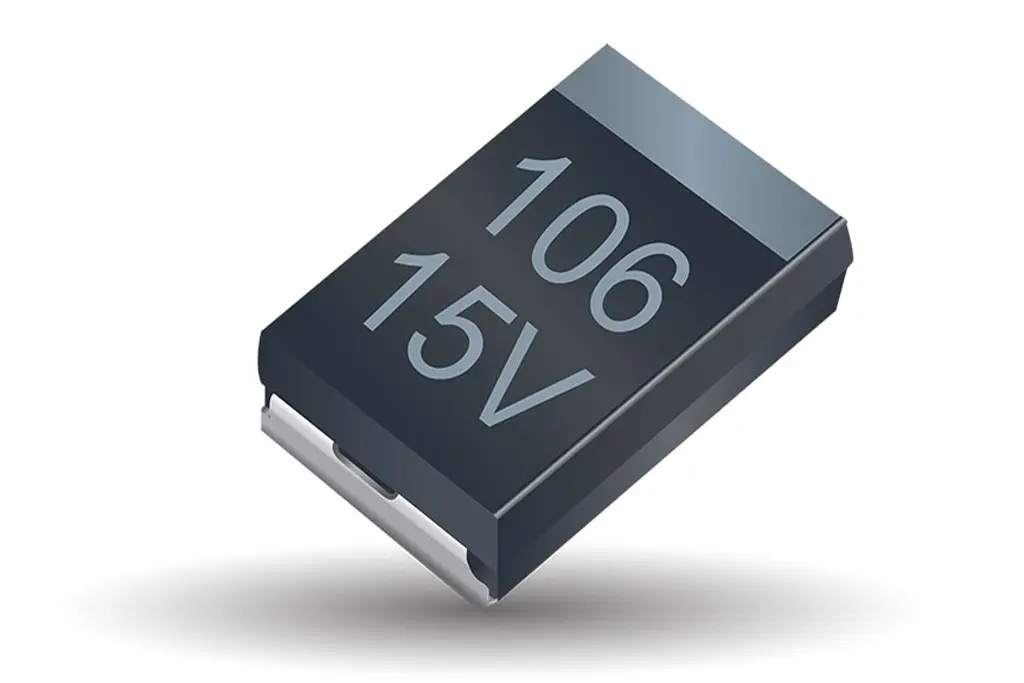
Manufactured in compliance with strict FDA regulations, the T4Z Medical Series delivers consistent, high-reliability performance with the lowest DCL values in the market (0.01CV down to 0.005CV) & offers short, stable lead-times extending to a maximum of eight weeks, providing an ideal alternative to commercial capacitors.
FOUNTAIN INN, S.C. (March 22, 2018) – AVX Corporation, a leading manufacturer and supplier of advanced electronic components and interconnect, sensor, control, and antenna solutions, has released the new T4Z Medical Series HRC4000 medical-grade tantalum capacitors.

RelatedPosts

Designing a 2 kW LLC Transformer with Integrated Resonant Inductor

Middle East Conflict: The Potential Impact to Passive Components

Inductor Technology Dossier

Designed to replace commercial capacitors in the filtering, hold-up, and charging circuits of non-critical medical devices that require high-reliability and strict change control, including: implantable, non-life-sustaining devices, such as heart monitors, neurostimulators, insulin pumps, and temporary cardiac monitors; external, life-sustaining devices, such as automated external defibrillators and external heart pump controllers; and external non-life-sustaining devices, including patient monitoring and diagnostic equipment, the new T4Z Medical Series solid tantalum capacitors are based on a MIL-PRF-55365 product line with more than 25 years of proven high-reliability performance in the medical industry. To ensure consistent, high-reliability performance, the series is manufactured at AVX’s high-reliability, ISO-13485-certified plant in Biddeford, Maine, using strict manufacturing control, statistical screening, and testing procedures compliant with FDA regulations for medical devices.

T4Z Medical Series capacitors offer the lowest DC leakage values in the market: 0.01CV standard, with custom potential down to 0.005CV — or half that of typical industry limits — enabling longer lifetime performance and improved reliability compared to commercial tantalum capacitors. They are currently available in eight compact, lightweight case sizes ranging from 2.54mm x 1.27 mm x 1.27mm (L x W x H) ±0.38mm and 0.016g to 7.24mm x 3.81mm x 2.79mm ±0.38mm and 0.335g with solder-plated, solder-fused, gold-plated, or 100% tin terminations. They offer capacitance values extending from 0.1μF to 330μF, eight standard voltage ratings spanning 4–50V, and rated operating temperatures extending from -55°C to +125°C. Custom DCL and ESR values are available upon request.

The T4Z Medical Series utilizes the industry-leading design for molded tantalum capacitors intended for use in high-reliability medical devices, which is conservative, robust, and strictly change-controlled to ensure continuity. They are manufactured using Weibull reliability grading, which subjects each batch to accelerated burn-in to provide a calculated failure rate; military-style screening and conformance testing, which ensures consistent, high-reliability part performance; and process control, which ensures a stable, normalized leakage distribution. In addition, each lot is subjected to sample function testing, which simulates the manufacturing environment to further ensure exceptional part performance. As a result, T4Z Medical Series capacitors deliver basic reliability better than 0.1% per 1,000 hours with a 90% confidence level.

“Subjecting our T4Z Medical Series HRC4000 medical-grade tantalum capacitors to such rigorous design and manufacturing process controls, statistical screening, and testing procedures allows us to consistently achieve higher-reliability components with significantly lower DC leakage levels than commercial solid tantalum capacitors, and to better satisfy the exacting demands of even non-critical medical applications,” said Lizzie Geismar, product marketing manager for AVX’s high-reliability tantalum division.

T4Z Medical Series capacitors can be shipped in bulk, 7” tape and reel, or waffle packaging, and — by virtue of being manufactured in a facility with five-plus years of guaranteed tantalum powder — are not subject to the long lead-times common to the commodity tantalum market, instead offering short, consistently stable lead-times that extend to a maximum of eight weeks.


Related

Recent Posts

Middle East Conflict: The Potential Impact to Passive Components

20.3.2026
11

Murata to Decouple China Rare Earth Supply in 3 Years

19.3.2026
95

Samtec AcceleRate Slim ARC6 Cable Assemblies with New Signaling Options

19.3.2026
7
Schematic illustration of the electric double layer of porous carbon electrodes at elevated potentials in a a conventional electrolyte and b a weakly solvating electrolyte; source: authors

Researchers Presented Lignin-based Electrolyte for 4V Supercapacitors with Low Self‑Discharge

19.3.2026
10

Samsung Outlines Growth Roadmap at its 52nd General Shareholders Meeting

19.3.2026
14

Samsung Electro-Mechanics Enters LEO Satellite Market With High‑Reliability MLCCs

19.3.2026
17

Vishay Introduced Space-Grade SMT Common Mode Choke

19.3.2026
11

Exxelia to Exhibit at APEC 2026 in San Antonio, Texas

17.3.2026
32

Würth Elektronik Presents Differential Pressure Sensor for HVAC and Medical

17.3.2026
11

Upcoming Events

Mar 21
All day

PSMA Capacitor Workshop 2026

Mar 24
9:00 - 10:00 CET

Power protection in the digital age – eFuse and hot-swap strategies for modern data center design

Apr 21
16:00 - 17:00 CEST

Heatsink Solutions: Thermal Management in electronic devices

View Calendar

Popular Posts

  • Buck Converter Design and Calculation

    0 shares
    Share 0 Tweet 0
  • Boost Converter Design and Calculation

    0 shares
    Share 0 Tweet 0
  • Flyback Converter Design and Calculation

    0 shares
    Share 0 Tweet 0
  • LLC Resonant Converter Design and Calculation

    0 shares
    Share 0 Tweet 0
  • MLCC Manufacturers Consider Price Increase as AI Demand Outpaces Supply

    0 shares
    Share 0 Tweet 0
  • MLCC and Ceramic Capacitors

    0 shares
    Share 0 Tweet 0
  • Dual Active Bridge (DAB) Topology

    0 shares
    Share 0 Tweet 0
  • Ripple Current and its Effects on the Performance of Capacitors

    3 shares
    Share 3 Tweet 0
  • MLCC Case Sizes Standards Explained

    0 shares
    Share 0 Tweet 0
  • What is a Dielectric Constant and DF of Plastic Materials?

    4 shares
    Share 4 Tweet 0

Newsletter Subscription


Passive Components Blog

© EPCI - Leading Passive Components Educational and Information Site

  • Home
  • Privacy Policy
  • EPCI Membership & Advertisement
  • About

No Result
View All Result
  • Home
  • Knowledge Blog
  • PCNS

© EPCI - Leading Passive Components Educational and Information Site

This website uses cookies. By continuing to use this website you are giving consent to cookies being used. Visit our Privacy and Cookie Policy.
Go to mobile version