


Passive Components Blog
No Result
View All Result
  • Home
  • NewsFilter
    • All
    • Aerospace & Defence
    • Antenna
    • Applications
    • Automotive
    • Capacitors
    • Circuit Protection Devices
    • electro-mechanical news
    • Filters
    • Fuses
    • Inductors
    • Industrial
    • Integrated Passives
    • inter-connect news
    • Market & Supply Chain
    • Market Insights
    • Medical
    • Modelling and Simulation
    • New Materials & Supply
    • New Technologies
    • Non-linear Passives
    • Oscillators
    • Passive Sensors News
    • Resistors
    • RF & Microwave
    • Telecommunication
    • Weekly Digest

    Knowles Expands High‑Q Ceramic Core Inductors for RF designs

    Vishay Unveils 1.5 kV IHDV High Voltage Power Inductors for EV and Industrial Converters

    SCHURTER Introduces PPTC Resettable Overcurrent Protection for Compact Electronics

    TrendForce: CSP in‑house AI ASIC Boom Reshapes Capacitor Demand

    Würth Elektroniks Flexible EMI Shielding Sheets Provides Quick and Easy Schielding Solution

    Samsung Introduces Automotive 1206 100uF X7T MLCC for Power Rails in ADAS and SoCs

    Hirose Releases Ultra‑low Profile FPC‑to‑board Connector

    YMIN Hybrid Aluminum Capacitors for Automotive LiDAR Power Rails

    Samsung Presents Ultra‑Thin Silicon Capacitors for AI and Server PDN

    Trending Tags

    • Ripple Current
    • RF
    • Leakage Current
    • Tantalum vs Ceramic
    • Snubber
    • Low ESR
    • Feedthrough
    • Derating
    • Dielectric Constant
    • New Products
    • Market Reports
  • VideoFilter
    • All
    • Antenna videos
    • Capacitor videos
    • Circuit Protection Video
    • Filter videos
    • Fuse videos
    • Inductor videos
    • Inter-Connect Video
    • Non-linear passives videos
    • Oscillator videos
    • Passive sensors videos
    • Resistor videos

    Why Isolated DC/DC Power Supplies Fail Late, Würth Elektronik Podcast

    Designing 800 V DC EMC Filters: Calculation, Simulation and Measurement

    Current Sense Transformer Datasheet and Design‑in Guide

    Designing a USB Type‑C Flyback Planar Transformer with Frenetic’s Planar Tool

    Magnetics Design in High‑Frequency GaN Converters

    Qi2 Wireless Charging: Inductors, Capacitors and EMC Filters

    Two‑capacitor paradox explained for engineers

    Capacitances of Nonlinear MLCCs: What Datasheets Don’t Tell You

    Tapped Inductor Buck Converter Fundamentals

    Trending Tags

    • Capacitors explained
    • Inductors explained
    • Resistors explained
    • Filters explained
    • Application Video Guidelines
    • EMC
    • New Products
    • Ripple Current
    • Simulation
    • Tantalum vs Ceramic
  • Knowledge Blog
  • DossiersNew
  • Suppliers
    • Who is Who
  • PCNS
    • PCNS 2025
    • PCNS 2023
    • PCNS 2021
    • PCNS 2019
    • PCNS 2017
  • Events
  • Home
  • NewsFilter
    • All
    • Aerospace & Defence
    • Antenna
    • Applications
    • Automotive
    • Capacitors
    • Circuit Protection Devices
    • electro-mechanical news
    • Filters
    • Fuses
    • Inductors
    • Industrial
    • Integrated Passives
    • inter-connect news
    • Market & Supply Chain
    • Market Insights
    • Medical
    • Modelling and Simulation
    • New Materials & Supply
    • New Technologies
    • Non-linear Passives
    • Oscillators
    • Passive Sensors News
    • Resistors
    • RF & Microwave
    • Telecommunication
    • Weekly Digest

    Knowles Expands High‑Q Ceramic Core Inductors for RF designs

    Vishay Unveils 1.5 kV IHDV High Voltage Power Inductors for EV and Industrial Converters

    SCHURTER Introduces PPTC Resettable Overcurrent Protection for Compact Electronics

    TrendForce: CSP in‑house AI ASIC Boom Reshapes Capacitor Demand

    Würth Elektroniks Flexible EMI Shielding Sheets Provides Quick and Easy Schielding Solution

    Samsung Introduces Automotive 1206 100uF X7T MLCC for Power Rails in ADAS and SoCs

    Hirose Releases Ultra‑low Profile FPC‑to‑board Connector

    YMIN Hybrid Aluminum Capacitors for Automotive LiDAR Power Rails

    Samsung Presents Ultra‑Thin Silicon Capacitors for AI and Server PDN

    Trending Tags

    • Ripple Current
    • RF
    • Leakage Current
    • Tantalum vs Ceramic
    • Snubber
    • Low ESR
    • Feedthrough
    • Derating
    • Dielectric Constant
    • New Products
    • Market Reports
  • VideoFilter
    • All
    • Antenna videos
    • Capacitor videos
    • Circuit Protection Video
    • Filter videos
    • Fuse videos
    • Inductor videos
    • Inter-Connect Video
    • Non-linear passives videos
    • Oscillator videos
    • Passive sensors videos
    • Resistor videos

    Why Isolated DC/DC Power Supplies Fail Late, Würth Elektronik Podcast

    Designing 800 V DC EMC Filters: Calculation, Simulation and Measurement

    Current Sense Transformer Datasheet and Design‑in Guide

    Designing a USB Type‑C Flyback Planar Transformer with Frenetic’s Planar Tool

    Magnetics Design in High‑Frequency GaN Converters

    Qi2 Wireless Charging: Inductors, Capacitors and EMC Filters

    Two‑capacitor paradox explained for engineers

    Capacitances of Nonlinear MLCCs: What Datasheets Don’t Tell You

    Tapped Inductor Buck Converter Fundamentals

    Trending Tags

    • Capacitors explained
    • Inductors explained
    • Resistors explained
    • Filters explained
    • Application Video Guidelines
    • EMC
    • New Products
    • Ripple Current
    • Simulation
    • Tantalum vs Ceramic
  • Knowledge Blog
  • DossiersNew
  • Suppliers
    • Who is Who
  • PCNS
    • PCNS 2025
    • PCNS 2023
    • PCNS 2021
    • PCNS 2019
    • PCNS 2017
  • Events
No Result
View All Result
Passive Components Blog
No Result
View All Result

Knowles Expands High‑Q Ceramic Core Inductors for RF designs

19.6.2026
Reading Time: 7 mins read
A A

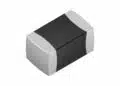
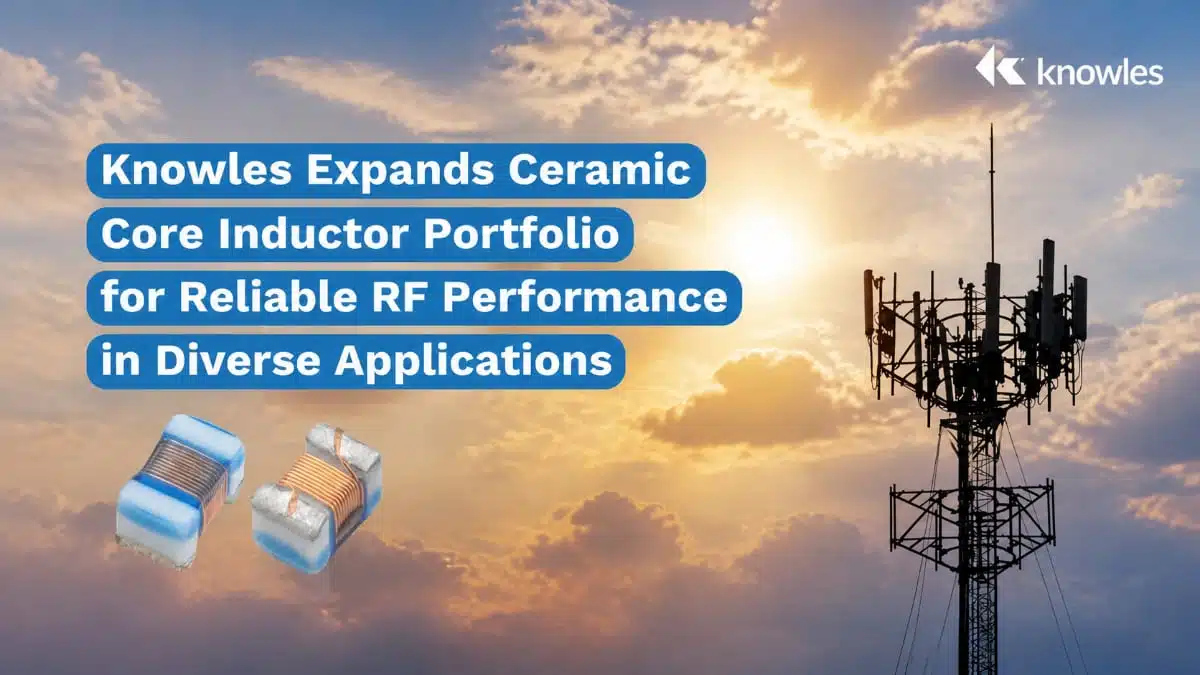
Knowles Precision Devices has expanded its ceramic core inductor portfolio to address a wider range of RF and microwave designs that need stable inductance and predictable RF behavior without the overhead of fully custom parts.

The updated Knowles Precision Devices ceramic core RF inductor range targets standard commercial, industrial, telecom, and medical applications where engineers are looking for dependable RF performance, consistent manufacturability, and acceptable cost profiles.

RelatedPosts

Knowles Releases 3825 X1/Y2 Safety MLCCs for High‑Voltage Applications

Knowles Expands High Q Ceramic Core Inductors

Knowles Doubles Capacitance of its Class I Ceramic C0G Capacitors

Key features and benefits

Knowles’ ceramic core RF inductors are positioned as general‑purpose high‑Q components for signal‑path use rather than niche, high‑power or magnetics‑intensive roles. For many projects this offers a useful compromise between RF performance, supply continuity, and budget.

  • Stable inductance across RF bands – Ceramic cores provide relatively constant inductance over frequency and temperature compared with many organic‑core or wound solutions, which helps maintain filter responses and matching conditions over operating life.
  • High Q and controlled SRF – The series is designed for high quality factor and well‑defined self‑resonant frequency, enabling low insertion loss and predictable behavior in matching networks, low‑loss filters, and oscillators.
  • Low loss for better efficiency – High Q and low dissipation in the intended bands minimize RF losses, which is particularly relevant in battery‑powered IoT, medical telemetry, and compact industrial radios where every decibel matters.
  • Standard nickel barrier terminations – Mainstream parts use nickel barrier with matte tin, compatible with automated SMT assembly and lead‑free reflow profiles according to industry practice.
  • Non‑magnetic copper termination options – For MRI and other magnetically sensitive environments, non‑magnetic terminations help avoid field distortion and image artefacts or measurement errors.
  • RoHS‑compliant ceramic construction – The inductors use ceramic cores and RoHS‑compliant terminations, with the family described as halogen‑free according to the available datasheet information.
  • Volume‑friendly pricing and logistics – Knowles highlights competitive pricing and short lead times, which will appeal to volume telecom, industrial, and medical OEMs trying to avoid long lead specialty RF parts.

For design teams that need a single qualified supplier across capacitors, filters, and inductors, the expanded inductor range also fits into the broader Knowles RF and microwave portfolio.

Typical applications

The ceramic core inductor range is aimed at mainstream RF signal conditioning tasks rather than power conversion magnetics. In these roles, consistent inductance, Q, and SRF are often more important than absolute current rating.

  • Industrial and IoT wireless systems – Matching networks and RF filters in sub‑GHz and 2.4 GHz ISM modules, proprietary radios, and sensor gateways benefit from stable inductance and low parasitics.
  • Medical imaging and instrumentation – Non‑magnetic variants are suited for MRI coils, front‑end matching networks, and other magnetically sensitive circuits where ferromagnetic content must be tightly controlled.
  • Telecom and broadband equipment – RF front‑ends in small cells, point‑to‑point microwave links, cable infrastructure, and CPE equipment use these inductors in filters, bias‑tees, and impedance matching stages.
  • Navigation and aerospace systems – RF paths in navigation receivers and related avionics benefit from stable parameters over temperature and time, supporting predictable system calibration.
  • General RF signal conditioning – Oscillators, tuned amplifiers, and resonant circuits in a wide variety of commercial and industrial designs can use a standard ceramic core series to simplify sourcing and design reuse.

In many of these applications, being able to source inductors and RF capacitors from the same vendor simplifies qualification and reduces supply‑chain variability.

Technical highlights

For detailed numbers, designers should always consult the manufacturer datasheet and simulation models for the specific inductor series and case size under consideration. The high‑Q ceramic core range provides a reasonably broad coverage of inductance values for RF designs.

Indicative electrical characteristics according to the published ceramic core inductor series data:

ParameterTypical information (per series)
Inductance rangeApproximately 12 nH up to around 10 µH according to datasheet
Core materialCeramic
Operating temperature rangeTypically from about −55 °C to +125 °C per series data
Environmental complianceRoHS‑compliant, halogen‑free according to series datasheet
PackagingTape and reel, multiple reel diameters for volume SMT

From a practical RF design perspective, three parameters tend to dominate device selection: inductance value and tolerance, quality factor over the intended band, and self‑resonant frequency. Ceramic core parts with high SRF typically introduce lower parasitic capacitance, which simplifies matching network design and improves predictability at higher frequencies.

Knowles offers both standard nickel barrier terminations and non‑magnetic copper termination options within its ceramic inductor portfolio. The non‑magnetic options are particularly relevant when inductors are located close to strong static fields or sensitive magnetic measurements, where even small ferromagnetic contributions can disturb field homogeneity.

Design‑in notes for engineers

When designing RF networks with ceramic core inductors, the underlying electrical behavior matters more than the headline inductance value on the datasheet. The following considerations can simplify first‑time‑right design and reduce debug cycles.

  • Start from operating frequency and SRF margin – Select candidate inductors with self‑resonant frequency comfortably above the highest operating frequency so that the device behaves as an inductor, not as a resonant element in band.
  • Check Q in the actual band of interest – Evaluate the quality factor at or near the intended operating frequency using the curves in the datasheet rather than relying on a single nominal test point, especially in narrowband filters and low‑noise amplifiers.
  • Account for DCR and RF current – While these inductors are not power magnetics, insertion loss and temperature rise can still be impacted by DC resistance when used in PA output matching or bias networks.
  • Consider tolerance and tuning strategy – For VCO tanks, narrow filters, or precision impedance matches, verify that available inductance tolerances and lot‑to‑lot variation can be absorbed either by capacitor trimming or by allowing some tuning margin on the line.
  • Non‑magnetic variants near strong fields – In MRI and similar equipment, specify the non‑magnetic termination version explicitly to avoid unexpected system‑level effects during integration.
  • Layout and grounding – As with any RF inductor, minimize loop area in the associated traces and provide a clean ground reference for nearby components to avoid introducing unintended coupling or detuning.
  • Verify against latest datasheet – Before freezing the design or locking production BOMs, re‑check all key parameters (inductance range, SRF, Q, DCR, temperature range, and soldering limits) against the current Knowles datasheet and models.

A practical approach is to shortlist a small set of inductance values within a single Knowles ceramic core family, build an evaluation board with alternative pad locations, and perform VNA‑based tuning to confirm that real‑world behavior matches simulation.

Source

This article is based on information from a recent Knowles Precision Devices press release and associated ceramic core inductor documentation, with additional context added for RF design engineers and component buyers.

References

  1. Knowles blog – “Knowles Expands Ceramic Core Inductor Portfolio for Reliable RF Performance in Diverse Applications”
  2. Knowles ceramic core inductor series datasheet / overview (High‑Q ceramic core inductor range)
  3. Knowles inductors and baluns – product family page
  4. Knowles A‑Series / ceramic core inductors brochure or sell sheet (via Knowles resources / info page)
  5. Knowles blog and promotional material on high‑Q ceramic core inductors
  6. DigiKey – Knowles ceramic core inductors availability page

Related

Recent Posts

Vishay Unveils 1.5 kV IHDV High Voltage Power Inductors for EV and Industrial Converters

19.6.2026
2

SCHURTER Introduces PPTC Resettable Overcurrent Protection for Compact Electronics

18.6.2026
14

TrendForce: CSP in‑house AI ASIC Boom Reshapes Capacitor Demand

18.6.2026
22

Samsung Introduces Automotive 1206 100uF X7T MLCC for Power Rails in ADAS and SoCs

17.6.2026
19

YMIN Hybrid Aluminum Capacitors for Automotive LiDAR Power Rails

17.6.2026
24

Samsung Presents Ultra‑Thin Silicon Capacitors for AI and Server PDN

17.6.2026
28

YAGEO Introduces 310VAC SMD Y2 Safety MP Capacitors for Compact EMI Filtering

16.6.2026
26

DMASS: European Components Distribution Returns To Growth In Q1 2026

16.6.2026
26

German Component Distribution Market Rebounds in Q1 2026 According to FBDi

16.6.2026
22

Upcoming Events

Jul 14
16:00 - 17:00 CEST

EMC Design Essentials: Mastering Varistors and Common Mode Chokes

Jul 21
16:00 - 17:00 CEST

Safety by design: X and Y Interference suppression capacitors for power line filters

View Calendar

Popular Posts

  • Boost Converter Design and Calculation

    0 shares
    Share 0 Tweet 0
  • Buck Converter Design and Calculation

    0 shares
    Share 0 Tweet 0
  • LLC Resonant Converter Design and Calculation

    0 shares
    Share 0 Tweet 0
  • Flyback Converter Design and Calculation

    0 shares
    Share 0 Tweet 0
  • MLCC and Ceramic Capacitors

    0 shares
    Share 0 Tweet 0
  • Earthing Systems and IEC Classification Explained

    0 shares
    Share 0 Tweet 0
  • Dual Active Bridge (DAB) Topology

    0 shares
    Share 0 Tweet 0
  • SEPIC Converter Design and Calculation

    0 shares
    Share 0 Tweet 0
  • MLCC Case Sizes Standards Explained

    0 shares
    Share 0 Tweet 0
  • What Electronics Engineer Needs to Know About Passive Low Pass Filters

    0 shares
    Share 0 Tweet 0

Newsletter Subscription


Passive Components Blog

© EPCI - Leading Passive Components Educational and Information Site

  • Home
  • Privacy Policy
  • EPCI Membership & Advertisement
  • About

No Result
View All Result
  • Home
  • Knowledge Blog
  • Dossiers
  • PCNS

© EPCI - Leading Passive Components Educational and Information Site

This website uses cookies. By continuing to use this website you are giving consent to cookies being used. Visit our Privacy and Cookie Policy.
Go to mobile version