












Passive Components Blog
No Result
View All Result
  • Home
  • NewsFilter
    • All
    • Aerospace & Defence
    • Antenna
    • Applications
    • Automotive
    • Capacitors
    • Circuit Protection Devices
    • electro-mechanical news
    • Filters
    • Fuses
    • Inductors
    • Industrial
    • Integrated Passives
    • inter-connect news
    • Market & Supply Chain
    • Market Insights
    • Medical
    • Modelling and Simulation
    • New Materials & Supply
    • New Technologies
    • Non-linear Passives
    • Oscillators
    • Passive Sensors News
    • Resistors
    • RF & Microwave
    • Telecommunication
    • Weekly Digest

    Smoltek CNF-MIM Capacitors Hit 1,000x Lower Leakage

    DigiKey Expands Line Card with 108K Stock Parts and 364 Suppliers

    Würth Elektronik Announces Partner Program

    Vishay Releases Compact 0806 Low‑DCR Power Inductor

    Murata Opens New Ceramic Capacitor Manufacturing and R&D Center in Japan

    Murata Publishes Power Delivery Guide for AI Servers

    Selecting Current Sense Transformers with Würth Elektronik REDEXPERT

    Mechanical Drift Indicator of Tantalum Capacitor Anodes Degradation under Reverse Bias

    Enabling Software‑Defined Vehicle Architectures: Automotive Ethernet and Zonal Smart Power

    Trending Tags

    • Ripple Current
    • RF
    • Leakage Current
    • Tantalum vs Ceramic
    • Snubber
    • Low ESR
    • Feedthrough
    • Derating
    • Dielectric Constant
    • New Products
    • Market Reports
  • VideoFilter
    • All
    • Antenna videos
    • Capacitor videos
    • Circuit Protection Video
    • Filter videos
    • Fuse videos
    • Inductor videos
    • Inter-Connect Video
    • Non-linear passives videos
    • Oscillator videos
    • Passive sensors videos
    • Resistor videos

    Enabling Software‑Defined Vehicle Architectures: Automotive Ethernet and Zonal Smart Power

    Calculating Resistance Value of a Flyback RC Snubber 

    One‑Pulse Characterization of Nonlinear Power Inductors

    Thermistor Linearization Challenges

    Coaxial Connectors and How to Connect with PCB

    PCB Manufacturing, Test Methods, Quality and Reliability

    Transformer Behavior – Current Transfer and Hidden Feedback

    Choosing the Right Capacitor: The Importance of Accurate Measurements

    RF Inductors: Selection and Design Challenges for High-Frequency Circuits

    Trending Tags

    • Capacitors explained
    • Inductors explained
    • Resistors explained
    • Filters explained
    • Application Video Guidelines
    • EMC
    • New Products
    • Ripple Current
    • Simulation
    • Tantalum vs Ceramic
  • Knowledge Blog
  • DossiersNew
  • Suppliers
    • Who is Who
  • PCNS
    • PCNS 2025
    • PCNS 2023
    • PCNS 2021
    • PCNS 2019
    • PCNS 2017
  • Events
  • Home
  • NewsFilter
    • All
    • Aerospace & Defence
    • Antenna
    • Applications
    • Automotive
    • Capacitors
    • Circuit Protection Devices
    • electro-mechanical news
    • Filters
    • Fuses
    • Inductors
    • Industrial
    • Integrated Passives
    • inter-connect news
    • Market & Supply Chain
    • Market Insights
    • Medical
    • Modelling and Simulation
    • New Materials & Supply
    • New Technologies
    • Non-linear Passives
    • Oscillators
    • Passive Sensors News
    • Resistors
    • RF & Microwave
    • Telecommunication
    • Weekly Digest

    Smoltek CNF-MIM Capacitors Hit 1,000x Lower Leakage

    DigiKey Expands Line Card with 108K Stock Parts and 364 Suppliers

    Würth Elektronik Announces Partner Program

    Vishay Releases Compact 0806 Low‑DCR Power Inductor

    Murata Opens New Ceramic Capacitor Manufacturing and R&D Center in Japan

    Murata Publishes Power Delivery Guide for AI Servers

    Selecting Current Sense Transformers with Würth Elektronik REDEXPERT

    Mechanical Drift Indicator of Tantalum Capacitor Anodes Degradation under Reverse Bias

    Enabling Software‑Defined Vehicle Architectures: Automotive Ethernet and Zonal Smart Power

    Trending Tags

    • Ripple Current
    • RF
    • Leakage Current
    • Tantalum vs Ceramic
    • Snubber
    • Low ESR
    • Feedthrough
    • Derating
    • Dielectric Constant
    • New Products
    • Market Reports
  • VideoFilter
    • All
    • Antenna videos
    • Capacitor videos
    • Circuit Protection Video
    • Filter videos
    • Fuse videos
    • Inductor videos
    • Inter-Connect Video
    • Non-linear passives videos
    • Oscillator videos
    • Passive sensors videos
    • Resistor videos

    Enabling Software‑Defined Vehicle Architectures: Automotive Ethernet and Zonal Smart Power

    Calculating Resistance Value of a Flyback RC Snubber 

    One‑Pulse Characterization of Nonlinear Power Inductors

    Thermistor Linearization Challenges

    Coaxial Connectors and How to Connect with PCB

    PCB Manufacturing, Test Methods, Quality and Reliability

    Transformer Behavior – Current Transfer and Hidden Feedback

    Choosing the Right Capacitor: The Importance of Accurate Measurements

    RF Inductors: Selection and Design Challenges for High-Frequency Circuits

    Trending Tags

    • Capacitors explained
    • Inductors explained
    • Resistors explained
    • Filters explained
    • Application Video Guidelines
    • EMC
    • New Products
    • Ripple Current
    • Simulation
    • Tantalum vs Ceramic
  • Knowledge Blog
  • DossiersNew
  • Suppliers
    • Who is Who
  • PCNS
    • PCNS 2025
    • PCNS 2023
    • PCNS 2021
    • PCNS 2019
    • PCNS 2017
  • Events
No Result
View All Result
Passive Components Blog
No Result
View All Result

Riedon launches new high-performance metal-clad braking resistors

29.5.2019
Reading Time: 2 mins read
A A

Source: Riedon news

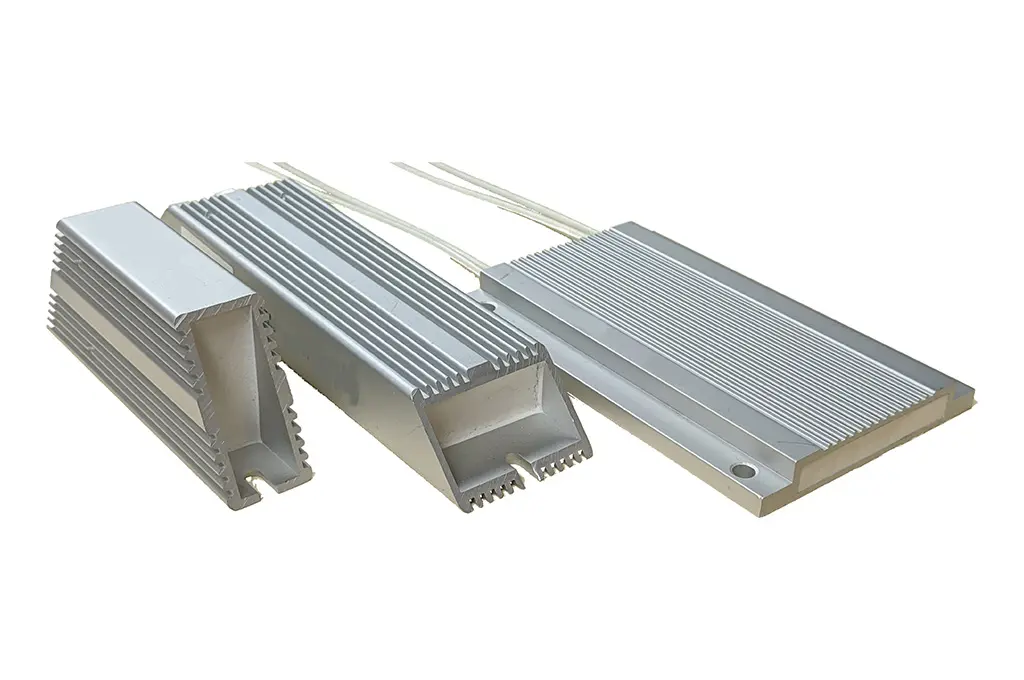
Riedon, a specialist manufacturer of cutting-edge power and precision resistors, announced an expansion to its extensive line of high-power wirewound resistors, with a new series of rugged metal-clad braking resistors that deliver high levels of performance and a reduction in the need for heatsinking.

RelatedPosts

Smoltek CNF-MIM Capacitors Hit 1,000x Lower Leakage

DigiKey Expands Line Card with 108K Stock Parts and 364 Suppliers

Würth Elektronik Announces Partner Program

The devices target a range of industrial and other commercial applications including motor drives, power conversion systems, HVAC systems and battery charging and monitoring applications. Encased in aluminum, the new BR series offers power ratings from 60 to 500 watts and is available in three different mechanical constructions. These highly durable and rugged components provide exceptional heat transfer and short-circuit performance.

They are also significantly less sensitive to heatsink requirements than a comparable TO-packaged device of a similar power rating, many of which may require a cold plate to operate at the same rated power. The BR series’ high level of performance is largely due to the use of ceramic cores rather than fiberglass: ceramic delivers benefits over fiberglass in efficiency by dealing with heat more effectively with overload and current surge events.

Although ceramic is traditionally a more expensive solution, the new series is highly competitive, thereby delivering an excellent performance/price option for industrial power designers and engineers. Available in flat (BR) or tall (BRT) series versions, other features include: a resistance range from 0.1Ω to 1kΩ; tolerances of 1%, 5% and 10%, making the series suitable for a range of applications; a withstand voltage of 2500V AC; good long-term stability with a TCR of less than ±260ppm maximum; quick-connect terminations; and an operating temperature range from –55 to +200°C. In addition, the BRS series is now available, which is an ultra-slim 12mm-high profile variant that offers power ratings from 100 to 500 watts and a resistance range from 1Ω to 5kΩ.

“This series of competitively-priced metal-clad braking resistors delivers a new and serious option for power designers working in the industrial arena”, said Phil Ebbert, Riedon’s VP of Engineering. “Integrating ceramic cores in the BR series means that new designs and systems can deal quickly and easily with heat or surge issues without the need for additional heatsinking. In addition, these devices can be customized to suit a particular application.”


Related

Recent Posts

Vishay Releases Compact 0806 Low‑DCR Power Inductor

5.2.2026
20

Murata Publishes Power Delivery Guide for AI Servers

4.2.2026
74

Calculating Resistance Value of a Flyback RC Snubber 

2.2.2026
29

CMSE 2026 Announces Call for Presentations on High-Reliability Military and Space Electronics

28.1.2026
50

ESA Call for Papers 6th Space Passive Component Days – SPCD 2026

28.1.2026
43

Binder Unveils M8 Flange Solder Connectors for Flexible Cabling

28.1.2026
18

Stackpole Releases AlN High‑Power Thick Film Chip Resistors

26.1.2026
36

ROHM Extends 2012 Shunt Resistors Power Rating up to 1.25 W

23.1.2026
31

Passive Components in Quantum Computing

22.1.2026
162

Upcoming Events

Feb 11
16:00 - 17:00 CET

What’s Next in Power Electronics Design

Feb 24
16:00 - 17:00 CET

Designing Qi2 Wireless Power Systems: Practical Development and EMC Optimization

Mar 3
16:00 - 17:00 CET

Cybersecurity at the Eleventh Hour – from RED to CRA – Information and Discussion

View Calendar

Popular Posts

  • Buck Converter Design and Calculation

    0 shares
    Share 0 Tweet 0
  • Boost Converter Design and Calculation

    0 shares
    Share 0 Tweet 0
  • LLC Resonant Converter Design and Calculation

    0 shares
    Share 0 Tweet 0
  • Flyback Converter Design and Calculation

    0 shares
    Share 0 Tweet 0
  • Ripple Current and its Effects on the Performance of Capacitors

    3 shares
    Share 3 Tweet 0
  • MLCC and Ceramic Capacitors

    0 shares
    Share 0 Tweet 0
  • Dual Active Bridge (DAB) Topology

    0 shares
    Share 0 Tweet 0
  • How Metal Prices Are Driving Passive Component Price Hikes

    0 shares
    Share 0 Tweet 0
  • What is a Dielectric Constant and DF of Plastic Materials?

    4 shares
    Share 4 Tweet 0
  • MLCC Case Sizes Standards Explained

    0 shares
    Share 0 Tweet 0

Newsletter Subscription


Passive Components Blog

© EPCI - Leading Passive Components Educational and Information Site

  • Home
  • Privacy Policy
  • EPCI Membership & Advertisement
  • About

No Result
View All Result
  • Home
  • Knowledge Blog
  • PCNS

© EPCI - Leading Passive Components Educational and Information Site

This website uses cookies. By continuing to use this website you are giving consent to cookies being used. Visit our Privacy and Cookie Policy.
Go to mobile version