





Passive Components Blog
No Result
View All Result
  • Home
  • NewsFilter
    • All
    • Aerospace & Defence
    • Antenna
    • Applications
    • Automotive
    • Capacitors
    • Circuit Protection Devices
    • electro-mechanical news
    • Filters
    • Fuses
    • Inductors
    • Industrial
    • Integrated Passives
    • inter-connect news
    • Market & Supply Chain
    • Market Insights
    • Medical
    • Modelling and Simulation
    • New Materials & Supply
    • New Technologies
    • Non-linear Passives
    • Oscillators
    • Passive Sensors News
    • Resistors
    • RF & Microwave
    • Telecommunication
    • Weekly Digest

    Bourns Introduced High-Current Coupled Inductor for 48 V Hybrid and IBC Converters

    Würth Elektronik Expands Nanocrystalline Cable Cores for Broadband EMI Suppression

    High‑Speed Supercapacitor Balancing for AI Data Center Power Systems

    Bourns Introduced Automotive TVS Diodes for Compact ESD Protection

    EMC‑Compliant PCB and Connector Design Guidelines

    Practical Value of Structural Diagnostics for Tantalum Capacitor Anodes

    Hall-Effect Sensing for Harsh Environments: TT Electronics Selected in NASA’s Dragonfly Fan

    Bourns Releases Automotive Gate Driver Transformer for Isolated Power

    Stackpole Releases High-Frequency Thin Film Chip Resistors for RF up to 50 GHz

    Trending Tags

    • Ripple Current
    • RF
    • Leakage Current
    • Tantalum vs Ceramic
    • Snubber
    • Low ESR
    • Feedthrough
    • Derating
    • Dielectric Constant
    • New Products
    • Market Reports
  • VideoFilter
    • All
    • Antenna videos
    • Capacitor videos
    • Circuit Protection Video
    • Filter videos
    • Fuse videos
    • Inductor videos
    • Inter-Connect Video
    • Non-linear passives videos
    • Oscillator videos
    • Passive sensors videos
    • Resistor videos

    EMC‑Compliant PCB and Connector Design Guidelines

    Why Isolated DC/DC Power Supplies Fail Late, Würth Elektronik Podcast

    Designing 800 V DC EMC Filters: Calculation, Simulation and Measurement

    Current Sense Transformer Datasheet and Design‑in Guide

    Designing a USB Type‑C Flyback Planar Transformer with Frenetic’s Planar Tool

    Magnetics Design in High‑Frequency GaN Converters

    Qi2 Wireless Charging: Inductors, Capacitors and EMC Filters

    Two‑capacitor paradox explained for engineers

    Capacitances of Nonlinear MLCCs: What Datasheets Don’t Tell You

    Trending Tags

    • Capacitors explained
    • Inductors explained
    • Resistors explained
    • Filters explained
    • Application Video Guidelines
    • EMC
    • New Products
    • Ripple Current
    • Simulation
    • Tantalum vs Ceramic
  • Knowledge Blog
  • DossiersNew
  • Suppliers
    • Who is Who
  • PCNS
    • PCNS 2025
    • PCNS 2023
    • PCNS 2021
    • PCNS 2019
    • PCNS 2017
  • Events
  • Home
  • NewsFilter
    • All
    • Aerospace & Defence
    • Antenna
    • Applications
    • Automotive
    • Capacitors
    • Circuit Protection Devices
    • electro-mechanical news
    • Filters
    • Fuses
    • Inductors
    • Industrial
    • Integrated Passives
    • inter-connect news
    • Market & Supply Chain
    • Market Insights
    • Medical
    • Modelling and Simulation
    • New Materials & Supply
    • New Technologies
    • Non-linear Passives
    • Oscillators
    • Passive Sensors News
    • Resistors
    • RF & Microwave
    • Telecommunication
    • Weekly Digest

    Bourns Introduced High-Current Coupled Inductor for 48 V Hybrid and IBC Converters

    Würth Elektronik Expands Nanocrystalline Cable Cores for Broadband EMI Suppression

    High‑Speed Supercapacitor Balancing for AI Data Center Power Systems

    Bourns Introduced Automotive TVS Diodes for Compact ESD Protection

    EMC‑Compliant PCB and Connector Design Guidelines

    Practical Value of Structural Diagnostics for Tantalum Capacitor Anodes

    Hall-Effect Sensing for Harsh Environments: TT Electronics Selected in NASA’s Dragonfly Fan

    Bourns Releases Automotive Gate Driver Transformer for Isolated Power

    Stackpole Releases High-Frequency Thin Film Chip Resistors for RF up to 50 GHz

    Trending Tags

    • Ripple Current
    • RF
    • Leakage Current
    • Tantalum vs Ceramic
    • Snubber
    • Low ESR
    • Feedthrough
    • Derating
    • Dielectric Constant
    • New Products
    • Market Reports
  • VideoFilter
    • All
    • Antenna videos
    • Capacitor videos
    • Circuit Protection Video
    • Filter videos
    • Fuse videos
    • Inductor videos
    • Inter-Connect Video
    • Non-linear passives videos
    • Oscillator videos
    • Passive sensors videos
    • Resistor videos

    EMC‑Compliant PCB and Connector Design Guidelines

    Why Isolated DC/DC Power Supplies Fail Late, Würth Elektronik Podcast

    Designing 800 V DC EMC Filters: Calculation, Simulation and Measurement

    Current Sense Transformer Datasheet and Design‑in Guide

    Designing a USB Type‑C Flyback Planar Transformer with Frenetic’s Planar Tool

    Magnetics Design in High‑Frequency GaN Converters

    Qi2 Wireless Charging: Inductors, Capacitors and EMC Filters

    Two‑capacitor paradox explained for engineers

    Capacitances of Nonlinear MLCCs: What Datasheets Don’t Tell You

    Trending Tags

    • Capacitors explained
    • Inductors explained
    • Resistors explained
    • Filters explained
    • Application Video Guidelines
    • EMC
    • New Products
    • Ripple Current
    • Simulation
    • Tantalum vs Ceramic
  • Knowledge Blog
  • DossiersNew
  • Suppliers
    • Who is Who
  • PCNS
    • PCNS 2025
    • PCNS 2023
    • PCNS 2021
    • PCNS 2019
    • PCNS 2017
  • Events
No Result
View All Result
Passive Components Blog
No Result
View All Result

Bourns Introduced High-Current Coupled Inductor for 48 V Hybrid and IBC Converters

24.6.2026
Reading Time: 6 mins read
A A

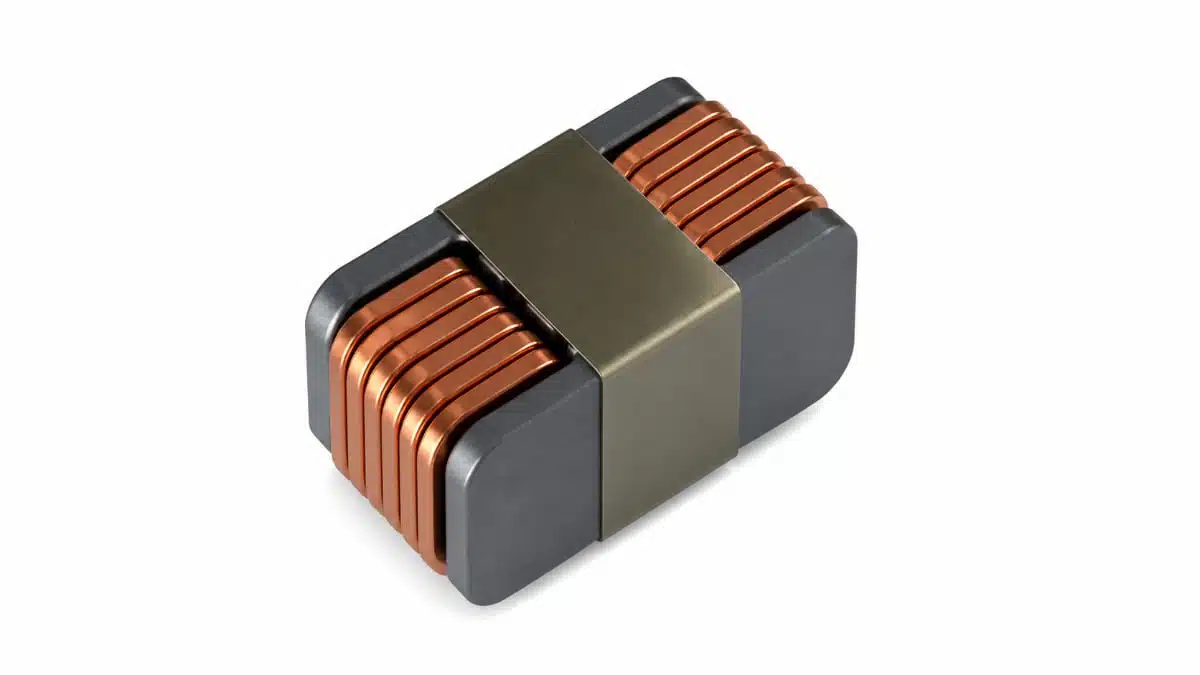
Bourns has introduced the MAG-3002562, a high-current coupled inductor optimized for 48 V to 12 V DC-DC conversion in hybrid and intermediate bus converter (IBC) architectures.

This high-current inductor targets next-generation high-frequency GaN-based power stages in data center, telecom, and high-performance computing systems where power density, efficiency, and low profile are critical.

RelatedPosts

Bourns Introduced Automotive TVS Diodes for Compact ESD Protection

Bourns Releases Automotive Gate Driver Transformer for Isolated Power

Bourns Completes Rakon Acquisition, Enters Timing Market

Key features and benefits

The MAG-3002562 is a single model, high-current coupled inductor specifically tailored for hybrid and IBC topologies operating from a 48 V input to a 12 V output. Its construction combines a low-profile magnetic stack, flat-wire winding, and low-loss ferrite core to minimize both AC and DC losses at elevated switching frequencies.

  • Optimized for 48 V to 12 V hybrid converters – suited for architectures where a coupled inductor enables multiphase or hybrid conversion stages, improving efficiency in 48 V distributed power systems.
  • High-frequency GaN-ready design – low-loss ferrite core and flat wire winding help reduce AC loss and copper loss at high switching frequencies typically used with GaN FETs.
  • High saturation capability – typical saturation current around 86 A at 25 °C and 70 A at 100 °C (30% inductance drop), enabling high current operation with thermal margin.
  • Low profile, compact footprint – height below 10 mm (9.75 mm) supports tight height constraints in quarter-brick and other low-profile power modules.
  • Low DCR and low ESR construction – typical DC resistance of 1.77 mΩ helps reduce conduction losses and improves overall converter efficiency.
  • Wide operating temperature range – specified operation from -40 °C to +125 °C for telecom and industrial environments.

In practice, this combination means designers can push higher current through a compact magnetics element without excessive temperature rise, while maintaining efficiency over a wide range of load and ambient conditions.

Typical applications

The MAG-3002562 is intended for 48 V distributed power architectures where an intermediate 12 V bus is used to feed downstream point-of-load converters. These applications increasingly rely on high-frequency GaN-based stages to reach higher power densities and reduce board area.

Typical use cases include:

  • 48 Vin – 12 Vout hybrid converters in data center racks and cloud infrastructure where hybrid topologies (e.g., series resonant plus synchronous rectification with coupled inductors) are applied to optimize efficiency.
  • High-frequency GaN converters used in telecom base stations and high-performance computing power shelves, where the inductor must tolerate high ripple current and fast switching transitions.
  • Quarter-brick IBC modules that must fit into standard mechanical envelopes while delivering high current at 12 V for blade servers, networking equipment, and storage systems.

In these environments, a single coupled inductor like the MAG-3002562 can simplify magnetics design, support multiphase or interleaved structures, and help reduce the number of discrete inductors on the board.

Technical highlights

The inductor features coupled windings and specifies both main inductance and leakage inductance for the relevant pins.

Electrical parameters (summary)

ParameterTypical value / notes
ModelMAG-3002562
Main inductance @ 0 A (pins 4-1, 3-2)2.6 µH
Leakage inductance (pins 4-2, pins 1 and 3 shorted)2.71 µH
Inductance tolerance±15%
Typical saturation current (25 °C, 30% drop)86 A
Typical saturation current (100 °C, 30% drop)70 A
DC resistance (N1–N2)1.77 mΩ
Isolation (Hi-Pot test)300 VAC, 1 s, 1 mA max
Maximum height9.75 mm
Operating temperature range-40 °C to +125 °C

All values and conditions are according to the manufacturer’s release and should be confirmed against the latest datasheet for detailed design work.

In practical terms, the relatively low inductance value combined with high saturation current is typical for coupled inductors used in high-current step-down applications, where the inductor must accommodate high ripple currents yet maintain sufficient inductance over the operating range.

Design-in notes for engineers

For power design engineers and component specifiers, the following points can help when integrating the MAG-3002562 into a new or existing 48 V distributed power platform.

  • Confirm inductance and leakage requirements
    • Make sure the 2.6 µH main inductance and specified leakage inductance align with the intended hybrid or IBC topology, particularly if the design relies on leakage inductance for resonance or current sharing.
  • Check thermal performance and derating
    • The typical saturation currents of 86 A at 25 °C and 70 A at 100 °C are specified at 30% inductance drop; for long-term reliability, consider derating current such that the inductor operates with additional headroom relative to these values.
  • Evaluate loss budget at target frequency
    • The low-loss ferrite core and flat wire construction are optimized for high-frequency operation, but designers should still perform core-loss and copper-loss calculations at the intended switching frequency to validate efficiency targets.
  • Mechanical integration and clearance
    • The <10 mm height (9.75 mm) is advantageous for low-profile modules; ensure adequate creepage/clearance and mechanical stability for the specified 300 VAC, 1 s isolation test condition.
  • EMI and layout considerations
    • Coupled inductors can reduce loop area and help control EMI; place the MAG-3002562 close to the switching devices, use wide copper planes for current paths, and consider shielding or guard traces if the layout is particularly dense.
  • Compatibility with GaN-based stages
    • For GaN-based designs, verify that voltage overshoots and dv/dt remain within the magnetics insulation and system limits, and that the coupled inductor behaves as expected under fast transient conditions.
  • Supply chain and second-sourcing strategy
    • As this is a specific Bourns model, consider a supply chain strategy that includes stocking levels for critical power platforms and a review of potential second-source alternatives with compatible electrical and mechanical characteristics, using the MAG-3002562 data as the primary benchmark.

Because the press release is the initial announcement, detailed mechanical drawings, footprint recommendations, and additional electrical curves (such as L vs. I and temperature rise curves) should be taken from the official manufacturer datasheet once available.

Source

This article is based on information provided in the official Bourns new product release for the MAG-3002562 high-current coupled inductor, complemented by general design considerations for 48 V distributed power systems and hybrid/IBC converter architectures as typically found in data center, telecom, and high-performance computing applications.
References

  1. Bourns New Product Release – Model MAG-3002562 High-Current Coupled Inductor
  2. Bourns official website – Magnetic products overview

Related

Recent Posts

Würth Elektronik Expands Nanocrystalline Cable Cores for Broadband EMI Suppression

23.6.2026
9

Bourns Releases Automotive Gate Driver Transformer for Isolated Power

22.6.2026
20

Knowles Expands High‑Q Ceramic Core Inductors for RF designs

19.6.2026
22

Vishay Unveils 1.5 kV IHDV High Voltage Power Inductors for EV and Industrial Converters

19.6.2026
29

SCHURTER Introduces PPTC Resettable Overcurrent Protection for Compact Electronics

18.6.2026
31

Samsung Presents Ultra‑Thin Silicon Capacitors for AI and Server PDN

17.6.2026
67

YAGEO Introduces 310VAC SMD Y2 Safety MP Capacitors for Compact EMI Filtering

16.6.2026
34

DMASS: European Components Distribution Returns To Growth In Q1 2026

16.6.2026
58

German Component Distribution Market Rebounds in Q1 2026 According to FBDi

16.6.2026
39

Upcoming Events

Jun 30
17:00 - 18:00 CEST

PSMA Capacitor Committee Webinar: High Voltage Pulse Capacitors

Jul 14
16:00 - 17:00 CEST

EMC Design Essentials: Mastering Varistors and Common Mode Chokes

Jul 21
16:00 - 17:00 CEST

Safety by design: X and Y Interference suppression capacitors for power line filters

View Calendar

Popular Posts

  • Boost Converter Design and Calculation

    0 shares
    Share 0 Tweet 0
  • Buck Converter Design and Calculation

    0 shares
    Share 0 Tweet 0
  • LLC Resonant Converter Design and Calculation

    0 shares
    Share 0 Tweet 0
  • Flyback Converter Design and Calculation

    0 shares
    Share 0 Tweet 0
  • MLCC and Ceramic Capacitors

    0 shares
    Share 0 Tweet 0
  • Earthing Systems and IEC Classification Explained

    0 shares
    Share 0 Tweet 0
  • Nvidia Vera Rubin: Why One AI Rack Needs So Many More MLCC Capacitors

    0 shares
    Share 0 Tweet 0
  • Dual Active Bridge (DAB) Topology

    0 shares
    Share 0 Tweet 0
  • SEPIC Converter Design and Calculation

    0 shares
    Share 0 Tweet 0
  • MLCC Case Sizes Standards Explained

    0 shares
    Share 0 Tweet 0

Newsletter Subscription


Passive Components Blog

© EPCI - Leading Passive Components Educational and Information Site

  • Home
  • Privacy Policy
  • EPCI Membership & Advertisement
  • About

No Result
View All Result
  • Home
  • Knowledge Blog
  • Dossiers
  • PCNS

© EPCI - Leading Passive Components Educational and Information Site

This website uses cookies. By continuing to use this website you are giving consent to cookies being used. Visit our Privacy and Cookie Policy.
Go to mobile version