







Passive Components Blog
No Result
View All Result
  • Home
  • NewsFilter
    • All
    • Aerospace & Defence
    • Antenna
    • Applications
    • Automotive
    • Capacitors
    • Circuit Protection Devices
    • electro-mechanical news
    • Filters
    • Fuses
    • Inductors
    • Industrial
    • Integrated Passives
    • inter-connect news
    • Market & Supply Chain
    • Market Insights
    • Medical
    • Modelling and Simulation
    • New Materials & Supply
    • New Technologies
    • Non-linear Passives
    • Oscillators
    • Passive Sensors News
    • Resistors
    • RF & Microwave
    • Telecommunication
    • Weekly Digest

    CMSE 2026 Announces Call for Presentations on High-Reliability Military and Space Electronics

    ESA Call for Papers 6th Space Passive Component Days – SPCD 2026

    Würth Elektronik Offers Halogen‑Free EMC Gaskets for Displays and Housings

    Component Distribution Supply Chain January 2026

    Binder Unveils M8 Flange Solder Connectors for Flexible Cabling

    Power Electronics Tools for Passives and Magnetic Designs

    Modelithics Releases Component Model Library for SIMULIA CST Studio Suite

    Exxelia Publishes Micropen White Papers for Printed Electronics

    Stackpole Releases AlN High‑Power Thick Film Chip Resistors

    Trending Tags

    • Ripple Current
    • RF
    • Leakage Current
    • Tantalum vs Ceramic
    • Snubber
    • Low ESR
    • Feedthrough
    • Derating
    • Dielectric Constant
    • New Products
    • Market Reports
  • VideoFilter
    • All
    • Antenna videos
    • Capacitor videos
    • Circuit Protection Video
    • Filter videos
    • Fuse videos
    • Inductor videos
    • Inter-Connect Video
    • Non-linear passives videos
    • Oscillator videos
    • Passive sensors videos
    • Resistor videos

    One‑Pulse Characterization of Nonlinear Power Inductors

    Thermistor Linearization Challenges

    Coaxial Connectors and How to Connect with PCB

    PCB Manufacturing, Test Methods, Quality and Reliability

    Transformer Behavior – Current Transfer and Hidden Feedback

    Choosing the Right Capacitor: The Importance of Accurate Measurements

    RF Inductors: Selection and Design Challenges for High-Frequency Circuits

    Transformer Safety IEC 61558 Standard

    3-Phase EMI Filter Design, Simulation, Calculation and Test

    Trending Tags

    • Capacitors explained
    • Inductors explained
    • Resistors explained
    • Filters explained
    • Application Video Guidelines
    • EMC
    • New Products
    • Ripple Current
    • Simulation
    • Tantalum vs Ceramic
  • Knowledge Blog
  • DossiersNew
  • Suppliers
    • Who is Who
  • PCNS
    • PCNS 2025
    • PCNS 2023
    • PCNS 2021
    • PCNS 2019
    • PCNS 2017
  • Events
  • Home
  • NewsFilter
    • All
    • Aerospace & Defence
    • Antenna
    • Applications
    • Automotive
    • Capacitors
    • Circuit Protection Devices
    • electro-mechanical news
    • Filters
    • Fuses
    • Inductors
    • Industrial
    • Integrated Passives
    • inter-connect news
    • Market & Supply Chain
    • Market Insights
    • Medical
    • Modelling and Simulation
    • New Materials & Supply
    • New Technologies
    • Non-linear Passives
    • Oscillators
    • Passive Sensors News
    • Resistors
    • RF & Microwave
    • Telecommunication
    • Weekly Digest

    CMSE 2026 Announces Call for Presentations on High-Reliability Military and Space Electronics

    ESA Call for Papers 6th Space Passive Component Days – SPCD 2026

    Würth Elektronik Offers Halogen‑Free EMC Gaskets for Displays and Housings

    Component Distribution Supply Chain January 2026

    Binder Unveils M8 Flange Solder Connectors for Flexible Cabling

    Power Electronics Tools for Passives and Magnetic Designs

    Modelithics Releases Component Model Library for SIMULIA CST Studio Suite

    Exxelia Publishes Micropen White Papers for Printed Electronics

    Stackpole Releases AlN High‑Power Thick Film Chip Resistors

    Trending Tags

    • Ripple Current
    • RF
    • Leakage Current
    • Tantalum vs Ceramic
    • Snubber
    • Low ESR
    • Feedthrough
    • Derating
    • Dielectric Constant
    • New Products
    • Market Reports
  • VideoFilter
    • All
    • Antenna videos
    • Capacitor videos
    • Circuit Protection Video
    • Filter videos
    • Fuse videos
    • Inductor videos
    • Inter-Connect Video
    • Non-linear passives videos
    • Oscillator videos
    • Passive sensors videos
    • Resistor videos

    One‑Pulse Characterization of Nonlinear Power Inductors

    Thermistor Linearization Challenges

    Coaxial Connectors and How to Connect with PCB

    PCB Manufacturing, Test Methods, Quality and Reliability

    Transformer Behavior – Current Transfer and Hidden Feedback

    Choosing the Right Capacitor: The Importance of Accurate Measurements

    RF Inductors: Selection and Design Challenges for High-Frequency Circuits

    Transformer Safety IEC 61558 Standard

    3-Phase EMI Filter Design, Simulation, Calculation and Test

    Trending Tags

    • Capacitors explained
    • Inductors explained
    • Resistors explained
    • Filters explained
    • Application Video Guidelines
    • EMC
    • New Products
    • Ripple Current
    • Simulation
    • Tantalum vs Ceramic
  • Knowledge Blog
  • DossiersNew
  • Suppliers
    • Who is Who
  • PCNS
    • PCNS 2025
    • PCNS 2023
    • PCNS 2021
    • PCNS 2019
    • PCNS 2017
  • Events
No Result
View All Result
Passive Components Blog
No Result
View All Result

Skeleton and NXTech Launch a New Project for the Development of Marine Certified Ultracapacitor Modules

24.2.2021
Reading Time: 3 mins read
A A

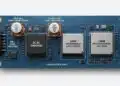
On February 18th, 2021 in a kick-off meeting opened by The Ambassador of Norway in Norway, Her Excellency Mrs. Else Berit Eikeland, and Sigrid Harjo, Member of the Management Board of Enterprise Estonia, Skeleton Technologies and its Norwegian partner NXTech officially launched a joint project aiming to develop marine-certified ultracapacitor modules with first use in active wave heave compensation systems. 

The Norwegian Ambassador did the opening speech of the meeting. It was particularly important for the teams because the project “Development of marine-certified ultracapacitor modules” has received a grant from Norway Grants. As the Ambassador explained, the cooperation between Skeleton and NXTech is critical for two key reasons: because of the goal of making marine operations more sustainable and because it strengthens bilateral relations between Estonia and Norway. As she said, “we need ambition, innovation and partnerships to be able to develop our green and sustainable society”.

RelatedPosts

CMSE 2026 Announces Call for Presentations on High-Reliability Military and Space Electronics

ESA Call for Papers 6th Space Passive Component Days – SPCD 2026

Würth Elektronik Offers Halogen‑Free EMC Gaskets for Displays and Housings

As the representative of EAS (Enterprise Estonia), Sigrid Harjo highlighted that Estonia needs to pay more attention to knowledge-intensive innovation driven by the fight against climate change and by digitalization. Norway and Estonia have already a strong history in common but international cooperation is becoming even more critical now in the context of the pandemic. The ability to develop and introduce new technologies and solutions is particularly vital for companies.

Jan Otto Reimers, CEO of NXTech, introduced the company and its highly skilled team of industry specialists. The company was established in 2008, and takes on complete multidiscipline projects with its main competence in hardware and software development. NXTech already collaborates with companies in the maritime sector such as Hydrolift, equipping fast moving boats with censors and electronics on board. John Breiland, Senior Project Engineer, also underlined that they already see a lot of interest in ultracapacitors from potential partners and customers.

From Skeleton, our VP of Innovation, Dr. Sebastian Pohlmann, introduced the company to the participants and our existing work in Active Heave Compensation (AHC) applications for the marine industry. AHC systems are used on lifting equipment to reduce the influence of waves upon offshore operations and keep a load, held by equipment on a moving vessel, motionless with regard to the seabed. The high power, high number of lifecycles, practically instant charging and discharging, high reliability, and tolerance for extreme weather conditions make ultracapacitors an ideal solution. In comparison, batteries have been used to power AHC systems, but due to their low number of cycles per lifetime, batteries have a relatively short lifetime. The use of Skeleton’s water-cooled 170V ultracapacitor module technology for AHC brings 75% energy demand reduction and offers energy regeneration during the “heave up” phase and energy consumption during the “heave down” phase as well as peak shaving capability.

The project aims at developing, certifying, and launching a marine-industry specific ultracapacitor module based on ultracapacitors with more than double the power density of the ultracapacitors already used. Doubling the power density allows to reduce the system size by 50% or lengthen the system lifetime by a factor of four.

Our programme director Egert Valmra will manage the project on Skeleton’s side. The product should be ready for series manufacturing in March 2022.

Related

Source: Skeleton Technologies

Recent Posts

CMSE 2026 Announces Call for Presentations on High-Reliability Military and Space Electronics

28.1.2026
14

ESA Call for Papers 6th Space Passive Component Days – SPCD 2026

28.1.2026
14

Binder Unveils M8 Flange Solder Connectors for Flexible Cabling

28.1.2026
11

Stackpole Releases AlN High‑Power Thick Film Chip Resistors

26.1.2026
17

Samsung Q4 2025 Results: MLCC focus for AI, Server and Automotive

26.1.2026
48

Capacitor Technology Dossier

26.1.2026
69

ROHM Extends 2012 Shunt Resistors Power Rating up to 1.25 W

23.1.2026
23

Passive Components in Quantum Computing

22.1.2026
119

Miniaturization of MLCCs and Electrolytics, KAVX Tech Chat

21.1.2026
66

Upcoming Events

Feb 24
16:00 - 17:00 CET

Designing Qi2 Wireless Power Systems: Practical Development and EMC Optimization

Mar 3
16:00 - 17:00 CET

Cybersecurity at the Eleventh Hour – from RED to CRA – Information and Discussion

Mar 21
All day

PSMA Capacitor Workshop 2026

View Calendar

Popular Posts

  • Buck Converter Design and Calculation

    0 shares
    Share 0 Tweet 0
  • Boost Converter Design and Calculation

    0 shares
    Share 0 Tweet 0
  • LLC Resonant Converter Design and Calculation

    0 shares
    Share 0 Tweet 0
  • Flyback Converter Design and Calculation

    0 shares
    Share 0 Tweet 0
  • Ripple Current and its Effects on the Performance of Capacitors

    3 shares
    Share 3 Tweet 0
  • How Metal Prices Are Driving Passive Component Price Hikes

    0 shares
    Share 0 Tweet 0
  • MLCC and Ceramic Capacitors

    0 shares
    Share 0 Tweet 0
  • Dual Active Bridge (DAB) Topology

    0 shares
    Share 0 Tweet 0
  • Degradation of Capacitors and its Failure Mechanisms

    0 shares
    Share 0 Tweet 0
  • What is a Dielectric Constant and DF of Plastic Materials?

    4 shares
    Share 4 Tweet 0

Newsletter Subscription


Passive Components Blog

© EPCI - Leading Passive Components Educational and Information Site

  • Home
  • Privacy Policy
  • EPCI Membership & Advertisement
  • About

No Result
View All Result
  • Home
  • Knowledge Blog
  • PCNS

© EPCI - Leading Passive Components Educational and Information Site

This website uses cookies. By continuing to use this website you are giving consent to cookies being used. Visit our Privacy and Cookie Policy.
Go to mobile version