












Passive Components Blog
No Result
View All Result
  • Home
  • NewsFilter
    • All
    • Aerospace & Defence
    • Antenna
    • Applications
    • Automotive
    • Capacitors
    • Circuit Protection Devices
    • electro-mechanical news
    • Filters
    • Fuses
    • Inductors
    • Industrial
    • Integrated Passives
    • inter-connect news
    • Market & Supply Chain
    • Market Insights
    • Medical
    • Modelling and Simulation
    • New Materials & Supply
    • New Technologies
    • Non-linear Passives
    • Oscillators
    • Passive Sensors News
    • Resistors
    • RF & Microwave
    • Telecommunication
    • Weekly Digest

    Samsung Unveils World First CLLC Resonant 1kV 33nF C0G MLCC in 1210 Size

    Bourns Releases 500VDC 690VAC Fuse to Protect Power Semiconductors

    Samsung MLCC Replacing Aluminum Polymer Capacitors in AI Systems

    Reliability Improvement in BaTiO3 MLCCs Using Ni–Sn and Ni–In Alloy Electrodes

    Littelfuse Introduces Automotive Current Sensors for EV Battery, Motor, and Safety Systems

    Vishay Releases Fast Acting Thin Film Chip Fuses

    Mechanical Testing of Tantalum Anodes to Predict Tantalum Capacitor Quality

    Thermistor Linearization Challenges

    Coaxial Connectors and How to Connect with PCB

    Trending Tags

    • Ripple Current
    • RF
    • Leakage Current
    • Tantalum vs Ceramic
    • Snubber
    • Low ESR
    • Feedthrough
    • Derating
    • Dielectric Constant
    • New Products
    • Market Reports
  • VideoFilter
    • All
    • Antenna videos
    • Capacitor videos
    • Circuit Protection Video
    • Filter videos
    • Fuse videos
    • Inductor videos
    • Inter-Connect Video
    • Non-linear passives videos
    • Oscillator videos
    • Passive sensors videos
    • Resistor videos

    Thermistor Linearization Challenges

    Coaxial Connectors and How to Connect with PCB

    PCB Manufacturing, Test Methods, Quality and Reliability

    Transformer Behavior – Current Transfer and Hidden Feedback

    Choosing the Right Capacitor: The Importance of Accurate Measurements

    RF Inductors: Selection and Design Challenges for High-Frequency Circuits

    Transformer Safety IEC 61558 Standard

    3-Phase EMI Filter Design, Simulation, Calculation and Test

    Transformer Design Optimization for Power Electronics Applications

    Trending Tags

    • Capacitors explained
    • Inductors explained
    • Resistors explained
    • Filters explained
    • Application Video Guidelines
    • EMC
    • New Products
    • Ripple Current
    • Simulation
    • Tantalum vs Ceramic
  • Knowledge Blog
  • Suppliers
    • Who is Who
  • PCNS
    • PCNS 2025
    • PCNS 2023
    • PCNS 2021
    • PCNS 2019
    • PCNS 2017
  • Events
  • Home
  • NewsFilter
    • All
    • Aerospace & Defence
    • Antenna
    • Applications
    • Automotive
    • Capacitors
    • Circuit Protection Devices
    • electro-mechanical news
    • Filters
    • Fuses
    • Inductors
    • Industrial
    • Integrated Passives
    • inter-connect news
    • Market & Supply Chain
    • Market Insights
    • Medical
    • Modelling and Simulation
    • New Materials & Supply
    • New Technologies
    • Non-linear Passives
    • Oscillators
    • Passive Sensors News
    • Resistors
    • RF & Microwave
    • Telecommunication
    • Weekly Digest

    Samsung Unveils World First CLLC Resonant 1kV 33nF C0G MLCC in 1210 Size

    Bourns Releases 500VDC 690VAC Fuse to Protect Power Semiconductors

    Samsung MLCC Replacing Aluminum Polymer Capacitors in AI Systems

    Reliability Improvement in BaTiO3 MLCCs Using Ni–Sn and Ni–In Alloy Electrodes

    Littelfuse Introduces Automotive Current Sensors for EV Battery, Motor, and Safety Systems

    Vishay Releases Fast Acting Thin Film Chip Fuses

    Mechanical Testing of Tantalum Anodes to Predict Tantalum Capacitor Quality

    Thermistor Linearization Challenges

    Coaxial Connectors and How to Connect with PCB

    Trending Tags

    • Ripple Current
    • RF
    • Leakage Current
    • Tantalum vs Ceramic
    • Snubber
    • Low ESR
    • Feedthrough
    • Derating
    • Dielectric Constant
    • New Products
    • Market Reports
  • VideoFilter
    • All
    • Antenna videos
    • Capacitor videos
    • Circuit Protection Video
    • Filter videos
    • Fuse videos
    • Inductor videos
    • Inter-Connect Video
    • Non-linear passives videos
    • Oscillator videos
    • Passive sensors videos
    • Resistor videos

    Thermistor Linearization Challenges

    Coaxial Connectors and How to Connect with PCB

    PCB Manufacturing, Test Methods, Quality and Reliability

    Transformer Behavior – Current Transfer and Hidden Feedback

    Choosing the Right Capacitor: The Importance of Accurate Measurements

    RF Inductors: Selection and Design Challenges for High-Frequency Circuits

    Transformer Safety IEC 61558 Standard

    3-Phase EMI Filter Design, Simulation, Calculation and Test

    Transformer Design Optimization for Power Electronics Applications

    Trending Tags

    • Capacitors explained
    • Inductors explained
    • Resistors explained
    • Filters explained
    • Application Video Guidelines
    • EMC
    • New Products
    • Ripple Current
    • Simulation
    • Tantalum vs Ceramic
  • Knowledge Blog
  • Suppliers
    • Who is Who
  • PCNS
    • PCNS 2025
    • PCNS 2023
    • PCNS 2021
    • PCNS 2019
    • PCNS 2017
  • Events
No Result
View All Result
Passive Components Blog
No Result
View All Result

Skeleton Supports Development of a Hydrogen-Paired Electric Race Car in Malaysia

21.5.2020
Reading Time: 2 mins read
A A

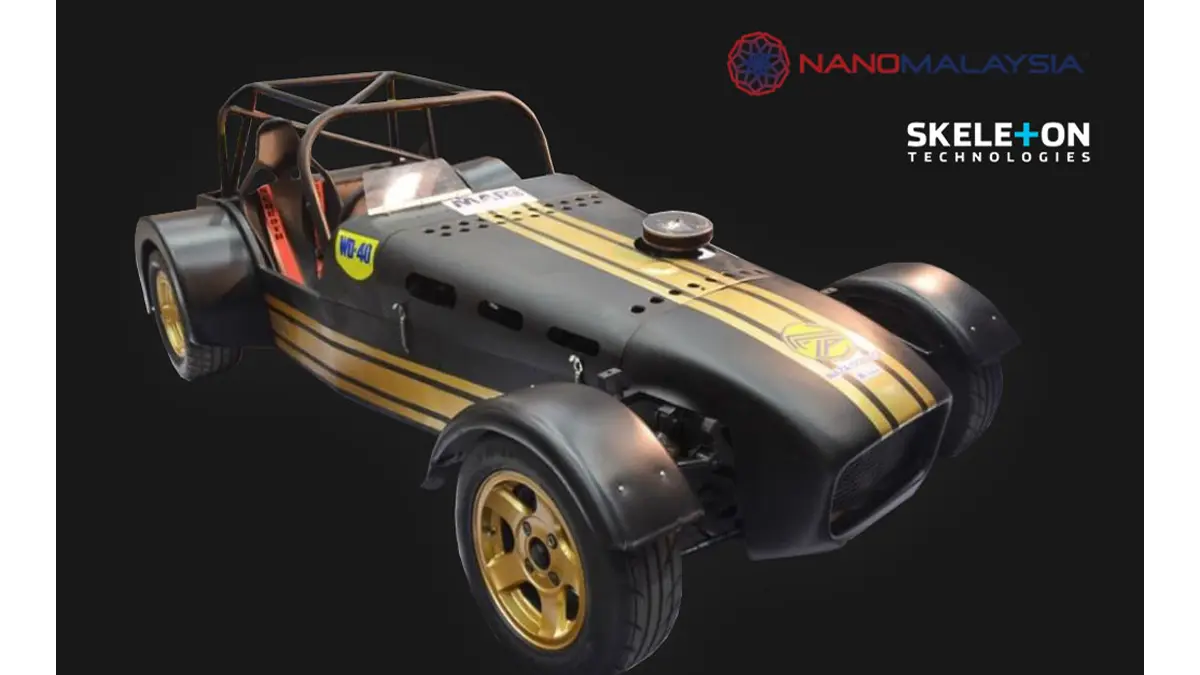
Skeleton Technologies is collaborating with NanoMalaysia, a Malaysian company specialized in nanotechnology commercialisation and industrialisation activities, to develop the first fuel cell-powered Electric Vehicle for use in the motorsports industry. The project has been developed for several months and is expected to be completed in the second half of June 2020.

The project initiated by NanoMalaysia’s Chief Executive Officer, Dr. Rezal Khairi Ahmad, focuses on renewable energy storage systems and their application for the automotive motorsports world. It aims to produce a locally developed electric motorsports vehicle called the Hydrogen-Paired Electric Racecar (HyPER).

RelatedPosts

Samsung Unveils World First CLLC Resonant 1kV 33nF C0G MLCC in 1210 Size

Bourns Releases 500VDC 690VAC Fuse to Protect Power Semiconductors

Samsung MLCC Replacing Aluminum Polymer Capacitors in AI Systems

HyPER is to be powered by NanoMalaysia’s Hydrogen and Hybrid Energy Storage System (H2SS) and this is where Skeleton’s ultracapacitors come into play. This storage system is a hybrid energy storage system with Li-Ion batteries and graphene-based ultracapacitor, and a fuel cell stack with on-board Hydrogen generation system. Using Skeleton’s ultracapacitors allows for higher power density, and lightning-fast charging compared to conventional Li-Ion based vehicles.

NanoMalaysia is using SkelMod 102V modules, which pack a lot of power in a small space. General applications are for example peak power supply, voltage stabilization, load leveling, and frequency regulation, but the module’s strength is its versatility.

Although this project is focused on the motorsports industry, it will also provide opportunities in terms of business and human capital development related to renewable energy for the automotive and transportation sectors as well as applications in other industries in Malaysia. The main issue with electric vehicles being the lack of charging infrastructure and long charging time, fuel cell electric vehicles can reduce charging time significantly, to as little time it currently takes to fill in petrol.

The technologies developed by HyPER could therefore give a huge boost to the development of the electric vehicle sector in Malaysia.


Related

Source: Skeleton

Recent Posts

Samsung Unveils World First CLLC Resonant 1kV 33nF C0G MLCC in 1210 Size

19.12.2025
9

Samsung MLCC Replacing Aluminum Polymer Capacitors in AI Systems

19.12.2025
15

Reliability Improvement in BaTiO3 MLCCs Using Ni–Sn and Ni–In Alloy Electrodes

19.12.2025
8

Littelfuse Introduces Automotive Current Sensors for EV Battery, Motor, and Safety Systems

18.12.2025
3

Mechanical Testing of Tantalum Anodes to Predict Tantalum Capacitor Quality

17.12.2025
22

Jianghai Offers Custom Bottom Cooled Screw Aluminum Capacitors

17.12.2025
36

TDK Unveils Vibration-Resistant Hybrid Polymer Aluminum Capacitors

15.12.2025
22

Isabellenhütte Releases Automotive Pulse Load Resistors

11.12.2025
38

Vishay Releases Automotive Glass Protected 0402 NTC Thermistor

11.12.2025
15

Upcoming Events

Jan 27
16:00 - 17:00 CET

Simplifying Vehicle Development with Automotive Ethernet and Zonal Smart Switch Technologies

Feb 24
16:00 - 17:00 CET

Designing Qi2 Wireless Power Systems: Practical Development and EMC Optimization

View Calendar

Popular Posts

  • Buck Converter Design and Calculation

    0 shares
    Share 0 Tweet 0
  • Boost Converter Design and Calculation

    0 shares
    Share 0 Tweet 0
  • LLC Resonant Converter Design and Calculation

    0 shares
    Share 0 Tweet 0
  • Flyback Converter Design and Calculation

    0 shares
    Share 0 Tweet 0
  • What Electronics Engineer Needs to Know About Passive Low Pass Filters

    0 shares
    Share 0 Tweet 0
  • Dual Active Bridge (DAB) Topology

    0 shares
    Share 0 Tweet 0
  • Ripple Current and its Effects on the Performance of Capacitors

    3 shares
    Share 3 Tweet 0
  • What is a Dielectric Constant and DF of Plastic Materials?

    4 shares
    Share 4 Tweet 0
  • MLCC and Ceramic Capacitors

    0 shares
    Share 0 Tweet 0
  • SEPIC Converter Design and Calculation

    0 shares
    Share 0 Tweet 0

Newsletter Subscription


Passive Components Blog

© EPCI - Leading Passive Components Educational and Information Site

  • Home
  • Privacy Policy
  • EPCI Membership & Advertisement
  • About

No Result
View All Result
  • Home
  • Knowledge Blog
  • PCNS

© EPCI - Leading Passive Components Educational and Information Site

This website uses cookies. By continuing to use this website you are giving consent to cookies being used. Visit our Privacy and Cookie Policy.
Go to mobile version