









Passive Components Blog
No Result
View All Result
  • Home
  • NewsFilter
    • All
    • Aerospace & Defence
    • Antenna
    • Applications
    • Automotive
    • Capacitors
    • Circuit Protection Devices
    • electro-mechanical news
    • Filters
    • Fuses
    • Inductors
    • Industrial
    • Integrated Passives
    • inter-connect news
    • Market & Supply Chain
    • Market Insights
    • Medical
    • Modelling and Simulation
    • New Materials & Supply
    • New Technologies
    • Non-linear Passives
    • Oscillators
    • Passive Sensors News
    • Resistors
    • RF & Microwave
    • Telecommunication
    • Weekly Digest

    Bourns BTJ Thermal Jumper Chips for PCB Heat Management

    One‑Pulse Characterization of Nonlinear Power Inductors

    Wk 51 Electronics Supply Chain Digest

    Samsung Unveils World First CLLC Resonant 1kV 33nF C0G MLCC in 1210 Size

    Bourns Releases 500VDC 690VAC Fuse to Protect Power Semiconductors

    Samsung MLCC Replacing Aluminum Polymer Capacitors in AI Systems

    Reliability Improvement in BaTiO3 MLCCs Using Ni–Sn and Ni–In Alloy Electrodes

    Littelfuse Introduces Automotive Current Sensors for EV Battery, Motor, and Safety Systems

    Vishay Releases Fast Acting Thin Film Chip Fuses

    Trending Tags

    • Ripple Current
    • RF
    • Leakage Current
    • Tantalum vs Ceramic
    • Snubber
    • Low ESR
    • Feedthrough
    • Derating
    • Dielectric Constant
    • New Products
    • Market Reports
  • VideoFilter
    • All
    • Antenna videos
    • Capacitor videos
    • Circuit Protection Video
    • Filter videos
    • Fuse videos
    • Inductor videos
    • Inter-Connect Video
    • Non-linear passives videos
    • Oscillator videos
    • Passive sensors videos
    • Resistor videos

    One‑Pulse Characterization of Nonlinear Power Inductors

    Thermistor Linearization Challenges

    Coaxial Connectors and How to Connect with PCB

    PCB Manufacturing, Test Methods, Quality and Reliability

    Transformer Behavior – Current Transfer and Hidden Feedback

    Choosing the Right Capacitor: The Importance of Accurate Measurements

    RF Inductors: Selection and Design Challenges for High-Frequency Circuits

    Transformer Safety IEC 61558 Standard

    3-Phase EMI Filter Design, Simulation, Calculation and Test

    Trending Tags

    • Capacitors explained
    • Inductors explained
    • Resistors explained
    • Filters explained
    • Application Video Guidelines
    • EMC
    • New Products
    • Ripple Current
    • Simulation
    • Tantalum vs Ceramic
  • Knowledge Blog
  • Suppliers
    • Who is Who
  • PCNS
    • PCNS 2025
    • PCNS 2023
    • PCNS 2021
    • PCNS 2019
    • PCNS 2017
  • Events
  • Home
  • NewsFilter
    • All
    • Aerospace & Defence
    • Antenna
    • Applications
    • Automotive
    • Capacitors
    • Circuit Protection Devices
    • electro-mechanical news
    • Filters
    • Fuses
    • Inductors
    • Industrial
    • Integrated Passives
    • inter-connect news
    • Market & Supply Chain
    • Market Insights
    • Medical
    • Modelling and Simulation
    • New Materials & Supply
    • New Technologies
    • Non-linear Passives
    • Oscillators
    • Passive Sensors News
    • Resistors
    • RF & Microwave
    • Telecommunication
    • Weekly Digest

    Bourns BTJ Thermal Jumper Chips for PCB Heat Management

    One‑Pulse Characterization of Nonlinear Power Inductors

    Wk 51 Electronics Supply Chain Digest

    Samsung Unveils World First CLLC Resonant 1kV 33nF C0G MLCC in 1210 Size

    Bourns Releases 500VDC 690VAC Fuse to Protect Power Semiconductors

    Samsung MLCC Replacing Aluminum Polymer Capacitors in AI Systems

    Reliability Improvement in BaTiO3 MLCCs Using Ni–Sn and Ni–In Alloy Electrodes

    Littelfuse Introduces Automotive Current Sensors for EV Battery, Motor, and Safety Systems

    Vishay Releases Fast Acting Thin Film Chip Fuses

    Trending Tags

    • Ripple Current
    • RF
    • Leakage Current
    • Tantalum vs Ceramic
    • Snubber
    • Low ESR
    • Feedthrough
    • Derating
    • Dielectric Constant
    • New Products
    • Market Reports
  • VideoFilter
    • All
    • Antenna videos
    • Capacitor videos
    • Circuit Protection Video
    • Filter videos
    • Fuse videos
    • Inductor videos
    • Inter-Connect Video
    • Non-linear passives videos
    • Oscillator videos
    • Passive sensors videos
    • Resistor videos

    One‑Pulse Characterization of Nonlinear Power Inductors

    Thermistor Linearization Challenges

    Coaxial Connectors and How to Connect with PCB

    PCB Manufacturing, Test Methods, Quality and Reliability

    Transformer Behavior – Current Transfer and Hidden Feedback

    Choosing the Right Capacitor: The Importance of Accurate Measurements

    RF Inductors: Selection and Design Challenges for High-Frequency Circuits

    Transformer Safety IEC 61558 Standard

    3-Phase EMI Filter Design, Simulation, Calculation and Test

    Trending Tags

    • Capacitors explained
    • Inductors explained
    • Resistors explained
    • Filters explained
    • Application Video Guidelines
    • EMC
    • New Products
    • Ripple Current
    • Simulation
    • Tantalum vs Ceramic
  • Knowledge Blog
  • Suppliers
    • Who is Who
  • PCNS
    • PCNS 2025
    • PCNS 2023
    • PCNS 2021
    • PCNS 2019
    • PCNS 2017
  • Events
No Result
View All Result
Passive Components Blog
No Result
View All Result

SLC or MLCC Ceramic Capacitor: When it Fits Better ?

10.2.2022
Reading Time: 3 mins read
A A
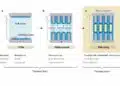
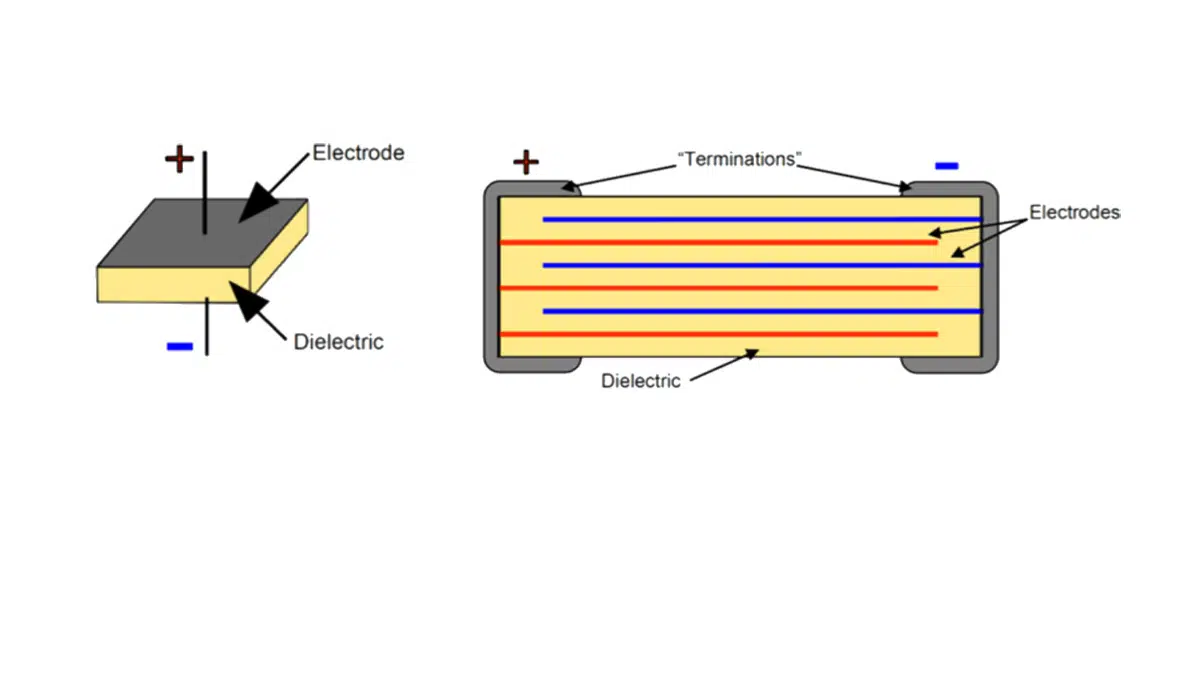
The illustration on the left shows how an SLC is built while the illustration on the right shows the many layers of an MLCC. source: Knowles Precision Devices

The illustration on the left shows how an SLC is built while the illustration on the right shows the many layers of an MLCC. source: Knowles Precision Devices

SLCs vs. MLCCs – when such ceramic capacitor construction type fits better to my application? Knowledge Precision Devices blog posted by Victor Lu highlights specific benefits of these individual types.

At a high-level, these capacitor types seem similar as both SLCs and MLCCs can be used for charging and storing, filtering, or bypass functions in a circuit. To determine which one is the best fit for your application, let’s first look at the basic structure of each capacitor type. SLCs are the most basic capacitor type available since these capacitors consist of a single layer of dielectric material, or insulating layer, sandwiched between a positive and a negative electrode.

RelatedPosts

Knowles Doubles Capacitance of its Class I Ceramic C0G Capacitors

Knowles Releases High Q Non-Magnetic X7R MLCCs for Medical Imaging

Knowles Unveils High-Performance Safety-Certified MLCC Capacitors

An MLCC uses the basic principle of this capacitor design to build multiple layers in the same capacitor, resulting in a single capacitor that provides a capacitance level that is equivalent to using multiple SLCs connected in parallel. This multi-layer design in slightly thicker (taller) than an SLC but decreases the overall footprint needed for a capacitor to achieve higher capacitance – a critical concern for many RF and microwave applications today as size, weight, and power (SWaP) are driving many design decisions. Featured image illustrates the construction of an SLC versus an MLCC.

When an SLC May Be the Best Fit

SLC’s are specifically designed for use in microwave and RF applications. This is because the inherent self-resonant frequency (SRF), which is the point where the capacitor will exhibit the least amount of impedance, of an SLC is the highest of any discrete lumped constant capacitor. Capacitors with a high SRF have low equivalent series resistance (ESR), which is the internal resistance in the capacitor that appears in series with the capacitance of the device.

This is important because, in general, ESR increases as frequency increases, so using a capacitor that has inherently low ESR is necessary. Additionally, since SLCs are formed monolithically, the number of mechanical parts in the SLC is limited, which also contributes to a lower ESR value.

One potential drawback of SLCs is that since it is just a single layer of material, capacitance is heavily dependent on the dielectric constant of the dielectric used, which limits the capacitance that can be achieved. Therefore, SLCs are mainly ideal for high-frequency, low-capacitance applications.

When an MLCC May Be the Best Fit

In general, MLCC’s can be used in a variety of applications since these capacitors have a much higher capacitance range than that of SLCs. This is possible because MLCCs are made with multiple layers of dielectric and conductors. In addition to offering higher capacitance, this design means MLCCs can be used for much higher voltage applications, up to 12 kV for some of our designs. However, since multiple layers of electrodes and dielectric are used, the ESR of an MLCC is usually much higher than that of an SLC. As a result, MLCC’s, even those made with high Q (ultra-low loss) Class 1 dielectrics, can only handle frequencies up to 30 GHz because of the high ESR values relative to SLCs, while SLCs can handle frequencies up to 100 GHz.

When it comes to RF and microwave applications, MLCCs are ideal for applications that require higher capacitance levels and higher operating voltages. However, when looking at applications beyond the RF and microwave industry, MLCCs, especially those taking advantage of a variety of our MLCC innovations, can be used for some of the world’s most demanding applications, including medical implantables, electric vehicles, and high-reliability detonation devices. 

As shown in this post, the uses cases for SLCs and MLCCs are not interchangeable since each capacitor type handles variables such as voltage, frequency, and capacitance differently. In general, SLCs are well-suited for high-frequency, low-voltage RF and microwave applications, while MLCCs can be used for all types of high-capacitance, high-voltage applications within a much more limited frequency range. 
Related

Source: Knowles Precision Devices Blog

Recent Posts

One‑Pulse Characterization of Nonlinear Power Inductors

22.12.2025
17

Reliability Improvement in BaTiO3 MLCCs Using Ni–Sn and Ni–In Alloy Electrodes

19.12.2025
27

Mechanical Testing of Tantalum Anodes to Predict Tantalum Capacitor Quality

17.12.2025
32

Thermistor Linearization Challenges

17.12.2025
18

Coaxial Connectors and How to Connect with PCB

17.12.2025
46

PCB Manufacturing, Test Methods, Quality and Reliability

17.12.2025
47

Transformer Behavior – Current Transfer and Hidden Feedback

12.12.2025
34

Current Sense Transformer and its Calculation

10.12.2025
73

Digital Twin of a Tantalum Capacitor Anode: From Powder to Formation

8.12.2025
65

Upcoming Events

Jan 27
16:00 - 17:00 CET

Simplifying Vehicle Development with Automotive Ethernet and Zonal Smart Switch Technologies

Feb 24
16:00 - 17:00 CET

Designing Qi2 Wireless Power Systems: Practical Development and EMC Optimization

View Calendar

Popular Posts

  • Buck Converter Design and Calculation

    0 shares
    Share 0 Tweet 0
  • Boost Converter Design and Calculation

    0 shares
    Share 0 Tweet 0
  • LLC Resonant Converter Design and Calculation

    0 shares
    Share 0 Tweet 0
  • Flyback Converter Design and Calculation

    0 shares
    Share 0 Tweet 0
  • What Electronics Engineer Needs to Know About Passive Low Pass Filters

    0 shares
    Share 0 Tweet 0
  • Dual Active Bridge (DAB) Topology

    0 shares
    Share 0 Tweet 0
  • Ripple Current and its Effects on the Performance of Capacitors

    3 shares
    Share 3 Tweet 0
  • MLCC and Ceramic Capacitors

    0 shares
    Share 0 Tweet 0
  • What is a Dielectric Constant and DF of Plastic Materials?

    4 shares
    Share 4 Tweet 0
  • SEPIC Converter Design and Calculation

    0 shares
    Share 0 Tweet 0

Newsletter Subscription


Passive Components Blog

© EPCI - Leading Passive Components Educational and Information Site

  • Home
  • Privacy Policy
  • EPCI Membership & Advertisement
  • About

No Result
View All Result
  • Home
  • Knowledge Blog
  • PCNS

© EPCI - Leading Passive Components Educational and Information Site

This website uses cookies. By continuing to use this website you are giving consent to cookies being used. Visit our Privacy and Cookie Policy.
Go to mobile version