











Passive Components Blog
No Result
View All Result
  • Home
  • NewsFilter
    • All
    • Aerospace & Defence
    • Antenna
    • Applications
    • Automotive
    • Capacitors
    • Circuit Protection Devices
    • electro-mechanical news
    • Filters
    • Fuses
    • Inductors
    • Industrial
    • Integrated Passives
    • inter-connect news
    • Market & Supply Chain
    • Market Insights
    • Medical
    • Modelling and Simulation
    • New Materials & Supply
    • New Technologies
    • Non-linear Passives
    • Oscillators
    • Passive Sensors News
    • Resistors
    • RF & Microwave
    • Telecommunication
    • Weekly Digest

    Mechanical Drift Indicator of Tantalum Capacitor Anodes Degradation under Reverse Bias

    Enabling Software‑Defined Vehicle Architectures: Automotive Ethernet and Zonal Smart Power

    Calculating Resistance Value of a Flyback RC Snubber 

    Wk 5 Electronics Supply Chain Digest

    Top 10 Connector Vendors by Product Type

    Bourns Releases High‑Q Air Coil Inductors for RF Aplications

    CMSE 2026 Announces Call for Presentations on High-Reliability Military and Space Electronics

    ESA Call for Papers 6th Space Passive Component Days – SPCD 2026

    Würth Elektronik Offers Halogen‑Free EMC Gaskets for Displays and Housings

    Trending Tags

    • Ripple Current
    • RF
    • Leakage Current
    • Tantalum vs Ceramic
    • Snubber
    • Low ESR
    • Feedthrough
    • Derating
    • Dielectric Constant
    • New Products
    • Market Reports
  • VideoFilter
    • All
    • Antenna videos
    • Capacitor videos
    • Circuit Protection Video
    • Filter videos
    • Fuse videos
    • Inductor videos
    • Inter-Connect Video
    • Non-linear passives videos
    • Oscillator videos
    • Passive sensors videos
    • Resistor videos

    Enabling Software‑Defined Vehicle Architectures: Automotive Ethernet and Zonal Smart Power

    Calculating Resistance Value of a Flyback RC Snubber 

    One‑Pulse Characterization of Nonlinear Power Inductors

    Thermistor Linearization Challenges

    Coaxial Connectors and How to Connect with PCB

    PCB Manufacturing, Test Methods, Quality and Reliability

    Transformer Behavior – Current Transfer and Hidden Feedback

    Choosing the Right Capacitor: The Importance of Accurate Measurements

    RF Inductors: Selection and Design Challenges for High-Frequency Circuits

    Trending Tags

    • Capacitors explained
    • Inductors explained
    • Resistors explained
    • Filters explained
    • Application Video Guidelines
    • EMC
    • New Products
    • Ripple Current
    • Simulation
    • Tantalum vs Ceramic
  • Knowledge Blog
  • DossiersNew
  • Suppliers
    • Who is Who
  • PCNS
    • PCNS 2025
    • PCNS 2023
    • PCNS 2021
    • PCNS 2019
    • PCNS 2017
  • Events
  • Home
  • NewsFilter
    • All
    • Aerospace & Defence
    • Antenna
    • Applications
    • Automotive
    • Capacitors
    • Circuit Protection Devices
    • electro-mechanical news
    • Filters
    • Fuses
    • Inductors
    • Industrial
    • Integrated Passives
    • inter-connect news
    • Market & Supply Chain
    • Market Insights
    • Medical
    • Modelling and Simulation
    • New Materials & Supply
    • New Technologies
    • Non-linear Passives
    • Oscillators
    • Passive Sensors News
    • Resistors
    • RF & Microwave
    • Telecommunication
    • Weekly Digest

    Mechanical Drift Indicator of Tantalum Capacitor Anodes Degradation under Reverse Bias

    Enabling Software‑Defined Vehicle Architectures: Automotive Ethernet and Zonal Smart Power

    Calculating Resistance Value of a Flyback RC Snubber 

    Wk 5 Electronics Supply Chain Digest

    Top 10 Connector Vendors by Product Type

    Bourns Releases High‑Q Air Coil Inductors for RF Aplications

    CMSE 2026 Announces Call for Presentations on High-Reliability Military and Space Electronics

    ESA Call for Papers 6th Space Passive Component Days – SPCD 2026

    Würth Elektronik Offers Halogen‑Free EMC Gaskets for Displays and Housings

    Trending Tags

    • Ripple Current
    • RF
    • Leakage Current
    • Tantalum vs Ceramic
    • Snubber
    • Low ESR
    • Feedthrough
    • Derating
    • Dielectric Constant
    • New Products
    • Market Reports
  • VideoFilter
    • All
    • Antenna videos
    • Capacitor videos
    • Circuit Protection Video
    • Filter videos
    • Fuse videos
    • Inductor videos
    • Inter-Connect Video
    • Non-linear passives videos
    • Oscillator videos
    • Passive sensors videos
    • Resistor videos

    Enabling Software‑Defined Vehicle Architectures: Automotive Ethernet and Zonal Smart Power

    Calculating Resistance Value of a Flyback RC Snubber 

    One‑Pulse Characterization of Nonlinear Power Inductors

    Thermistor Linearization Challenges

    Coaxial Connectors and How to Connect with PCB

    PCB Manufacturing, Test Methods, Quality and Reliability

    Transformer Behavior – Current Transfer and Hidden Feedback

    Choosing the Right Capacitor: The Importance of Accurate Measurements

    RF Inductors: Selection and Design Challenges for High-Frequency Circuits

    Trending Tags

    • Capacitors explained
    • Inductors explained
    • Resistors explained
    • Filters explained
    • Application Video Guidelines
    • EMC
    • New Products
    • Ripple Current
    • Simulation
    • Tantalum vs Ceramic
  • Knowledge Blog
  • DossiersNew
  • Suppliers
    • Who is Who
  • PCNS
    • PCNS 2025
    • PCNS 2023
    • PCNS 2021
    • PCNS 2019
    • PCNS 2017
  • Events
No Result
View All Result
Passive Components Blog
No Result
View All Result

VinaTech Supercapacitors: Enhancing Smart Meter Reliability and Efficiency

17.6.2025
Reading Time: 4 mins read
A A

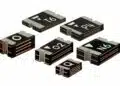
VINATech in this article explains the role of supercapacitors in improving the reliability and efficiency of smart meters, essential for modern energy infrastructure.

Smart meters represent a cornerstone in the evolution of modern energy infrastructure, enabling precise real-time monitoring and efficient control of electricity, gas, and water consumption.

RelatedPosts

VINATech Offers Smallest 100µF Al-Hybrid Capacitor

VINATech Supercapacitors Enhance Automotive Safety with Reliable E-Latch Emergency Power

Advancing Energy Solutions: The Technical Landscape of VINATech Supercapacitor Modules

As global efforts intensify to reduce carbon emissions and improve energy efficiency, smart meters are essential for advancing sustainable energy management. However, their performance heavily relies on robust, responsive, and durable energy storage systems.

The Challenge: Ensuring Reliable Power in Smart Metering

Smart meters must maintain operational integrity even during power interruptions or communication failures. Traditional batteries often struggle to meet the demands for rapid response, long-term stability, and resilience in harsh environmental conditions. This operational gap underscores the critical role of supercapacitors as either complementary components or alternatives to conventional batteries.

Energy Storage Requirements in Smart Meters

To guarantee data integrity and continuous functionality, smart meters require energy storage solutions capable of:

  1. Providing Backup Power During Outages
  2. Supercapacitors can deliver immediate power bursts to protect critical data, maintain communication links, and support grid stability during unexpected power losses.
  3. Supporting Long Operational Lifespan
  4. With high charge/discharge cycle capabilities, supercapacitors reduce the need for frequent replacements, thus lowering the total cost of ownership (TCO).
  5. Withstanding Environmental Variations
  6. Supercapacitors operate efficiently across a wide temperature range, minimizing performance risks and enhancing overall system safety.

Technical Benefits of Supercapacitors in Smart Meters

The inherent characteristics of supercapacitors make them highly suitable for smart metering applications:

  • Rapid Charge and Discharge Capability
  • Supercapacitors respond within milliseconds, ensuring quick power delivery for critical functions such as data logging and communication during outages.
  • High Power Density
  • They offer superior power density compared to traditional batteries, enabling compact designs without compromising performance.
  • Extended Lifespan
  • Capable of enduring over 20,000 charge/discharge cycles, supercapacitors significantly outlast conventional batteries, reducing maintenance frequency.
  • Temperature Resilience
  • Supercapacitors maintain performance from -25°C to +70°C, making them reliable in diverse climatic conditions.
  • Enhanced Safety
  • Their solid-state construction minimizes risks associated with leakage, thermal runaway, and fire hazards.
  • Eco-Friendly Attributes
  • Supercapacitors have lower environmental impacts due to their long service life and reduced material degradation.

Applications Beyond Smart Meters

While their benefits are exemplary in smart metering, supercapacitors are equally effective in other sectors requiring high-power, reliable energy storage solutions, including:

  • IoT Devices
  • Energy Storage Systems
  • Telecommunication Equipment
  • Automotive Electronics

Conclusion

Supercapacitors are pivotal in enhancing the reliability, efficiency, and sustainability of smart meters. Their technical superiority in rapid power delivery, longevity, safety, and environmental resilience addresses the core challenges of modern energy metering systems.

As the energy landscape continues to evolve, supercapacitors stand out as a key technology driving the future of smart energy management.

Related

Source: VinaTech

Recent Posts

Mechanical Drift Indicator of Tantalum Capacitor Anodes Degradation under Reverse Bias

3.2.2026
1

Enabling Software‑Defined Vehicle Architectures: Automotive Ethernet and Zonal Smart Power

2.2.2026
8

CMSE 2026 Announces Call for Presentations on High-Reliability Military and Space Electronics

28.1.2026
44

ESA Call for Papers 6th Space Passive Component Days – SPCD 2026

28.1.2026
35

Binder Unveils M8 Flange Solder Connectors for Flexible Cabling

28.1.2026
15

Stackpole Releases AlN High‑Power Thick Film Chip Resistors

26.1.2026
32

Samsung Q4 2025 Results: MLCC focus for AI, Server and Automotive

26.1.2026
93

Capacitor Technology Dossier

26.1.2026
126

ROHM Extends 2012 Shunt Resistors Power Rating up to 1.25 W

23.1.2026
27

Upcoming Events

Feb 24
16:00 - 17:00 CET

Designing Qi2 Wireless Power Systems: Practical Development and EMC Optimization

Mar 3
16:00 - 17:00 CET

Cybersecurity at the Eleventh Hour – from RED to CRA – Information and Discussion

Mar 21
All day

PSMA Capacitor Workshop 2026

View Calendar

Popular Posts

  • Buck Converter Design and Calculation

    0 shares
    Share 0 Tweet 0
  • Boost Converter Design and Calculation

    0 shares
    Share 0 Tweet 0
  • LLC Resonant Converter Design and Calculation

    0 shares
    Share 0 Tweet 0
  • Flyback Converter Design and Calculation

    0 shares
    Share 0 Tweet 0
  • Ripple Current and its Effects on the Performance of Capacitors

    3 shares
    Share 3 Tweet 0
  • How Metal Prices Are Driving Passive Component Price Hikes

    0 shares
    Share 0 Tweet 0
  • MLCC and Ceramic Capacitors

    0 shares
    Share 0 Tweet 0
  • Dual Active Bridge (DAB) Topology

    0 shares
    Share 0 Tweet 0
  • What is a Dielectric Constant and DF of Plastic Materials?

    4 shares
    Share 4 Tweet 0
  • Degradation of Capacitors and its Failure Mechanisms

    0 shares
    Share 0 Tweet 0

Newsletter Subscription


Passive Components Blog

© EPCI - Leading Passive Components Educational and Information Site

  • Home
  • Privacy Policy
  • EPCI Membership & Advertisement
  • About

No Result
View All Result
  • Home
  • Knowledge Blog
  • PCNS

© EPCI - Leading Passive Components Educational and Information Site

This website uses cookies. By continuing to use this website you are giving consent to cookies being used. Visit our Privacy and Cookie Policy.
Go to mobile version