







Passive Components Blog
No Result
View All Result
  • Home
  • NewsFilter
    • All
    • Aerospace & Defence
    • Antenna
    • Applications
    • Automotive
    • Capacitors
    • Circuit Protection Devices
    • electro-mechanical news
    • Filters
    • Fuses
    • Inductors
    • Industrial
    • Integrated Passives
    • inter-connect news
    • Market & Supply Chain
    • Market Insights
    • Medical
    • Modelling and Simulation
    • New Materials & Supply
    • New Technologies
    • Non-linear Passives
    • Oscillators
    • Passive Sensors News
    • Resistors
    • RF & Microwave
    • Telecommunication
    • Weekly Digest

    Binder Extends NCC Circular Connectors for Harsh Environments

    Standard vs Planar LLC transformers Comparison for Battery Chargers

    Würth Elektronik and Grinn Launch Edge AI Cooperation

    Bourns Expanded Semi-Shielded Low Profile Automotive Power Inductor

    Peak Nano to Develop Fusion Grade High Energy Film Capacitors

    Murata New Vibration Sensor Targets High‑Frequency Predictive Maintenance

    Kyocera Releases 30fs Jitter Differential Clock Oscillator

    Panasonic Expands Automotive PP Film Capacitors Voltage Range

    Panasonic Extends Automotive Power Inductor Line

    Trending Tags

    • Ripple Current
    • RF
    • Leakage Current
    • Tantalum vs Ceramic
    • Snubber
    • Low ESR
    • Feedthrough
    • Derating
    • Dielectric Constant
    • New Products
    • Market Reports
  • VideoFilter
    • All
    • Antenna videos
    • Capacitor videos
    • Circuit Protection Video
    • Filter videos
    • Fuse videos
    • Inductor videos
    • Inter-Connect Video
    • Non-linear passives videos
    • Oscillator videos
    • Passive sensors videos
    • Resistor videos

    Standard vs Planar LLC transformers Comparison for Battery Chargers

    How Modern Tools Model Magnetic Components for Power Electronics

    Advanced Loss Modeling for Planar Magnetics in the Frenetic Planar Tool

    2026 Power Magnetics Design Trends: Flyback, DAB and Planar

    Enabling Software‑Defined Vehicle Architectures: Automotive Ethernet and Zonal Smart Power

    Calculating Resistance Value of a Flyback RC Snubber 

    One‑Pulse Characterization of Nonlinear Power Inductors

    Thermistor Linearization Challenges

    Coaxial Connectors and How to Connect with PCB

    Trending Tags

    • Capacitors explained
    • Inductors explained
    • Resistors explained
    • Filters explained
    • Application Video Guidelines
    • EMC
    • New Products
    • Ripple Current
    • Simulation
    • Tantalum vs Ceramic
  • Knowledge Blog
  • DossiersNew
  • Suppliers
    • Who is Who
  • PCNS
    • PCNS 2025
    • PCNS 2023
    • PCNS 2021
    • PCNS 2019
    • PCNS 2017
  • Events
  • Home
  • NewsFilter
    • All
    • Aerospace & Defence
    • Antenna
    • Applications
    • Automotive
    • Capacitors
    • Circuit Protection Devices
    • electro-mechanical news
    • Filters
    • Fuses
    • Inductors
    • Industrial
    • Integrated Passives
    • inter-connect news
    • Market & Supply Chain
    • Market Insights
    • Medical
    • Modelling and Simulation
    • New Materials & Supply
    • New Technologies
    • Non-linear Passives
    • Oscillators
    • Passive Sensors News
    • Resistors
    • RF & Microwave
    • Telecommunication
    • Weekly Digest

    Binder Extends NCC Circular Connectors for Harsh Environments

    Standard vs Planar LLC transformers Comparison for Battery Chargers

    Würth Elektronik and Grinn Launch Edge AI Cooperation

    Bourns Expanded Semi-Shielded Low Profile Automotive Power Inductor

    Peak Nano to Develop Fusion Grade High Energy Film Capacitors

    Murata New Vibration Sensor Targets High‑Frequency Predictive Maintenance

    Kyocera Releases 30fs Jitter Differential Clock Oscillator

    Panasonic Expands Automotive PP Film Capacitors Voltage Range

    Panasonic Extends Automotive Power Inductor Line

    Trending Tags

    • Ripple Current
    • RF
    • Leakage Current
    • Tantalum vs Ceramic
    • Snubber
    • Low ESR
    • Feedthrough
    • Derating
    • Dielectric Constant
    • New Products
    • Market Reports
  • VideoFilter
    • All
    • Antenna videos
    • Capacitor videos
    • Circuit Protection Video
    • Filter videos
    • Fuse videos
    • Inductor videos
    • Inter-Connect Video
    • Non-linear passives videos
    • Oscillator videos
    • Passive sensors videos
    • Resistor videos

    Standard vs Planar LLC transformers Comparison for Battery Chargers

    How Modern Tools Model Magnetic Components for Power Electronics

    Advanced Loss Modeling for Planar Magnetics in the Frenetic Planar Tool

    2026 Power Magnetics Design Trends: Flyback, DAB and Planar

    Enabling Software‑Defined Vehicle Architectures: Automotive Ethernet and Zonal Smart Power

    Calculating Resistance Value of a Flyback RC Snubber 

    One‑Pulse Characterization of Nonlinear Power Inductors

    Thermistor Linearization Challenges

    Coaxial Connectors and How to Connect with PCB

    Trending Tags

    • Capacitors explained
    • Inductors explained
    • Resistors explained
    • Filters explained
    • Application Video Guidelines
    • EMC
    • New Products
    • Ripple Current
    • Simulation
    • Tantalum vs Ceramic
  • Knowledge Blog
  • DossiersNew
  • Suppliers
    • Who is Who
  • PCNS
    • PCNS 2025
    • PCNS 2023
    • PCNS 2021
    • PCNS 2019
    • PCNS 2017
  • Events
No Result
View All Result
Passive Components Blog
No Result
View All Result

10 Tips for Ensuring Reliability of Discrete Wire Assemblies

20.2.2025
Reading Time: 4 mins read
A A

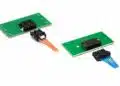
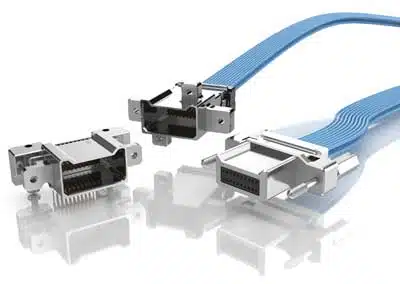
Samtec in its blog compiled ten essential tips for discrete wire assemblies. These guidelines will improve the durability and performance of discrete wire assemblies while minimizing rework and troubleshooting.

When working on reliable discrete wire assemblies, precision and attention to detail are critical to ensuring performance and longevity.

RelatedPosts

Samtec ANSI/VITA 90 Connectors: Rugged Small Form Factor Standard

Key Interconnect Technologies for 2025

Samtec Releases Rugged Multi-Port SMPM Interconnects with Threaded Coupling

Even small mistakes—such as improper cable routing or excessive force during assembly—can lead to performance issues, mechanical failures, or long-term reliability concerns. Following industry standards like IPC/WHMA-A-620 and using the right techniques can help ensure a successful, high-quality assembly.

1. Optimize Cable Length and Management

Optimize Cable Length and Management: Ensure adequate cable length for routing and movement to prevent undue strain. Avoid aggressive zip ties or routing cables around sharp edges, which can degrade insulation and impact performance.

2. Respect Minimum Bend Radius
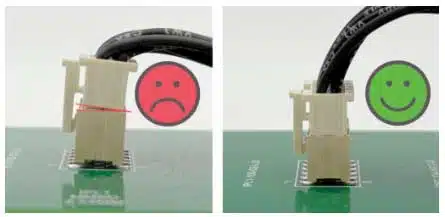
Respect Minimum Bend Radius: Follow manufacturers’ recommendations for minimum bend radius and maintain a safe distance from connectors before starting a bend. Tight bends near terminations can create mechanical stress, leading to electrical or mechanical failures.

3. Proper Handling During Modifications

Proper Handling During Modifications: Many customers purchase single-ended cables and terminate the other end themselves. However, excessive force during modifications can damage the genuine terminated end. Handle cables carefully to preserve the integrity of the factory-crimped connection.

4. Handle Retention Features with Care

Handle Retention Features with Care: Crimped contacts and terminals have small yet essential retention features that keep them secured in housings. Mishandling can damage these features, leading to poor retention and electrical failures. Always use proper techniques to insert and remove contacts without bending or breaking these retention features.

5. Use Proper Demating Techniques

Use Proper Demating Techniques: Pulling on wires to unmate connectors can damage both the wire and the contact system. Instead, use ejector shrouds or demating tools to evenly release connectors without placing stress on individual wires. If a demating tool or feature is not part of the design, then grip the plastic or metal housing while disengaging the latch.

6. Maintain System Compatibility

For optimal results, always use reliable manufacturer components and approved tooling from the same manufacturer. Mixing different brands can introduce inconsistencies in fit, performance, and long-term reliability. Just because a contact system from supplier A appears compatible with a body from supplier B doesn’t guarantee that its features will function as expected.

7. Use the Right Tools for Contact Removal

Improperly removing crimped cables from plastic housings can cause damage, leading to poor retention and future mating issues. Samtec offers specialized tools to safely remove contacts without damaging connectors. Refer to the manufacturing tooling guides, for the recommended equipment.
8. Understand Latch Strength Limitations

Plastic and metal latches are designed to secure mated connectors under normal conditions but are not intended to withstand excessive pull forces. Avoid relying solely on latches to hold connectors in high-stress applications unless otherwise specified.

9. Investigate Issues Thoroughly

If a defect occurs, manufacturers employ various root cause analysis, regression testing, continuous monitoring, and inspection techniques to identify the underlying issues. Consider factors such as tooling calibration, wire specifications, crimp measurement, lubrication, and any modifications made to the tool. Detailed documentation and images can expedite the resolution process.

10. Regularly Maintain and Inspect Tools

Crimp tools require periodic maintenance to function optimally. Ensure that tools are lubricated, calibrated, and inspected regularly to prevent inconsistencies in crimp quality. A well-maintained tool extends the lifespan of your assembly process and minimizes defects.

By adhering to these best practices, you can enhance the quality and durability of your reliable discrete wire assemblies. 
Related

Source: Samtec

Recent Posts

Binder Extends NCC Circular Connectors for Harsh Environments

13.3.2026
1

Samtec ANSI/VITA 90 Connectors: Rugged Small Form Factor Standard

5.3.2026
10

Molex Extends Cardinal Multi‑Port Coax Assemblies to 145 GHz for AI and 6G Test

25.2.2026
13

Earthing Systems and IEC Classification Explained

26.2.2026
142

Smiths Interconnect invests £2m in Costa Rica electronics plant

23.2.2026
14

Würth Elektronik Introduces Lead-Free SMT Spacers

11.2.2026
47

Top 10 Connector Vendors by Product Type

29.1.2026
131

Binder Unveils M8 Flange Solder Connectors for Flexible Cabling

28.1.2026
23

Coaxial Connectors and How to Connect with PCB

17.12.2025
351

Upcoming Events

Mar 19
13:00 - 14:00 CDT

Smart Consideration of Inductor Thermal Performance

Mar 21
All day

PSMA Capacitor Workshop 2026

Apr 21
16:00 - 17:00 CEST

Heatsink Solutions: Thermal Management in electronic devices

View Calendar

Popular Posts

  • Buck Converter Design and Calculation

    0 shares
    Share 0 Tweet 0
  • Boost Converter Design and Calculation

    0 shares
    Share 0 Tweet 0
  • Flyback Converter Design and Calculation

    0 shares
    Share 0 Tweet 0
  • LLC Resonant Converter Design and Calculation

    0 shares
    Share 0 Tweet 0
  • MLCC Manufacturers Consider Price Increase as AI Demand Outpaces Supply

    0 shares
    Share 0 Tweet 0
  • Dual Active Bridge (DAB) Topology

    0 shares
    Share 0 Tweet 0
  • Ripple Current and its Effects on the Performance of Capacitors

    3 shares
    Share 3 Tweet 0
  • MLCC and Ceramic Capacitors

    0 shares
    Share 0 Tweet 0
  • MLCC Case Sizes Standards Explained

    0 shares
    Share 0 Tweet 0
  • What is a Dielectric Constant and DF of Plastic Materials?

    4 shares
    Share 4 Tweet 0

Newsletter Subscription


Passive Components Blog

© EPCI - Leading Passive Components Educational and Information Site

  • Home
  • Privacy Policy
  • EPCI Membership & Advertisement
  • About

No Result
View All Result
  • Home
  • Knowledge Blog
  • PCNS

© EPCI - Leading Passive Components Educational and Information Site

This website uses cookies. By continuing to use this website you are giving consent to cookies being used. Visit our Privacy and Cookie Policy.
Go to mobile version