





Passive Components Blog
No Result
View All Result
  • Home
  • NewsFilter
    • All
    • Aerospace & Defence
    • Antenna
    • Applications
    • Automotive
    • Capacitors
    • Circuit Protection Devices
    • electro-mechanical news
    • Filters
    • Fuses
    • Inductors
    • Industrial
    • Integrated Passives
    • inter-connect news
    • Market & Supply Chain
    • Market Insights
    • Medical
    • Modelling and Simulation
    • New Materials & Supply
    • New Technologies
    • Non-linear Passives
    • Oscillators
    • Passive Sensors News
    • Resistors
    • RF & Microwave
    • Telecommunication
    • Weekly Digest

    Circuit Protection Technology Annual Dossier

    ESA SPCD 26 Registration Open

    Capacitances of Nonlinear MLCCs: What Datasheets Don’t Tell You

    Stackpole Releases Automotive Wide‑Termination Resistors

    How a Digital Structural Twin Can Predict Tantalum Capacitor Reliability

    SCHURTER Buys Biaodi to Boost High-Voltage Protection Portfolio

    Binder Hybrid Connector Simplifies One Cable Automation

    Tapped Inductor Buck Converter Fundamentals

    TAIYO YUDEN Releases Mini Metal Power Inductors

    Trending Tags

    • Ripple Current
    • RF
    • Leakage Current
    • Tantalum vs Ceramic
    • Snubber
    • Low ESR
    • Feedthrough
    • Derating
    • Dielectric Constant
    • New Products
    • Market Reports
  • VideoFilter
    • All
    • Antenna videos
    • Capacitor videos
    • Circuit Protection Video
    • Filter videos
    • Fuse videos
    • Inductor videos
    • Inter-Connect Video
    • Non-linear passives videos
    • Oscillator videos
    • Passive sensors videos
    • Resistor videos

    Capacitances of Nonlinear MLCCs: What Datasheets Don’t Tell You

    Tapped Inductor Buck Converter Fundamentals

    Planar vs Conventional Transformer: When it Make Sense

    Modeling Fringing Field Losses in Inductors & Transformers

    Why Power Inductors Use a Ferrite Core With an Air Gap

    Transformer-Based Power-Line Harvester Magnetic Design

    Thermal Modeling of Magnetics

    Standard vs Planar LLC transformers Comparison for Battery Chargers

    How Modern Tools Model Magnetic Components for Power Electronics

    Trending Tags

    • Capacitors explained
    • Inductors explained
    • Resistors explained
    • Filters explained
    • Application Video Guidelines
    • EMC
    • New Products
    • Ripple Current
    • Simulation
    • Tantalum vs Ceramic
  • Knowledge Blog
  • DossiersNew
  • Suppliers
    • Who is Who
  • PCNS
    • PCNS 2025
    • PCNS 2023
    • PCNS 2021
    • PCNS 2019
    • PCNS 2017
  • Events
  • Home
  • NewsFilter
    • All
    • Aerospace & Defence
    • Antenna
    • Applications
    • Automotive
    • Capacitors
    • Circuit Protection Devices
    • electro-mechanical news
    • Filters
    • Fuses
    • Inductors
    • Industrial
    • Integrated Passives
    • inter-connect news
    • Market & Supply Chain
    • Market Insights
    • Medical
    • Modelling and Simulation
    • New Materials & Supply
    • New Technologies
    • Non-linear Passives
    • Oscillators
    • Passive Sensors News
    • Resistors
    • RF & Microwave
    • Telecommunication
    • Weekly Digest

    Circuit Protection Technology Annual Dossier

    ESA SPCD 26 Registration Open

    Capacitances of Nonlinear MLCCs: What Datasheets Don’t Tell You

    Stackpole Releases Automotive Wide‑Termination Resistors

    How a Digital Structural Twin Can Predict Tantalum Capacitor Reliability

    SCHURTER Buys Biaodi to Boost High-Voltage Protection Portfolio

    Binder Hybrid Connector Simplifies One Cable Automation

    Tapped Inductor Buck Converter Fundamentals

    TAIYO YUDEN Releases Mini Metal Power Inductors

    Trending Tags

    • Ripple Current
    • RF
    • Leakage Current
    • Tantalum vs Ceramic
    • Snubber
    • Low ESR
    • Feedthrough
    • Derating
    • Dielectric Constant
    • New Products
    • Market Reports
  • VideoFilter
    • All
    • Antenna videos
    • Capacitor videos
    • Circuit Protection Video
    • Filter videos
    • Fuse videos
    • Inductor videos
    • Inter-Connect Video
    • Non-linear passives videos
    • Oscillator videos
    • Passive sensors videos
    • Resistor videos

    Capacitances of Nonlinear MLCCs: What Datasheets Don’t Tell You

    Tapped Inductor Buck Converter Fundamentals

    Planar vs Conventional Transformer: When it Make Sense

    Modeling Fringing Field Losses in Inductors & Transformers

    Why Power Inductors Use a Ferrite Core With an Air Gap

    Transformer-Based Power-Line Harvester Magnetic Design

    Thermal Modeling of Magnetics

    Standard vs Planar LLC transformers Comparison for Battery Chargers

    How Modern Tools Model Magnetic Components for Power Electronics

    Trending Tags

    • Capacitors explained
    • Inductors explained
    • Resistors explained
    • Filters explained
    • Application Video Guidelines
    • EMC
    • New Products
    • Ripple Current
    • Simulation
    • Tantalum vs Ceramic
  • Knowledge Blog
  • DossiersNew
  • Suppliers
    • Who is Who
  • PCNS
    • PCNS 2025
    • PCNS 2023
    • PCNS 2021
    • PCNS 2019
    • PCNS 2017
  • Events
No Result
View All Result
Passive Components Blog
No Result
View All Result

ECIA NA Electronic Component Sales Survey: Downturn Accelerates at the End of 2022

6.12.2022
Reading Time: 2 mins read
A A

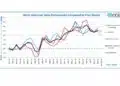
North American electronic component sales downturn accelerates at the end of 2022 according to ECIA November 2022 survey results.

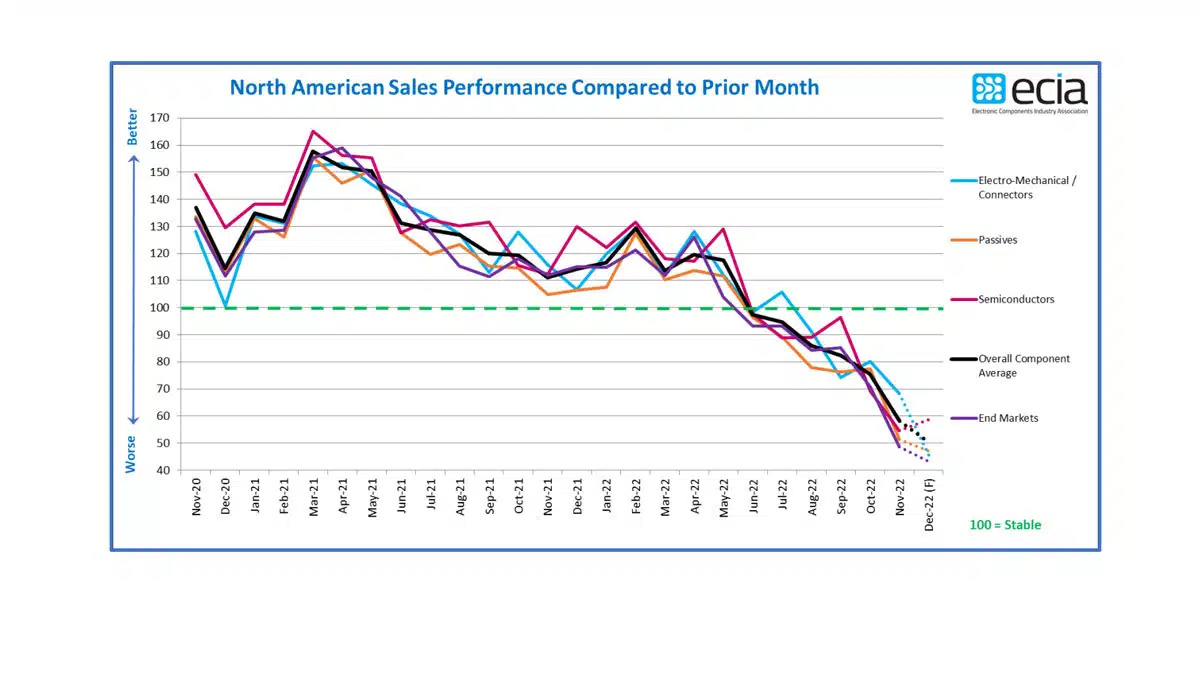
The overall electronic component average sales sentiment collapsed below the previous lowest level hit during the initial months of the pandemic shutdowns in May 2020, 2.5 years ago. The average sales sentiment fell to 58.1 in November 2022 and is projected to continue its free-fall to 50.4 in December.

RelatedPosts

ECIA March 2026 Industry Pulse Points to Best Sales Climate in Five Years

ECIA February 2026 Industry Pulse Signals Strong Component Growth

ECIA January 2026 Reports Strong Sales Confidence

By contrast, the lowest index measurement in the early stages of the pandemic was 69.4. In addition, the average electronic component index was measured below 100, indicating declining month-to-month sales, for four months during the pandemic shutdowns. The current index has come in below 100 for six months through November in the current downturn and shows no signs of improvement in December and Q1 2023.

Electro-Mechanical/Connectors and Passive Components are leading the charge down as they are projected to fall to 45.5 and 47.1 respectively in December. Semiconductors only fare marginally better at 58.8 in December. The slight rebound in Semiconductors projected for December could be a head fake as Semiconductors were projected to see a slight rebound between October and November also but then fell by 14.7 points in November.
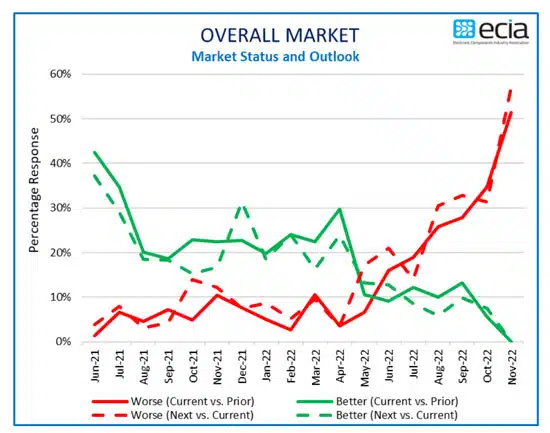
The Overall End-Market index typically tracks slightly below the component index. This trend continues into November and December with the gap widening as the End-Market index drops to 48.6 in November and 43.1 in the December outlook. The end-market pessimism is reinforced by 0% of survey respondents seeing improvement in the end-market in both November and December.

Every end market measure is strongly negative in November and worsening in December with the exception of Avionics/Military/Space. The Avionics/Military/Space market segment eeks out a slightly positive result in November but then falls negative in December. The strongest level of pessimism for Electro-Mechanical and Passive Components is reported by Distributors in November. However, Manufacturer Representatives report the strongest negative sentiment in these markets by a wide margin in December. Distributors and Manufacturers are significantly less bearish in the Semiconductor segment compared to Manufacturer Representatives and also in comparison to their assessment of Passives and Electro-Mechanical components. Bottom line, the Americas electronic components markets are in a deep period of sales declines at this point in the market cycle.

The reported product lead time trends saw a large jump in decreasing lead times as the overall percentage jumped from 28% in October to 46% in November. At the same time, those still reporting increases dropped from 11% to 2% overall in November. In Semiconductors there were no reports of increasing lead times in November. This is especially good news given the extremely extended lead times for Semiconductors. Hopefully, this will allow a rebalancing of the supply chain and an ability to manage inventory levels overall.
 

Related

Source: ECIA

Recent Posts

Circuit Protection Technology Annual Dossier

15.5.2026
17

ESA SPCD 26 Registration Open

15.5.2026
9

Capacitances of Nonlinear MLCCs: What Datasheets Don’t Tell You

14.5.2026
46

Stackpole Releases Automotive Wide‑Termination Resistors

14.5.2026
20

How a Digital Structural Twin Can Predict Tantalum Capacitor Reliability

14.5.2026
42

SCHURTER Buys Biaodi to Boost High-Voltage Protection Portfolio

14.5.2026
32

Tapped Inductor Buck Converter Fundamentals

13.5.2026
29

TAIYO YUDEN Releases Mini Metal Power Inductors

13.5.2026
32

Molecular Memristor Shows Record 145 kH Emergent Inductance

12.5.2026
35

Upcoming Events

May 19
16:00 - 17:00 CEST

Designing Qi2 Wireless Power Systems: Practical Development and EMC Optimization

Jun 2
16:00 - 17:00 CEST

Calculation, Simulation and Measurement of 800V EMC Filters

Jun 16
16:00 - 17:00 CEST

EMC with EMC – EMC‑compliant design with electromechanical connectors

View Calendar

Popular Posts

  • Buck Converter Design and Calculation

    0 shares
    Share 0 Tweet 0
  • Boost Converter Design and Calculation

    0 shares
    Share 0 Tweet 0
  • Flyback Converter Design and Calculation

    0 shares
    Share 0 Tweet 0
  • LLC Resonant Converter Design and Calculation

    0 shares
    Share 0 Tweet 0
  • MLCC and Ceramic Capacitors

    0 shares
    Share 0 Tweet 0
  • Capacitor Charging and Discharging

    0 shares
    Share 0 Tweet 0
  • What Electronics Engineer Needs to Know About Passive Low Pass Filters

    0 shares
    Share 0 Tweet 0
  • Dual Active Bridge (DAB) Topology

    0 shares
    Share 0 Tweet 0
  • Ripple Current and its Effects on the Performance of Capacitors

    3 shares
    Share 3 Tweet 0
  • Samsung Electro-Mechanics Releases High-Capacitance MLCCs for AI Server Applications

    0 shares
    Share 0 Tweet 0

Newsletter Subscription


Passive Components Blog

© EPCI - Leading Passive Components Educational and Information Site

  • Home
  • Privacy Policy
  • EPCI Membership & Advertisement
  • About

No Result
View All Result
  • Home
  • Knowledge Blog
  • PCNS

© EPCI - Leading Passive Components Educational and Information Site

This website uses cookies. By continuing to use this website you are giving consent to cookies being used. Visit our Privacy and Cookie Policy.
Go to mobile version