










Passive Components Blog
No Result
View All Result
  • Home
  • NewsFilter
    • All
    • Aerospace & Defence
    • Antenna
    • Applications
    • Automotive
    • Capacitors
    • Circuit Protection Devices
    • electro-mechanical news
    • Filters
    • Fuses
    • Inductors
    • Industrial
    • Integrated Passives
    • inter-connect news
    • Market & Supply Chain
    • Market Insights
    • Medical
    • Modelling and Simulation
    • New Materials & Supply
    • New Technologies
    • Non-linear Passives
    • Oscillators
    • Passive Sensors News
    • Resistors
    • RF & Microwave
    • Telecommunication
    • Weekly Digest

    Vishay Extends Aluminum Capacitors Rating Up to 600 V for DC Links

    Würth Elektronik Introduces Product Navigator for Passive Components

    Panasonic Passive Components for Reliable Robotic Arms

    Littelfuse Unveils Ultra-Low-Power TMR Magnetic Switches

    DC/DC Push‑Pull Converter vs PSFB Design Guide

    Wk 2 Electronics Supply Chain Digest

    Rubycon PMLCAP DC‑Link Film Capacitors in Mass Production

    Bourns SSD‑1000A AEC‑Q Digital Current Sensors

    YAGEO High‑Capacitance X7R Automotive MLCC Extensions

    Trending Tags

    • Ripple Current
    • RF
    • Leakage Current
    • Tantalum vs Ceramic
    • Snubber
    • Low ESR
    • Feedthrough
    • Derating
    • Dielectric Constant
    • New Products
    • Market Reports
  • VideoFilter
    • All
    • Antenna videos
    • Capacitor videos
    • Circuit Protection Video
    • Filter videos
    • Fuse videos
    • Inductor videos
    • Inter-Connect Video
    • Non-linear passives videos
    • Oscillator videos
    • Passive sensors videos
    • Resistor videos

    One‑Pulse Characterization of Nonlinear Power Inductors

    Thermistor Linearization Challenges

    Coaxial Connectors and How to Connect with PCB

    PCB Manufacturing, Test Methods, Quality and Reliability

    Transformer Behavior – Current Transfer and Hidden Feedback

    Choosing the Right Capacitor: The Importance of Accurate Measurements

    RF Inductors: Selection and Design Challenges for High-Frequency Circuits

    Transformer Safety IEC 61558 Standard

    3-Phase EMI Filter Design, Simulation, Calculation and Test

    Trending Tags

    • Capacitors explained
    • Inductors explained
    • Resistors explained
    • Filters explained
    • Application Video Guidelines
    • EMC
    • New Products
    • Ripple Current
    • Simulation
    • Tantalum vs Ceramic
  • Knowledge Blog
  • Suppliers
    • Who is Who
  • PCNS
    • PCNS 2025
    • PCNS 2023
    • PCNS 2021
    • PCNS 2019
    • PCNS 2017
  • Events
  • Home
  • NewsFilter
    • All
    • Aerospace & Defence
    • Antenna
    • Applications
    • Automotive
    • Capacitors
    • Circuit Protection Devices
    • electro-mechanical news
    • Filters
    • Fuses
    • Inductors
    • Industrial
    • Integrated Passives
    • inter-connect news
    • Market & Supply Chain
    • Market Insights
    • Medical
    • Modelling and Simulation
    • New Materials & Supply
    • New Technologies
    • Non-linear Passives
    • Oscillators
    • Passive Sensors News
    • Resistors
    • RF & Microwave
    • Telecommunication
    • Weekly Digest

    Vishay Extends Aluminum Capacitors Rating Up to 600 V for DC Links

    Würth Elektronik Introduces Product Navigator for Passive Components

    Panasonic Passive Components for Reliable Robotic Arms

    Littelfuse Unveils Ultra-Low-Power TMR Magnetic Switches

    DC/DC Push‑Pull Converter vs PSFB Design Guide

    Wk 2 Electronics Supply Chain Digest

    Rubycon PMLCAP DC‑Link Film Capacitors in Mass Production

    Bourns SSD‑1000A AEC‑Q Digital Current Sensors

    YAGEO High‑Capacitance X7R Automotive MLCC Extensions

    Trending Tags

    • Ripple Current
    • RF
    • Leakage Current
    • Tantalum vs Ceramic
    • Snubber
    • Low ESR
    • Feedthrough
    • Derating
    • Dielectric Constant
    • New Products
    • Market Reports
  • VideoFilter
    • All
    • Antenna videos
    • Capacitor videos
    • Circuit Protection Video
    • Filter videos
    • Fuse videos
    • Inductor videos
    • Inter-Connect Video
    • Non-linear passives videos
    • Oscillator videos
    • Passive sensors videos
    • Resistor videos

    One‑Pulse Characterization of Nonlinear Power Inductors

    Thermistor Linearization Challenges

    Coaxial Connectors and How to Connect with PCB

    PCB Manufacturing, Test Methods, Quality and Reliability

    Transformer Behavior – Current Transfer and Hidden Feedback

    Choosing the Right Capacitor: The Importance of Accurate Measurements

    RF Inductors: Selection and Design Challenges for High-Frequency Circuits

    Transformer Safety IEC 61558 Standard

    3-Phase EMI Filter Design, Simulation, Calculation and Test

    Trending Tags

    • Capacitors explained
    • Inductors explained
    • Resistors explained
    • Filters explained
    • Application Video Guidelines
    • EMC
    • New Products
    • Ripple Current
    • Simulation
    • Tantalum vs Ceramic
  • Knowledge Blog
  • Suppliers
    • Who is Who
  • PCNS
    • PCNS 2025
    • PCNS 2023
    • PCNS 2021
    • PCNS 2019
    • PCNS 2017
  • Events
No Result
View All Result
Passive Components Blog
No Result
View All Result

Embedding Capacitors into Interposers

2.6.2021
Reading Time: 3 mins read
A A
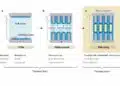
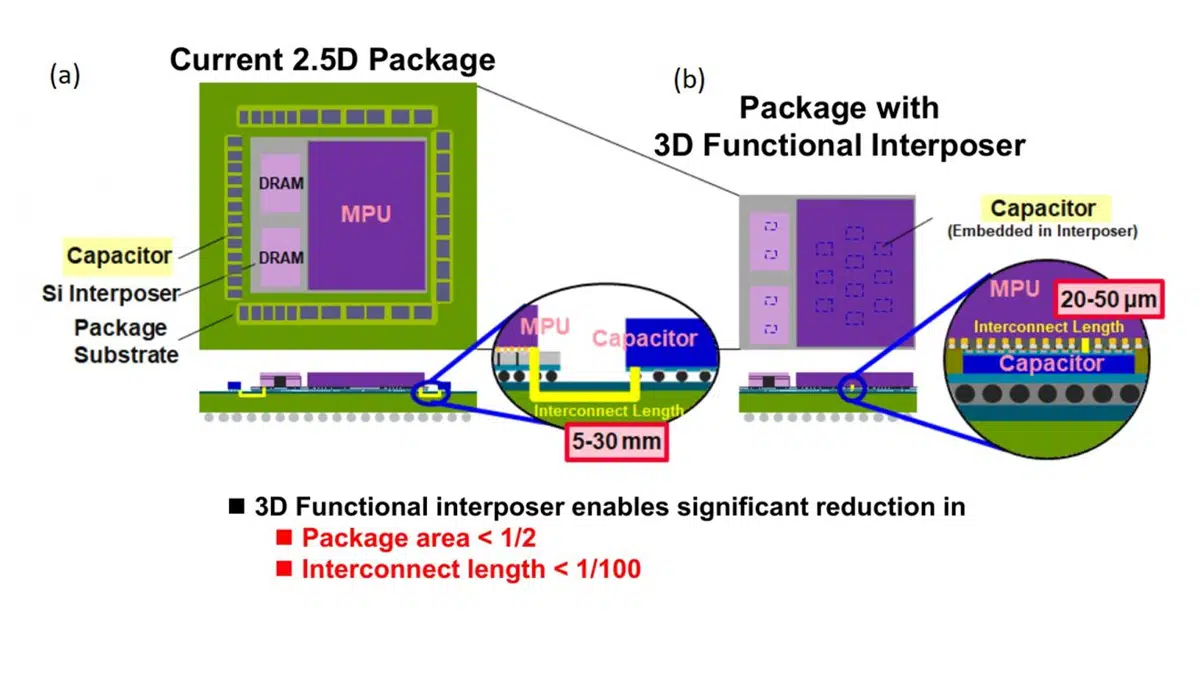
The new interposer design with an embedded capacitor provides a notable reduction in area requirements and interconnect length, leading to lower wiring resistance and parasitic capacitance. MPU: Microprocessing unit; DRAM: Direct random-access memory. Credit: The 2021 IEEE Electronic Components and Technology Conference

The new interposer design with an embedded capacitor provides a notable reduction in area requirements and interconnect length, leading to lower wiring resistance and parasitic capacitance. MPU: Microprocessing unit; DRAM: Direct random-access memory. Credit: The 2021 IEEE Electronic Components and Technology Conference

Scientists at Tokyo Institute of Technology develop a 3D functional interposer -the interface between a chip and the package substrate–containing an embedded capacitor. This compact design saves a lot of package area and greatly reduces the wiring length between the chip’s terminals and the capacitor, allowing for less noise and power consumption. Their approach paves the way to new semiconductor package structures with greater miniaturization.

Electronics started big size-wise but have only grown smaller and more compact over time. Today, even smartphones outperform the bulky computers from the 1980s by orders of magnitude. Unfortunately, this accelerating trend in performance and scale is bound to slow down considerably as the materials and designs we use approach their physical limits. To overcome such problems, it is critical to think out of the box and come up with designs that address technological bottlenecks.

RelatedPosts

Vishay Extends Aluminum Capacitors Rating Up to 600 V for DC Links

Würth Elektronik Introduces Product Navigator for Passive Components

Panasonic Passive Components for Reliable Robotic Arms

Over the last decade, progress in an essential passive component in electronics, the capacitor, has stagnated in some regards. Although we can fabricate much smaller capacitors than ever before, their actual capacity per unit area hasn’t been improving as much. We need ways to make capacitors occupy less space while preserving their performance.

But what if we could integrate capacitors inside another element commonly used in modern circuits: the interposer? At Tokyo Institute of Technology, Japan, a team of scientists led by Professor Takayuki Ohba have committed to developing technologies to sustain the scaling of semiconductor circuits. In their latest study, which will be presented at the Proceedings of the 2021 IEEE Electronic Components and Technology Conference, they demonstrated that silicon interposers–the planar interface that holds and vertically connects an integrated chip with a circuit package or another chip–can be made into functional capacitors, thus saving up considerable space, and bringing along a ton of benefits.

In modern “2.5D” packages, chips such as DRAMs and microprocessors sit atop interposers with through-silicon vias, vertical conducting tunnels that bridge the connections in the chips with solder bumps on the package substrate. Capacitors are placed on the package substrate close to the components they serve, and a connection between their terminals and those of the chip has to be made, spanning 5-30 mm (Figure 1a). This layout not only increases the necessary package substrate area, but also causes problems such as high wiring resistance and noise due to the long interconnections.

In stark contrast with this design, the team at Tokyo Tech cut the middleman and directly made the interposer be the silicon capacitor (Figure 1b). They achieved this through a novel fabrication process in which the capacitive elements are embedded inside a 300 mm silicon piece using permanent adhesive and mold resin. The interconnects between the chip and the capacitor are made directly with through-silicon vias and without the need for solder bumps. “Our bumpless 3D functional interposer enables a notable reduction in package area of about 50% and an interconnect length a hundred times shorter,” remarks Ohba.

The researchers also managed to cleverly avoid the two most common problems of bumpless chip-on-wafer designs, namely warping in the wafer due to the resin and misplacement errors due to void pockets in the adhesive. Through testing and theoretical calculations, they determined their functional interposer allowed for a wiring resistance about a hundred times lower than conventional designs, as well as a lower parasitic capacitance. These features could enable the use of lower supply voltages, leading to lower power consumption. “The chip-on-wafer integration technology we are developing will open up new routes in the evolution of semiconductor package structures,” concludes Ohba excitedly. Overall, this study is a perfect example of the creative leaps that are needed if the accelerating march of technology is to be maintained.


Related

Source: EurekAlert!

Recent Posts

Vishay Extends Aluminum Capacitors Rating Up to 600 V for DC Links

15.1.2026
17

Würth Elektronik Introduces Product Navigator for Passive Components

14.1.2026
41

Panasonic Passive Components for Reliable Robotic Arms

14.1.2026
47

DC/DC Push‑Pull Converter vs PSFB Design Guide

12.1.2026
60

Rubycon PMLCAP DC‑Link Film Capacitors in Mass Production

9.1.2026
63

YAGEO High‑Capacitance X7R Automotive MLCC Extensions

8.1.2026
61

How Metal Prices Are Driving Passive Component Price Hikes

8.1.2026
299

Modelithics COMPLETE Library v25.8 for Keysight ADS

7.1.2026
39

Energy-Controlled Structural Evolution of Amorphous Ta₂O₅ in Tantalum Anodes

6.1.2026
47

Upcoming Events

Jan 21
18:00 - 18:45 CET

To Rogowski or not to Rogowski

Jan 27
16:00 - 17:00 CET

Simplifying Vehicle Development with Automotive Ethernet and Zonal Smart Switch Technologies

Feb 24
16:00 - 17:00 CET

Designing Qi2 Wireless Power Systems: Practical Development and EMC Optimization

View Calendar

Popular Posts

  • Buck Converter Design and Calculation

    0 shares
    Share 0 Tweet 0
  • Boost Converter Design and Calculation

    0 shares
    Share 0 Tweet 0
  • LLC Resonant Converter Design and Calculation

    0 shares
    Share 0 Tweet 0
  • Flyback Converter Design and Calculation

    0 shares
    Share 0 Tweet 0
  • Ripple Current and its Effects on the Performance of Capacitors

    3 shares
    Share 3 Tweet 0
  • MLCC and Ceramic Capacitors

    0 shares
    Share 0 Tweet 0
  • How Metal Prices Are Driving Passive Component Price Hikes

    0 shares
    Share 0 Tweet 0
  • Dual Active Bridge (DAB) Topology

    0 shares
    Share 0 Tweet 0
  • What is a Dielectric Constant and DF of Plastic Materials?

    4 shares
    Share 4 Tweet 0
  • Degradation of Capacitors and its Failure Mechanisms

    0 shares
    Share 0 Tweet 0

Newsletter Subscription


Passive Components Blog

© EPCI - Leading Passive Components Educational and Information Site

  • Home
  • Privacy Policy
  • EPCI Membership & Advertisement
  • About

No Result
View All Result
  • Home
  • Knowledge Blog
  • PCNS

© EPCI - Leading Passive Components Educational and Information Site

This website uses cookies. By continuing to use this website you are giving consent to cookies being used. Visit our Privacy and Cookie Policy.
Go to mobile version