







Passive Components Blog
No Result
View All Result
  • Home
  • NewsFilter
    • All
    • Aerospace & Defence
    • Antenna
    • Applications
    • Automotive
    • Capacitors
    • Circuit Protection Devices
    • electro-mechanical news
    • Filters
    • Fuses
    • Inductors
    • Industrial
    • Integrated Passives
    • inter-connect news
    • Market & Supply Chain
    • Market Insights
    • Medical
    • Modelling and Simulation
    • New Materials & Supply
    • New Technologies
    • Non-linear Passives
    • Oscillators
    • Passive Sensors News
    • Resistors
    • RF & Microwave
    • Telecommunication
    • Weekly Digest

    Bourns Releases Compact High Current Shielded Power Inductors

    March 2026 Interconnect, Passives and Electromechanical Components Market Insights

    Molex Completes Acquisition of Smiths Interconnect, Expanding Portfolio of High-Reliability Connectivity Solutions

    APEC 2026 Power Electronics Trends and Implications for Passive Components

    Hydra Enhances Film Capacitor Robustness by Novel Gel Filler

    Würth Elektronik Releases Heat Sinks for TO and IC packages

    Würth Elektronik ICS to Acquire MRS Electronic and Expand Vehicle Electronics Portfolio

    Indias ECMS Wave Brings New Capacity For Passive Components Manufacturing in India

    Binder Introduces Triangular Moulding for M16 and M12 Cable Connectors

    Trending Tags

    • Ripple Current
    • RF
    • Leakage Current
    • Tantalum vs Ceramic
    • Snubber
    • Low ESR
    • Feedthrough
    • Derating
    • Dielectric Constant
    • New Products
    • Market Reports
  • VideoFilter
    • All
    • Antenna videos
    • Capacitor videos
    • Circuit Protection Video
    • Filter videos
    • Fuse videos
    • Inductor videos
    • Inter-Connect Video
    • Non-linear passives videos
    • Oscillator videos
    • Passive sensors videos
    • Resistor videos

    Transformer-Based Power-Line Harvester Magnetic Design

    Thermal Modeling of Magnetics

    Standard vs Planar LLC transformers Comparison for Battery Chargers

    How Modern Tools Model Magnetic Components for Power Electronics

    Advanced Loss Modeling for Planar Magnetics in the Frenetic Planar Tool

    2026 Power Magnetics Design Trends: Flyback, DAB and Planar

    Enabling Software‑Defined Vehicle Architectures: Automotive Ethernet and Zonal Smart Power

    Calculating Resistance Value of a Flyback RC Snubber 

    One‑Pulse Characterization of Nonlinear Power Inductors

    Trending Tags

    • Capacitors explained
    • Inductors explained
    • Resistors explained
    • Filters explained
    • Application Video Guidelines
    • EMC
    • New Products
    • Ripple Current
    • Simulation
    • Tantalum vs Ceramic
  • Knowledge Blog
  • DossiersNew
  • Suppliers
    • Who is Who
  • PCNS
    • PCNS 2025
    • PCNS 2023
    • PCNS 2021
    • PCNS 2019
    • PCNS 2017
  • Events
  • Home
  • NewsFilter
    • All
    • Aerospace & Defence
    • Antenna
    • Applications
    • Automotive
    • Capacitors
    • Circuit Protection Devices
    • electro-mechanical news
    • Filters
    • Fuses
    • Inductors
    • Industrial
    • Integrated Passives
    • inter-connect news
    • Market & Supply Chain
    • Market Insights
    • Medical
    • Modelling and Simulation
    • New Materials & Supply
    • New Technologies
    • Non-linear Passives
    • Oscillators
    • Passive Sensors News
    • Resistors
    • RF & Microwave
    • Telecommunication
    • Weekly Digest

    Bourns Releases Compact High Current Shielded Power Inductors

    March 2026 Interconnect, Passives and Electromechanical Components Market Insights

    Molex Completes Acquisition of Smiths Interconnect, Expanding Portfolio of High-Reliability Connectivity Solutions

    APEC 2026 Power Electronics Trends and Implications for Passive Components

    Hydra Enhances Film Capacitor Robustness by Novel Gel Filler

    Würth Elektronik Releases Heat Sinks for TO and IC packages

    Würth Elektronik ICS to Acquire MRS Electronic and Expand Vehicle Electronics Portfolio

    Indias ECMS Wave Brings New Capacity For Passive Components Manufacturing in India

    Binder Introduces Triangular Moulding for M16 and M12 Cable Connectors

    Trending Tags

    • Ripple Current
    • RF
    • Leakage Current
    • Tantalum vs Ceramic
    • Snubber
    • Low ESR
    • Feedthrough
    • Derating
    • Dielectric Constant
    • New Products
    • Market Reports
  • VideoFilter
    • All
    • Antenna videos
    • Capacitor videos
    • Circuit Protection Video
    • Filter videos
    • Fuse videos
    • Inductor videos
    • Inter-Connect Video
    • Non-linear passives videos
    • Oscillator videos
    • Passive sensors videos
    • Resistor videos

    Transformer-Based Power-Line Harvester Magnetic Design

    Thermal Modeling of Magnetics

    Standard vs Planar LLC transformers Comparison for Battery Chargers

    How Modern Tools Model Magnetic Components for Power Electronics

    Advanced Loss Modeling for Planar Magnetics in the Frenetic Planar Tool

    2026 Power Magnetics Design Trends: Flyback, DAB and Planar

    Enabling Software‑Defined Vehicle Architectures: Automotive Ethernet and Zonal Smart Power

    Calculating Resistance Value of a Flyback RC Snubber 

    One‑Pulse Characterization of Nonlinear Power Inductors

    Trending Tags

    • Capacitors explained
    • Inductors explained
    • Resistors explained
    • Filters explained
    • Application Video Guidelines
    • EMC
    • New Products
    • Ripple Current
    • Simulation
    • Tantalum vs Ceramic
  • Knowledge Blog
  • DossiersNew
  • Suppliers
    • Who is Who
  • PCNS
    • PCNS 2025
    • PCNS 2023
    • PCNS 2021
    • PCNS 2019
    • PCNS 2017
  • Events
No Result
View All Result
Passive Components Blog
No Result
View All Result

Emerging Tantalum in Additive Manufacturing

6.12.2021
Reading Time: 3 mins read
A A

Tantalum, with its unique properties enabling high performance, reliability and long life in many essential applications, is now available for use in the rapidly expanding metal Additive Manufacturing (AM) space. Size of the particles may not be suitable for capacitor electrodes as of yet, nevertheless the latest status of AM technology and its applications is described in this article by Global Advanced Metals.

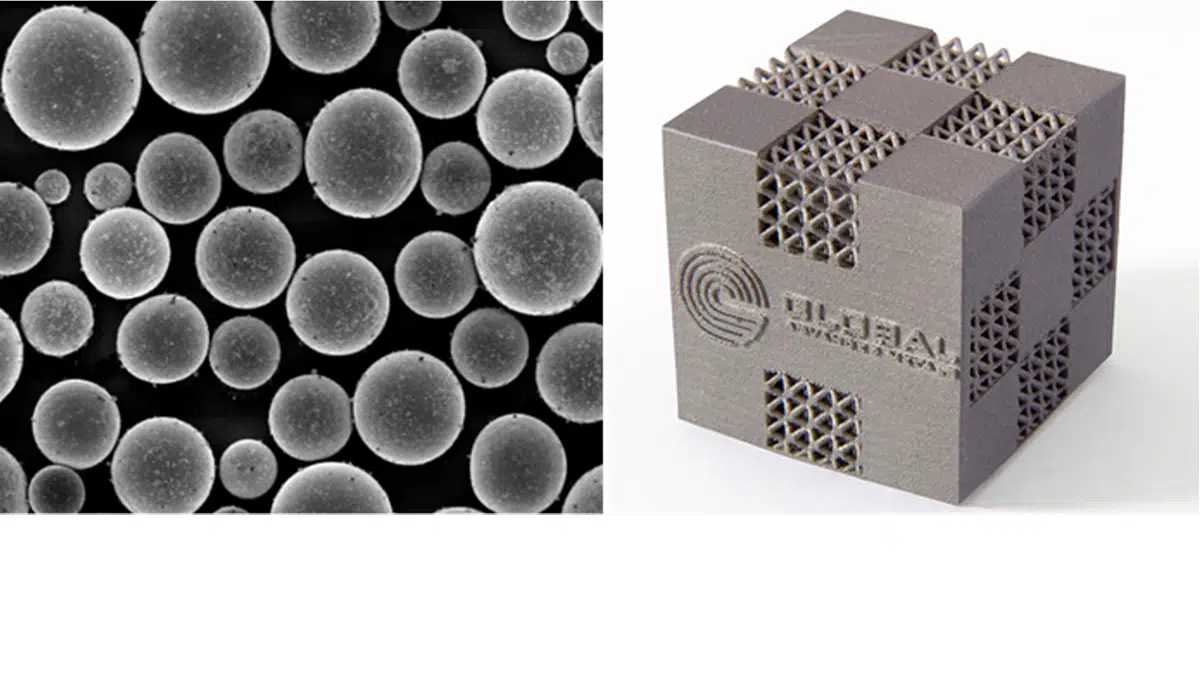
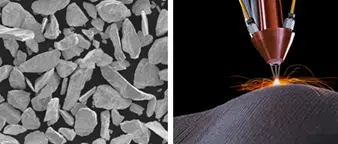
AM technologies include various forms of 3D printing using “spherical” powder and of cold spray techniques using “angular” powder types (both types depicted below). Metal AM is the opposite of subtractive manufacturing, where shapes are milled and forged and cut from large starting pieces of metal. AM technology advantages typically include eliminating waste, enabling new designs and pro-typing, providing rapid creation of replacement parts, the creation of complex geometries and “light-weighting” and providing repair at point of use. Tantalum, it’s unique properties now coupled with AM capable flexibility, is being developed in an expanding range of applications in defense, medical, industrial and other industries.
RelatedPosts

Flaked Tantalum Powders: High Capacitance Powders for High Reliable Tantalum Capacitors

Lithium Mines Impact to Tantalum Supply

Tantalum for Next-Generation Electronics

In 3D printing, layers of spherical powder are bonded together with the powder layer thickness related to the particle size. Typical particle sizes depend on the 3D printing method and cover diameters from less than 15 microns, 15 to 45 microns, and 50 to 150 microns. For perspective, a human eye typically cannot see things smaller than 50 to 60 microns. Powder properties are often customized for common AM printer technologies including laser powder bed fusion (LPBF), direct energy deposition (DED), electron beam melting (EBM), binder jetting, and metal injection molding (MIM). Spherical tantalum for 3D printing is developing in a broad variety of industries and applications including medical implants, valve bodies and heat exchangers in the chemical processing industry’s harsh environments, radiation shielding in aerospace applications and various defense related products.

Another AM technology is gas dynamic cold spraying or cold spray (CS), which is best described as a high-energy coating deposition process where solid and typically angular metal powders are accelerated in a supersonic gas jet onto a substrate. The particles can travel up to 1200 meters per second as they strike the substrate, plastically deform, and bond to the surface of the substrate. While similar to thermal spraying, cold spray utilizes the expansion of gas to achieve supersonic speeds and the powders are not melted. This results in favorable bonding properties such as no heat affected zone, practically unlimited deposition thickness, high bond strengths, and high deposition efficiency. Tantalum powders used in cold spray are typically angular with particle sizes less than 50 microns and can be customized for different CS machines. Tantalum sprayed utilizing CS finds favor in coating substrates for the defense, energy, space, and chemical processing industries.

With the confidence found in existing and emerging stable tantalum ore sources to feed the growing global tantalum demand (for additional details, read Passive Components Blog’s “Tantalum in Electronics” and “Tantalum for a Lifetime” Articles – Global Advanced Metals), academia and industry have the opportunity to design, test, develop and implement with tantalum using these AM technologies of 3D printing with metal powders and cold spray. These are indeed exciting times for tantalum and its use in a wide variety of industries now including these two new AM and emerging technologies which open the possibilities to novel products, improved performance and elimination of waste.


Related

Source: Global Advanced Metals

Recent Posts

March 2026 Interconnect, Passives and Electromechanical Components Market Insights

2.4.2026
15

Molex Completes Acquisition of Smiths Interconnect, Expanding Portfolio of High-Reliability Connectivity Solutions

1.4.2026
5

APEC 2026 Power Electronics Trends and Implications for Passive Components

1.4.2026
37

Würth Elektronik ICS to Acquire MRS Electronic and Expand Vehicle Electronics Portfolio

31.3.2026
22

Indias ECMS Wave Brings New Capacity For Passive Components Manufacturing in India

31.3.2026
33

New J‑STD‑075B Standard Elevates Process Sensitivity Classification for Passive and Solid-State Components

27.3.2026
43

Middle East Conflict: The Potential Impact to Passive Components

23.3.2026
188

Inductor Technology Dossier

19.3.2026
67

Rutheniums Critical Role in Passive Component Supply Chains

19.3.2026
44

Upcoming Events

Apr 8
17:00 - 18:00 CEST

Trade Secrets of the Flyback Converter

Apr 21
16:00 - 17:00 CEST

Heatsink Solutions: Thermal Management in electronic devices

May 5
16:00 - 17:00 CEST

Understanding and Selecting Capacitors – Fundamentals, Technologies and Latest Trends

View Calendar

Popular Posts

  • Buck Converter Design and Calculation

    0 shares
    Share 0 Tweet 0
  • Boost Converter Design and Calculation

    0 shares
    Share 0 Tweet 0
  • Flyback Converter Design and Calculation

    0 shares
    Share 0 Tweet 0
  • LLC Resonant Converter Design and Calculation

    0 shares
    Share 0 Tweet 0
  • Dual Active Bridge (DAB) Topology

    0 shares
    Share 0 Tweet 0
  • MLCC and Ceramic Capacitors

    0 shares
    Share 0 Tweet 0
  • Ripple Current and its Effects on the Performance of Capacitors

    3 shares
    Share 3 Tweet 0
  • MLCC Case Sizes Standards Explained

    0 shares
    Share 0 Tweet 0
  • Plastic Materials Dielectric Constant and DF

    4 shares
    Share 4 Tweet 0
  • Capacitor Charging and Discharging

    0 shares
    Share 0 Tweet 0

Newsletter Subscription


Passive Components Blog

© EPCI - Leading Passive Components Educational and Information Site

  • Home
  • Privacy Policy
  • EPCI Membership & Advertisement
  • About

No Result
View All Result
  • Home
  • Knowledge Blog
  • PCNS

© EPCI - Leading Passive Components Educational and Information Site

This website uses cookies. By continuing to use this website you are giving consent to cookies being used. Visit our Privacy and Cookie Policy.
Go to mobile version