












Passive Components Blog
No Result
View All Result
  • Home
  • NewsFilter
    • All
    • Aerospace & Defence
    • Antenna
    • Applications
    • Automotive
    • Capacitors
    • Circuit Protection Devices
    • electro-mechanical news
    • Filters
    • Fuses
    • Inductors
    • Industrial
    • Integrated Passives
    • inter-connect news
    • Market & Supply Chain
    • Market Insights
    • Medical
    • Modelling and Simulation
    • New Materials & Supply
    • New Technologies
    • Non-linear Passives
    • Oscillators
    • Passive Sensors News
    • Resistors
    • RF & Microwave
    • Telecommunication
    • Weekly Digest

    TDK Releases High Performance 105C DC Link Film Capacitors

    YAGEO Offers Automotive MOVs for EV and AI power

    YAGEO Acquires 100% of Shares of Shibaura Electronics

    Wk 3 Electronics Supply Chain Digest

    Vishay Extends Aluminum Capacitors Rating Up to 600 V for DC Links

    Würth Elektronik Introduces Product Navigator for Passive Components

    Panasonic Passive Components for Reliable Robotic Arms

    Littelfuse Unveils Ultra-Low-Power TMR Magnetic Switches

    DC/DC Push‑Pull Converter vs PSFB Design Guide

    Trending Tags

    • Ripple Current
    • RF
    • Leakage Current
    • Tantalum vs Ceramic
    • Snubber
    • Low ESR
    • Feedthrough
    • Derating
    • Dielectric Constant
    • New Products
    • Market Reports
  • VideoFilter
    • All
    • Antenna videos
    • Capacitor videos
    • Circuit Protection Video
    • Filter videos
    • Fuse videos
    • Inductor videos
    • Inter-Connect Video
    • Non-linear passives videos
    • Oscillator videos
    • Passive sensors videos
    • Resistor videos

    One‑Pulse Characterization of Nonlinear Power Inductors

    Thermistor Linearization Challenges

    Coaxial Connectors and How to Connect with PCB

    PCB Manufacturing, Test Methods, Quality and Reliability

    Transformer Behavior – Current Transfer and Hidden Feedback

    Choosing the Right Capacitor: The Importance of Accurate Measurements

    RF Inductors: Selection and Design Challenges for High-Frequency Circuits

    Transformer Safety IEC 61558 Standard

    3-Phase EMI Filter Design, Simulation, Calculation and Test

    Trending Tags

    • Capacitors explained
    • Inductors explained
    • Resistors explained
    • Filters explained
    • Application Video Guidelines
    • EMC
    • New Products
    • Ripple Current
    • Simulation
    • Tantalum vs Ceramic
  • Knowledge Blog
  • Suppliers
    • Who is Who
  • PCNS
    • PCNS 2025
    • PCNS 2023
    • PCNS 2021
    • PCNS 2019
    • PCNS 2017
  • Events
  • Home
  • NewsFilter
    • All
    • Aerospace & Defence
    • Antenna
    • Applications
    • Automotive
    • Capacitors
    • Circuit Protection Devices
    • electro-mechanical news
    • Filters
    • Fuses
    • Inductors
    • Industrial
    • Integrated Passives
    • inter-connect news
    • Market & Supply Chain
    • Market Insights
    • Medical
    • Modelling and Simulation
    • New Materials & Supply
    • New Technologies
    • Non-linear Passives
    • Oscillators
    • Passive Sensors News
    • Resistors
    • RF & Microwave
    • Telecommunication
    • Weekly Digest

    TDK Releases High Performance 105C DC Link Film Capacitors

    YAGEO Offers Automotive MOVs for EV and AI power

    YAGEO Acquires 100% of Shares of Shibaura Electronics

    Wk 3 Electronics Supply Chain Digest

    Vishay Extends Aluminum Capacitors Rating Up to 600 V for DC Links

    Würth Elektronik Introduces Product Navigator for Passive Components

    Panasonic Passive Components for Reliable Robotic Arms

    Littelfuse Unveils Ultra-Low-Power TMR Magnetic Switches

    DC/DC Push‑Pull Converter vs PSFB Design Guide

    Trending Tags

    • Ripple Current
    • RF
    • Leakage Current
    • Tantalum vs Ceramic
    • Snubber
    • Low ESR
    • Feedthrough
    • Derating
    • Dielectric Constant
    • New Products
    • Market Reports
  • VideoFilter
    • All
    • Antenna videos
    • Capacitor videos
    • Circuit Protection Video
    • Filter videos
    • Fuse videos
    • Inductor videos
    • Inter-Connect Video
    • Non-linear passives videos
    • Oscillator videos
    • Passive sensors videos
    • Resistor videos

    One‑Pulse Characterization of Nonlinear Power Inductors

    Thermistor Linearization Challenges

    Coaxial Connectors and How to Connect with PCB

    PCB Manufacturing, Test Methods, Quality and Reliability

    Transformer Behavior – Current Transfer and Hidden Feedback

    Choosing the Right Capacitor: The Importance of Accurate Measurements

    RF Inductors: Selection and Design Challenges for High-Frequency Circuits

    Transformer Safety IEC 61558 Standard

    3-Phase EMI Filter Design, Simulation, Calculation and Test

    Trending Tags

    • Capacitors explained
    • Inductors explained
    • Resistors explained
    • Filters explained
    • Application Video Guidelines
    • EMC
    • New Products
    • Ripple Current
    • Simulation
    • Tantalum vs Ceramic
  • Knowledge Blog
  • Suppliers
    • Who is Who
  • PCNS
    • PCNS 2025
    • PCNS 2023
    • PCNS 2021
    • PCNS 2019
    • PCNS 2017
  • Events
No Result
View All Result
Passive Components Blog
No Result
View All Result

Global Advanced Metals and LPW Technology Cooperate on 3D Printing of Tantalum

6.12.2021
Reading Time: 2 mins read
A A

Source: GAM news

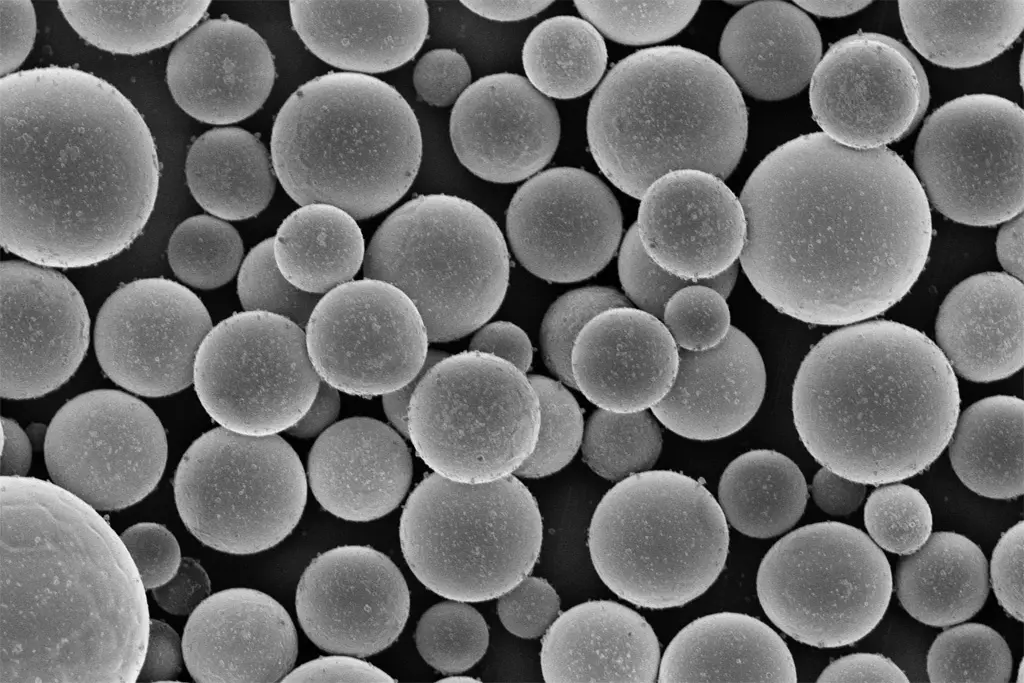
Waltham, MA and Runcorn Cheshire United Kingdom – March 26, 2018 – Global Advanced Metals Pty Ltd (GAM), a leading producer of tantalum and niobium products, along with LPW Technology (LPW), a global manufacturer of high-quality metal powders exclusively for additive manufacturing (AM), announce a cooperative agreement to further demonstrate the suitability of spheroidized tantalum for 3D metal printing.

RelatedPosts

Flaked Tantalum Powders: High Capacitance Powders for High Reliable Tantalum Capacitors

Lithium Mines Impact to Tantalum Supply

Tantalum for Next-Generation Electronics

Across this emerging industry there are few examples of additively manufactured refractory metals, and a need exists for a more thorough proof of concept and development of print criteria. GAM is filling this void and expanding its product portfolio.

GAM is the world leader in tantalum powder technology and offers powders in nodular, angular, fractal and spherical morphologies for a wide range of critical applications. Successful demonstration of laser 3D printing of tantalum offers GAM customers another powder option with which to serve medical, dental, military, aerospace and other markets via tantalum-based additive manufacturing. Tantalum offers superior osteointegration, higher biocompatibility and reduced stress shielding with respect to current metals and alloys used for medical implants.

“Leveraging LPW’s laser powder bed fusion expertise, developed by viewing AM from the perspective of the powder, represents one step of our strategy to extend our offering in tantalum and other refractory metals to the additive manufacturing marketplace. We can now measure and share physicochemical data for both our spherical tantalum and the resulting 3D printed part and bring this solution to our partners, including practitioners, designers and manufacturers of tantalum based surgical implants and other high reliability and critical devices,” said Andrew O’Donovan, CEO, GAM.

LPW Technology is the market leader in the manufacture, development and processing of high-quality metal powders for additive manufacturing, and provides a comprehensive range of solutions and services for the AM industry. These include the development and testing of new alloys, expert application support, and innovative end-to-end hardware and software.

“This initiative demonstrates the benefits of two experts in their fields partnering to expand the materials knowledge-base for AM and accelerate its adoption for production,” said Ben Ferrar, LPW’s COO.  “The performance of metal powder feedstock is key to building consistent AM parts and delivering the required mechanical properties.

“This work will further develop understanding of the factors affecting tantalum powder spheroidization and how it performs in the AM process, adding assurance to metal AM producers of the material compatibility for AM production.”

featured image: high flow,high purity tantalum powder, Image credit: Business Wire

Related

Recent Posts

TDK Releases High Performance 105C DC Link Film Capacitors

19.1.2026
16

Vishay Extends Aluminum Capacitors Rating Up to 600 V for DC Links

15.1.2026
25

Würth Elektronik Introduces Product Navigator for Passive Components

14.1.2026
49

Panasonic Passive Components for Reliable Robotic Arms

14.1.2026
60

Rubycon PMLCAP DC‑Link Film Capacitors in Mass Production

9.1.2026
74

YAGEO High‑Capacitance X7R Automotive MLCC Extensions

8.1.2026
64

How Metal Prices Are Driving Passive Component Price Hikes

8.1.2026
309

Modelithics COMPLETE Library v25.8 for Keysight ADS

7.1.2026
39

Energy-Controlled Structural Evolution of Amorphous Ta₂O₅ in Tantalum Anodes

6.1.2026
48

Upcoming Events

Jan 21
18:00 - 18:45 CET

To Rogowski or not to Rogowski

Jan 27
16:00 - 17:00 CET

Simplifying Vehicle Development with Automotive Ethernet and Zonal Smart Switch Technologies

Feb 24
16:00 - 17:00 CET

Designing Qi2 Wireless Power Systems: Practical Development and EMC Optimization

View Calendar

Popular Posts

  • Buck Converter Design and Calculation

    0 shares
    Share 0 Tweet 0
  • Boost Converter Design and Calculation

    0 shares
    Share 0 Tweet 0
  • LLC Resonant Converter Design and Calculation

    0 shares
    Share 0 Tweet 0
  • Flyback Converter Design and Calculation

    0 shares
    Share 0 Tweet 0
  • Ripple Current and its Effects on the Performance of Capacitors

    3 shares
    Share 3 Tweet 0
  • MLCC and Ceramic Capacitors

    0 shares
    Share 0 Tweet 0
  • How Metal Prices Are Driving Passive Component Price Hikes

    0 shares
    Share 0 Tweet 0
  • Dual Active Bridge (DAB) Topology

    0 shares
    Share 0 Tweet 0
  • What is a Dielectric Constant and DF of Plastic Materials?

    4 shares
    Share 4 Tweet 0
  • Degradation of Capacitors and its Failure Mechanisms

    0 shares
    Share 0 Tweet 0

Newsletter Subscription


Passive Components Blog

© EPCI - Leading Passive Components Educational and Information Site

  • Home
  • Privacy Policy
  • EPCI Membership & Advertisement
  • About

No Result
View All Result
  • Home
  • Knowledge Blog
  • PCNS

© EPCI - Leading Passive Components Educational and Information Site

This website uses cookies. By continuing to use this website you are giving consent to cookies being used. Visit our Privacy and Cookie Policy.
Go to mobile version