





Passive Components Blog
No Result
View All Result
  • Home
  • NewsFilter
    • All
    • Aerospace & Defence
    • Antenna
    • Applications
    • Automotive
    • Capacitors
    • Circuit Protection Devices
    • electro-mechanical news
    • Filters
    • Fuses
    • Inductors
    • Industrial
    • Integrated Passives
    • inter-connect news
    • Market & Supply Chain
    • Market Insights
    • Medical
    • Modelling and Simulation
    • New Materials & Supply
    • New Technologies
    • Non-linear Passives
    • Oscillators
    • Passive Sensors News
    • Resistors
    • RF & Microwave
    • Telecommunication
    • Weekly Digest

    Top 10 Connector Vendors by Product Type

    Bourns Releases High‑Q Air Coil Inductors for RF Aplications

    CMSE 2026 Announces Call for Presentations on High-Reliability Military and Space Electronics

    ESA Call for Papers 6th Space Passive Component Days – SPCD 2026

    Würth Elektronik Offers Halogen‑Free EMC Gaskets for Displays and Housings

    Component Distribution Supply Chain January 2026

    Binder Unveils M8 Flange Solder Connectors for Flexible Cabling

    Power Electronics Tools for Passives and Magnetic Designs

    Modelithics Releases Component Model Library for SIMULIA CST Studio Suite

    Trending Tags

    • Ripple Current
    • RF
    • Leakage Current
    • Tantalum vs Ceramic
    • Snubber
    • Low ESR
    • Feedthrough
    • Derating
    • Dielectric Constant
    • New Products
    • Market Reports
  • VideoFilter
    • All
    • Antenna videos
    • Capacitor videos
    • Circuit Protection Video
    • Filter videos
    • Fuse videos
    • Inductor videos
    • Inter-Connect Video
    • Non-linear passives videos
    • Oscillator videos
    • Passive sensors videos
    • Resistor videos

    One‑Pulse Characterization of Nonlinear Power Inductors

    Thermistor Linearization Challenges

    Coaxial Connectors and How to Connect with PCB

    PCB Manufacturing, Test Methods, Quality and Reliability

    Transformer Behavior – Current Transfer and Hidden Feedback

    Choosing the Right Capacitor: The Importance of Accurate Measurements

    RF Inductors: Selection and Design Challenges for High-Frequency Circuits

    Transformer Safety IEC 61558 Standard

    3-Phase EMI Filter Design, Simulation, Calculation and Test

    Trending Tags

    • Capacitors explained
    • Inductors explained
    • Resistors explained
    • Filters explained
    • Application Video Guidelines
    • EMC
    • New Products
    • Ripple Current
    • Simulation
    • Tantalum vs Ceramic
  • Knowledge Blog
  • DossiersNew
  • Suppliers
    • Who is Who
  • PCNS
    • PCNS 2025
    • PCNS 2023
    • PCNS 2021
    • PCNS 2019
    • PCNS 2017
  • Events
  • Home
  • NewsFilter
    • All
    • Aerospace & Defence
    • Antenna
    • Applications
    • Automotive
    • Capacitors
    • Circuit Protection Devices
    • electro-mechanical news
    • Filters
    • Fuses
    • Inductors
    • Industrial
    • Integrated Passives
    • inter-connect news
    • Market & Supply Chain
    • Market Insights
    • Medical
    • Modelling and Simulation
    • New Materials & Supply
    • New Technologies
    • Non-linear Passives
    • Oscillators
    • Passive Sensors News
    • Resistors
    • RF & Microwave
    • Telecommunication
    • Weekly Digest

    Top 10 Connector Vendors by Product Type

    Bourns Releases High‑Q Air Coil Inductors for RF Aplications

    CMSE 2026 Announces Call for Presentations on High-Reliability Military and Space Electronics

    ESA Call for Papers 6th Space Passive Component Days – SPCD 2026

    Würth Elektronik Offers Halogen‑Free EMC Gaskets for Displays and Housings

    Component Distribution Supply Chain January 2026

    Binder Unveils M8 Flange Solder Connectors for Flexible Cabling

    Power Electronics Tools for Passives and Magnetic Designs

    Modelithics Releases Component Model Library for SIMULIA CST Studio Suite

    Trending Tags

    • Ripple Current
    • RF
    • Leakage Current
    • Tantalum vs Ceramic
    • Snubber
    • Low ESR
    • Feedthrough
    • Derating
    • Dielectric Constant
    • New Products
    • Market Reports
  • VideoFilter
    • All
    • Antenna videos
    • Capacitor videos
    • Circuit Protection Video
    • Filter videos
    • Fuse videos
    • Inductor videos
    • Inter-Connect Video
    • Non-linear passives videos
    • Oscillator videos
    • Passive sensors videos
    • Resistor videos

    One‑Pulse Characterization of Nonlinear Power Inductors

    Thermistor Linearization Challenges

    Coaxial Connectors and How to Connect with PCB

    PCB Manufacturing, Test Methods, Quality and Reliability

    Transformer Behavior – Current Transfer and Hidden Feedback

    Choosing the Right Capacitor: The Importance of Accurate Measurements

    RF Inductors: Selection and Design Challenges for High-Frequency Circuits

    Transformer Safety IEC 61558 Standard

    3-Phase EMI Filter Design, Simulation, Calculation and Test

    Trending Tags

    • Capacitors explained
    • Inductors explained
    • Resistors explained
    • Filters explained
    • Application Video Guidelines
    • EMC
    • New Products
    • Ripple Current
    • Simulation
    • Tantalum vs Ceramic
  • Knowledge Blog
  • DossiersNew
  • Suppliers
    • Who is Who
  • PCNS
    • PCNS 2025
    • PCNS 2023
    • PCNS 2021
    • PCNS 2019
    • PCNS 2017
  • Events
No Result
View All Result
Passive Components Blog
No Result
View All Result

KYOCERA AVX Launches the Industry’s First Automotive-Qualified MLV Varistors with FLEXITERM® Technology

4.10.2022
Reading Time: 4 mins read
A A

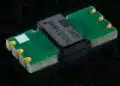
KYOCERA AVX, a leading global manufacturer of advanced electronic components engineered to accelerate technological innovation and build a better future, has released the industry’s first automotive-qualified multilayer varistors (MLVs) equipped with the company’s patented FLEXITERM® soft termination technology, which has been widely employed on a number of automotive-qualified multilayer ceramic capacitors (MLCCs) for more than 15 years.

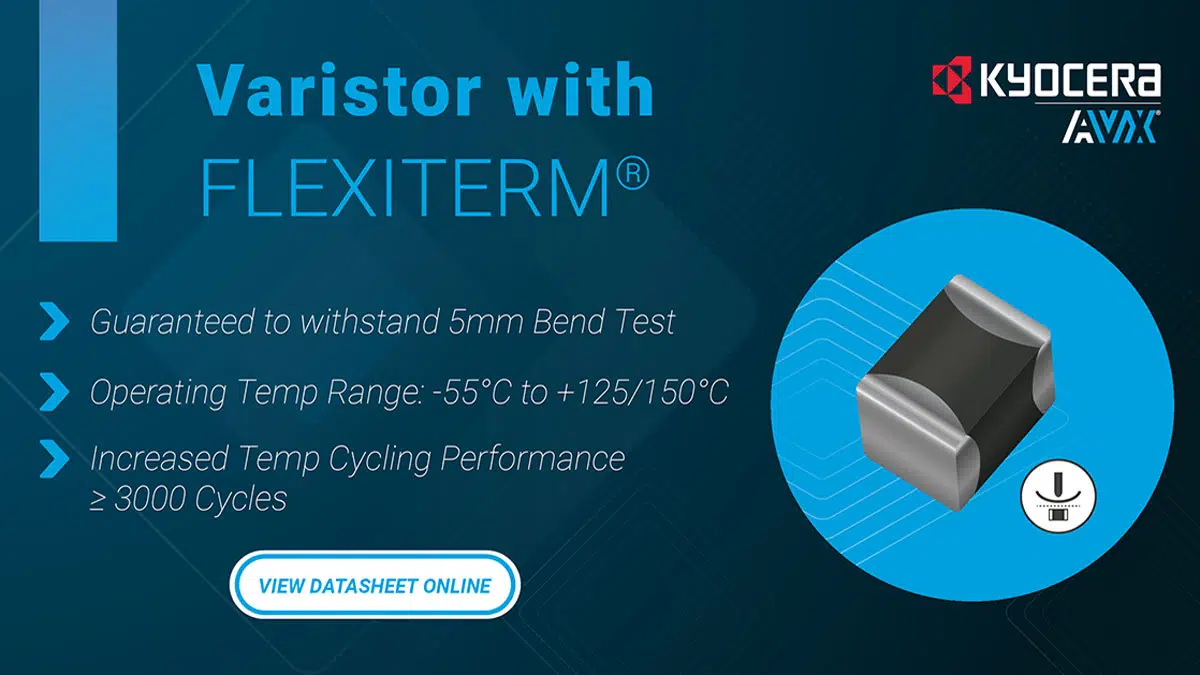
The new AEC-Q200-qualifed VCAS Series MLVs feature soft terminations that provide up to 5mm of flexure over 3,000 temperature cycles extending up to 150°C with zero flex failures and stable electrical characteristics. The series also provides high current and energy handling capabilities, bidirectional overvoltage protection, and EMI/RFI attenuation in power and signal lines. 

RelatedPosts

Miniaturization of MLCCs and Electrolytics, KAVX Tech Chat

Conductive Polymer Capacitor Market and Design‑In Guide to 2035

Kyocera Releases Ultra-Compact Low Voltage Clock Oscillators

Designed to satisfy automotive industry demands for more robust component solutions, the new VCAS Series MLVs with FLEXITERM® technology are engineered to reliably withstand severe flexing, vibration, and temperature cycling, enabling up to 5mm of mechanical board flexure over 3,000 temperature cycles extending up to 150°C with zero board flex failures, including internal cracks and depanelization, and no significant changes to electrical characteristics. Automotive-qualified MLVs with industry-standard terminations, on the other hand, generally support just 2mm of board flexure over 1,000 temperature cycles extending up to 125°C, which is often insufficient for preventing flex failures cause by the mechanical and thermal stresses incurred during assembly and operation.        

As such, the new VCAS Series MLVs with FLEXITERM® soft termination technology provide increased reliability and outstanding mechanical and thermomechanical performance compared to competing solutions in automotive under-hood applications such as engine sensors with a direct connection to the battery rail, as well as in automotive audio circuits, aerospace, industrial, and downhole drilling applications, and IoT applications including smart watches, other wearables, and cleaning robots. In addition, these new MLVs exhibit high current and energy handling capabilities, super-fast response times, and multiple ESD strike capabilities, and provide high-reliability bidirectional overvoltage protection. They also provide EMI/RFI attenuation in their off state, which can reduce or even eliminate the need for additional EMC capacitors; exhibit lower insertion loss, lower leakage current, and unrivaled reliability compared to competing diode solutions; and are qualified to both the AEC-Q200 and VW 80808 specifications.

Currently available in four surface-mount cases sizes ranging from 0603 to 1210, the new VCAS Series MLVs are rated for five working voltages ranging from 5.6–30VDC, five clamping voltages extending from 18–67V, four energy transients spanning 0.1–1.5J, and operating temperatures as low as -55°C and as high as +150°C. They are also RoHS-compliant. 

“We are very proud to introduce the new AEC-Q200-qualified VCAS Series multilayer varistors with FLEXITERM® technology to the market. This new product introduction will provide our automotive OEM customers with a compact, multifunctional component solution optimized for outstanding mechanical and thermomechanical robustness proven to reliably outperform competing MLV and diode solutions in harsh-environment signal and power line applications subject to vibration, variable temperatures, and flexure stress,” said John Gallipeau, Senior Field Applications Engineer, KYOCERA AVX. “As the demand for more electronic content in today’s vehicles continues to grow, so does the demand for extremely rugged and reliable electronic components qualified for use in these challenging applications. As such, the new VCAS Series MLVs are just the first to feature our patented and field proven FLEXITERM® soft termination technology. Soon, all of our TransGuard® and TransGuard Automotive MLVs will also be available with FLEXITERM® technology.”

When subjected to the rigorous AEC-Q200 board bend and temperature cycling testing procedures, the new VCAS Series MLVs with FLEXITERM® technology were proven to withstand up to 5mm of flexure (versus 2mm for MLVs with industry-standard terminations) over 3,000 temperature cycles extending up to 150°C with zero board flex failures and no significant changes to their electrical characteristics, which well exceeds the 1,000 cycles at up to 125°C AEC-Q200 testing requirement. This proven performance makes the series ideal for use in the signal and power lines of automotive, aerospace, and IoT applications subject to hazards including significant temperature variations, vibration, wave soldering, forced cooling, improper handling, the insertion and removal of PCBs from connectors, and high-density board configurations, all of which can result in board expansion, contraction, flexure, and cracking, and the depanelization of components mounted near the edges of the PCB, near flex zones, and near large, heavy components.

Features

  • Operating Temp Range: -55°C to +125/150°C
  • Qualified Case Sizes: 0603, 0805, 1206, & 1210
  • High Mechanical Performance Guaranteed to Withstand 5mm Bend Test
  • Increased Temp Cycling Performance ≥ 3000 Cycles
  • Flexible Termination System
  • Reduction in Circuit Board Flex Failures
  • AEC-Q200 Qualified or Commercial Grade Products Available

Applications:

  • High Flexure Stress
  • Variable Temperature Applications
  • Automotive

VCAS Series MLVs with FLEXITERM® technology are packaged on 7” reels for compatibility with automated processing equipment, and lead-time for the series is currently 10 weeks.
Related

Source: KYOCERA AVX

Recent Posts

Würth Elektronik Offers Halogen‑Free EMC Gaskets for Displays and Housings

28.1.2026
14

Binder Unveils M8 Flange Solder Connectors for Flexible Cabling

28.1.2026
12

Stackpole Releases AlN High‑Power Thick Film Chip Resistors

26.1.2026
17

Samsung Q4 2025 Results: MLCC focus for AI, Server and Automotive

26.1.2026
50

Würth Elektronik Developed a Custom Transformer for Active Hand Orthosis

26.1.2026
35

Capacitor Technology Dossier

26.1.2026
70

ROHM Extends 2012 Shunt Resistors Power Rating up to 1.25 W

23.1.2026
23

Passive Components in Quantum Computing

22.1.2026
122

0603 Automotive Chip Varistors as TVS Diode Replacements, TDK Tech Note

21.1.2026
29

Upcoming Events

Feb 24
16:00 - 17:00 CET

Designing Qi2 Wireless Power Systems: Practical Development and EMC Optimization

Mar 3
16:00 - 17:00 CET

Cybersecurity at the Eleventh Hour – from RED to CRA – Information and Discussion

Mar 21
All day

PSMA Capacitor Workshop 2026

View Calendar

Popular Posts

  • Buck Converter Design and Calculation

    0 shares
    Share 0 Tweet 0
  • Boost Converter Design and Calculation

    0 shares
    Share 0 Tweet 0
  • LLC Resonant Converter Design and Calculation

    0 shares
    Share 0 Tweet 0
  • Flyback Converter Design and Calculation

    0 shares
    Share 0 Tweet 0
  • Ripple Current and its Effects on the Performance of Capacitors

    3 shares
    Share 3 Tweet 0
  • How Metal Prices Are Driving Passive Component Price Hikes

    0 shares
    Share 0 Tweet 0
  • MLCC and Ceramic Capacitors

    0 shares
    Share 0 Tweet 0
  • Dual Active Bridge (DAB) Topology

    0 shares
    Share 0 Tweet 0
  • Degradation of Capacitors and its Failure Mechanisms

    0 shares
    Share 0 Tweet 0
  • What is a Dielectric Constant and DF of Plastic Materials?

    4 shares
    Share 4 Tweet 0

Newsletter Subscription


Passive Components Blog

© EPCI - Leading Passive Components Educational and Information Site

  • Home
  • Privacy Policy
  • EPCI Membership & Advertisement
  • About

No Result
View All Result
  • Home
  • Knowledge Blog
  • PCNS

© EPCI - Leading Passive Components Educational and Information Site

This website uses cookies. By continuing to use this website you are giving consent to cookies being used. Visit our Privacy and Cookie Policy.
Go to mobile version