





Passive Components Blog
No Result
View All Result
  • Home
  • NewsFilter
    • All
    • Aerospace & Defence
    • Antenna
    • Applications
    • Automotive
    • Capacitors
    • Circuit Protection Devices
    • electro-mechanical news
    • Filters
    • Fuses
    • Inductors
    • Industrial
    • Integrated Passives
    • inter-connect news
    • Market & Supply Chain
    • Market Insights
    • Medical
    • Modelling and Simulation
    • New Materials & Supply
    • New Technologies
    • Non-linear Passives
    • Oscillators
    • Passive Sensors News
    • Resistors
    • RF & Microwave
    • Telecommunication
    • Weekly Digest

    Bourns Releases Compact High Current Shielded Power Inductors

    March 2026 Interconnect, Passives and Electromechanical Components Market Insights

    Molex Completes Acquisition of Smiths Interconnect, Expanding Portfolio of High-Reliability Connectivity Solutions

    APEC 2026 Power Electronics Trends and Implications for Passive Components

    Hydra Enhances Film Capacitor Robustness by Novel Gel Filler

    Würth Elektronik Releases Heat Sinks for TO and IC packages

    Würth Elektronik ICS to Acquire MRS Electronic and Expand Vehicle Electronics Portfolio

    Indias ECMS Wave Brings New Capacity For Passive Components Manufacturing in India

    Binder Introduces Triangular Moulding for M16 and M12 Cable Connectors

    Trending Tags

    • Ripple Current
    • RF
    • Leakage Current
    • Tantalum vs Ceramic
    • Snubber
    • Low ESR
    • Feedthrough
    • Derating
    • Dielectric Constant
    • New Products
    • Market Reports
  • VideoFilter
    • All
    • Antenna videos
    • Capacitor videos
    • Circuit Protection Video
    • Filter videos
    • Fuse videos
    • Inductor videos
    • Inter-Connect Video
    • Non-linear passives videos
    • Oscillator videos
    • Passive sensors videos
    • Resistor videos

    Transformer-Based Power-Line Harvester Magnetic Design

    Thermal Modeling of Magnetics

    Standard vs Planar LLC transformers Comparison for Battery Chargers

    How Modern Tools Model Magnetic Components for Power Electronics

    Advanced Loss Modeling for Planar Magnetics in the Frenetic Planar Tool

    2026 Power Magnetics Design Trends: Flyback, DAB and Planar

    Enabling Software‑Defined Vehicle Architectures: Automotive Ethernet and Zonal Smart Power

    Calculating Resistance Value of a Flyback RC Snubber 

    One‑Pulse Characterization of Nonlinear Power Inductors

    Trending Tags

    • Capacitors explained
    • Inductors explained
    • Resistors explained
    • Filters explained
    • Application Video Guidelines
    • EMC
    • New Products
    • Ripple Current
    • Simulation
    • Tantalum vs Ceramic
  • Knowledge Blog
  • DossiersNew
  • Suppliers
    • Who is Who
  • PCNS
    • PCNS 2025
    • PCNS 2023
    • PCNS 2021
    • PCNS 2019
    • PCNS 2017
  • Events
  • Home
  • NewsFilter
    • All
    • Aerospace & Defence
    • Antenna
    • Applications
    • Automotive
    • Capacitors
    • Circuit Protection Devices
    • electro-mechanical news
    • Filters
    • Fuses
    • Inductors
    • Industrial
    • Integrated Passives
    • inter-connect news
    • Market & Supply Chain
    • Market Insights
    • Medical
    • Modelling and Simulation
    • New Materials & Supply
    • New Technologies
    • Non-linear Passives
    • Oscillators
    • Passive Sensors News
    • Resistors
    • RF & Microwave
    • Telecommunication
    • Weekly Digest

    Bourns Releases Compact High Current Shielded Power Inductors

    March 2026 Interconnect, Passives and Electromechanical Components Market Insights

    Molex Completes Acquisition of Smiths Interconnect, Expanding Portfolio of High-Reliability Connectivity Solutions

    APEC 2026 Power Electronics Trends and Implications for Passive Components

    Hydra Enhances Film Capacitor Robustness by Novel Gel Filler

    Würth Elektronik Releases Heat Sinks for TO and IC packages

    Würth Elektronik ICS to Acquire MRS Electronic and Expand Vehicle Electronics Portfolio

    Indias ECMS Wave Brings New Capacity For Passive Components Manufacturing in India

    Binder Introduces Triangular Moulding for M16 and M12 Cable Connectors

    Trending Tags

    • Ripple Current
    • RF
    • Leakage Current
    • Tantalum vs Ceramic
    • Snubber
    • Low ESR
    • Feedthrough
    • Derating
    • Dielectric Constant
    • New Products
    • Market Reports
  • VideoFilter
    • All
    • Antenna videos
    • Capacitor videos
    • Circuit Protection Video
    • Filter videos
    • Fuse videos
    • Inductor videos
    • Inter-Connect Video
    • Non-linear passives videos
    • Oscillator videos
    • Passive sensors videos
    • Resistor videos

    Transformer-Based Power-Line Harvester Magnetic Design

    Thermal Modeling of Magnetics

    Standard vs Planar LLC transformers Comparison for Battery Chargers

    How Modern Tools Model Magnetic Components for Power Electronics

    Advanced Loss Modeling for Planar Magnetics in the Frenetic Planar Tool

    2026 Power Magnetics Design Trends: Flyback, DAB and Planar

    Enabling Software‑Defined Vehicle Architectures: Automotive Ethernet and Zonal Smart Power

    Calculating Resistance Value of a Flyback RC Snubber 

    One‑Pulse Characterization of Nonlinear Power Inductors

    Trending Tags

    • Capacitors explained
    • Inductors explained
    • Resistors explained
    • Filters explained
    • Application Video Guidelines
    • EMC
    • New Products
    • Ripple Current
    • Simulation
    • Tantalum vs Ceramic
  • Knowledge Blog
  • DossiersNew
  • Suppliers
    • Who is Who
  • PCNS
    • PCNS 2025
    • PCNS 2023
    • PCNS 2021
    • PCNS 2019
    • PCNS 2017
  • Events
No Result
View All Result
Passive Components Blog
No Result
View All Result

Kyocera Releases Ultra-Compact Low Voltage Clock Oscillators

12.11.2025
Reading Time: 3 mins read
A A
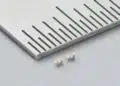
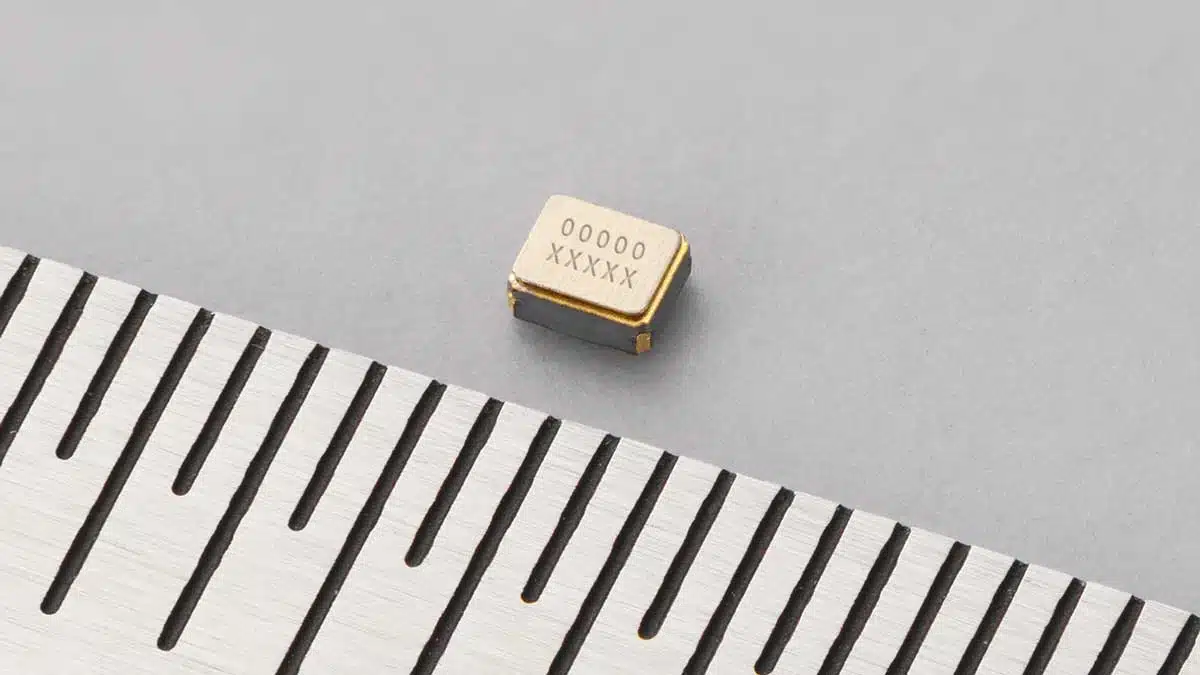
KYOCERA has unveiled the KC1210A Series Clock Oscillators, which are ultra-compact and ultra-low voltage. These oscillators enable energy-efficient design for next-generation smartphones and wearables.

Kyocera Corporation announces the development of the KC1210A Series clock oscillators.

These oscillators offer the world’s smallest size*1 and operate at an ultra-low voltage of 0.9V, which is approximately 50% lower than Kyocera’s previous conventional clock oscillator models. Sample shipments are now available, with full-scale mass production planned for the summer of 2026.

RelatedPosts

Kyocera Releases 30fs Jitter Differential Clock Oscillator

KYOCERA AVX Extends Ultra‑Broadband RF Capacitor Series

Kyocera Offers Small SAW Filters for IoT RF Modules

Key Features:

  • Ultra-compact design and low profile: 1.25mm × 1.05mm × 0.5mm max.
  • Low-voltage operation: 0.9V, about 50% lower than previous models.

With the increasing functionality of smartphones and wearables, including AI, high-speed communication, and large-scale data processing, power consumption is also rising. This leads to faster battery depletion and more frequent charging. To address these issues, demand is rising for compact, low-voltage oscillators. In response, Kyocera developed the KC1210A Series. Kyocera will continue to innovate to meet market needs and support the evolution of advanced devices. 

Background of Development

As smartphones and wearables evolve with AI, high-speed communication, and large-scale data processing, power consumption increases, causing faster battery depletion and more frequent charging. To address these issues, the demand for compact, low-voltage oscillators is growing. Kyocera developed the KC1210A Series to meet these needs, supporting the evolution of advanced devices.

Features of the KC1210A Series

Ultra-compact design and low profile

Kyocera’s proprietary compact element design2 achieves strong performance in a smaller form factor. The mounting area is reduced by approximately 60% to 1.31 mm2, and the volume is about one-quarter of the KC2016K model, supporting high-density device mounting.

Low-voltage operation: 0.9V

The newly developed oscillator IC enables operation at 0.9V, reducing power consumption by about 50% compared to previous models, supporting energy savings in smartphones and wearables.

Main Applications

  • Smartphones
  • VR Goggles / VR Headsets
  • Wearable Devices
  • IoT modules

KC1210A Series – Product Overview

Product NameClock Oscillators
ModelKC1210A Series
Dimensions1.25mm × 1.05mm × 0.5mm (Max.)
Production SiteHigashine Plant, Yamagata, Japan
Mass ProductionScheduled for Summer 2026
Operating Temperature Range-40 to +85°C / -40 to +105°C

Electrical Characteristics

Output Frequency Range9.6MHz to 100MHz
Output TypeCMOS
Frequency Tolerance±25 × 10-6 (-40 to +85°C), ±50 × 10-6 (-40 to +105°C)
Supply Voltage0.8V to 1.8V
Current Consumption3.5mA (Max.) / 50MHz, 0.9V, CL = 15pF
  • * Frequency tolerance includes initial tolerance 25°C, operating temperature characteristics, supply voltage variation, load capacitance variation, aging (1st year 25°C), and effects of vibration and shock.
  • 1 – Based on Kyocera research as of August 2025, among clock oscillators utilizing a ceramic package.
  • 2 – Kyocera’s proprietary technology for designing compact crystal elements.

Related

Source: KYOCERA AVX

Recent Posts

Würth Elektronik Releases Heat Sinks for TO and IC packages

31.3.2026
16

Equivalent Circuit Constants of Crystal Units Explained

26.3.2026
32

Exxelia Miniaturized 400 MHz Inverted‑F Antenna

24.3.2026
15

Würth Elektronik Unveils High-Current Automotive Power Inductor

24.3.2026
33

Würth Elektronik Presents Differential Pressure Sensor for HVAC and Medical

17.3.2026
21

Würth Elektronik and Grinn Launch Edge AI Cooperation

13.3.2026
27

Murata New Vibration Sensor Targets High‑Frequency Predictive Maintenance

10.3.2026
58

Kyocera Releases 30fs Jitter Differential Clock Oscillator

10.3.2026
22

Würth Elektronik IQD Awarded by EcoVadis Gold Sustainability Medal

4.3.2026
5

Upcoming Events

Apr 8
17:00 - 18:00 CEST

Trade Secrets of the Flyback Converter

Apr 21
16:00 - 17:00 CEST

Heatsink Solutions: Thermal Management in electronic devices

May 5
16:00 - 17:00 CEST

Understanding and Selecting Capacitors – Fundamentals, Technologies and Latest Trends

View Calendar

Popular Posts

  • Buck Converter Design and Calculation

    0 shares
    Share 0 Tweet 0
  • Boost Converter Design and Calculation

    0 shares
    Share 0 Tweet 0
  • Flyback Converter Design and Calculation

    0 shares
    Share 0 Tweet 0
  • LLC Resonant Converter Design and Calculation

    0 shares
    Share 0 Tweet 0
  • Dual Active Bridge (DAB) Topology

    0 shares
    Share 0 Tweet 0
  • MLCC and Ceramic Capacitors

    0 shares
    Share 0 Tweet 0
  • Ripple Current and its Effects on the Performance of Capacitors

    3 shares
    Share 3 Tweet 0
  • Capacitor Charging and Discharging

    0 shares
    Share 0 Tweet 0
  • Plastic Materials Dielectric Constant and DF

    4 shares
    Share 4 Tweet 0
  • MLCC Case Sizes Standards Explained

    0 shares
    Share 0 Tweet 0

Newsletter Subscription


Passive Components Blog

© EPCI - Leading Passive Components Educational and Information Site

  • Home
  • Privacy Policy
  • EPCI Membership & Advertisement
  • About

No Result
View All Result
  • Home
  • Knowledge Blog
  • PCNS

© EPCI - Leading Passive Components Educational and Information Site

This website uses cookies. By continuing to use this website you are giving consent to cookies being used. Visit our Privacy and Cookie Policy.
Go to mobile version