






Passive Components Blog
No Result
View All Result
  • Home
  • NewsFilter
    • All
    • Aerospace & Defence
    • Antenna
    • Applications
    • Automotive
    • Capacitors
    • Circuit Protection Devices
    • electro-mechanical news
    • Filters
    • Fuses
    • Inductors
    • Industrial
    • Integrated Passives
    • inter-connect news
    • Market & Supply Chain
    • Market Insights
    • Medical
    • Modelling and Simulation
    • New Materials & Supply
    • New Technologies
    • Non-linear Passives
    • Oscillators
    • Passive Sensors News
    • Resistors
    • RF & Microwave
    • Telecommunication
    • Weekly Digest

    Bourns Introduces High Current Chip Ferrite Beads for Dense Power Rails

    Wk 22 Electronics Supply Chain Digest

    Vishay Releases High‑Current Radial Inductors up to 209 A

    May 2026 Interconnect, Passives and Electromechanical Components Market Insights

    Passive Components Enable Safe and Reliable ADAS Architectures

    Current Sense Transformer Datasheet and Design‑in Guide

    Designing a USB Type‑C Flyback Planar Transformer with Frenetic’s Planar Tool

    YMIN Releases Square Supercapacitors for AI Server Power System

    Exxelia Extends Temperature Range of its PP Film Capacitors to 140C

    Trending Tags

    • Ripple Current
    • RF
    • Leakage Current
    • Tantalum vs Ceramic
    • Snubber
    • Low ESR
    • Feedthrough
    • Derating
    • Dielectric Constant
    • New Products
    • Market Reports
  • VideoFilter
    • All
    • Antenna videos
    • Capacitor videos
    • Circuit Protection Video
    • Filter videos
    • Fuse videos
    • Inductor videos
    • Inter-Connect Video
    • Non-linear passives videos
    • Oscillator videos
    • Passive sensors videos
    • Resistor videos

    Current Sense Transformer Datasheet and Design‑in Guide

    Designing a USB Type‑C Flyback Planar Transformer with Frenetic’s Planar Tool

    Magnetics Design in High‑Frequency GaN Converters

    Qi2 Wireless Charging: Inductors, Capacitors and EMC Filters

    Two‑capacitor paradox explained for engineers

    Capacitances of Nonlinear MLCCs: What Datasheets Don’t Tell You

    Tapped Inductor Buck Converter Fundamentals

    Planar vs Conventional Transformer: When it Make Sense

    Modeling Fringing Field Losses in Inductors & Transformers

    Trending Tags

    • Capacitors explained
    • Inductors explained
    • Resistors explained
    • Filters explained
    • Application Video Guidelines
    • EMC
    • New Products
    • Ripple Current
    • Simulation
    • Tantalum vs Ceramic
  • Knowledge Blog
  • DossiersNew
  • Suppliers
    • Who is Who
  • PCNS
    • PCNS 2025
    • PCNS 2023
    • PCNS 2021
    • PCNS 2019
    • PCNS 2017
  • Events
  • Home
  • NewsFilter
    • All
    • Aerospace & Defence
    • Antenna
    • Applications
    • Automotive
    • Capacitors
    • Circuit Protection Devices
    • electro-mechanical news
    • Filters
    • Fuses
    • Inductors
    • Industrial
    • Integrated Passives
    • inter-connect news
    • Market & Supply Chain
    • Market Insights
    • Medical
    • Modelling and Simulation
    • New Materials & Supply
    • New Technologies
    • Non-linear Passives
    • Oscillators
    • Passive Sensors News
    • Resistors
    • RF & Microwave
    • Telecommunication
    • Weekly Digest

    Bourns Introduces High Current Chip Ferrite Beads for Dense Power Rails

    Wk 22 Electronics Supply Chain Digest

    Vishay Releases High‑Current Radial Inductors up to 209 A

    May 2026 Interconnect, Passives and Electromechanical Components Market Insights

    Passive Components Enable Safe and Reliable ADAS Architectures

    Current Sense Transformer Datasheet and Design‑in Guide

    Designing a USB Type‑C Flyback Planar Transformer with Frenetic’s Planar Tool

    YMIN Releases Square Supercapacitors for AI Server Power System

    Exxelia Extends Temperature Range of its PP Film Capacitors to 140C

    Trending Tags

    • Ripple Current
    • RF
    • Leakage Current
    • Tantalum vs Ceramic
    • Snubber
    • Low ESR
    • Feedthrough
    • Derating
    • Dielectric Constant
    • New Products
    • Market Reports
  • VideoFilter
    • All
    • Antenna videos
    • Capacitor videos
    • Circuit Protection Video
    • Filter videos
    • Fuse videos
    • Inductor videos
    • Inter-Connect Video
    • Non-linear passives videos
    • Oscillator videos
    • Passive sensors videos
    • Resistor videos

    Current Sense Transformer Datasheet and Design‑in Guide

    Designing a USB Type‑C Flyback Planar Transformer with Frenetic’s Planar Tool

    Magnetics Design in High‑Frequency GaN Converters

    Qi2 Wireless Charging: Inductors, Capacitors and EMC Filters

    Two‑capacitor paradox explained for engineers

    Capacitances of Nonlinear MLCCs: What Datasheets Don’t Tell You

    Tapped Inductor Buck Converter Fundamentals

    Planar vs Conventional Transformer: When it Make Sense

    Modeling Fringing Field Losses in Inductors & Transformers

    Trending Tags

    • Capacitors explained
    • Inductors explained
    • Resistors explained
    • Filters explained
    • Application Video Guidelines
    • EMC
    • New Products
    • Ripple Current
    • Simulation
    • Tantalum vs Ceramic
  • Knowledge Blog
  • DossiersNew
  • Suppliers
    • Who is Who
  • PCNS
    • PCNS 2025
    • PCNS 2023
    • PCNS 2021
    • PCNS 2019
    • PCNS 2017
  • Events
No Result
View All Result
Passive Components Blog
No Result
View All Result

Modelithics Releases Component Model Library for SIMULIA CST Studio Suite

27.1.2026
Reading Time: 6 mins read
A A

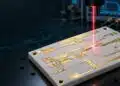
Modelithics has released a dedicated component model library for SIMULIA CST Studio Suite, bringing its well‑known RF and microwave component models into a full‑wave 3D EM environment.

The move is relevant for engineers who want to close the gap between circuit‑level simulation and system‑level electromagnetic analysis, while keeping access to accurate, measurement‑based models for real‑world passive components and active devices.

RelatedPosts

Modelithics Releases COMPLETE v26.1 for Keysight ADS

Modelithics Expands COMPLETE+3D Library for Ansys HFSS

Modelithics Library for MATLAB: Measurement-Based Models for Microwave and RF Passive Components

Overview of the new Modelithics Library for CST Studio Suite

The new Modelithics Library for CST Studio Suite provides an extensive collection of RF and microwave device and component models, including Modelithics Microwave Global Models. These models represent nearly 28,000 components from more than 30 component suppliers, including Amotech, Coilcraft, Dalicap, International Manufacturing Services, Johanson, Kemet YAGEO, Kyocera‑AVX, Murata, Passive Plus, Presidio and Vishay. The library is integrated into the CST Studio Suite environment, which supports multiple solver technologies such as finite element method, finite integration technique and method of moments for electromagnetic analysis from DC up to optical frequencies.

For design engineers already using Modelithics in traditional circuit simulators, this release extends the same measurement‑driven models into the CST platform. For CST users, it provides access to vendor‑correlated component behavior beyond generic lumped models or simple S‑parameter blocks.

Key features and benefits

The library builds on Modelithics Microwave Global Models, which are designed to capture realistic component behavior over a wide range of operating and layout conditions. Key technical features include:

  • Substrate scaling to account for different PCB materials and thicknesses compared to the original characterization substrate.
  • Part value scalability that allows a single model to cover an entire component family across different values.
  • Solder pad‑size scaling and de‑embedding, so engineers can adjust the model to their own pad geometry and still maintain accuracy.
  • Coverage of nearly 28,000 components from over 30 suppliers, simplifying cross‑vendor evaluation at the simulation stage.
  • Support for integration with multiple CST solvers, enabling use in antenna feed networks, filters, matching networks and complex 3D structures.

Compared to simple S‑parameter files, these models are tuned to be more flexible with respect to substrate and pad conditions, which in practice are often different from the original test fixture. This helps reduce the need for ad‑hoc re‑characterization or conservative over‑design margins and supports more confident first‑time‑pass designs.

Typical applications

The combination of a detailed component library with CST’s full‑wave EM capabilities is particularly relevant in the following application areas:

  • RF and microwave filters where discrete capacitors and inductors are tightly coupled to the surrounding layout and housing.
  • Antenna feed networks, matching networks and baluns where parasitics from passives and interconnects influence overall radiation performance.
  • High‑frequency connectors and transitions where discontinuities, pads and component parasitics must be co‑simulated.
  • Complex microwave circuits and modules that combine distributed structures, packaged passives and active devices on the same substrate.
  • mmWave and high‑speed designs where layout‑dependent parasitics of chip components can materially affect insertion loss, return loss and group delay.

In these scenarios, the ability to use measurement‑based models inside a 3D EM solver helps bridge the gap between schematic‑level optimization and final layout verification. It can also assist purchasing and component engineering teams in assessing whether alternative suppliers or series will meet RF performance requirements without extensive re‑prototyping.

Technical highlights

CST Studio Suite, part of Dassault Systèmes’ SIMULIA brand, supports several numerical methods including FEM, FIT and MoM, providing coverage from low frequencies up to optical regimes. The new library leverages this environment while bringing in the following model‑related aspects:

  • Well‑documented circuit simulation models, typically accompanied by detailed release notes that describe supported parts and parameter ranges.
  • Advanced behavioral models for passive component families, non‑linear diode models, non‑linear transistor models and system‑level components via the broader Modelithics COMPLETE Library product line.
  • Extension path towards 3D EM component models, which Modelithics indicates as a future step for even deeper full‑wave component representation.

For teams working at mmWave or in broadband RF systems, the availability of the Modelithics mmWave Library and COMPLETE+3D Library on other EDA platforms suggests a roadmap toward similar high‑frequency depth within CST over time. Exact coverage details for specific components and frequency ranges should be confirmed in the official release notes and related datasheets according to the manufacturer datasheet.

Availability and licensing

The new Modelithics Library for CST Studio Suite is released in version v25.9, with release notes available for engineers needing a detailed list of supported components and features. Interested users can request a free trial of the library by contacting Modelithics sales.

Through the Modelithics Vendor Partner (MVP) program, free use of selected Modelithics models is available for supported manufacturers. Under this program, certain component vendors sponsor access to their models for design engineers, which can simplify evaluation and design‑in of their parts. For specific access conditions, included suppliers and license details, engineers should refer to the current MVP program information and v25.9 release documentation according to the manufacturer datasheet and program description.

Design‑in notes for engineers

For practical design‑in, engineers can consider the following points when adopting the Modelithics Library in CST Studio Suite:

  • Use substrate scaling to match your actual PCB stackup as closely as possible to the model settings (dielectric constant, thickness, copper weight). Small deviations can significantly impact impedance and Q at high frequencies.
  • Adjust pad geometries in the models to reflect your actual land pattern and solder mask, especially in sensitive RF filter or matching network designs where added series inductance or shunt capacitance can detune the response.
  • Where available, exploit part value scalability to sweep component values across a series when optimizing performance, then narrow down candidates for BOM selection and purchasing.
  • Validate critical designs by combining circuit‑level optimization using Microwave Global Models with 3D EM analysis of the final layout, including housings, connectors and packaging features.
  • Coordinate with purchasing and component engineering teams early, using the list of supported suppliers and series as a guide to select parts that are both technically suitable and available in your supply chain.

For organizations standardizing on CST Studio Suite as a primary EM platform, this library can be a way to align RF design, simulation and procurement around components that are already characterized and supported by detailed models. This may reduce the number of physical prototypes and design spins needed to reach production‑ready performance.

Source

The information in this article is based on an official press release and product documentation from Modelithics, combined with general engineering context for RF and microwave design workflows.

References

  1. Modelithics Library for SIMULIA CST Studio Suite – Press release (PDF)
  2. Modelithics Vendor Partner (MVP) program overview
  3. Modelithics – Company and product overview

Related

Recent Posts

Vishay Introduced Thin Film Submount Platform for Optical and RF Modules

30.4.2026
48

Modelithics Releases COMPLETE v26.1 for Keysight ADS

23.4.2026
33

SPICE Simulation of Non-Linear Resistors: Vishay’s Thermistor and PPTC Modelling Ecosystem

22.4.2026
108

Modeling Planar Magnetics Temperature: Practical Guidelines for Power Electronics Engineers

15.4.2026
66

Vishay Releases 2-Way Wilkinson Divider / Combiner for 15–20 GHz RF Front Ends

13.4.2026
31

Exxelia Releases Updated Microwave Materials and Frequency Tuning Catalogues

8.4.2026
35

Modelithics Expands COMPLETE+3D Library for Ansys HFSS

27.3.2026
23

Thermal Modeling of Magnetics

16.3.2026
169

How Modern Tools Model Magnetic Components for Power Electronics

5.3.2026
105

Upcoming Events

Jun 2
16:00 - 17:00 CEST

Calculation, Simulation and Measurement of 800V EMC Filters

Jun 16
16:00 - 17:00 CEST

EMC with EMC – EMC‑compliant design with electromechanical connectors

View Calendar

Popular Posts

  • Buck Converter Design and Calculation

    0 shares
    Share 0 Tweet 0
  • Boost Converter Design and Calculation

    0 shares
    Share 0 Tweet 0
  • Flyback Converter Design and Calculation

    0 shares
    Share 0 Tweet 0
  • MLCC and Ceramic Capacitors

    0 shares
    Share 0 Tweet 0
  • LLC Resonant Converter Design and Calculation

    0 shares
    Share 0 Tweet 0
  • Capacitor Charging and Discharging

    0 shares
    Share 0 Tweet 0
  • What Electronics Engineer Needs to Know About Passive Low Pass Filters

    0 shares
    Share 0 Tweet 0
  • Dual Active Bridge (DAB) Topology

    0 shares
    Share 0 Tweet 0
  • Ripple Current and its Effects on the Performance of Capacitors

    3 shares
    Share 3 Tweet 0
  • SEPIC Converter Design and Calculation

    0 shares
    Share 0 Tweet 0

Newsletter Subscription


Passive Components Blog

© EPCI - Leading Passive Components Educational and Information Site

  • Home
  • Privacy Policy
  • EPCI Membership & Advertisement
  • About

No Result
View All Result
  • Home
  • Knowledge Blog
  • Dossiers
  • PCNS

© EPCI - Leading Passive Components Educational and Information Site

This website uses cookies. By continuing to use this website you are giving consent to cookies being used. Visit our Privacy and Cookie Policy.
Go to mobile version