






Passive Components Blog
No Result
View All Result
  • Home
  • NewsFilter
    • All
    • Aerospace & Defence
    • Antenna
    • Applications
    • Automotive
    • Capacitors
    • Circuit Protection Devices
    • electro-mechanical news
    • Filters
    • Fuses
    • Inductors
    • Industrial
    • Integrated Passives
    • inter-connect news
    • Market & Supply Chain
    • Market Insights
    • Medical
    • Modelling and Simulation
    • New Materials & Supply
    • New Technologies
    • Non-linear Passives
    • Oscillators
    • Passive Sensors News
    • Resistors
    • RF & Microwave
    • Telecommunication
    • Weekly Digest

    YAGEO Introduces C0G Flexible Termination Automotive MLCCs

    SCHURTER Releases SMT Micro Switch for Compact HMIs

    binder Releases Tool‑Tightenable M12 Connectors for Improved Reliability

    Vishay Introduced Thin Film Submount Platform for Optical and RF Modules

    Murata Introduces Crystal and NTC Set for Automotive UWB Timing

    Kyocera Developed Multilayer Ceramic Core Substrate for AI Packages

    Modeling Fringing Field Losses in Inductors & Transformers

    YMIN Introduces Polymer Tantalum Capacitors for AI Server SSDs

    Littelfuse Expands High-Voltage TVS Diodes

    Trending Tags

    • Ripple Current
    • RF
    • Leakage Current
    • Tantalum vs Ceramic
    • Snubber
    • Low ESR
    • Feedthrough
    • Derating
    • Dielectric Constant
    • New Products
    • Market Reports
  • VideoFilter
    • All
    • Antenna videos
    • Capacitor videos
    • Circuit Protection Video
    • Filter videos
    • Fuse videos
    • Inductor videos
    • Inter-Connect Video
    • Non-linear passives videos
    • Oscillator videos
    • Passive sensors videos
    • Resistor videos

    Modeling Fringing Field Losses in Inductors & Transformers

    Why Power Inductors Use a Ferrite Core With an Air Gap

    Transformer-Based Power-Line Harvester Magnetic Design

    Thermal Modeling of Magnetics

    Standard vs Planar LLC transformers Comparison for Battery Chargers

    How Modern Tools Model Magnetic Components for Power Electronics

    Advanced Loss Modeling for Planar Magnetics in the Frenetic Planar Tool

    2026 Power Magnetics Design Trends: Flyback, DAB and Planar

    Enabling Software‑Defined Vehicle Architectures: Automotive Ethernet and Zonal Smart Power

    Trending Tags

    • Capacitors explained
    • Inductors explained
    • Resistors explained
    • Filters explained
    • Application Video Guidelines
    • EMC
    • New Products
    • Ripple Current
    • Simulation
    • Tantalum vs Ceramic
  • Knowledge Blog
  • DossiersNew
  • Suppliers
    • Who is Who
  • PCNS
    • PCNS 2025
    • PCNS 2023
    • PCNS 2021
    • PCNS 2019
    • PCNS 2017
  • Events
  • Home
  • NewsFilter
    • All
    • Aerospace & Defence
    • Antenna
    • Applications
    • Automotive
    • Capacitors
    • Circuit Protection Devices
    • electro-mechanical news
    • Filters
    • Fuses
    • Inductors
    • Industrial
    • Integrated Passives
    • inter-connect news
    • Market & Supply Chain
    • Market Insights
    • Medical
    • Modelling and Simulation
    • New Materials & Supply
    • New Technologies
    • Non-linear Passives
    • Oscillators
    • Passive Sensors News
    • Resistors
    • RF & Microwave
    • Telecommunication
    • Weekly Digest

    YAGEO Introduces C0G Flexible Termination Automotive MLCCs

    SCHURTER Releases SMT Micro Switch for Compact HMIs

    binder Releases Tool‑Tightenable M12 Connectors for Improved Reliability

    Vishay Introduced Thin Film Submount Platform for Optical and RF Modules

    Murata Introduces Crystal and NTC Set for Automotive UWB Timing

    Kyocera Developed Multilayer Ceramic Core Substrate for AI Packages

    Modeling Fringing Field Losses in Inductors & Transformers

    YMIN Introduces Polymer Tantalum Capacitors for AI Server SSDs

    Littelfuse Expands High-Voltage TVS Diodes

    Trending Tags

    • Ripple Current
    • RF
    • Leakage Current
    • Tantalum vs Ceramic
    • Snubber
    • Low ESR
    • Feedthrough
    • Derating
    • Dielectric Constant
    • New Products
    • Market Reports
  • VideoFilter
    • All
    • Antenna videos
    • Capacitor videos
    • Circuit Protection Video
    • Filter videos
    • Fuse videos
    • Inductor videos
    • Inter-Connect Video
    • Non-linear passives videos
    • Oscillator videos
    • Passive sensors videos
    • Resistor videos

    Modeling Fringing Field Losses in Inductors & Transformers

    Why Power Inductors Use a Ferrite Core With an Air Gap

    Transformer-Based Power-Line Harvester Magnetic Design

    Thermal Modeling of Magnetics

    Standard vs Planar LLC transformers Comparison for Battery Chargers

    How Modern Tools Model Magnetic Components for Power Electronics

    Advanced Loss Modeling for Planar Magnetics in the Frenetic Planar Tool

    2026 Power Magnetics Design Trends: Flyback, DAB and Planar

    Enabling Software‑Defined Vehicle Architectures: Automotive Ethernet and Zonal Smart Power

    Trending Tags

    • Capacitors explained
    • Inductors explained
    • Resistors explained
    • Filters explained
    • Application Video Guidelines
    • EMC
    • New Products
    • Ripple Current
    • Simulation
    • Tantalum vs Ceramic
  • Knowledge Blog
  • DossiersNew
  • Suppliers
    • Who is Who
  • PCNS
    • PCNS 2025
    • PCNS 2023
    • PCNS 2021
    • PCNS 2019
    • PCNS 2017
  • Events
No Result
View All Result
Passive Components Blog
No Result
View All Result

MLCC Market: Automotive & Industrial on Rise, IT Slows Down

19.12.2022
Reading Time: 3 mins read
A A

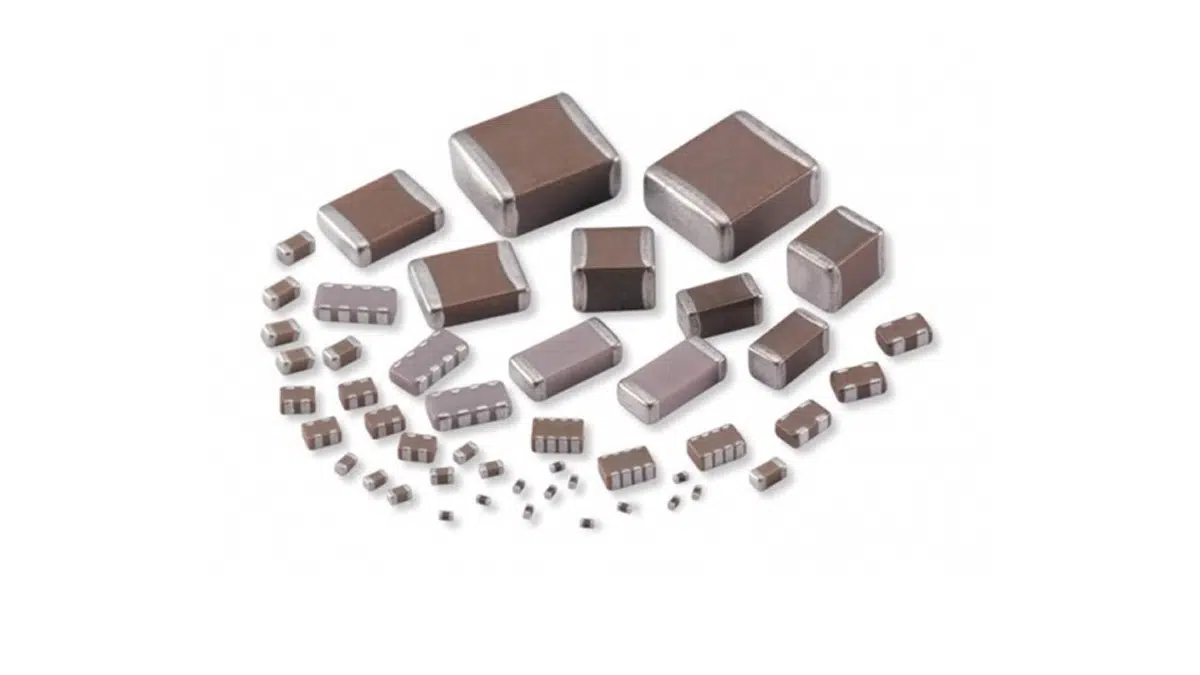
Demand for multilayer ceramic capacitors (MLCC) is expected to slow down until the first half of next year. The decline trend is likely to be concentrated in the IT sector, including smartphones, PC, and tablet PC. On the other hand, MLCC for electric vehicles and automobiles are expected to continue to grow rapidly.

Korean MLCC industry plans to respond to market changes by lowering the operating rate and increasing the proportion of special MLCC according to Korea IT news article.

RelatedPosts

YAGEO Introduces C0G Flexible Termination Automotive MLCCs

SCHURTER Releases SMT Micro Switch for Compact HMIs

binder Releases Tool‑Tightenable M12 Connectors for Improved Reliability

Samsung Electro-Mechanics’ component division, which is in charge of MLCC, is expected to generate sales of 4.166 trillion KRW this year, which is decreased by about 14% from 4.778 trillion KRW last year. Most of Samsung Electro-Mechanics’ MLCC business is for IT devices.

The operating rate also plummeted. The component division’s operating rate in the third quarter was only 65%. It is the lowest rate in last three years since 2019. Last year, when MLCC was booming, the utilization rate was between 89~99%.

Samsung Electro-Mechanics has recently been significantly increasing MLCC for automotive and industrial use. They are struggling to secure large global customers. They announced that their automotive MLCC business in the third quarter of this year grew by double digits compared to the previous year. As MLCC accounts for a large portion of total sales, it is known that they are struggling with special measures to respond to a sharp drop in demand.

Samwha Capacitor also recorded 60.3 billion KRW in sales in the third quarter, down 14.16% from the previous year. Net profit was 8 billion KRW, down 30.21% from the previous year. The Yongin plant’s operating rate is in the 70% range, down from 93% last year. The overseas plant operating rate was 59%, down significantly from 89% last year. Samwha Capacitor’s MLCC business has a high proportion of IT and home appliances. Samwha Capacitor is diversifying their sales by strengthening the automotive MLCC business, where demand continues to grow.

Murata from Japan announced that MLCC demand will decline until the first half of next year due to the decline in smartphone sales in China. The prediction of the world’s No. 1 company becomes the standard for the MLCC industry. Smartphone and PC, and tablet PC shipments for next year were predicted to decrease by 19.9% and 12% compared to last year to 1.1 billion units and 440 million units, respectively.

On the other hand, automotive and industrial MLCC is on the rise. AMOTECH, which is strengthening automotive MLCC, succeeded in turning a profit on a separate basis in the third quarter of this year from MLCC sales. The proportion of MLCC sales is expected to increase further next year. An annual turnaround is expected next year. For AMOTECH, demand for MLCC for global electric vehicle manufacturers and communication equipment is continuously increasing.

AVATECH opened the door to a new special MLCC business this year by supplying MLCC to SolarEdge, the world’s number one solar inverter company. AVATECH mass-produced and supplied MLCC for industrial, electronic products, and IT purposes. Negotiations are underway to supply MLCC parts for automotive electronics.

An official from the parts industry said, “The demand for MLCC for IT has noticeably declined and the price has also fallen, so companies are making breakthroughs in growth markets such as for electric vehicles. As the MLCC production lines for IT and automotive are different, additional investment is required.”


Related

Source: Korea IT news

Recent Posts

YAGEO Introduces C0G Flexible Termination Automotive MLCCs

30.4.2026
11

SCHURTER Releases SMT Micro Switch for Compact HMIs

30.4.2026
4

binder Releases Tool‑Tightenable M12 Connectors for Improved Reliability

30.4.2026
4

Vishay Introduced Thin Film Submount Platform for Optical and RF Modules

30.4.2026
9

Murata Introduces Crystal and NTC Set for Automotive UWB Timing

30.4.2026
8

YMIN Introduces Polymer Tantalum Capacitors for AI Server SSDs

29.4.2026
37

DigiKey Adds 31k New In‑Stock Parts in Q1 2026

29.4.2026
8

Miniaturization of Tantalum Capacitors: Structural Limit Under Constant Rating

27.4.2026
32

Murata New MLCC Bulk Case Packaging Cuts Packaging Material by 99%

27.4.2026
48

Upcoming Events

May 5
16:00 - 17:00 CEST

Understanding and Selecting Capacitors – Fundamentals, Technologies and Latest Trends

May 7
17:00 - 18:00 CEST

From Grid to Motion: How Industrial Electrification is Redefining Power System Design

May 12
8:00 - 15:00 CEST

ESCC Space Splice connectors

View Calendar

Popular Posts

  • Buck Converter Design and Calculation

    0 shares
    Share 0 Tweet 0
  • Boost Converter Design and Calculation

    0 shares
    Share 0 Tweet 0
  • Flyback Converter Design and Calculation

    0 shares
    Share 0 Tweet 0
  • LLC Resonant Converter Design and Calculation

    0 shares
    Share 0 Tweet 0
  • MLCC and Ceramic Capacitors

    0 shares
    Share 0 Tweet 0
  • Dual Active Bridge (DAB) Topology

    0 shares
    Share 0 Tweet 0
  • Capacitor Charging and Discharging

    0 shares
    Share 0 Tweet 0
  • What Electronics Engineer Needs to Know About Passive Low Pass Filters

    0 shares
    Share 0 Tweet 0
  • Ripple Current and its Effects on the Performance of Capacitors

    3 shares
    Share 3 Tweet 0
  • MLCC Case Sizes Standards Explained

    0 shares
    Share 0 Tweet 0

Newsletter Subscription


Passive Components Blog

© EPCI - Leading Passive Components Educational and Information Site

  • Home
  • Privacy Policy
  • EPCI Membership & Advertisement
  • About

No Result
View All Result
  • Home
  • Knowledge Blog
  • PCNS

© EPCI - Leading Passive Components Educational and Information Site

This website uses cookies. By continuing to use this website you are giving consent to cookies being used. Visit our Privacy and Cookie Policy.
Go to mobile version