











Passive Components Blog
No Result
View All Result
  • Home
  • NewsFilter
    • All
    • Aerospace & Defence
    • Antenna
    • Applications
    • Automotive
    • Capacitors
    • Circuit Protection Devices
    • electro-mechanical news
    • Filters
    • Fuses
    • Inductors
    • Industrial
    • Integrated Passives
    • inter-connect news
    • Market & Supply Chain
    • Market Insights
    • Medical
    • Modelling and Simulation
    • New Materials & Supply
    • New Technologies
    • Non-linear Passives
    • Oscillators
    • Passive Sensors News
    • Resistors
    • RF & Microwave
    • Telecommunication
    • Weekly Digest

    YAGEO Introduces High Rel MLCCs Beyond MIL-Spec Limits

    Würth Elektronik Expanded Capacity for Validation and Services in Asia

    Samsung Introduces Ultra-High-Voltage 1500 V MLCCs for xEV Powertrains

    YAGEO Q1 2026 Results: AI Servers and Pricing Power Behind a Moderate Q2 Outlook

    TDK Introduces High‑Voltage Common‑Mode Chokes for Compact 1250 V DC Converters

    Vishay Extends Power Inductors for DC/DC with 1212 Compact Case

    Modeling Planar Magnetics Temperature: Practical Guidelines for Power Electronics Engineers

    YAGEO Releases Ferrite Shielded Power Inductors for High‑Density Designs

    Samsung Presents MLCC Selection Guide for Humanoids and Robotic Applications

    Trending Tags

    • Ripple Current
    • RF
    • Leakage Current
    • Tantalum vs Ceramic
    • Snubber
    • Low ESR
    • Feedthrough
    • Derating
    • Dielectric Constant
    • New Products
    • Market Reports
  • VideoFilter
    • All
    • Antenna videos
    • Capacitor videos
    • Circuit Protection Video
    • Filter videos
    • Fuse videos
    • Inductor videos
    • Inter-Connect Video
    • Non-linear passives videos
    • Oscillator videos
    • Passive sensors videos
    • Resistor videos

    Transformer-Based Power-Line Harvester Magnetic Design

    Thermal Modeling of Magnetics

    Standard vs Planar LLC transformers Comparison for Battery Chargers

    How Modern Tools Model Magnetic Components for Power Electronics

    Advanced Loss Modeling for Planar Magnetics in the Frenetic Planar Tool

    2026 Power Magnetics Design Trends: Flyback, DAB and Planar

    Enabling Software‑Defined Vehicle Architectures: Automotive Ethernet and Zonal Smart Power

    Calculating Resistance Value of a Flyback RC Snubber 

    One‑Pulse Characterization of Nonlinear Power Inductors

    Trending Tags

    • Capacitors explained
    • Inductors explained
    • Resistors explained
    • Filters explained
    • Application Video Guidelines
    • EMC
    • New Products
    • Ripple Current
    • Simulation
    • Tantalum vs Ceramic
  • Knowledge Blog
  • DossiersNew
  • Suppliers
    • Who is Who
  • PCNS
    • PCNS 2025
    • PCNS 2023
    • PCNS 2021
    • PCNS 2019
    • PCNS 2017
  • Events
  • Home
  • NewsFilter
    • All
    • Aerospace & Defence
    • Antenna
    • Applications
    • Automotive
    • Capacitors
    • Circuit Protection Devices
    • electro-mechanical news
    • Filters
    • Fuses
    • Inductors
    • Industrial
    • Integrated Passives
    • inter-connect news
    • Market & Supply Chain
    • Market Insights
    • Medical
    • Modelling and Simulation
    • New Materials & Supply
    • New Technologies
    • Non-linear Passives
    • Oscillators
    • Passive Sensors News
    • Resistors
    • RF & Microwave
    • Telecommunication
    • Weekly Digest

    YAGEO Introduces High Rel MLCCs Beyond MIL-Spec Limits

    Würth Elektronik Expanded Capacity for Validation and Services in Asia

    Samsung Introduces Ultra-High-Voltage 1500 V MLCCs for xEV Powertrains

    YAGEO Q1 2026 Results: AI Servers and Pricing Power Behind a Moderate Q2 Outlook

    TDK Introduces High‑Voltage Common‑Mode Chokes for Compact 1250 V DC Converters

    Vishay Extends Power Inductors for DC/DC with 1212 Compact Case

    Modeling Planar Magnetics Temperature: Practical Guidelines for Power Electronics Engineers

    YAGEO Releases Ferrite Shielded Power Inductors for High‑Density Designs

    Samsung Presents MLCC Selection Guide for Humanoids and Robotic Applications

    Trending Tags

    • Ripple Current
    • RF
    • Leakage Current
    • Tantalum vs Ceramic
    • Snubber
    • Low ESR
    • Feedthrough
    • Derating
    • Dielectric Constant
    • New Products
    • Market Reports
  • VideoFilter
    • All
    • Antenna videos
    • Capacitor videos
    • Circuit Protection Video
    • Filter videos
    • Fuse videos
    • Inductor videos
    • Inter-Connect Video
    • Non-linear passives videos
    • Oscillator videos
    • Passive sensors videos
    • Resistor videos

    Transformer-Based Power-Line Harvester Magnetic Design

    Thermal Modeling of Magnetics

    Standard vs Planar LLC transformers Comparison for Battery Chargers

    How Modern Tools Model Magnetic Components for Power Electronics

    Advanced Loss Modeling for Planar Magnetics in the Frenetic Planar Tool

    2026 Power Magnetics Design Trends: Flyback, DAB and Planar

    Enabling Software‑Defined Vehicle Architectures: Automotive Ethernet and Zonal Smart Power

    Calculating Resistance Value of a Flyback RC Snubber 

    One‑Pulse Characterization of Nonlinear Power Inductors

    Trending Tags

    • Capacitors explained
    • Inductors explained
    • Resistors explained
    • Filters explained
    • Application Video Guidelines
    • EMC
    • New Products
    • Ripple Current
    • Simulation
    • Tantalum vs Ceramic
  • Knowledge Blog
  • DossiersNew
  • Suppliers
    • Who is Who
  • PCNS
    • PCNS 2025
    • PCNS 2023
    • PCNS 2021
    • PCNS 2019
    • PCNS 2017
  • Events
No Result
View All Result
Passive Components Blog
No Result
View All Result

Percolation Phenomenon and Reliability of Molded Power Inductors in DC/DC converters

1.9.2025
Reading Time: 3 mins read
A A

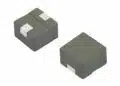
This Würth Elektronik webinar presentation delves into the significance of molded power inductors in today’s market, focusing on the phenomenon of degradation and the newly identified percolation effect, its detection, and its influence on DC-DC converter design.

The higher electrical and thermal stresses over time can lead to an increase in magnetic core loss due to the degradation of the insulation between magnetic particles.

RelatedPosts

Würth Elektronik Expanded Capacity for Validation and Services in Asia

Würth Elektronik Releases Heat Sinks for TO and IC packages

Würth Elektronik ICS to Acquire MRS Electronic and Expand Vehicle Electronics Portfolio

Würth Elektronik defines this degradation as a percolation phenomenon. But what exactly is percolation and what are its repercussions? And more importantly, how does it affect the long-term performance of a DC/DC converter?

Percolation Phenomenon and Reliability of Molded Power Inductors

Molded power inductors are witnessing a robust growth trajectory despite current economic challenges. Projections indicate an expansion from 2.5 million units to nearly 5 million, with a CAGR of 6.6%. This growth is driven by advancements in GaN technologies, SiC families, and the rising demand for efficient, reliable components in automotive and smart devices.

Importance of Reliability

Reliability stands as a critical factor due to increasing applications in AI, embedded systems, and high-voltage designs. Traditionally, capacitors and cooling systems were considered primary failure points in DC-DC converters. However, recent insights reveal that molded power inductors also present reliability concerns due to an unexpected degradation phenomenon.

Discovery of the Percolation Phenomenon

Our research uncovered a degradation pattern not attributed to conventional factors like temperature or saturation. Instead, we identified a percolation phenomenon—an internal flow of energy through connected particles within the inductor material. This transition from an insulated to a conductive state significantly impacts performance, leading to increased core losses and reduced efficiency.

Experimental Analysis

Through simulations and real-world application tests, we observed:

  • Ripple Current Variations: Unexpected increases in ripple current indicating percolation onset.
  • Temperature and Voltage Stress: High thermal and electrical stress accelerated the formation of percolation networks.
  • Material Degradation: Changes in inductance and resistance values, even without visible physical cracks, suggesting internal structural failures.

Implications for DC-DC Converter Design

The percolation effect results in:

  • Increased power losses and reduced efficiency.
  • Elevated harmonic distortions impacting sensitive applications like wireless communication and embedded systems.
  • Potential thermal runaway scenarios if not detected early.

Mitigation Strategies

To address these challenges:

  1. Enhanced Material Composition: Using advanced binders and coatings to delay percolation onset.
  2. High-Temperature Testing: Prolonged testing beyond standard 1,000-hour benchmarks to identify latent degradation.
  3. Improved Detection Techniques: Monitoring changes in Q-factor and ripple current to detect early signs of percolation.

Conclusion

The percolation phenomenon represents a pivotal discovery in understanding the long-term reliability of molded power inductors. Our continued research at Bure Electronics aims to develop materials and designs that mitigate this effect, ensuring robust performance across diverse applications.

Related

Source: Würth Elektronik

Recent Posts

TDK Introduces High‑Voltage Common‑Mode Chokes for Compact 1250 V DC Converters

16.4.2026
6

Vishay Extends Power Inductors for DC/DC with 1212 Compact Case

16.4.2026
7

Modeling Planar Magnetics Temperature: Practical Guidelines for Power Electronics Engineers

15.4.2026
9

YAGEO Releases Ferrite Shielded Power Inductors for High‑Density Designs

15.4.2026
10

AI-Assisted Structural Diagnostics and Physics-Based Reliability Interpretation of Tantalum Capacitor Anodes

14.4.2026
16

YAGEO Introduces EMI Suppression High‑Current 3‑phase Common Mode Chokes

14.4.2026
18

ECIA March 2026 Industry Pulse Points to Best Sales Climate in Five Years

13.4.2026
31

Coilcraft Unveils Molded Power Inductors for High‑Current VRMs

8.4.2026
39

Bourns Releases Compact High Current Shielded Power Inductors

2.4.2026
29

Upcoming Events

Apr 21
16:00 - 17:00 CEST

Heatsink Solutions: Thermal Management in electronic devices

Apr 22
17:00 - 17:30 CEST

Magnetics in a high frequency GaN era

Apr 22
17:00 - 18:00 CEST

Derating Tantalum, Film, and Ceramic Capacitors

View Calendar

Popular Posts

  • Buck Converter Design and Calculation

    0 shares
    Share 0 Tweet 0
  • Boost Converter Design and Calculation

    0 shares
    Share 0 Tweet 0
  • Flyback Converter Design and Calculation

    0 shares
    Share 0 Tweet 0
  • LLC Resonant Converter Design and Calculation

    0 shares
    Share 0 Tweet 0
  • MLCC and Ceramic Capacitors

    0 shares
    Share 0 Tweet 0
  • Dual Active Bridge (DAB) Topology

    0 shares
    Share 0 Tweet 0
  • Capacitor Charging and Discharging

    0 shares
    Share 0 Tweet 0
  • Plastic Materials Dielectric Constant and DF

    4 shares
    Share 4 Tweet 0
  • MLCC Case Sizes Standards Explained

    0 shares
    Share 0 Tweet 0
  • Ripple Current and its Effects on the Performance of Capacitors

    3 shares
    Share 3 Tweet 0

Newsletter Subscription


Passive Components Blog

© EPCI - Leading Passive Components Educational and Information Site

  • Home
  • Privacy Policy
  • EPCI Membership & Advertisement
  • About

No Result
View All Result
  • Home
  • Knowledge Blog
  • PCNS

© EPCI - Leading Passive Components Educational and Information Site

This website uses cookies. By continuing to use this website you are giving consent to cookies being used. Visit our Privacy and Cookie Policy.
Go to mobile version