










Passive Components Blog
No Result
View All Result
  • Home
  • NewsFilter
    • All
    • Aerospace & Defence
    • Antenna
    • Applications
    • Automotive
    • Capacitors
    • Circuit Protection Devices
    • electro-mechanical news
    • Filters
    • Fuses
    • Inductors
    • Industrial
    • Integrated Passives
    • inter-connect news
    • Market & Supply Chain
    • Market Insights
    • Medical
    • Modelling and Simulation
    • New Materials & Supply
    • New Technologies
    • Non-linear Passives
    • Oscillators
    • Passive Sensors News
    • Resistors
    • RF & Microwave
    • Telecommunication
    • Weekly Digest

    Panasonic Expands Automotive PP Film Capacitors Voltage Range

    Panasonic Extends Automotive Power Inductor Line

    February 2026 Interconnect, Passives and Electromechanical Components Market Insights

    Wk 10 Electronics Supply Chain Digest

    YAGEO Presents 3.6 kW LLC Transformer Platform

    Empower Extends Embedded Silicon Capacitors for AI

    ECIA February 2026 Industry Pulse Signals Strong Component Growth

    How Modern Tools Model Magnetic Components for Power Electronics

    Inductors and Ferrite Beads Price Hikes 

    Trending Tags

    • Ripple Current
    • RF
    • Leakage Current
    • Tantalum vs Ceramic
    • Snubber
    • Low ESR
    • Feedthrough
    • Derating
    • Dielectric Constant
    • New Products
    • Market Reports
  • VideoFilter
    • All
    • Antenna videos
    • Capacitor videos
    • Circuit Protection Video
    • Filter videos
    • Fuse videos
    • Inductor videos
    • Inter-Connect Video
    • Non-linear passives videos
    • Oscillator videos
    • Passive sensors videos
    • Resistor videos

    How Modern Tools Model Magnetic Components for Power Electronics

    Advanced Loss Modeling for Planar Magnetics in the Frenetic Planar Tool

    2026 Power Magnetics Design Trends: Flyback, DAB and Planar

    Enabling Software‑Defined Vehicle Architectures: Automotive Ethernet and Zonal Smart Power

    Calculating Resistance Value of a Flyback RC Snubber 

    One‑Pulse Characterization of Nonlinear Power Inductors

    Thermistor Linearization Challenges

    Coaxial Connectors and How to Connect with PCB

    PCB Manufacturing, Test Methods, Quality and Reliability

    Trending Tags

    • Capacitors explained
    • Inductors explained
    • Resistors explained
    • Filters explained
    • Application Video Guidelines
    • EMC
    • New Products
    • Ripple Current
    • Simulation
    • Tantalum vs Ceramic
  • Knowledge Blog
  • DossiersNew
  • Suppliers
    • Who is Who
  • PCNS
    • PCNS 2025
    • PCNS 2023
    • PCNS 2021
    • PCNS 2019
    • PCNS 2017
  • Events
  • Home
  • NewsFilter
    • All
    • Aerospace & Defence
    • Antenna
    • Applications
    • Automotive
    • Capacitors
    • Circuit Protection Devices
    • electro-mechanical news
    • Filters
    • Fuses
    • Inductors
    • Industrial
    • Integrated Passives
    • inter-connect news
    • Market & Supply Chain
    • Market Insights
    • Medical
    • Modelling and Simulation
    • New Materials & Supply
    • New Technologies
    • Non-linear Passives
    • Oscillators
    • Passive Sensors News
    • Resistors
    • RF & Microwave
    • Telecommunication
    • Weekly Digest

    Panasonic Expands Automotive PP Film Capacitors Voltage Range

    Panasonic Extends Automotive Power Inductor Line

    February 2026 Interconnect, Passives and Electromechanical Components Market Insights

    Wk 10 Electronics Supply Chain Digest

    YAGEO Presents 3.6 kW LLC Transformer Platform

    Empower Extends Embedded Silicon Capacitors for AI

    ECIA February 2026 Industry Pulse Signals Strong Component Growth

    How Modern Tools Model Magnetic Components for Power Electronics

    Inductors and Ferrite Beads Price Hikes 

    Trending Tags

    • Ripple Current
    • RF
    • Leakage Current
    • Tantalum vs Ceramic
    • Snubber
    • Low ESR
    • Feedthrough
    • Derating
    • Dielectric Constant
    • New Products
    • Market Reports
  • VideoFilter
    • All
    • Antenna videos
    • Capacitor videos
    • Circuit Protection Video
    • Filter videos
    • Fuse videos
    • Inductor videos
    • Inter-Connect Video
    • Non-linear passives videos
    • Oscillator videos
    • Passive sensors videos
    • Resistor videos

    How Modern Tools Model Magnetic Components for Power Electronics

    Advanced Loss Modeling for Planar Magnetics in the Frenetic Planar Tool

    2026 Power Magnetics Design Trends: Flyback, DAB and Planar

    Enabling Software‑Defined Vehicle Architectures: Automotive Ethernet and Zonal Smart Power

    Calculating Resistance Value of a Flyback RC Snubber 

    One‑Pulse Characterization of Nonlinear Power Inductors

    Thermistor Linearization Challenges

    Coaxial Connectors and How to Connect with PCB

    PCB Manufacturing, Test Methods, Quality and Reliability

    Trending Tags

    • Capacitors explained
    • Inductors explained
    • Resistors explained
    • Filters explained
    • Application Video Guidelines
    • EMC
    • New Products
    • Ripple Current
    • Simulation
    • Tantalum vs Ceramic
  • Knowledge Blog
  • DossiersNew
  • Suppliers
    • Who is Who
  • PCNS
    • PCNS 2025
    • PCNS 2023
    • PCNS 2021
    • PCNS 2019
    • PCNS 2017
  • Events
No Result
View All Result
Passive Components Blog
No Result
View All Result

Perspectives on Supply Chain Ripples

14.3.2019
Reading Time: 3 mins read
A A
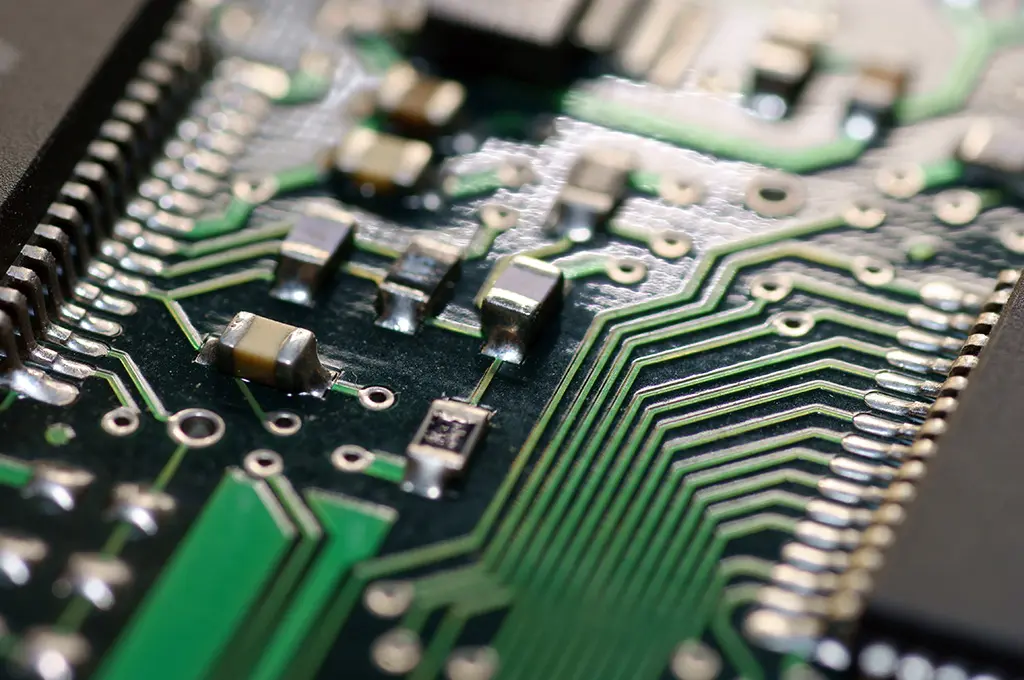
electronic circuit plate

electronic circuit plate

Source: iConnect007 article

by Nolan Johnson;

RelatedPosts

Panasonic Expands Automotive PP Film Capacitors Voltage Range

Panasonic Extends Automotive Power Inductor Line

February 2026 Interconnect, Passives and Electromechanical Components Market Insights

The ripples start at the very front of the process when the engineering and design team make their first choices about the performance characteristics for their project, then select components to fit their performance windows.

As the project proceeds, the team makes hundreds and even thousands of little choices about which capacitor, resistor, packages, etc. In a traditional design flow, the project team tends to use the parts they already know and for which they probably already have footprints—the parts may be a little long in the tooth, but they are well-known quantities with a solid supply chain.

Except these are not traditional times. It doesn’t work the same way now; the market is much more turbulent. The PCB supply chain has changed.

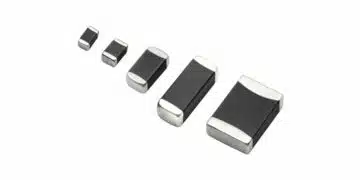
“The parts that are in the greatest demand are what we call popcorn parts—the really low-cost penny parts. Since the dot-com crash in 2000, the prices have been depressed to the point that they’re a very low margin for the manufacturers, making their average selling price not profitable,” states Stephanie Martin, senior VP of supply chain at Vexos, a low- to  mid-volume electronics manufacturing and custom material solutions provider. “None of the main manufacturers that I’ve talked to are expanding in the larger case sizes.” She continues, “They’re expanding in the 0201 and the 1005 case sizes, but not expanding in the 0402 and above.”

This starts causing problems for those triedand-true parts chosen in the design phase. Martin notes, “That’s where most of the industrial sector is still located—in the larger case sizes. I think the only real relief that’s going to come for those part sizes is when the OEMs decide to do a redesign into the smaller sizes.”

What’s the Cause?

Dave Doherty, COO at Digi-Key, shares this, “If you look across industrial, medical, telecommunications, military, aerospace, and automotive, we’re in a very robust part of the cycle where more electronics being put into more applications. However, I would say what’s putting the strain on the infrastructure as much as anything is automotive.”

In John Watson’s recent article for the January 2019 issue of SMT007 Magazine titled “The Electronic Component Shortage Crisis: A Veteran Engineer’s Perspective,” he does the math for us. “It is estimated that approximately 1.5 billion smartphones will be manufactured in the upcoming year, and each flagship model contains roughly 1,000 capacitors. The current estimate is that there is a worldwide production capacity of three trillion MLCC capacitors. By those numbers, nearly 50% of the MLCC capacitors produced are already designated and used strictly in the mobile cellphone sector.”

Watson continues, “A standard combustion engine car requires somewhere between 2,000–3,000 capacitors. An electric vehicle has up to 22,000 capacitors required in a single car. Furthermore, the higher temperatures inside the control circuits of electric vehicles  mean that traditional plastic film capacitors are no longer suitable, so ceramic MLCCs are increasingly being used.”

These two market trends alone start to put the situation into perspective. Martin characterizes it this way, “Typically, the market follows some new must-have device—whether it was a pager, cellphone, or laptop computer—but this market cycle is very different. This one is not any single device; this market segment is really what we’re calling the electrification of everything. There’s a huge change going on. All of the devices, the internet of things, and smart devices in general, as well as automotive content and cellphones are hitting us at the same time.”

“There is a huge technology shift that’s happening right now,” notes Dave Doherty. “We’re at the beginning stages, and I think it’s going to accelerate. The industry is going smaller. Designers need to look at using the smallest size parts that they possibly can. Designers tend to use the parts that they’re comfortable with. It is not unusual when we see a brand-new design that it has obsolete components.”

To read the full version of this article which originally appeared in the January 2019 issue of PCB007 Magazine


Related

Recent Posts

Panasonic Expands Automotive PP Film Capacitors Voltage Range

9.3.2026
5

Panasonic Extends Automotive Power Inductor Line

9.3.2026
9

February 2026 Interconnect, Passives and Electromechanical Components Market Insights

9.3.2026
16

YAGEO Presents 3.6 kW LLC Transformer Platform

6.3.2026
24

Empower Extends Embedded Silicon Capacitors for AI

6.3.2026
25

ECIA February 2026 Industry Pulse Signals Strong Component Growth

6.3.2026
16

Inductors and Ferrite Beads Price Hikes 

5.3.2026
55

TDK Extends Compact ThermoFuse Varistors up to 50 kA

5.3.2026
14

Samtec ANSI/VITA 90 Connectors: Rugged Small Form Factor Standard

5.3.2026
5

Upcoming Events

Mar 19
13:00 - 14:00 CDT

Smart Consideration of Inductor Thermal Performance

Mar 21
All day

PSMA Capacitor Workshop 2026

Apr 21
16:00 - 17:00 CEST

Heatsink Solutions: Thermal Management in electronic devices

View Calendar

Popular Posts

  • Buck Converter Design and Calculation

    0 shares
    Share 0 Tweet 0
  • Boost Converter Design and Calculation

    0 shares
    Share 0 Tweet 0
  • Flyback Converter Design and Calculation

    0 shares
    Share 0 Tweet 0
  • LLC Resonant Converter Design and Calculation

    0 shares
    Share 0 Tweet 0
  • MLCC Manufacturers Consider Price Increase as AI Demand Outpaces Supply

    0 shares
    Share 0 Tweet 0
  • Dual Active Bridge (DAB) Topology

    0 shares
    Share 0 Tweet 0
  • Ripple Current and its Effects on the Performance of Capacitors

    3 shares
    Share 3 Tweet 0
  • MLCC and Ceramic Capacitors

    0 shares
    Share 0 Tweet 0
  • What is a Dielectric Constant and DF of Plastic Materials?

    4 shares
    Share 4 Tweet 0
  • MLCC Case Sizes Standards Explained

    0 shares
    Share 0 Tweet 0

Newsletter Subscription


Passive Components Blog

© EPCI - Leading Passive Components Educational and Information Site

  • Home
  • Privacy Policy
  • EPCI Membership & Advertisement
  • About

No Result
View All Result
  • Home
  • Knowledge Blog
  • PCNS

© EPCI - Leading Passive Components Educational and Information Site

This website uses cookies. By continuing to use this website you are giving consent to cookies being used. Visit our Privacy and Cookie Policy.
Go to mobile version