







Passive Components Blog
No Result
View All Result
  • Home
  • NewsFilter
    • All
    • Aerospace & Defence
    • Antenna
    • Applications
    • Automotive
    • Capacitors
    • Circuit Protection Devices
    • electro-mechanical news
    • Filters
    • Fuses
    • Inductors
    • Industrial
    • Integrated Passives
    • inter-connect news
    • Market & Supply Chain
    • Market Insights
    • Medical
    • Modelling and Simulation
    • New Materials & Supply
    • New Technologies
    • Non-linear Passives
    • Oscillators
    • Passive Sensors News
    • Resistors
    • RF & Microwave
    • Telecommunication
    • Weekly Digest

    SCHURTER Releases Coin Cell Supercapacitors for Backup Power

    Skeleton Technologies Expands in U.S. to Power AI Data Centers

    TDK Releases Stackable µPOL 25A Power Modules

    Wk 6 Electronics Supply Chain Digest

    Smoltek CNF-MIM Capacitors Hit 1,000x Lower Leakage

    DigiKey Expands Line Card with 108K Stock Parts and 364 Suppliers

    Würth Elektronik Announces Partner Program

    Vishay Releases Compact 0806 Low‑DCR Power Inductor

    Murata Opens New Ceramic Capacitor Manufacturing and R&D Center in Japan

    Trending Tags

    • Ripple Current
    • RF
    • Leakage Current
    • Tantalum vs Ceramic
    • Snubber
    • Low ESR
    • Feedthrough
    • Derating
    • Dielectric Constant
    • New Products
    • Market Reports
  • VideoFilter
    • All
    • Antenna videos
    • Capacitor videos
    • Circuit Protection Video
    • Filter videos
    • Fuse videos
    • Inductor videos
    • Inter-Connect Video
    • Non-linear passives videos
    • Oscillator videos
    • Passive sensors videos
    • Resistor videos

    Enabling Software‑Defined Vehicle Architectures: Automotive Ethernet and Zonal Smart Power

    Calculating Resistance Value of a Flyback RC Snubber 

    One‑Pulse Characterization of Nonlinear Power Inductors

    Thermistor Linearization Challenges

    Coaxial Connectors and How to Connect with PCB

    PCB Manufacturing, Test Methods, Quality and Reliability

    Transformer Behavior – Current Transfer and Hidden Feedback

    Choosing the Right Capacitor: The Importance of Accurate Measurements

    RF Inductors: Selection and Design Challenges for High-Frequency Circuits

    Trending Tags

    • Capacitors explained
    • Inductors explained
    • Resistors explained
    • Filters explained
    • Application Video Guidelines
    • EMC
    • New Products
    • Ripple Current
    • Simulation
    • Tantalum vs Ceramic
  • Knowledge Blog
  • DossiersNew
  • Suppliers
    • Who is Who
  • PCNS
    • PCNS 2025
    • PCNS 2023
    • PCNS 2021
    • PCNS 2019
    • PCNS 2017
  • Events
  • Home
  • NewsFilter
    • All
    • Aerospace & Defence
    • Antenna
    • Applications
    • Automotive
    • Capacitors
    • Circuit Protection Devices
    • electro-mechanical news
    • Filters
    • Fuses
    • Inductors
    • Industrial
    • Integrated Passives
    • inter-connect news
    • Market & Supply Chain
    • Market Insights
    • Medical
    • Modelling and Simulation
    • New Materials & Supply
    • New Technologies
    • Non-linear Passives
    • Oscillators
    • Passive Sensors News
    • Resistors
    • RF & Microwave
    • Telecommunication
    • Weekly Digest

    SCHURTER Releases Coin Cell Supercapacitors for Backup Power

    Skeleton Technologies Expands in U.S. to Power AI Data Centers

    TDK Releases Stackable µPOL 25A Power Modules

    Wk 6 Electronics Supply Chain Digest

    Smoltek CNF-MIM Capacitors Hit 1,000x Lower Leakage

    DigiKey Expands Line Card with 108K Stock Parts and 364 Suppliers

    Würth Elektronik Announces Partner Program

    Vishay Releases Compact 0806 Low‑DCR Power Inductor

    Murata Opens New Ceramic Capacitor Manufacturing and R&D Center in Japan

    Trending Tags

    • Ripple Current
    • RF
    • Leakage Current
    • Tantalum vs Ceramic
    • Snubber
    • Low ESR
    • Feedthrough
    • Derating
    • Dielectric Constant
    • New Products
    • Market Reports
  • VideoFilter
    • All
    • Antenna videos
    • Capacitor videos
    • Circuit Protection Video
    • Filter videos
    • Fuse videos
    • Inductor videos
    • Inter-Connect Video
    • Non-linear passives videos
    • Oscillator videos
    • Passive sensors videos
    • Resistor videos

    Enabling Software‑Defined Vehicle Architectures: Automotive Ethernet and Zonal Smart Power

    Calculating Resistance Value of a Flyback RC Snubber 

    One‑Pulse Characterization of Nonlinear Power Inductors

    Thermistor Linearization Challenges

    Coaxial Connectors and How to Connect with PCB

    PCB Manufacturing, Test Methods, Quality and Reliability

    Transformer Behavior – Current Transfer and Hidden Feedback

    Choosing the Right Capacitor: The Importance of Accurate Measurements

    RF Inductors: Selection and Design Challenges for High-Frequency Circuits

    Trending Tags

    • Capacitors explained
    • Inductors explained
    • Resistors explained
    • Filters explained
    • Application Video Guidelines
    • EMC
    • New Products
    • Ripple Current
    • Simulation
    • Tantalum vs Ceramic
  • Knowledge Blog
  • DossiersNew
  • Suppliers
    • Who is Who
  • PCNS
    • PCNS 2025
    • PCNS 2023
    • PCNS 2021
    • PCNS 2019
    • PCNS 2017
  • Events
No Result
View All Result
Passive Components Blog
No Result
View All Result

‘Smart’ Transformers Could Make Reliable Smart Grid A Reality

6.7.2017
Reading Time: 3 mins read
A A

source: ECN news

A new study using complex computational models finds that smart solid-state transformers (SSTs) could be used to make a stable, reliable “smart grid” – allowing the power distribution system to route renewable energy from homes and businesses into the power grid.

RelatedPosts

SCHURTER Releases Coin Cell Supercapacitors for Backup Power

Skeleton Technologies Expands in U.S. to Power AI Data Centers

TDK Releases Stackable µPOL 25A Power Modules

The idea of a smart grid that can handle power flows not just from the power company to our homes, but also back from our homes to the power company has been around for years. Among other benefits, such a grid would improve efficient use of renewable energy and storage. But, to date, the smart grid has been mostly conceptual. The new study indicates that it could move from concept to reality in the near future, using technology that already exists. The key technology is the SST.

Transformers are found in substations and at distribution points within the larger power grid. Conventional transformers convert the high voltage power used in power lines to lower voltage power that can be used safely in homes and businesses.

In 2010, researchers at the National Science Foundation’s FREEDM Systems Center at North Carolina State University unveiled the first SST, which not only performed all of the functions of a traditional transformer, but could also redirect power as needed to address changes in supply and demand.

“The SST is a fundamental building block in the smart-grid concept,” says Iqbal Husain, ABB Distinguished Professor of Electrical and Computer Engineering at NC State and director of the FREEDM Center. “It can scale down voltage for use in homes and businesses, but it can also scale up voltage from solar panels or other residential-scale renewable sources in order to feed that power back into the grid.

“And because the SST is a smart technology, it can switch back and forth between those two functions as needed,” says Husain, who co-authored a paper on the new modeling work.

The idea is for these SSTs to work together throughout the larger power grid to coordinate power distribution efficiently.

“We know how individual SSTs work, but the question since 2010 has been how they might work as part of a microgrid – and how those microgrids may work in the context of the larger grid,” says Aranya Chakrabortty, an associate professor of electrical and computer engineering at NC State and co-author of the paper. “This is not something that the power industry can afford to get wrong, and we need to ensure that the concept improves efficiency – and is therefore worthy of investment – without adversely affecting the stability and reliability of the grid.”

To that end, researchers developed a complex model that simulates the behavior of a power distribution system, accounting for the SSTs, renewable energy sources, and energy storage. The model is scalable, so can be used to predict the behavior of power distribution systems of any size.

“Using this model, we found that SSTs can greatly enhance the functionalities of tomorrow’s power grid,” Chakrabortty says. “However, certain operational boundaries would need to be maintained.”

Essentially, system designers and operators would need to ensure that the system – at every level – is taking into account customer power demand, power generation from renewable sources and energy storage capacity, in order to avoid providing too much or too little power.

“Addressing that challenge is one of the things that SSTs are designed to address,” Husain says. “Now that we know the grid would work better with SSTs, our next step is to develop the algorithms necessary for SSTs to make the split-second decisions needed to keep a system within its operational bounds – something we’re already working on. We plan to demonstrate this capability in less than a year, and hopefully within the next six months.”

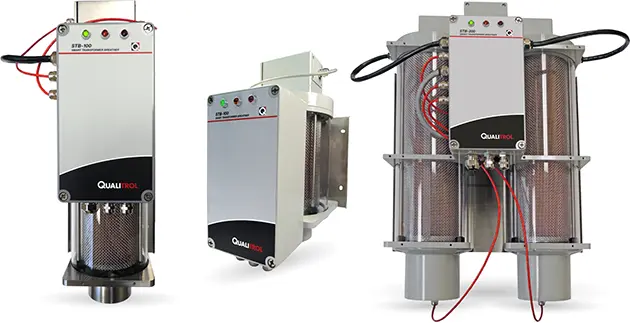
featured image source: Qualitrol

Related

Recent Posts

SCHURTER Releases Coin Cell Supercapacitors for Backup Power

10.2.2026
5

TDK Releases Stackable µPOL 25A Power Modules

9.2.2026
13

Vishay Releases Compact 0806 Low‑DCR Power Inductor

5.2.2026
31

Murata Publishes Power Delivery Guide for AI Servers

4.2.2026
98

Selecting Current Sense Transformers with Würth Elektronik REDEXPERT

3.2.2026
24

Enabling Software‑Defined Vehicle Architectures: Automotive Ethernet and Zonal Smart Power

2.2.2026
30

Bourns Releases High‑Q Air Coil Inductors for RF Aplications

29.1.2026
44

CMSE 2026 Announces Call for Presentations on High-Reliability Military and Space Electronics

28.1.2026
52

ESA Call for Papers 6th Space Passive Component Days – SPCD 2026

28.1.2026
50

Upcoming Events

Feb 11
16:00 - 17:00 CET

What’s Next in Power Electronics Design

Feb 24
16:00 - 17:00 CET

Designing Qi2 Wireless Power Systems: Practical Development and EMC Optimization

Mar 3
16:00 - 17:00 CET

Cybersecurity at the Eleventh Hour – from RED to CRA – Information and Discussion

View Calendar

Popular Posts

  • Buck Converter Design and Calculation

    0 shares
    Share 0 Tweet 0
  • Boost Converter Design and Calculation

    0 shares
    Share 0 Tweet 0
  • LLC Resonant Converter Design and Calculation

    0 shares
    Share 0 Tweet 0
  • Flyback Converter Design and Calculation

    0 shares
    Share 0 Tweet 0
  • Ripple Current and its Effects on the Performance of Capacitors

    3 shares
    Share 3 Tweet 0
  • Dual Active Bridge (DAB) Topology

    0 shares
    Share 0 Tweet 0
  • MLCC and Ceramic Capacitors

    0 shares
    Share 0 Tweet 0
  • What is a Dielectric Constant and DF of Plastic Materials?

    4 shares
    Share 4 Tweet 0
  • How Metal Prices Are Driving Passive Component Price Hikes

    0 shares
    Share 0 Tweet 0
  • MLCC Case Sizes Standards Explained

    0 shares
    Share 0 Tweet 0

Newsletter Subscription


Passive Components Blog

© EPCI - Leading Passive Components Educational and Information Site

  • Home
  • Privacy Policy
  • EPCI Membership & Advertisement
  • About

No Result
View All Result
  • Home
  • Knowledge Blog
  • PCNS

© EPCI - Leading Passive Components Educational and Information Site

This website uses cookies. By continuing to use this website you are giving consent to cookies being used. Visit our Privacy and Cookie Policy.
Go to mobile version