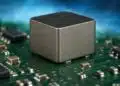

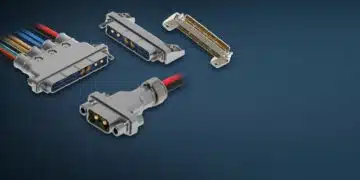






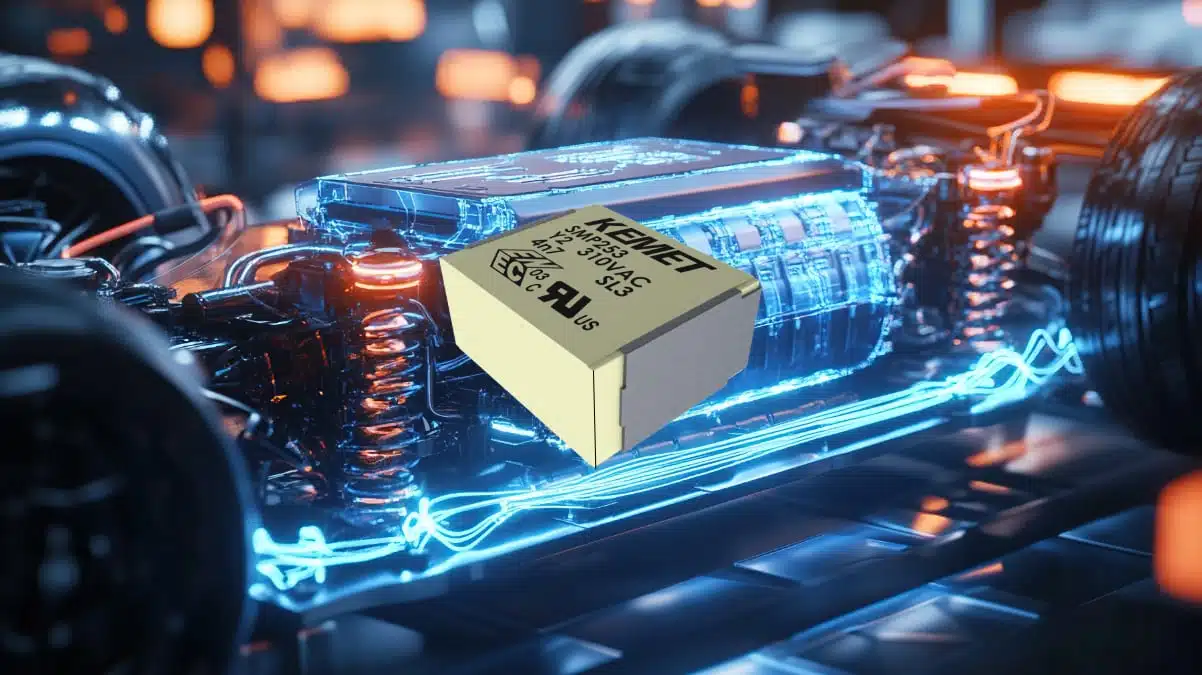
YAGEO Group’s SMP253 series is a surface‑mount Y2 safety metallized paper capacitor family rated 310 VAC for line‑to‑earth EMI suppression in industrial and automotive power electronics.
The new YAGEO Y2 safety capacitors combine impregnated metallized paper capacitor technology with compact SMD packaging, targeting designers who need robust safety compliance, reliable EMI performance, and high automation capability in space‑constrained layouts. Compared with traditional through‑hole Y2 capacitors, the SMP253 helps engineers shrink input filters, simplify assembly, and still meet demanding safety and EMC requirements.
Key features and benefits
- Y2 safety classification for line‑to‑earth use
The SMP253 is designed as a Class Y2 capacitor for use between line and protective earth in single‑phase systems up to 300–310 VAC, where insulation integrity is critical. In practice this is the component that must not fail short under any foreseeable condition, because it sits between the mains and accessible metal parts. - 310 VAC rating with up to 1500 VDC capability
A 310 VAC rating ensures comfortable margin for 230 VAC and 240 VAC mains worldwide, including tolerances and overvoltage categories. The DC capability up to 1500 VDC indicates robust dielectric strength against surge and transient events, which is important in grids with frequent switching disturbances or lightning‑induced overvoltage. - Capacitance range from 1 nF to 68 nF
Values from 1.0 to 68 nF cover the typical Y2 positions in common‑mode input filters. Lower values keep leakage current to earth very low, while higher values give stronger attenuation at switching frequencies and their harmonics. This allows an engineer to tune EMI performance versus leakage and touch‑current limits. - Wide operating temperature range from −40 °C to +125 °C
The specified temperature range supports applications from cold outdoor installations up to hot environments near power semiconductors, magnetics, or under‑hood locations. For many designs this allows a single Y2 platform to cover both standard industrial temperature profiles and extended automotive temperature ranges. - Impregnated metallized paper technology with self‑healing
The SMP253 uses metallized paper dielectric with impregnation, which improves moisture resistance and dielectric strength compared with dry constructions. Self‑healing properties mean that tiny dielectric breakdowns during overvoltage events are cleared locally, limiting damage and helping the capacitor to fail in a safer, more predictable way. - Qualified for harsh environments (THB Grade IIB)
THB Grade IIB qualification reflects stable performance under temperature, humidity, and bias stress over extended periods. For equipment that may see condensation, coastal climates, or poorly controlled environments, this is a practical indicator that capacitance drift, leakage, and insulation resistance will remain within acceptable limits. - AEC‑Q200 compliant automotive‑grade variant
Automotive qualification ensures that the SMP253 can survive extended temperature cycling, mechanical stress, and other tests defined for automotive electronics. For design teams working on platforms that have both industrial and automotive derivatives, an AEC‑Q200 qualified Y2 SMD simplifies AVL strategy and reduces the risk of having to re‑qualify similar but different parts. - SMD package optimized for automated assembly
Traditional Y capacitors are often radial through‑hole parts that require a separate wave‑solder step and additional board real estate. The SMD construction of SMP253 allows designers to place the safety capacitor in line with the rest of the SMT components, enabling full reflow‑only assembly and more compact layouts, which is particularly valuable in EV chargers and tightly packed power modules. - Stable EMI performance under real‑world transients
High dV/dt capability and impulse robustness help the SMP253 maintain its EMI attenuation characteristics even when the mains line is stressed by fast transients, such as turn‑on events, motor commutations, or surge pulses. This reduces the risk that filters tuned in the lab will drift out of spec after long‑term field exposure.
Typical applications
The SMP253 series targets line‑to‑earth EMI suppression in a wide range of power‑electronic equipment where safety, reliability, and compact SMD implementation are critical. It is especially attractive wherever designers strive to eliminate through‑hole components from the BOM.
- DC EMI filters on AC‑DC front ends
In off‑line SMPS, adapters, LED drivers, and industrial power supplies, the SMP253 serves as the Y2 capacitor between primary side and earth. Combined with X capacitors and common‑mode chokes, it helps meet conducted and radiated EMI limits while keeping leakage current and touch current under control. - On‑board chargers (OBC) for electric vehicles
OBC input stages must meet strict automotive EMC and safety standards within very limited board area. The SMD Y2 implementation of SMP253 allows Y capacitors to be placed closer to magnetics and power devices and on both sides of the PCB if needed, without adding an extra assembly process. - Auxiliary inverters such as electric compressor drives
Auxiliary EV systems like e‑compressors and electric pumps use compact inverters that generate high dv/dt on the motor cables. SMP253 capacitors between line or DC bus and chassis/earth help control common‑mode noise and reduce emissions on wiring harnesses and vehicle shells. - Switching power supplies and industrial SMPS
In industrial SMPS and server or telecom power supplies, the SMP253 can replace through‑hole Y capacitors to reduce assembly steps. The extended temperature range and THB performance are well aligned with 24/7 operation and elevated ambient temperatures in racks, cabinets, or machinery housings. - Motor‑driven systems such as pumps and HVAC
Drives for water pumps, HVAC blowers, and fans often run in environments subject to moisture and temperature swings. A THB‑qualified Y2 capacitor like SMP253 is a good fit for the line‑to‑earth position in these systems, supporting long‑term reliability even when the filter is mounted near the motor or in partially sealed housings.
Where SMP253 fits in typical input filter topologies
From a circuit perspective, the SMP253 sits in the classic Y‑capacitor positions:
- Between line and protective earth, and optionally between neutral and protective earth, forming the Y‑branches of a common‑mode filter together with a common‑mode choke and one or more X capacitors across line and neutral.
- Between a noisy primary reference (for example the switching node or DC bus reference) and the equipment chassis, to direct high‑frequency common‑mode currents away from signal cables and external wiring toward the protective earth reference.
- In EV and industrial drives, between the DC link or inverter output and chassis/earth, as part of the strategy to control common‑mode current through the vehicle frame or machine housing.
Thinking about the SMP253 this way helps when translating EMC test results into practical component value adjustments: small increases in Y capacitance will typically improve high‑frequency attenuation but also increase leakage, so any tuning must consider both EMC and safety limits.
Technical highlights
Core electrical parameters
| Parameter | Value / description |
|---|---|
| Safety class | Y2, line‑to‑earth EMI suppression |
| Rated AC voltage | 310 VAC |
| Maximum DC voltage capability | Up to 1500 VDC (according to manufacturer data) |
| Capacitance range | 1.0 nF to 68 nF |
| Operating temperature range | −40 °C to +125 °C |
| THB qualification | Grade IIB |
| Automotive qualification | AEC‑Q200 |
| Encapsulation | UL 94 V‑0, self‑extinguishing material |
The Y2 classification indicates suitability for basic or reinforced insulation applications between mains and earth with defined creepage and clearance requirements. The combination of 310 VAC rating and up to 1500 VDC withstand makes the device robust against both normal AC operation and high‑energy transient events that occur during surge testing and abnormal conditions.
Construction and safety behavior
- Impregnated metallized paper dielectric
Metallized paper dielectrics have long been used in safety capacitors because they handle humidity and high‑energy discharges better than many plastic films. In the SMP253, the paper is impregnated to further improve dielectric strength and moisture resistance, which is reflected in the THB Grade IIB performance. - Self‑healing metallization
When a transient causes a local breakdown in the dielectric, the metallization around the defect evaporates and isolates the fault. The capacitor continues to function with only a very small loss of capacitance, rather than shorting and tripping protective devices or causing more serious damage. - Safe failure mode and encapsulation
By design, Y capacitors must fail in a way that avoids compromising insulation between mains and accessible parts. The combination of Y2 classification, self‑healing behavior, and UL 94 V‑0 encapsulation material helps the SMP253 meet this requirement and supports system‑level safety certifications.
Environmental and reliability aspects
- THB Grade IIB performance
THB testing subjects the capacitor to elevated temperature, high humidity, and continuous voltage bias for many hours. Grade IIB qualification suggests that the SMP253 maintains its capacitance, loss factor, and insulation resistance within tight limits under these stresses, making it suitable for outdoor equipment, white goods, and EV applications where moisture is a concern. - Suitable for demanding industrial and automotive environments
With a −40 °C to +125 °C rating and AEC‑Q200 qualification, the SMP253 addresses use cases ranging from cold starts in winter to high‑temperature operation in engine compartments or tightly packed power modules. For many projects this allows the same Y2 SMD device to be used from early prototypes through to automotive‑qualified production.
Metallized paper versus other safety capacitor technologies
The SMP253 is built on impregnated metallized paper technology, while many other safety capacitors on the market use polymer film capacitor dielectrics such as polypropylene, and in some applications safety ceramic capacitors are also considered. Each approach can meet safety requirements, but they differ in how they balance humidity robustness, self‑healing behavior, pulse handling, size, and losses.
A notable point of the SMP253 MP capacitor is the temperature ceiling of +125 °C, which is higher than what engineers often associate with many general‑purpose EMI suppression capacitors. In real designs, that extra temperature margin can ease placement constraints near hot semiconductors, magnetics, or enclosed charger assemblies, although final derating should still follow the manufacturer datasheet.
For design engineers, metallized paper remains attractive in demanding mains environments because of its strong self‑healing behavior and good endurance under surge and humidity stress. Polypropylene‑based safety capacitors are also widely used and often favored where very low losses and compact, high‑volume general mains filtering are the main priorities, while ceramic safety capacitors can be useful where very small size is needed but application conditions suit their dielectric behavior.
For the SMP253 specifically, the interesting point is not just that it uses metallized paper, but that it brings that dielectric system into a 310 VAC SMD Y2 format. That gives designers access to a technology associated with robust safety behavior while still supporting compact SMT‑based power converter layouts.
Design‑in notes for engineers
- Positioning in the EMI filter
Use the SMP253 in the Y2 positions between line and earth, and optionally between neutral and earth, as defined by your safety and EMC concept. In many designs, a pair of Y2 capacitors and one X capacitor, combined with a common‑mode choke, will form the basic input EMI filter structure. - Creepage, clearance, and PCB layout
Even though the SMP253 is an SMD component, the PCB layout must still respect the creepage and clearance distances required by safety standards for the applicable mains voltage and pollution degree. This includes spacing between pads, copper pours, and any nearby conductive parts, as well as mechanical constraints such as slots, shields, or mounting hardware. - Temperature and derating considerations
While the SMP253 is specified up to +125 °C, best practice is to operate safety capacitors with some temperature margin. During design validation, measure the actual capacitor body temperature under worst‑case load, ambient, and airflow conditions, and check lifetime or endurance curves in the datasheet if available. - Surge and transient stress planning
Consider the levels required by standards such as IEC 61000‑4‑5 and similar surge specifications when dimensioning the Y2 capacitor. The SMP253’s high dV/dt capability and impulse robustness are advantageous, but designers should still confirm that the chosen values and layout meet surge requirements in combination with arresters, MOVs, or other protection elements. - Leakage current, EMC margin, and safety
Y capacitors inherently create a leakage path from mains to earth. Selecting a higher capacitance value improves high‑frequency attenuation, which can help pass EMC tests with more margin, but it also increases leakage current and touch current. When tuning values, always cross‑check against applicable safety limits and system‑level leakage specifications. - Reflow soldering and assembly process
Because the SMP253 is SMD, it can be processed in standard SMT lines. Follow the recommended reflow profile in the manufacturer documentation, paying attention to maximum temperatures and dwell times to avoid damaging the encapsulation or degrading the dielectric. Where necessary, verify solder joint quality by X‑ray or cross‑section during the first builds. - Automotive qualification and mission profile alignment
For automotive projects, confirm that the exact SMP253 variant selected is listed as AEC‑Q200 compliant and that its qualification conditions match or exceed the mission profile of the application. Factors such as expected lifetime, vibration, temperature cycling, and humidity exposure should be part of the component selection review. - Documentation and certification support
Keep the SMP253 datasheet, safety certificates, and any manufacturer test reports in the project documentation set. This material is typically required during compliance testing, safety certification, and customer audits, and it helps demonstrate that the chosen Y2 capacitor meets the required standards and test conditions.
Source
This article is based on official product information and a press‑style announcement from YAGEO Group describing the SMP253 310 VAC SMD Y2 safety capacitor series, supplemented by interpretation and contextual guidance for design engineers and purchasing teams.