












Passive Components Blog
No Result
View All Result
  • Home
  • NewsFilter
    • All
    • Aerospace & Defence
    • Antenna
    • Applications
    • Automotive
    • Capacitors
    • Circuit Protection Devices
    • electro-mechanical news
    • Filters
    • Fuses
    • Inductors
    • Industrial
    • Integrated Passives
    • inter-connect news
    • Market & Supply Chain
    • Market Insights
    • Medical
    • Modelling and Simulation
    • New Materials & Supply
    • New Technologies
    • Non-linear Passives
    • Oscillators
    • Passive Sensors News
    • Resistors
    • RF & Microwave
    • Telecommunication
    • Weekly Digest

    Exxelia Releases Updated Microwave Materials and Frequency Tuning Catalogues

    Coilcraft Unveils Molded Power Inductors for High‑Current VRMs

    Murata Automotive MLCCs Push Capacitance Limits for ADAS and Power Lines

    TDK Releases Ultra‑small EMI Noise Suppression Filters

    Littelfuse Presents Ultra-Miniature Half-Pitch SMT DIP Switches

    SCHURTER Releases Compact SMT DIP Switches

    TDK and Nippon Chemical Launch Joint Venture for MLCC Materials

    Wk 14 Electronics Supply Chain Digest

    Bourns Releases Compact High Current Shielded Power Inductors

    Trending Tags

    • Ripple Current
    • RF
    • Leakage Current
    • Tantalum vs Ceramic
    • Snubber
    • Low ESR
    • Feedthrough
    • Derating
    • Dielectric Constant
    • New Products
    • Market Reports
  • VideoFilter
    • All
    • Antenna videos
    • Capacitor videos
    • Circuit Protection Video
    • Filter videos
    • Fuse videos
    • Inductor videos
    • Inter-Connect Video
    • Non-linear passives videos
    • Oscillator videos
    • Passive sensors videos
    • Resistor videos

    Transformer-Based Power-Line Harvester Magnetic Design

    Thermal Modeling of Magnetics

    Standard vs Planar LLC transformers Comparison for Battery Chargers

    How Modern Tools Model Magnetic Components for Power Electronics

    Advanced Loss Modeling for Planar Magnetics in the Frenetic Planar Tool

    2026 Power Magnetics Design Trends: Flyback, DAB and Planar

    Enabling Software‑Defined Vehicle Architectures: Automotive Ethernet and Zonal Smart Power

    Calculating Resistance Value of a Flyback RC Snubber 

    One‑Pulse Characterization of Nonlinear Power Inductors

    Trending Tags

    • Capacitors explained
    • Inductors explained
    • Resistors explained
    • Filters explained
    • Application Video Guidelines
    • EMC
    • New Products
    • Ripple Current
    • Simulation
    • Tantalum vs Ceramic
  • Knowledge Blog
  • DossiersNew
  • Suppliers
    • Who is Who
  • PCNS
    • PCNS 2025
    • PCNS 2023
    • PCNS 2021
    • PCNS 2019
    • PCNS 2017
  • Events
  • Home
  • NewsFilter
    • All
    • Aerospace & Defence
    • Antenna
    • Applications
    • Automotive
    • Capacitors
    • Circuit Protection Devices
    • electro-mechanical news
    • Filters
    • Fuses
    • Inductors
    • Industrial
    • Integrated Passives
    • inter-connect news
    • Market & Supply Chain
    • Market Insights
    • Medical
    • Modelling and Simulation
    • New Materials & Supply
    • New Technologies
    • Non-linear Passives
    • Oscillators
    • Passive Sensors News
    • Resistors
    • RF & Microwave
    • Telecommunication
    • Weekly Digest

    Exxelia Releases Updated Microwave Materials and Frequency Tuning Catalogues

    Coilcraft Unveils Molded Power Inductors for High‑Current VRMs

    Murata Automotive MLCCs Push Capacitance Limits for ADAS and Power Lines

    TDK Releases Ultra‑small EMI Noise Suppression Filters

    Littelfuse Presents Ultra-Miniature Half-Pitch SMT DIP Switches

    SCHURTER Releases Compact SMT DIP Switches

    TDK and Nippon Chemical Launch Joint Venture for MLCC Materials

    Wk 14 Electronics Supply Chain Digest

    Bourns Releases Compact High Current Shielded Power Inductors

    Trending Tags

    • Ripple Current
    • RF
    • Leakage Current
    • Tantalum vs Ceramic
    • Snubber
    • Low ESR
    • Feedthrough
    • Derating
    • Dielectric Constant
    • New Products
    • Market Reports
  • VideoFilter
    • All
    • Antenna videos
    • Capacitor videos
    • Circuit Protection Video
    • Filter videos
    • Fuse videos
    • Inductor videos
    • Inter-Connect Video
    • Non-linear passives videos
    • Oscillator videos
    • Passive sensors videos
    • Resistor videos

    Transformer-Based Power-Line Harvester Magnetic Design

    Thermal Modeling of Magnetics

    Standard vs Planar LLC transformers Comparison for Battery Chargers

    How Modern Tools Model Magnetic Components for Power Electronics

    Advanced Loss Modeling for Planar Magnetics in the Frenetic Planar Tool

    2026 Power Magnetics Design Trends: Flyback, DAB and Planar

    Enabling Software‑Defined Vehicle Architectures: Automotive Ethernet and Zonal Smart Power

    Calculating Resistance Value of a Flyback RC Snubber 

    One‑Pulse Characterization of Nonlinear Power Inductors

    Trending Tags

    • Capacitors explained
    • Inductors explained
    • Resistors explained
    • Filters explained
    • Application Video Guidelines
    • EMC
    • New Products
    • Ripple Current
    • Simulation
    • Tantalum vs Ceramic
  • Knowledge Blog
  • DossiersNew
  • Suppliers
    • Who is Who
  • PCNS
    • PCNS 2025
    • PCNS 2023
    • PCNS 2021
    • PCNS 2019
    • PCNS 2017
  • Events
No Result
View All Result
Passive Components Blog
No Result
View All Result

AEM Compares Auto-Grade Surface-Mount Wire-in-Air Fuse Performance Under Extreme Electric Vehicle Conditions

24.9.2017
Reading Time: 2 mins read
A A

source: AEM Components news

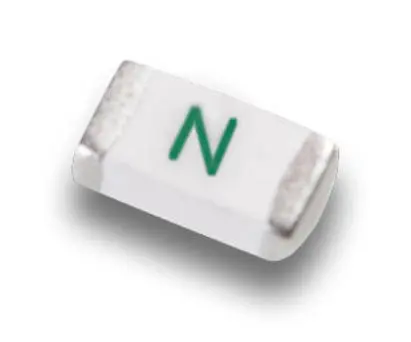
Novi, Mich.—September 12, 2017 — EETech Labs, in cooperation with AEM Components, has produced a video that demonstrates the effect on circuit protection devices when subjected to worst case electric vehicle (EV) battery short circuit conditions. This comparison study highlights the advantages of using AEM (AirMatrix®) wire-in-air fuse versus similarly rated competitive surface mount fuses.

RelatedPosts

Exxelia Releases Updated Microwave Materials and Frequency Tuning Catalogues

Coilcraft Unveils Molded Power Inductors for High‑Current VRMs

Murata Automotive MLCCs Push Capacitance Limits for ADAS and Power Lines

The video clearly displays the adverse effects that short circuits from EV batteries can exert on a fuse. Automotive specifications require circuit protection to break the circuit without causing damage to PC boards or other components in the system. The AEM wire-in-air fuse technology is able to comply with this prerequisite by remaining intact. Competitive fuses that were also tested under the same conditions not only caught on fire, they also caused damage to the PCB on which they were mounted.

AEM AirMatrix® fuses are designed to meet stringent automotive standards, so testing for worst case conditions is critical. When testing in electric and plug-in hybrid vehicles battery systems, a short circuit condition is created for all batteries in the array, causing the full amount of current to be present at the fuse. Assuring that the fuse opens properly and protects the battery system is of primary concern.

“The fusible element in the QA Series wire-in-air devices is uniformly straight across the internal cavity and externally bonded to the endcap through the plating process,” reports Jeffers Liu, AEM Components’ Vice President of Sales and Marketing. “Competitive units utilize solder joints inside a ceramic tube to secure the fusible link. This traditional approach has the drawback of non-uniform performance and potential internal connection failure caused by mechanical/thermal stress like vibration or bending, or by common soldering defects like cold joints or poor wetting. As the YouTube video demonstrates, under high-stress conditions, the solder can vaporize, causing prolonged arcing that can lead to package failure and damage to the circuit board and surrounding components. In comparison, our automotive-grade fuses stand up under the same stress since they are designed specifically to enhance reliability in harsh environments by eliminating the solder joint.”

The new wire-in-air AirMatrix (QA-F Series and QA-H Series) are manufactured in AEM’s TS16949-certified facility. The QA Series features the industry’s highest current ratings – up to 20A/250V and its proprietary, air-tight, wire-in-air structure assures consistent electrical performance. The QA Series is offered in two fast-acting versions: a 2410 package (QA-F Series) with a 0.5-20A/65-250V rating and a 1206 (QA-H Series) package rated at 1.5-15A/32-65V.

Pricing and Availability
The QA Series is now available in mass quantities. Prices range from $0.065 to $0.20 per unit for OEM quantities. For samples, interested parties can contact a local AEM Distributor.


 

Related

Recent Posts

Coilcraft Unveils Molded Power Inductors for High‑Current VRMs

8.4.2026
31

Murata Automotive MLCCs Push Capacitance Limits for ADAS and Power Lines

8.4.2026
25

Würth Elektronik ICS to Acquire MRS Electronic and Expand Vehicle Electronics Portfolio

31.3.2026
28

Panasonic High Precision Chip Resistors Bridge Gap Between Thin and Thick Technology

30.3.2026
85

DigiKey Launches “Engineering Unlocked” Video Series

26.3.2026
19

Würth Elektronik Unveils High-Current Automotive Power Inductor

24.3.2026
38

Inductor Technology Dossier

19.3.2026
81

Coilcraft Releases TLVR Inductors for High Density VRMs and PoL Converters

19.3.2026
66

Würth Elektronik and Grinn Launch Edge AI Cooperation

13.3.2026
29

Upcoming Events

Apr 21
16:00 - 17:00 CEST

Heatsink Solutions: Thermal Management in electronic devices

May 5
16:00 - 17:00 CEST

Understanding and Selecting Capacitors – Fundamentals, Technologies and Latest Trends

May 19
16:00 - 17:00 CEST

Designing Qi2 Wireless Power Systems: Practical Development and EMC Optimization

View Calendar

Popular Posts

  • Buck Converter Design and Calculation

    0 shares
    Share 0 Tweet 0
  • Boost Converter Design and Calculation

    0 shares
    Share 0 Tweet 0
  • Flyback Converter Design and Calculation

    0 shares
    Share 0 Tweet 0
  • LLC Resonant Converter Design and Calculation

    0 shares
    Share 0 Tweet 0
  • Dual Active Bridge (DAB) Topology

    0 shares
    Share 0 Tweet 0
  • MLCC and Ceramic Capacitors

    0 shares
    Share 0 Tweet 0
  • Capacitor Charging and Discharging

    0 shares
    Share 0 Tweet 0
  • Plastic Materials Dielectric Constant and DF

    4 shares
    Share 4 Tweet 0
  • Ripple Current and its Effects on the Performance of Capacitors

    3 shares
    Share 3 Tweet 0
  • MLCC Case Sizes Standards Explained

    0 shares
    Share 0 Tweet 0

Newsletter Subscription


Passive Components Blog

© EPCI - Leading Passive Components Educational and Information Site

  • Home
  • Privacy Policy
  • EPCI Membership & Advertisement
  • About

No Result
View All Result
  • Home
  • Knowledge Blog
  • PCNS

© EPCI - Leading Passive Components Educational and Information Site

This website uses cookies. By continuing to use this website you are giving consent to cookies being used. Visit our Privacy and Cookie Policy.
Go to mobile version