














Passive Components Blog
No Result
View All Result
  • Home
  • NewsFilter
    • All
    • Aerospace & Defence
    • Antenna
    • Applications
    • Automotive
    • Capacitors
    • Circuit Protection Devices
    • electro-mechanical news
    • Filters
    • Fuses
    • Inductors
    • Industrial
    • Integrated Passives
    • inter-connect news
    • Market & Supply Chain
    • Market Insights
    • Medical
    • Modelling and Simulation
    • New Materials & Supply
    • New Technologies
    • Non-linear Passives
    • Oscillators
    • Passive Sensors News
    • Resistors
    • RF & Microwave
    • Telecommunication
    • Weekly Digest

    Designing a 2 kW LLC Transformer with Integrated Resonant Inductor

    Middle East Conflict: The Potential Impact to Passive Components

    Inductor Technology Dossier

    Coilcraft Releases TLVR Inductors for High Density VRMs and PoL Converters

    Rutheniums Critical Role in Passive Component Supply Chains

    Bourns Expands its Modular Contacts for Power-Dense Systems

    Murata to Decouple China Rare Earth Supply in 3 Years

    Samtec AcceleRate Slim ARC6 Cable Assemblies with New Signaling Options

    Hirose Electric to Establish Automotive Connector Plant in India

    Trending Tags

    • Ripple Current
    • RF
    • Leakage Current
    • Tantalum vs Ceramic
    • Snubber
    • Low ESR
    • Feedthrough
    • Derating
    • Dielectric Constant
    • New Products
    • Market Reports
  • VideoFilter
    • All
    • Antenna videos
    • Capacitor videos
    • Circuit Protection Video
    • Filter videos
    • Fuse videos
    • Inductor videos
    • Inter-Connect Video
    • Non-linear passives videos
    • Oscillator videos
    • Passive sensors videos
    • Resistor videos

    Thermal Modeling of Magnetics

    Standard vs Planar LLC transformers Comparison for Battery Chargers

    How Modern Tools Model Magnetic Components for Power Electronics

    Advanced Loss Modeling for Planar Magnetics in the Frenetic Planar Tool

    2026 Power Magnetics Design Trends: Flyback, DAB and Planar

    Enabling Software‑Defined Vehicle Architectures: Automotive Ethernet and Zonal Smart Power

    Calculating Resistance Value of a Flyback RC Snubber 

    One‑Pulse Characterization of Nonlinear Power Inductors

    Thermistor Linearization Challenges

    Trending Tags

    • Capacitors explained
    • Inductors explained
    • Resistors explained
    • Filters explained
    • Application Video Guidelines
    • EMC
    • New Products
    • Ripple Current
    • Simulation
    • Tantalum vs Ceramic
  • Knowledge Blog
  • DossiersNew
  • Suppliers
    • Who is Who
  • PCNS
    • PCNS 2025
    • PCNS 2023
    • PCNS 2021
    • PCNS 2019
    • PCNS 2017
  • Events
  • Home
  • NewsFilter
    • All
    • Aerospace & Defence
    • Antenna
    • Applications
    • Automotive
    • Capacitors
    • Circuit Protection Devices
    • electro-mechanical news
    • Filters
    • Fuses
    • Inductors
    • Industrial
    • Integrated Passives
    • inter-connect news
    • Market & Supply Chain
    • Market Insights
    • Medical
    • Modelling and Simulation
    • New Materials & Supply
    • New Technologies
    • Non-linear Passives
    • Oscillators
    • Passive Sensors News
    • Resistors
    • RF & Microwave
    • Telecommunication
    • Weekly Digest

    Designing a 2 kW LLC Transformer with Integrated Resonant Inductor

    Middle East Conflict: The Potential Impact to Passive Components

    Inductor Technology Dossier

    Coilcraft Releases TLVR Inductors for High Density VRMs and PoL Converters

    Rutheniums Critical Role in Passive Component Supply Chains

    Bourns Expands its Modular Contacts for Power-Dense Systems

    Murata to Decouple China Rare Earth Supply in 3 Years

    Samtec AcceleRate Slim ARC6 Cable Assemblies with New Signaling Options

    Hirose Electric to Establish Automotive Connector Plant in India

    Trending Tags

    • Ripple Current
    • RF
    • Leakage Current
    • Tantalum vs Ceramic
    • Snubber
    • Low ESR
    • Feedthrough
    • Derating
    • Dielectric Constant
    • New Products
    • Market Reports
  • VideoFilter
    • All
    • Antenna videos
    • Capacitor videos
    • Circuit Protection Video
    • Filter videos
    • Fuse videos
    • Inductor videos
    • Inter-Connect Video
    • Non-linear passives videos
    • Oscillator videos
    • Passive sensors videos
    • Resistor videos

    Thermal Modeling of Magnetics

    Standard vs Planar LLC transformers Comparison for Battery Chargers

    How Modern Tools Model Magnetic Components for Power Electronics

    Advanced Loss Modeling for Planar Magnetics in the Frenetic Planar Tool

    2026 Power Magnetics Design Trends: Flyback, DAB and Planar

    Enabling Software‑Defined Vehicle Architectures: Automotive Ethernet and Zonal Smart Power

    Calculating Resistance Value of a Flyback RC Snubber 

    One‑Pulse Characterization of Nonlinear Power Inductors

    Thermistor Linearization Challenges

    Trending Tags

    • Capacitors explained
    • Inductors explained
    • Resistors explained
    • Filters explained
    • Application Video Guidelines
    • EMC
    • New Products
    • Ripple Current
    • Simulation
    • Tantalum vs Ceramic
  • Knowledge Blog
  • DossiersNew
  • Suppliers
    • Who is Who
  • PCNS
    • PCNS 2025
    • PCNS 2023
    • PCNS 2021
    • PCNS 2019
    • PCNS 2017
  • Events
No Result
View All Result
Passive Components Blog
No Result
View All Result

Heraeus Unveils Self-Regulating Heater Inks a Breakthrough in Heater Technology

10.8.2023
Reading Time: 2 mins read
A A

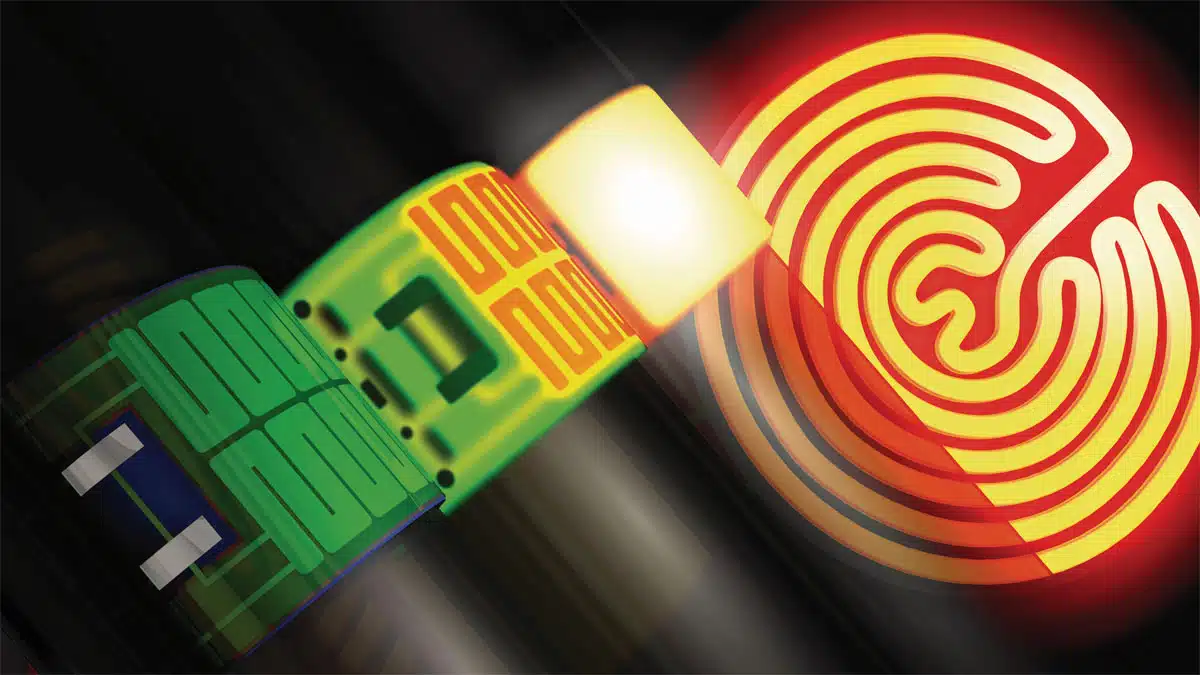
Heraeus Electronics introduces the PTC4900 Series Self-Regulating Heater Inks, a breakthrough in heater technology. These customizable PTC (Positive Thermal Coefficient) inks offer enhanced performance, expanded operating temperatures, and unparalleled customization options. Designed for precise temperature control, they are suitable for various applications, including EV battery heaters, ADAS heaters, flooring heaters and cabin comfort heaters.

Traditionally, PTC inks have been limited in their scope, temperature offerings and customization capabilities. Heraeus Electronics has changed the game with the PTC4900 Series, a range of customizable pastes targeting heater operating temperatures between 50 – 90°C, with products targeting temperatures above 100°C currently in development. This breakthrough technology provides tailored resistances to meet precise temperature control requirements without the need to change heater designs.

RelatedPosts

Advancements in Flexible End Terminations for Robust MLCCs in EV

Heraeus Electronics Expands Electronic Inks Portfolio Through Acquisition of PriElex

Understanding The Power of Magnetic Fusion

“PTC4900 Series Self-Regulating Heater Inks are a disruptive new solution that expands the range and applications of the flexible and rigid PTC heater market,” said Mark Challingsworth, Head of Business Line – Thick Film at Heraeus Electronics. “We are dedicated to providing our customers with the best materials for their heater designs, and this new series exemplifies our commitment to innovation and customer-centric solutions.”

One of the key advantages of the PTC4900 Series is its improved PTC performance and expanded operating temperatures compared to competitors’ offerings. While others provide a single material with a small temperature range, Heraeus Electronics’ solution allows for precise heating with self-regulating properties, enhancing product safety.

The launch of Heraeus Electronics’ drop-in solution expands the range of applications for the flexible and rigid PTC heater market. By eliminating the need for time-consuming adjustments and allowing for wider process windows, Heraeus Electronics empowers its customers to accelerate development timelines, reduce time to market, and achieve improved yield in production.

Customers also will benefit from the blendable system of resistors, simplifying circuit design and streamlining the production process. “Our customizable resistances allow for easier heater production and repeatability, avoiding lot-to-lot variations,” said Dean Buzby, Global Product Manager – Thick Film at Heraeus Electronics. “This saves our customers development time, improves yield in production and shortens time to market.”

Heraeus Electronics has a long-standing reputation for dependable product quality, technical service, and hands-on support. The company’s experts work directly with customers to find the best solution for their specific needs, ensuring maximum performance and customer satisfaction.


Related

Source: Heraeus

Recent Posts

Middle East Conflict: The Potential Impact to Passive Components

20.3.2026
20

Inductor Technology Dossier

19.3.2026
30

Rutheniums Critical Role in Passive Component Supply Chains

19.3.2026
19

Murata to Decouple China Rare Earth Supply in 3 Years

19.3.2026
103

Hirose Electric to Establish Automotive Connector Plant in India

19.3.2026
8

Samsung Outlines Growth Roadmap at its 52nd General Shareholders Meeting

19.3.2026
20

Peak Nano to Develop Fusion Grade High Energy Film Capacitors

11.3.2026
35

February 2026 Interconnect, Passives and Electromechanical Components Market Insights

9.3.2026
85

ECIA February 2026 Industry Pulse Signals Strong Component Growth

6.3.2026
38

Upcoming Events

Mar 24
9:00 - 10:00 CET

Power protection in the digital age – eFuse and hot-swap strategies for modern data center design

Apr 21
16:00 - 17:00 CEST

Heatsink Solutions: Thermal Management in electronic devices

May 5
16:00 - 17:00 CEST

Understanding and Selecting Capacitors – Fundamentals, Technologies and Latest Trends

View Calendar

Popular Posts

  • Buck Converter Design and Calculation

    0 shares
    Share 0 Tweet 0
  • Boost Converter Design and Calculation

    0 shares
    Share 0 Tweet 0
  • Flyback Converter Design and Calculation

    0 shares
    Share 0 Tweet 0
  • LLC Resonant Converter Design and Calculation

    0 shares
    Share 0 Tweet 0
  • MLCC Manufacturers Consider Price Increase as AI Demand Outpaces Supply

    0 shares
    Share 0 Tweet 0
  • MLCC and Ceramic Capacitors

    0 shares
    Share 0 Tweet 0
  • Dual Active Bridge (DAB) Topology

    0 shares
    Share 0 Tweet 0
  • Ripple Current and its Effects on the Performance of Capacitors

    3 shares
    Share 3 Tweet 0
  • MLCC Case Sizes Standards Explained

    0 shares
    Share 0 Tweet 0
  • What is a Dielectric Constant and DF of Plastic Materials?

    4 shares
    Share 4 Tweet 0

Newsletter Subscription


Passive Components Blog

© EPCI - Leading Passive Components Educational and Information Site

  • Home
  • Privacy Policy
  • EPCI Membership & Advertisement
  • About

No Result
View All Result
  • Home
  • Knowledge Blog
  • PCNS

© EPCI - Leading Passive Components Educational and Information Site

This website uses cookies. By continuing to use this website you are giving consent to cookies being used. Visit our Privacy and Cookie Policy.
Go to mobile version