











Passive Components Blog
No Result
View All Result
  • Home
  • NewsFilter
    • All
    • Aerospace & Defence
    • Antenna
    • Applications
    • Automotive
    • Capacitors
    • Circuit Protection Devices
    • electro-mechanical news
    • Filters
    • Fuses
    • Inductors
    • Industrial
    • Integrated Passives
    • inter-connect news
    • Market & Supply Chain
    • Market Insights
    • Medical
    • Modelling and Simulation
    • New Materials & Supply
    • New Technologies
    • Non-linear Passives
    • Oscillators
    • Passive Sensors News
    • Resistors
    • RF & Microwave
    • Telecommunication
    • Weekly Digest

    YAGEO Introduces High‑Current Y2/X1 Film Capacitors for Wide-bandgap Power Systems

    Amphenol Explanded Liquid Cooling Connectors for AI, ESS and EV Systems

    Hirose Introduced BGA connector for PCIe Gen6 for AI and Edge Computing

    YAGEO Introduces High Rel MLCCs Beyond MIL-Spec Limits

    Würth Elektronik Expanded Capacity for Validation and Services in Asia

    Samsung Introduces Ultra-High-Voltage 1500 V MLCCs for xEV Powertrains

    YAGEO Q1 2026 Results: AI Servers and Pricing Power Behind a Moderate Q2 Outlook

    TDK Introduces High‑Voltage Common‑Mode Chokes for Compact 1250 V DC Converters

    Vishay Extends Power Inductors for DC/DC with 1212 Compact Case

    Trending Tags

    • Ripple Current
    • RF
    • Leakage Current
    • Tantalum vs Ceramic
    • Snubber
    • Low ESR
    • Feedthrough
    • Derating
    • Dielectric Constant
    • New Products
    • Market Reports
  • VideoFilter
    • All
    • Antenna videos
    • Capacitor videos
    • Circuit Protection Video
    • Filter videos
    • Fuse videos
    • Inductor videos
    • Inter-Connect Video
    • Non-linear passives videos
    • Oscillator videos
    • Passive sensors videos
    • Resistor videos

    Transformer-Based Power-Line Harvester Magnetic Design

    Thermal Modeling of Magnetics

    Standard vs Planar LLC transformers Comparison for Battery Chargers

    How Modern Tools Model Magnetic Components for Power Electronics

    Advanced Loss Modeling for Planar Magnetics in the Frenetic Planar Tool

    2026 Power Magnetics Design Trends: Flyback, DAB and Planar

    Enabling Software‑Defined Vehicle Architectures: Automotive Ethernet and Zonal Smart Power

    Calculating Resistance Value of a Flyback RC Snubber 

    One‑Pulse Characterization of Nonlinear Power Inductors

    Trending Tags

    • Capacitors explained
    • Inductors explained
    • Resistors explained
    • Filters explained
    • Application Video Guidelines
    • EMC
    • New Products
    • Ripple Current
    • Simulation
    • Tantalum vs Ceramic
  • Knowledge Blog
  • DossiersNew
  • Suppliers
    • Who is Who
  • PCNS
    • PCNS 2025
    • PCNS 2023
    • PCNS 2021
    • PCNS 2019
    • PCNS 2017
  • Events
  • Home
  • NewsFilter
    • All
    • Aerospace & Defence
    • Antenna
    • Applications
    • Automotive
    • Capacitors
    • Circuit Protection Devices
    • electro-mechanical news
    • Filters
    • Fuses
    • Inductors
    • Industrial
    • Integrated Passives
    • inter-connect news
    • Market & Supply Chain
    • Market Insights
    • Medical
    • Modelling and Simulation
    • New Materials & Supply
    • New Technologies
    • Non-linear Passives
    • Oscillators
    • Passive Sensors News
    • Resistors
    • RF & Microwave
    • Telecommunication
    • Weekly Digest

    YAGEO Introduces High‑Current Y2/X1 Film Capacitors for Wide-bandgap Power Systems

    Amphenol Explanded Liquid Cooling Connectors for AI, ESS and EV Systems

    Hirose Introduced BGA connector for PCIe Gen6 for AI and Edge Computing

    YAGEO Introduces High Rel MLCCs Beyond MIL-Spec Limits

    Würth Elektronik Expanded Capacity for Validation and Services in Asia

    Samsung Introduces Ultra-High-Voltage 1500 V MLCCs for xEV Powertrains

    YAGEO Q1 2026 Results: AI Servers and Pricing Power Behind a Moderate Q2 Outlook

    TDK Introduces High‑Voltage Common‑Mode Chokes for Compact 1250 V DC Converters

    Vishay Extends Power Inductors for DC/DC with 1212 Compact Case

    Trending Tags

    • Ripple Current
    • RF
    • Leakage Current
    • Tantalum vs Ceramic
    • Snubber
    • Low ESR
    • Feedthrough
    • Derating
    • Dielectric Constant
    • New Products
    • Market Reports
  • VideoFilter
    • All
    • Antenna videos
    • Capacitor videos
    • Circuit Protection Video
    • Filter videos
    • Fuse videos
    • Inductor videos
    • Inter-Connect Video
    • Non-linear passives videos
    • Oscillator videos
    • Passive sensors videos
    • Resistor videos

    Transformer-Based Power-Line Harvester Magnetic Design

    Thermal Modeling of Magnetics

    Standard vs Planar LLC transformers Comparison for Battery Chargers

    How Modern Tools Model Magnetic Components for Power Electronics

    Advanced Loss Modeling for Planar Magnetics in the Frenetic Planar Tool

    2026 Power Magnetics Design Trends: Flyback, DAB and Planar

    Enabling Software‑Defined Vehicle Architectures: Automotive Ethernet and Zonal Smart Power

    Calculating Resistance Value of a Flyback RC Snubber 

    One‑Pulse Characterization of Nonlinear Power Inductors

    Trending Tags

    • Capacitors explained
    • Inductors explained
    • Resistors explained
    • Filters explained
    • Application Video Guidelines
    • EMC
    • New Products
    • Ripple Current
    • Simulation
    • Tantalum vs Ceramic
  • Knowledge Blog
  • DossiersNew
  • Suppliers
    • Who is Who
  • PCNS
    • PCNS 2025
    • PCNS 2023
    • PCNS 2021
    • PCNS 2019
    • PCNS 2017
  • Events
No Result
View All Result
Passive Components Blog
No Result
View All Result

Littelfuse Releases TMR Switches with Ultra-Low Power Magnetic Sensing

12.11.2025
Reading Time: 4 mins read
A A

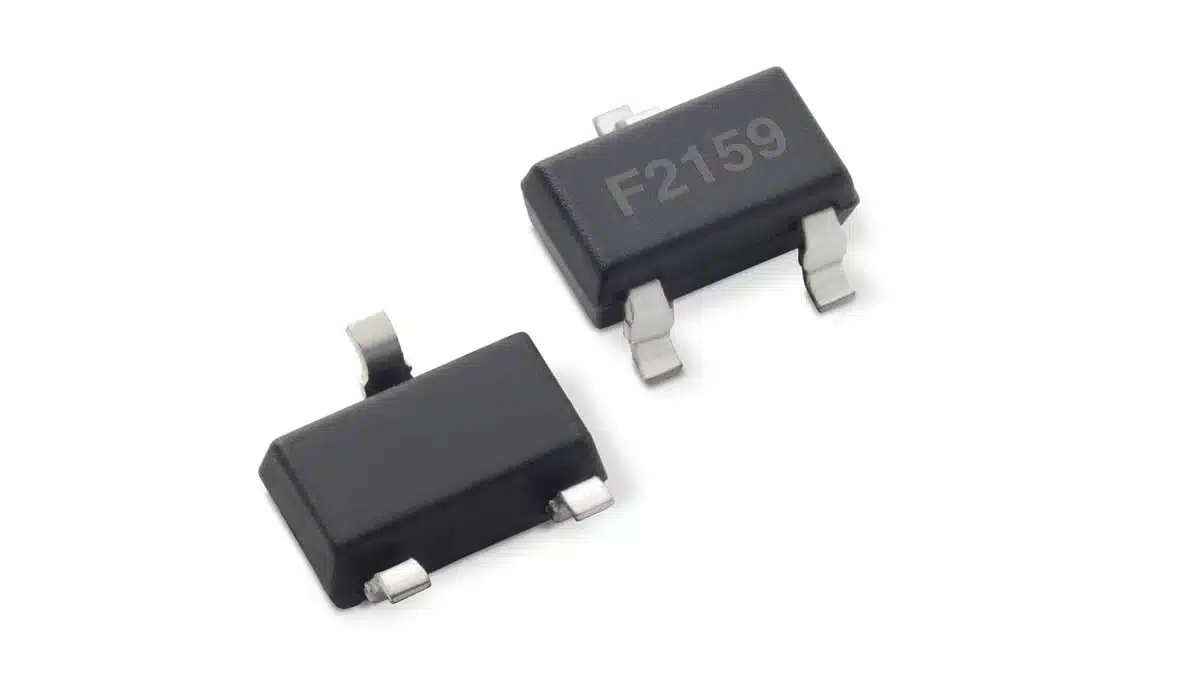
Littelfuse unveils omnipolar and bipolar TMR switches that combine high sensitivity with minimal power draw for smart meters, IoT devices, and compact electronics.

Littelfuse, Inc. , a diversified, industrial technology manufacturing company empowering a sustainable, connected, and safer world, today announced the launch of two next-generation Tunneling Magnetoresistance (TMR) magnetic switches: the LF21112TMR omnipolar switch and the LF11215TMR bipolar switch.

RelatedPosts

Littelfuse Presents Ultra-Miniature Half-Pitch SMT DIP Switches

Littelfuse NANO2 415 SMD Fuse Wins 2025 Product of the Year

Littelfuse Unveils Ultra-Low-Power TMR Magnetic Switches

These compact devices offer exceptional magnetic sensitivity, thermal stability, and ultra-low power consumption—providing energy-efficient sensing solutions for smart meters, wearables, consumer electronics, industrial automation, and home security systems. (View the video in English, Chinese & Japanese.)

Expanded TMR Sensor Portfolio

By integrating TMR technology with ultra-low-power CMOS design, both switches deliver superior performance compared to traditional Hall-effect sensors and older magnetic switch technologies. These introductions mark a significant expansion of the Littelfuse magnetic sensor portfolio into battery-sensitive and always-on applications.

  • LF21112TMR: The company’s first omnipolar TMR switch, capable of detecting both North and South magnetic poles, enables greater flexibility in magnet placement and simplifies design. With a typical current draw of just 200nA, it is ideal for ultra-low-power applications.
  • LF11215TMR: A bipolar digital TMR switch that delivers high-speed, precision detection with ultra-low 1.5 µA current consumption and a high magnetic sensitivity of just 17 Gauss. It excels at more complex sensing applications that require directional detection.

Bipolar vs. Omnipolar: What’s the Difference?

Omnipolar switches, such as the LF21112TMR, trigger a response when exposed to either magnetic pole, making them ideal for space-constrained designs and applications where it is harder to control the magnet alignment.. Bipolar switches, such as the LF11215TMR, are triggered by a specific magnetic polarity (typically North), and reset with the opposite polarity (South). This directional sensitivity is advantageous for applications needing rotational or directional sensing.

Key Features and Benefits

Both devices are housed in compact SOT23-3 packages and feature:

  • TMR technology for higher sensitivity and thermal stability
  • Push-pull CMOS output for clean digital signals
  • Schmitt trigger inputs to reduce noise and improve reliability
  • Excellent immunity to external magnetic interference
  • Wide operating voltage: 1.8V to 5.0V

These switches help engineers design smaller, smarter, and more energy-efficient products while reducing mechanical complexity and extending battery life.

Markets and Applications

These innovative switches are ideal for:

  • Smart utility meters (gas, water, heat)
  • Battery-powered wearables and IoT sensors
  • Lid and cover detection in appliances and power tools
  • Tamper detection in home and building automation
  • Rotary and linear position sensing in light industrial and robotic equipment

“With the LF21112TMR and LF11215TMR, we’re expanding the Littelfuse TMR sensor portfolio with solutions that address critical design challenges in today’s compact, battery-powered, and always-on devices,” said Julius Venckus, Global Product Manager at Littelfuse.

“Both switches integrate Tunneling Magnetoresistance technology with ultra-low power CMOS design, delivering exceptional magnetic sensitivity and thermal stability at industry-leading current levels—just 200nA for omnipolar sensing and 1.5 µA for bipolar. These innovations empower engineers to extend battery life, simplify magnetic alignment, and ensure reliable sensing in noisy, thermally demanding environments. Whether you need flexible pole detection or precise directional switching, these TMR solutions offer the performance and efficiency required to design smarter, longer-lasting applications—from smart meters and wearables to factory automation and home security systems.”

Related

Source: Littelfuse

Recent Posts

YAGEO Introduces High‑Current Y2/X1 Film Capacitors for Wide-bandgap Power Systems

17.4.2026
1

Amphenol Explanded Liquid Cooling Connectors for AI, ESS and EV Systems

17.4.2026
1

Hirose Introduced BGA connector for PCIe Gen6 for AI and Edge Computing

17.4.2026
3

Samsung Introduces Ultra-High-Voltage 1500 V MLCCs for xEV Powertrains

16.4.2026
11

TDK Introduces High‑Voltage Common‑Mode Chokes for Compact 1250 V DC Converters

16.4.2026
11

Vishay Extends Power Inductors for DC/DC with 1212 Compact Case

16.4.2026
10

YAGEO Releases Ferrite Shielded Power Inductors for High‑Density Designs

15.4.2026
12

Samsung Presents MLCC Selection Guide for Humanoids and Robotic Applications

15.4.2026
17

YAGEO Introduces EMI Suppression High‑Current 3‑phase Common Mode Chokes

14.4.2026
22

Upcoming Events

Apr 21
16:00 - 17:00 CEST

Heatsink Solutions: Thermal Management in electronic devices

Apr 22
17:00 - 17:30 CEST

Magnetics in a high frequency GaN era

Apr 22
17:00 - 18:00 CEST

Derating Tantalum, Film, and Ceramic Capacitors

View Calendar

Popular Posts

  • Buck Converter Design and Calculation

    0 shares
    Share 0 Tweet 0
  • Boost Converter Design and Calculation

    0 shares
    Share 0 Tweet 0
  • Flyback Converter Design and Calculation

    0 shares
    Share 0 Tweet 0
  • LLC Resonant Converter Design and Calculation

    0 shares
    Share 0 Tweet 0
  • MLCC and Ceramic Capacitors

    0 shares
    Share 0 Tweet 0
  • Dual Active Bridge (DAB) Topology

    0 shares
    Share 0 Tweet 0
  • Capacitor Charging and Discharging

    0 shares
    Share 0 Tweet 0
  • Plastic Materials Dielectric Constant and DF

    4 shares
    Share 4 Tweet 0
  • MLCC Case Sizes Standards Explained

    0 shares
    Share 0 Tweet 0
  • Ripple Current and its Effects on the Performance of Capacitors

    3 shares
    Share 3 Tweet 0

Newsletter Subscription


Passive Components Blog

© EPCI - Leading Passive Components Educational and Information Site

  • Home
  • Privacy Policy
  • EPCI Membership & Advertisement
  • About

No Result
View All Result
  • Home
  • Knowledge Blog
  • PCNS

© EPCI - Leading Passive Components Educational and Information Site

This website uses cookies. By continuing to use this website you are giving consent to cookies being used. Visit our Privacy and Cookie Policy.
Go to mobile version