







Passive Components Blog
No Result
View All Result
  • Home
  • NewsFilter
    • All
    • Aerospace & Defence
    • Antenna
    • Applications
    • Automotive
    • Capacitors
    • Circuit Protection Devices
    • electro-mechanical news
    • Filters
    • Fuses
    • Inductors
    • Industrial
    • Integrated Passives
    • inter-connect news
    • Market & Supply Chain
    • Market Insights
    • Medical
    • Modelling and Simulation
    • New Materials & Supply
    • New Technologies
    • Non-linear Passives
    • Oscillators
    • Passive Sensors News
    • Resistors
    • RF & Microwave
    • Telecommunication
    • Weekly Digest

    Exxelia Publishes Micropen White Papers for Printed Electronics

    Stackpole Releases AlN High‑Power Thick Film Chip Resistors

    Samsung Q4 2025 Results: MLCC focus for AI, Server and Automotive

    Würth Elektronik Developed a Custom Transformer for Active Hand Orthosis

    Wk 4 Electronics Supply Chain Digest

    Capacitor Technology Dossier

    Panasonic High Precision Chip Resistors Bridge Gap Between Thin and Thick Technology

    ROHM Extends 2012 Shunt Resistors Power Rating up to 1.25 W

    January 2026 Interconnect, Passives and Electromechanical Components Market Insights

    Trending Tags

    • Ripple Current
    • RF
    • Leakage Current
    • Tantalum vs Ceramic
    • Snubber
    • Low ESR
    • Feedthrough
    • Derating
    • Dielectric Constant
    • New Products
    • Market Reports
  • VideoFilter
    • All
    • Antenna videos
    • Capacitor videos
    • Circuit Protection Video
    • Filter videos
    • Fuse videos
    • Inductor videos
    • Inter-Connect Video
    • Non-linear passives videos
    • Oscillator videos
    • Passive sensors videos
    • Resistor videos

    One‑Pulse Characterization of Nonlinear Power Inductors

    Thermistor Linearization Challenges

    Coaxial Connectors and How to Connect with PCB

    PCB Manufacturing, Test Methods, Quality and Reliability

    Transformer Behavior – Current Transfer and Hidden Feedback

    Choosing the Right Capacitor: The Importance of Accurate Measurements

    RF Inductors: Selection and Design Challenges for High-Frequency Circuits

    Transformer Safety IEC 61558 Standard

    3-Phase EMI Filter Design, Simulation, Calculation and Test

    Trending Tags

    • Capacitors explained
    • Inductors explained
    • Resistors explained
    • Filters explained
    • Application Video Guidelines
    • EMC
    • New Products
    • Ripple Current
    • Simulation
    • Tantalum vs Ceramic
  • Knowledge Blog
  • DossiersNew
  • Suppliers
    • Who is Who
  • PCNS
    • PCNS 2025
    • PCNS 2023
    • PCNS 2021
    • PCNS 2019
    • PCNS 2017
  • Events
  • Home
  • NewsFilter
    • All
    • Aerospace & Defence
    • Antenna
    • Applications
    • Automotive
    • Capacitors
    • Circuit Protection Devices
    • electro-mechanical news
    • Filters
    • Fuses
    • Inductors
    • Industrial
    • Integrated Passives
    • inter-connect news
    • Market & Supply Chain
    • Market Insights
    • Medical
    • Modelling and Simulation
    • New Materials & Supply
    • New Technologies
    • Non-linear Passives
    • Oscillators
    • Passive Sensors News
    • Resistors
    • RF & Microwave
    • Telecommunication
    • Weekly Digest

    Exxelia Publishes Micropen White Papers for Printed Electronics

    Stackpole Releases AlN High‑Power Thick Film Chip Resistors

    Samsung Q4 2025 Results: MLCC focus for AI, Server and Automotive

    Würth Elektronik Developed a Custom Transformer for Active Hand Orthosis

    Wk 4 Electronics Supply Chain Digest

    Capacitor Technology Dossier

    Panasonic High Precision Chip Resistors Bridge Gap Between Thin and Thick Technology

    ROHM Extends 2012 Shunt Resistors Power Rating up to 1.25 W

    January 2026 Interconnect, Passives and Electromechanical Components Market Insights

    Trending Tags

    • Ripple Current
    • RF
    • Leakage Current
    • Tantalum vs Ceramic
    • Snubber
    • Low ESR
    • Feedthrough
    • Derating
    • Dielectric Constant
    • New Products
    • Market Reports
  • VideoFilter
    • All
    • Antenna videos
    • Capacitor videos
    • Circuit Protection Video
    • Filter videos
    • Fuse videos
    • Inductor videos
    • Inter-Connect Video
    • Non-linear passives videos
    • Oscillator videos
    • Passive sensors videos
    • Resistor videos

    One‑Pulse Characterization of Nonlinear Power Inductors

    Thermistor Linearization Challenges

    Coaxial Connectors and How to Connect with PCB

    PCB Manufacturing, Test Methods, Quality and Reliability

    Transformer Behavior – Current Transfer and Hidden Feedback

    Choosing the Right Capacitor: The Importance of Accurate Measurements

    RF Inductors: Selection and Design Challenges for High-Frequency Circuits

    Transformer Safety IEC 61558 Standard

    3-Phase EMI Filter Design, Simulation, Calculation and Test

    Trending Tags

    • Capacitors explained
    • Inductors explained
    • Resistors explained
    • Filters explained
    • Application Video Guidelines
    • EMC
    • New Products
    • Ripple Current
    • Simulation
    • Tantalum vs Ceramic
  • Knowledge Blog
  • DossiersNew
  • Suppliers
    • Who is Who
  • PCNS
    • PCNS 2025
    • PCNS 2023
    • PCNS 2021
    • PCNS 2019
    • PCNS 2017
  • Events
No Result
View All Result
Passive Components Blog
No Result
View All Result

New Supercapacitor Materials: Market of Billions of Dollars Emerging

5.7.2018
Reading Time: 2 mins read
A A

Source: Off Grid Energy Independence news

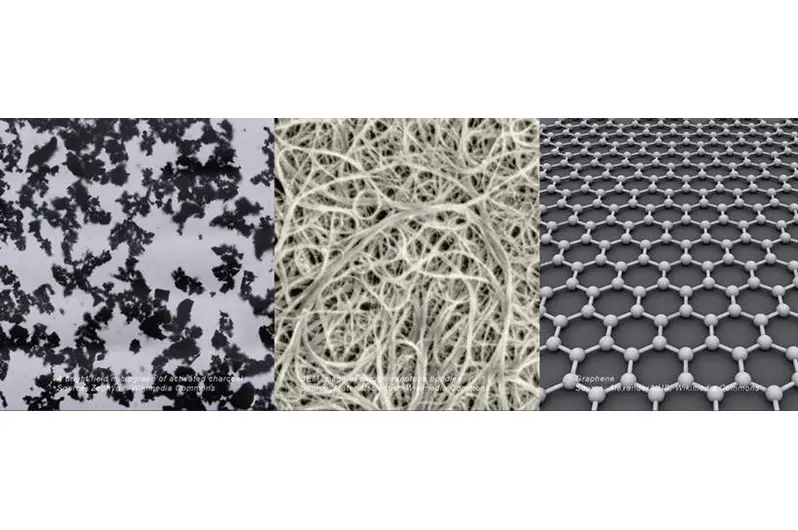
Supercapacitors will be a large market. It will interest suppliers of a wide range of specialty chemicals and added value feedstock. The new IDTechEx Research report Supercapacitor Materials and Technology Roadmap 2019-2039 uniquely appraises these and identifies gaps in the market for device variants and new material capabilities.

RelatedPosts

Exxelia Publishes Micropen White Papers for Printed Electronics

Stackpole Releases AlN High‑Power Thick Film Chip Resistors

Samsung Q4 2025 Results: MLCC focus for AI, Server and Automotive

We are rapidly moving beyond familiar carbon electrodes and two favourite electrolytes to a wide variety of organic and inorganic chemistries and new morphologies. Many transition metal oxides and other compounds from liquids to ceramics are now in focus. That includes the newer carbon allotropes, metallorganic frameworks, MXenes, organics and 2D compounds for example.

The report notes that lithium-ion batteries were a cottage industry but as they became a large market, added value materials companies prospered from making key materials that the device makers could not address. That will happen with supercapacitors. The growth of the supercapacitor business is being be accelerated by new priorities.

Think structural supercapacitors to ones maximising pseudocapacitance for battery-like functions and others replacing general purpose electrolytic capacitors. Breakthroughs are appearing with load bearing, smart skin, fabric and paper versions not currently possible with batteries or capacitors. The performance needs are prioritised before appraisal of the best pairing of new active electrode materials and morphologies with advanced electrolytes. We need cost down, energy density up, load-bearing, formable structural supercapacitors, solid state “massless energy”, self-discharge down, longer life, non-flammable materials etc.

In the past, supercapacitors have improved cost and parameters by a factor of ten or more and that will happen again, opening up a host of new applications. They are already successful in stop-start microhybrid vehicles for example and IDTechEx argues that it is reasonable to plan for when they replace batteries in the successor, the 48V mild hybrid implying an addressable supercapacitor materials business of billions of dollars yearly for this alone.

The new virtuosity is astounding. Some experimental supercapacitors now work from minus 110C to 300C. Power supply versions at 120 Hz are demonstrated. On the other hand, load-bearing supercapacitors are sometimes achieving lighter weight than the dumb structure they replace. Batteries make things heavier but supercapacitors make them lighter – “negative mass” energy storage? Supercapacitor materials just got exciting.

featured image credit: IDTechEx

Related

Recent Posts

Samsung Q4 2025 Results: MLCC focus for AI, Server and Automotive

26.1.2026
10

Capacitor Technology Dossier

26.1.2026
43

January 2026 Interconnect, Passives and Electromechanical Components Market Insights

22.1.2026
99

Passive Components in Quantum Computing

22.1.2026
83

Miniaturization of MLCCs and Electrolytics, KAVX Tech Chat

21.1.2026
51

Researchers Demonstrated 32nm Aluminum Vacuum Gap Capacitor

20.1.2026
34

Conductive Polymer Capacitor Market and Design‑In Guide to 2035

20.1.2026
118

TDK Releases High Performance 105C DC Link Film Capacitors

19.1.2026
54

YAGEO Acquires 100% of Shares of Shibaura Electronics

19.1.2026
91

Upcoming Events

Jan 27
16:00 - 17:00 CET

Simplifying Vehicle Development with Automotive Ethernet and Zonal Smart Switch Technologies

Feb 24
16:00 - 17:00 CET

Designing Qi2 Wireless Power Systems: Practical Development and EMC Optimization

Mar 3
16:00 - 17:00 CET

Cybersecurity at the Eleventh Hour – from RED to CRA – Information and Discussion

View Calendar

Popular Posts

  • Buck Converter Design and Calculation

    0 shares
    Share 0 Tweet 0
  • Boost Converter Design and Calculation

    0 shares
    Share 0 Tweet 0
  • LLC Resonant Converter Design and Calculation

    0 shares
    Share 0 Tweet 0
  • Flyback Converter Design and Calculation

    0 shares
    Share 0 Tweet 0
  • Ripple Current and its Effects on the Performance of Capacitors

    3 shares
    Share 3 Tweet 0
  • How Metal Prices Are Driving Passive Component Price Hikes

    0 shares
    Share 0 Tweet 0
  • MLCC and Ceramic Capacitors

    0 shares
    Share 0 Tweet 0
  • What is a Dielectric Constant and DF of Plastic Materials?

    4 shares
    Share 4 Tweet 0
  • Dual Active Bridge (DAB) Topology

    0 shares
    Share 0 Tweet 0
  • Degradation of Capacitors and its Failure Mechanisms

    0 shares
    Share 0 Tweet 0

Newsletter Subscription


Passive Components Blog

© EPCI - Leading Passive Components Educational and Information Site

  • Home
  • Privacy Policy
  • EPCI Membership & Advertisement
  • About

No Result
View All Result
  • Home
  • Knowledge Blog
  • PCNS

© EPCI - Leading Passive Components Educational and Information Site

This website uses cookies. By continuing to use this website you are giving consent to cookies being used. Visit our Privacy and Cookie Policy.
Go to mobile version