



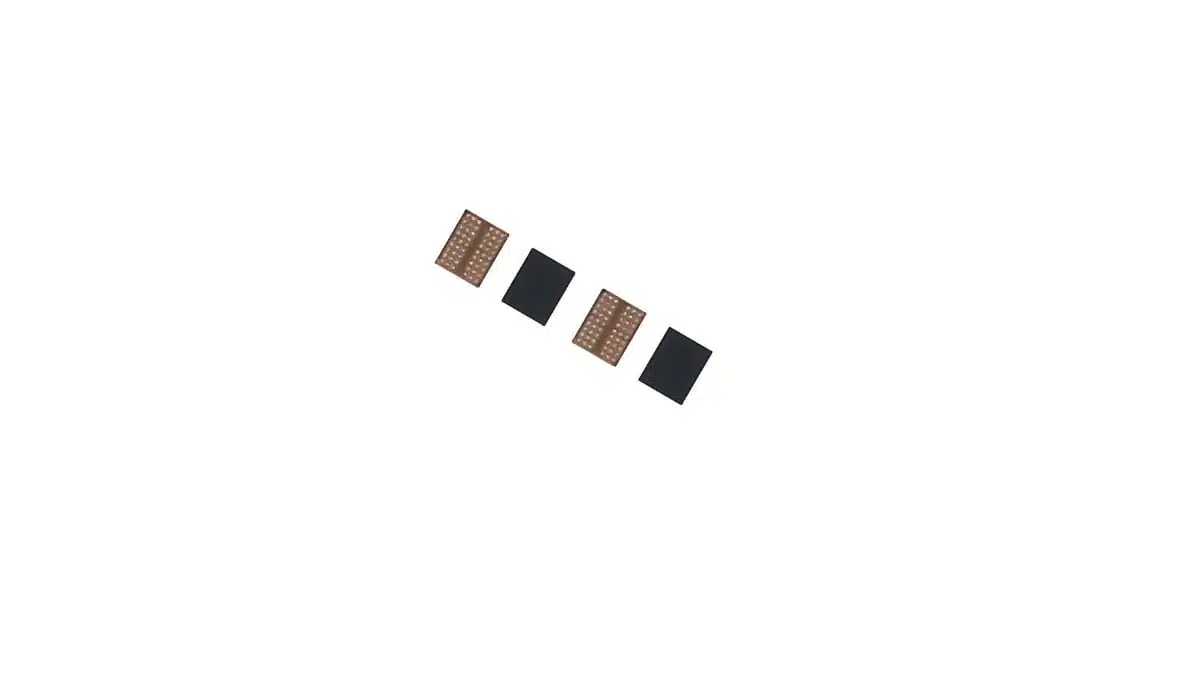
Samsung Electro-Mechanics has signed a large-scale silicon capacitor supply contract worth approximately 1.5 trillion KRW with a global large-scale technology company, marking a major milestone in its AI component strategy.
The agreement runs for two years, from January 1, 2027 to December 31, 2028, and represents the company’s first high-volume supply achievement in silicon capacitors targeted at AI infrastructure.
Update – June 14, 2026: Samsung completes AI silicon capacitor rollout
Since our original coverage of Samsung Electro‑Mechanics’ 1.5 trillion KRW silicon capacitor supply contract for AI infrastructure, the company has now moved into full‑scale mass production of silicon capacitors and formally positioned them alongside its MLCC and FC‑BGA portfolio as a complete lineup of key AI semiconductor components. At a media seminar on June 14, Samsung Electro‑Mechanics confirmed that it is building a full mass‑production system for silicon capacitors used in AI semiconductor packaging and plans to expand its push into the global AI semiconductor market.
According to the company, silicon capacitors act as on‑package power buffers for AI GPUs and high‑bandwidth memory (HBM), smoothing large, fast current transients and reducing signal interference inside advanced AI packages. Their wafer‑based construction enables extremely thin form factors and direct integration inside semiconductor packages and FC‑BGA substrates, reducing power distribution loss and improving transient response compared to traditional MLCC‑only solutions.
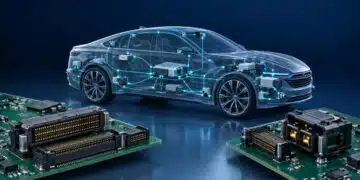
Industry observers now see Samsung Electro‑Mechanics as one of the few players able to supply all three critical elements for AI packages—MLCCs, FC‑BGA substrates and silicon capacitors—from a single source, at a time when data‑center AI servers demand higher power quality, tighter PDN design, and embedded decoupling inside substrates. This further reinforces the strategic direction we previously outlined, where silicon capacitors evolve from early mobile applications into data‑center AI infrastructure and, longer term, into “Physical AI” domains such as autonomous vehicles, industrial robots and humanoid platforms.
Strategic Step in AI Infrastructure Components
Samsung Electro-Mechanics has been nurturing silicon capacitors as a new growth engine and is now leveraging this contract to accelerate its entry into next‑generation AI infrastructure markets. The deal positions the company as a key supplier into the core power-delivery chain of advanced AI semiconductors used in data centers and high-performance computing platforms.
Silicon capacitors are installed inside high-performance semiconductor packages such as GPUs for AI servers and High Bandwidth Memory HBM, where they help stabilize power delivery directly at the chip level. By operating at the closest possible point to the die, they remove power noise and support signal integrity in extremely high-speed, high‑current environments.
Why Silicon Capacitors Matter for AI and HPC
In AI servers and other high-performance computing systems, the volume of processed data and corresponding power consumption has increased sharply. AI-centric packages are physically larger and have more layers than those used in general PCs, which makes stable power delivery and robust signal integrity critical competitive parameters. Even brief power fluctuations can cause performance degradation or computational errors, making embedded power‑conditioning components inside the package increasingly important.
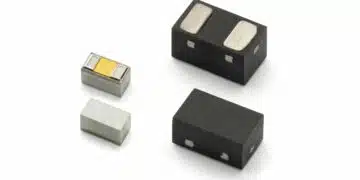
Silicon capacitors, manufactured on silicon wafers, offer ultra-compact form factors combined with very low parasitics compared with conventional MLCC ceramic capacitor-based solutions. According to Samsung Electro-Mechanics, silicon capacitors exhibit more than 100‑fold lower ESL and ESR than standard MLCCs, significantly reducing signal loss in high-speed semiconductors. Their ultra-thin structure allows high-density integration, while the technology maintains stable performance under high‑voltage and high‑temperature operating conditions typical of AI and server environments.
Technology Leadership and Market Entry Barriers
The silicon capacitor market is characterized by high technological entry barriers and stringent customer qualification requirements, which have historically led to an oligopolistic landscape dominated by a small number of specialized suppliers. Samsung Electro-Mechanics is leveraging ultra‑fine process capabilities built in its MLCC and package substrate businesses to overcome these barriers and enter the core supply chain for AI semiconductors.
By combining its experience in precision processing, thin‑film structures and advanced packaging, the company can integrate silicon capacitors directly into semiconductor packages where low inductance and tight power integrity margins are essential. This approach aligns with broader industry trends in which power-delivery networks are being pushed closer to the die to support higher bandwidth and lower jitter in AI and high‑speed networking applications.
Expansion into Wider High-Performance Applications
Samsung Electro-Mechanics plans to use this flagship contract as a springboard to diversify silicon capacitor supply beyond AI servers. Targeted application areas include high-performance computing platforms, autonomous driving systems and advanced mobile devices, all of which increasingly depend on dense, high-efficiency power delivery solutions inside compact footprints.
The company sees silicon capacitors as part of a broader portfolio evolution from traditional MLCC dominance toward next‑generation components serving AI, automotive, energy and robotics markets. In related communications, Samsung Electro-Mechanics has highlighted its focus on AI/server components, advanced substrates and other enabling technologies for future growth segments.
Management Perspective
Commenting on the contract, President Chang Duckhyun stated that this agreement will be an important milestone in strengthening Samsung Electro-Mechanics’ position as a total solution provider of core components in the AI era. He emphasized the company’s intent to deepen cooperation with global customers and expand its product lineup in emerging high‑growth applications.
The contract has also attracted attention from financial markets and industry observers, who view the deal size and customer profile as validation of Samsung Electro-Mechanics’ technological competitiveness in silicon capacitors and AI infrastructure components.
Source
This article is based on information provided in Samsung Electro-Mechanics’ official press release and related publicly available company and market reports, compiled and adapted for a technical electronics audience.
References
- Samsung Electro-Mechanics press release – Silicon capacitor supply contract
- Samsung Electro-Mechanics – Silicon Capacitor product overview
- Samsung Electro-Mechanics – Newsroom main page
- Korea Economic Daily Global – Samsung deepens foray into silicon capacitor market
- Maeil Business – Samsung Electro-Mechanics wins 1.5 trillion won order for silicon capacitors