





Passive Components Blog
No Result
View All Result
  • Home
  • NewsFilter
    • All
    • Aerospace & Defence
    • Antenna
    • Applications
    • Automotive
    • Capacitors
    • Circuit Protection Devices
    • electro-mechanical news
    • Filters
    • Fuses
    • Inductors
    • Industrial
    • Integrated Passives
    • inter-connect news
    • Market & Supply Chain
    • Market Insights
    • Medical
    • Modelling and Simulation
    • New Materials & Supply
    • New Technologies
    • Non-linear Passives
    • Oscillators
    • Passive Sensors News
    • Resistors
    • RF & Microwave
    • Telecommunication
    • Weekly Digest

    ECIA Industry Pulse Index Cools After Five-Year High

    YAGEO Extends Automotive CAN and CAN-FD Common-Mode Chokes

    Würth Elektronik Updates REDEXPERT DC‑DC Converter Designer

    Stackpole Unveils High-Temperature Automotive Thick Film Chip Resistors for Harsh Environments

    Molex Presents MiniMix Hybrid Power and Signal Connectors for Compact Humanoid Joints

    Bourns Releases Custom SiC AFE/PFC Power Inductor for High‑Voltage Designs

    Littelfuse Releases Toggle Safety Covers for Reliable Control Panels

    Bourns Expanded Blend‑Balance Guitar Potentiometers Resistance Range

    TDK Extends Vibration‑Resistant Axial Aluminum Capacitors for Compact DC‑links

    Trending Tags

    • Ripple Current
    • RF
    • Leakage Current
    • Tantalum vs Ceramic
    • Snubber
    • Low ESR
    • Feedthrough
    • Derating
    • Dielectric Constant
    • New Products
    • Market Reports
  • VideoFilter
    • All
    • Antenna videos
    • Capacitor videos
    • Circuit Protection Video
    • Filter videos
    • Fuse videos
    • Inductor videos
    • Inter-Connect Video
    • Non-linear passives videos
    • Oscillator videos
    • Passive sensors videos
    • Resistor videos

    Current Sense Transformers: Ferrite vs Nanocrystalline Cores for Accurate Current Measurement

    EMC Design Fundamentals: Safe Use of Varistors and Common Mode Chokes in Mains and Data-Line Filters

    Ferrite versus Nanocrystalline Power Inductor Cores: Turns, Gap and Size

    KYOCERA AVX Presents Antenna Integrator Studio Tutorial for Antenna Placement and RF Design

    Power Design Simulation Tools for Faster Inductor Selection and Loss Optimization

    EMC‑Compliant PCB and Connector Design Guidelines

    Why Isolated DC/DC Power Supplies Fail Late, Würth Elektronik Podcast

    Designing 800 V DC EMC Filters: Calculation, Simulation and Measurement

    Current Sense Transformer Datasheet and Design‑in Guide

    Trending Tags

    • Capacitors explained
    • Inductors explained
    • Resistors explained
    • Filters explained
    • Application Video Guidelines
    • EMC
    • New Products
    • Ripple Current
    • Simulation
    • Tantalum vs Ceramic
  • Knowledge Blog
  • Dossiers
    • AI Hardware Dossier
    • Power Converter Dossier
    • Automotive Dossier
    • Capacitor Dossier
    • Resistor Dossier
    • Inductor Dossier
    • Circuit Protection Dossier
  • Suppliers
    • Who is Who
  • PCNS
    • PCNS 2025
    • PCNS 2023
    • PCNS 2021
    • PCNS 2019
    • PCNS 2017
  • Events
  • Home
  • NewsFilter
    • All
    • Aerospace & Defence
    • Antenna
    • Applications
    • Automotive
    • Capacitors
    • Circuit Protection Devices
    • electro-mechanical news
    • Filters
    • Fuses
    • Inductors
    • Industrial
    • Integrated Passives
    • inter-connect news
    • Market & Supply Chain
    • Market Insights
    • Medical
    • Modelling and Simulation
    • New Materials & Supply
    • New Technologies
    • Non-linear Passives
    • Oscillators
    • Passive Sensors News
    • Resistors
    • RF & Microwave
    • Telecommunication
    • Weekly Digest

    ECIA Industry Pulse Index Cools After Five-Year High

    YAGEO Extends Automotive CAN and CAN-FD Common-Mode Chokes

    Würth Elektronik Updates REDEXPERT DC‑DC Converter Designer

    Stackpole Unveils High-Temperature Automotive Thick Film Chip Resistors for Harsh Environments

    Molex Presents MiniMix Hybrid Power and Signal Connectors for Compact Humanoid Joints

    Bourns Releases Custom SiC AFE/PFC Power Inductor for High‑Voltage Designs

    Littelfuse Releases Toggle Safety Covers for Reliable Control Panels

    Bourns Expanded Blend‑Balance Guitar Potentiometers Resistance Range

    TDK Extends Vibration‑Resistant Axial Aluminum Capacitors for Compact DC‑links

    Trending Tags

    • Ripple Current
    • RF
    • Leakage Current
    • Tantalum vs Ceramic
    • Snubber
    • Low ESR
    • Feedthrough
    • Derating
    • Dielectric Constant
    • New Products
    • Market Reports
  • VideoFilter
    • All
    • Antenna videos
    • Capacitor videos
    • Circuit Protection Video
    • Filter videos
    • Fuse videos
    • Inductor videos
    • Inter-Connect Video
    • Non-linear passives videos
    • Oscillator videos
    • Passive sensors videos
    • Resistor videos

    Current Sense Transformers: Ferrite vs Nanocrystalline Cores for Accurate Current Measurement

    EMC Design Fundamentals: Safe Use of Varistors and Common Mode Chokes in Mains and Data-Line Filters

    Ferrite versus Nanocrystalline Power Inductor Cores: Turns, Gap and Size

    KYOCERA AVX Presents Antenna Integrator Studio Tutorial for Antenna Placement and RF Design

    Power Design Simulation Tools for Faster Inductor Selection and Loss Optimization

    EMC‑Compliant PCB and Connector Design Guidelines

    Why Isolated DC/DC Power Supplies Fail Late, Würth Elektronik Podcast

    Designing 800 V DC EMC Filters: Calculation, Simulation and Measurement

    Current Sense Transformer Datasheet and Design‑in Guide

    Trending Tags

    • Capacitors explained
    • Inductors explained
    • Resistors explained
    • Filters explained
    • Application Video Guidelines
    • EMC
    • New Products
    • Ripple Current
    • Simulation
    • Tantalum vs Ceramic
  • Knowledge Blog
  • Dossiers
    • AI Hardware Dossier
    • Power Converter Dossier
    • Automotive Dossier
    • Capacitor Dossier
    • Resistor Dossier
    • Inductor Dossier
    • Circuit Protection Dossier
  • Suppliers
    • Who is Who
  • PCNS
    • PCNS 2025
    • PCNS 2023
    • PCNS 2021
    • PCNS 2019
    • PCNS 2017
  • Events
No Result
View All Result
Passive Components Blog
No Result
View All Result

TDK Explains Soft Termination on Capacitors, Inductors, and Chip Beads for Automotive

2.12.2019
Reading Time: 7 mins read
A A

Components operating in high vibration and wide operating temperature environments such, as automotive electronics, have to absorb both board flexure stress and stress from the expansion and contraction of solder joints due to thermal shock. Thereby manufactures have developed conductive soft resin-polymer as the thermo-mechanical shock absorber improving connection reliability compare to conventional electrodes. TDK has present its explanation in article below.

Automakers are incorporating more multifunctional capabilities into automobiles as they seek to make autonomous driving a reality. Electronic control units (ECUs) for advanced driver assistance systems are consuming more power, and the latest trend is toward ECU integration—installing an ECU close to the engine room or other working part. For these reasons, the number of electronic devices and components built into cars these days is on the rise, and the reliability of the electronic components used in the electronics is having a growing impact on the reliability of the vehicle overall.

RelatedPosts

ECIA Industry Pulse Index Cools After Five-Year High

YAGEO Extends Automotive CAN and CAN-FD Common-Mode Chokes

Wk 31 Electronics Supply Chain Digest

High reliability required for automotive electronic components

As automotive electrical devices become more compact while providing greater functionality, the number of onboard electronic components has been rising at the same time as the functioning environment has become more demanding. Electronic components have the following three desirable qualities:

  • Compact
  • High performance
  • High reliability

High reliability is especially important. Electronic components that have the durability required for mechanical strength and are able to withstand rapid changes in temperature will be in high demand more than ever.

To meet these needs, TDK supplies products with improved connection reliability thanks to resin electrodes (soft termination) used in the capacitors, inductors, and chip beads employed in the products.

This Tech Note discusses examples of and the effects of resin electrodes in dealing with the issues of flex cracks and solder cracks.

Difference between a regular terminal product and soft termination

Products with resin electrodes absorb both board flexure stress and stress from the expansion and contraction of solder joints due to thermal shock, thereby improving connection reliability over products with conventional electrodes.

Flex cracks that occur in multilayer ceramic chip capacitors (MLCCs)

  • In the terminal electrode of a regular MLCC, the Cu under layer is plated with Ni and Sn. Soft termination is a type of MLCC in which a conductive resin layer is provided between the Cu and Ni plating layer. (Fig. 1)
  • The resin layer absorbs stress accompanying expansion or shrinkage of the solder joints due to thermal shock or flex stress on the board and prevents cracking of the capacitor element.
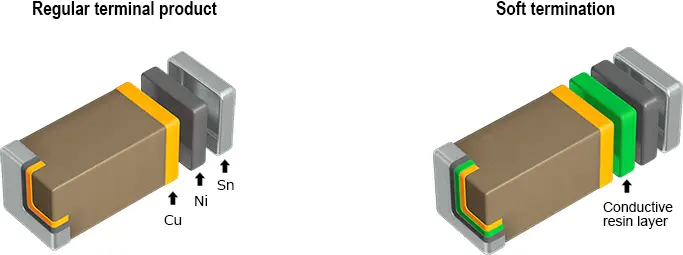
Fig.1: Difference between a regular terminal product and soft termination in MLCCs; source: TDK

Flex cracks that occur in inductors (coils) and chip beads

  • In the terminal electrode of a regular beads, the Ag under layer is plated with Ni and Sn. Soft termination is a type of beads in which a conductive resin layer is provided between the Ag and Ni plating layer. (Fig. 2)
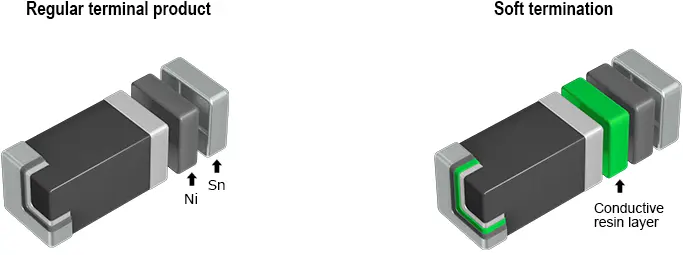
Fig. 2: Difference between a regular terminal product and soft termination in inductors (coils) and chip beads; source: TDK

Flex crack countermeasures by using soft termination

Major causes and process of flex cracks

Flex cracking is due to excessive circuit board flexure. As for the causes of board flexure, there are various causes including solder stress due to an inappropriate amount of solder, stress applied at the time of depaneling or screw fastening, or board flexure at the time of final assembly. When a crack occurs on the element, it may lead to a failure—either a short circuit (mode) or open mode failure—requiring measures to be taken.
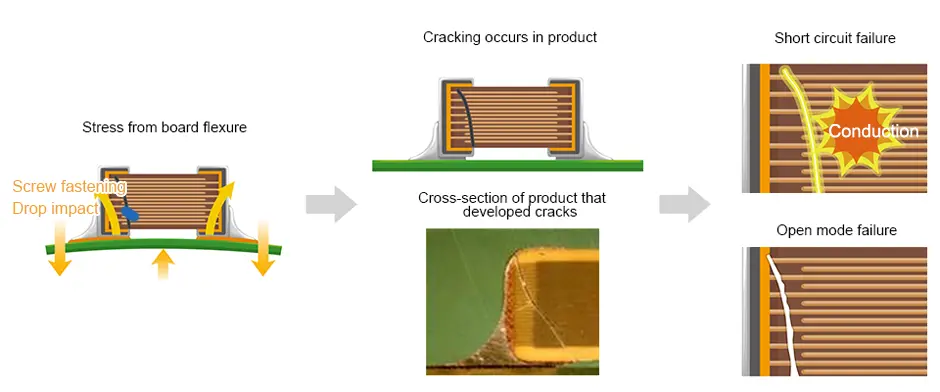
Fig.3: Major causes and process of board flexure; source: TDK

Flex cracks that occur in multilayer ceramic chip capacitors (MLCCs)

Whereas excessive stress has caused cracking on the ceramic element of a conventional product, no cracking develops on the element with soft termination, even with peeling of the nickel plating layer and conductive resin layer. This shows that the conductive resin layer has an excellent effect in preventing element cracks. For more information, see the Summary of Flex Crack Countermeasures in MLCCs solution guide.

Common Soldering Process Issues
ABC of CLR Mounting Guidelines Free Online Handbook

Flex cracks that occur in inductors (coils) and chip beads

TDK’s multilayer inductors and chip bead resin electrode products have nearly twice the board flex resistance (critical bending) of products with conventional electrodes, according to testing. In the conventional product, cracks developed on the ceramic element with a flex of about 4 mm. The product with soft termination can safely withstand cracking at 7 mm of flex.
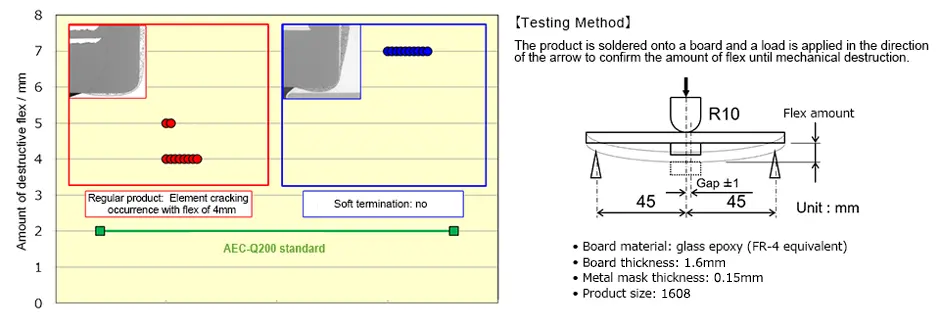
Fig.4: Flex test results; source: TDK

Solder crack countermeasures by using soft termination

Major causes and process of solder cracks

Solder cracks on electronic components developed from severe usage conditions after going on the market and during manufacturing processes such as soldering. The primary cause of cracking is the difference between the thermal expansion coefficient of the product’s electrodes and its board in an environment of repeated temperature changes, resulting in thermal stress on the soldered areas.

In automobiles in particular, caution is required because of the high likelihood of rapid temperature changes (thermal shock) occurring in close proximity to the product. Because of environmental considerations, lead-free solder has come to be used even for automotive electronic components, and the risk of solder cracking is increasing when compared to the use of conventional eutectic solder in terms of temperature control and solder composition.
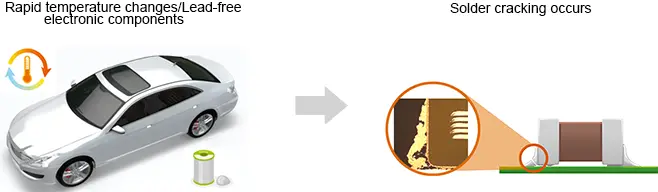

Fig. 5: Major causes of solder cracks
Soldering, PCB Handling and Rework
ABC of CLR Mounting Guidelines Free Online Handbook

Bond strength decrease rate

In general, anchoring strength declines after a thermal shock, but TDK’s resin electrodes feature excellent thermal shock resistance, a fact borne out by post-thermal shock test data.

Flex cracks that occur in multilayer ceramic chip capacitors (MLCCs)
  • The 3,000-cycle thermal shock test data (-55 °C to 125 °C) show that the anchoring strength of the conventional product declined approximately 90%, as compared to approximately 50% for the resin electrode.
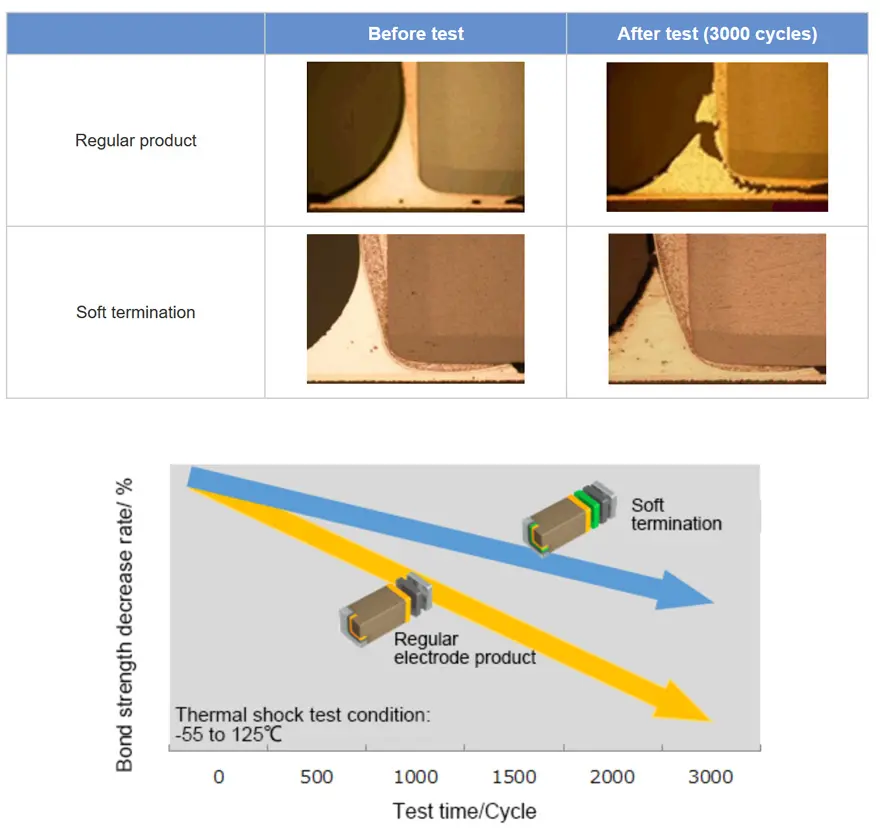
Fig. 6: Thermal shock test data of MLCCs; source: TDK
Flex cracks that occur in inductors (coils) and chip beads
  • •The 2,000-cycle thermal shock test data (-55 °C to 150 °C) show that the anchoring strength of the conventional product declined approximately 50%, as compared to approximately 20% for the resin electrode.
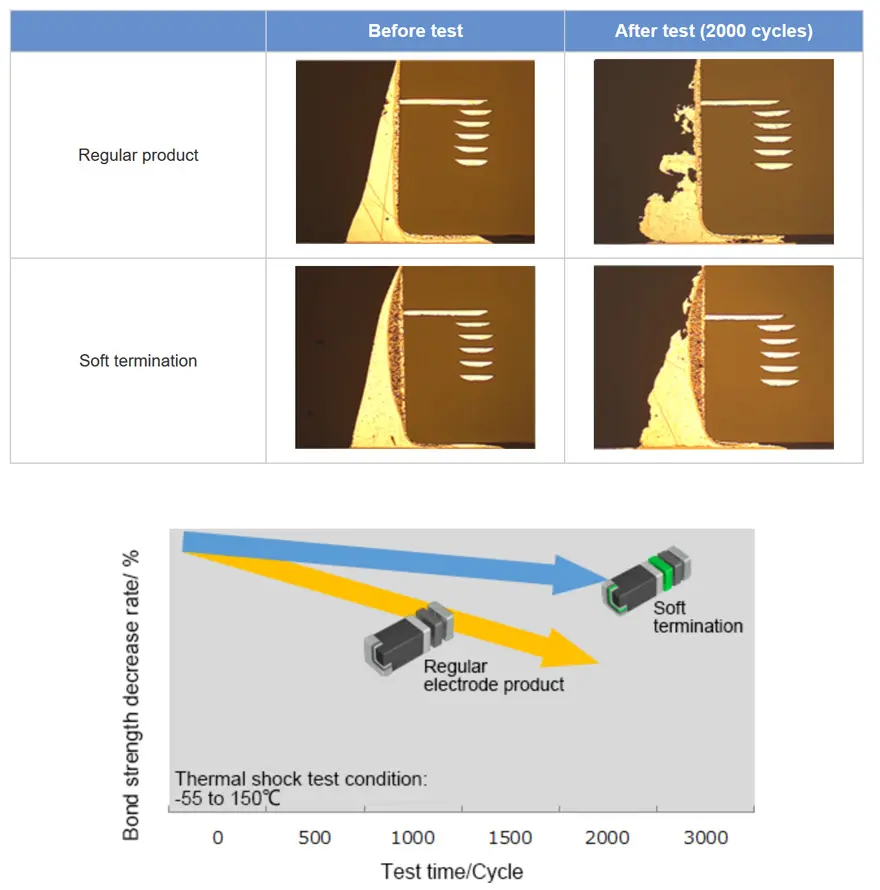
Fig. 8: Thermal shock test data of inductors (coils) and chip beads; source: TDK
PCB Board Design and Handling
ABC of CLR Mounting Guidelines Free Online Handbook

Summary

When the element of an electronic component develops cracking, a short circuit failure or open circuit failure will occur.

Similarly, solder cracking will occur when there is stress between the board and the joint, causing the component to possibly fall off or an open circuit failure or other failure to occur.

Caution is required when components are used in locations with extreme temperature changes (differences) such as in an automobile’s engine room or on a device with a heat source.

TDK’s soft termination products are highly resistant to board bending and flexure and to thermal shock, and can suppress external stresses. TDK supplies electronic components with soft termination to improve connection reliability.

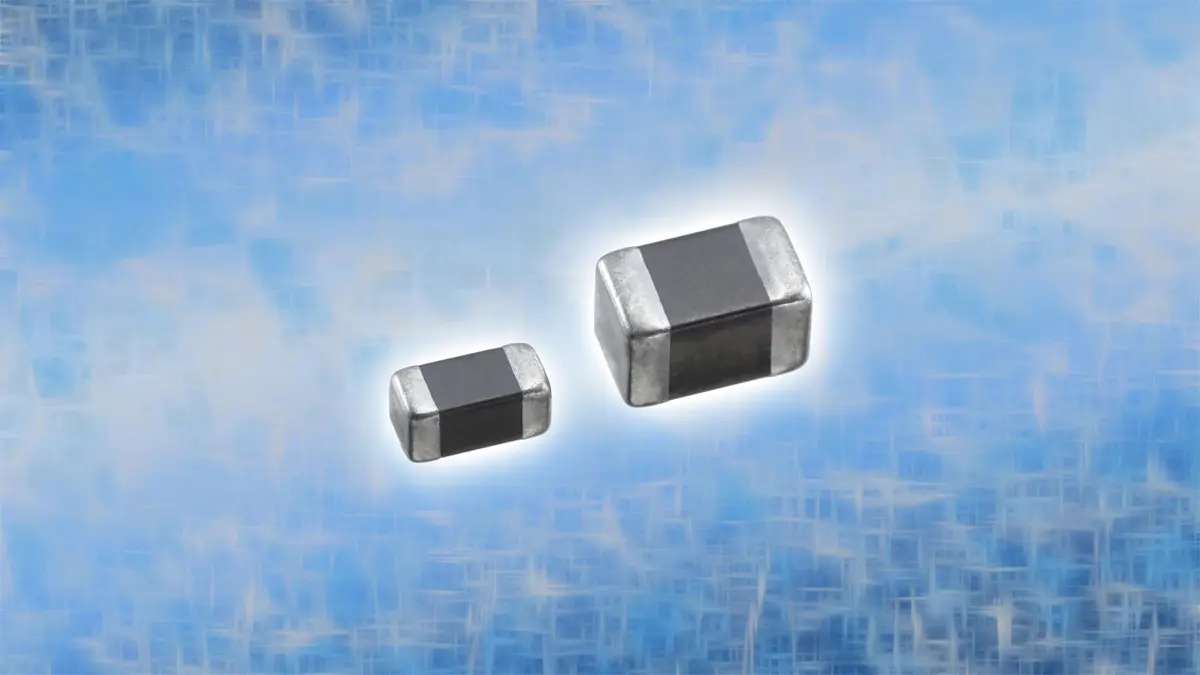
featured image: TDK inductors and chip beads with soft termination; source: TDK

Related

Source: TDK

Recent Posts

YAGEO Extends Automotive CAN and CAN-FD Common-Mode Chokes

10.8.2026
5

Würth Elektronik Updates REDEXPERT DC‑DC Converter Designer

6.8.2026
36

Bourns Releases Custom SiC AFE/PFC Power Inductor for High‑Voltage Designs

6.8.2026
34

TDK Extends Vibration‑Resistant Axial Aluminum Capacitors for Compact DC‑links

4.8.2026
49

Current Sense Transformers: Ferrite vs Nanocrystalline Cores for Accurate Current Measurement

5.8.2026
64

YAGEO Extends Automotive Tantalum Polymer Capacitors for AI and ADAS Controllers

31.7.2026
119

Knowles Introduces PP Film Capacitors for High‑Stress Power Electronics

30.7.2026
66

AI Data Centers Push Aluminium Capacitor Prices Higher

30.7.2026
179

Murata Releases 1210 Metal Terminal Common Mode Choke for 10Base‑T1S In‑Vehicle Ethernet

30.7.2026
143

Upcoming Events

Sep 10
11:00 - 12:00 CEST

Equipment models and model strategies for Space Missions

Sep 29
16:00 - 17:00 CEST

Cybersecurity 2026

Nov 24
16:00 - 17:00 CET

Component selection with the WE REDEXPERT® DC-DC Converter Designer Tool

View Calendar

Popular Posts

  • Buck Converter Design and Calculation

    0 shares
    Share 0 Tweet 0
  • Boost Converter Design and Calculation

    0 shares
    Share 0 Tweet 0
  • LLC Resonant Converter Design and Calculation

    0 shares
    Share 0 Tweet 0
  • Flyback Converter Design and Calculation

    0 shares
    Share 0 Tweet 0
  • MLCC and Ceramic Capacitors

    0 shares
    Share 0 Tweet 0
  • MLCCs in the Age of AI: Q2 2026 Market Tightness

    0 shares
    Share 0 Tweet 0
  • YAGEO Announces July 2026 Capacitor Price Increase

    0 shares
    Share 0 Tweet 0
  • Earthing Systems and IEC Classification Explained

    0 shares
    Share 0 Tweet 0
  • Dual Active Bridge (DAB) Topology

    0 shares
    Share 0 Tweet 0
  • Ripple Current and its Effects on the Performance of Capacitors

    3 shares
    Share 3 Tweet 0

Newsletter Subscription


Passive Components Blog

© EPCI - Leading Passive Components Educational and Information Site

  • Home
  • Privacy Policy
  • EPCI Membership & Advertisement
  • About

No Result
View All Result
  • Home
  • Knowledge Blog
  • Dossiers
  • PCNS

© EPCI - Leading Passive Components Educational and Information Site