

Würth Elektronik will present an integrated portfolio of electronic components, PCB technologies and high-current interconnect solutions at electronica 2026 in Munich.
The group’s three business units will exhibit at separate booths, combining new product introductions with engineering tools, design-in support and application-focused demonstrations.
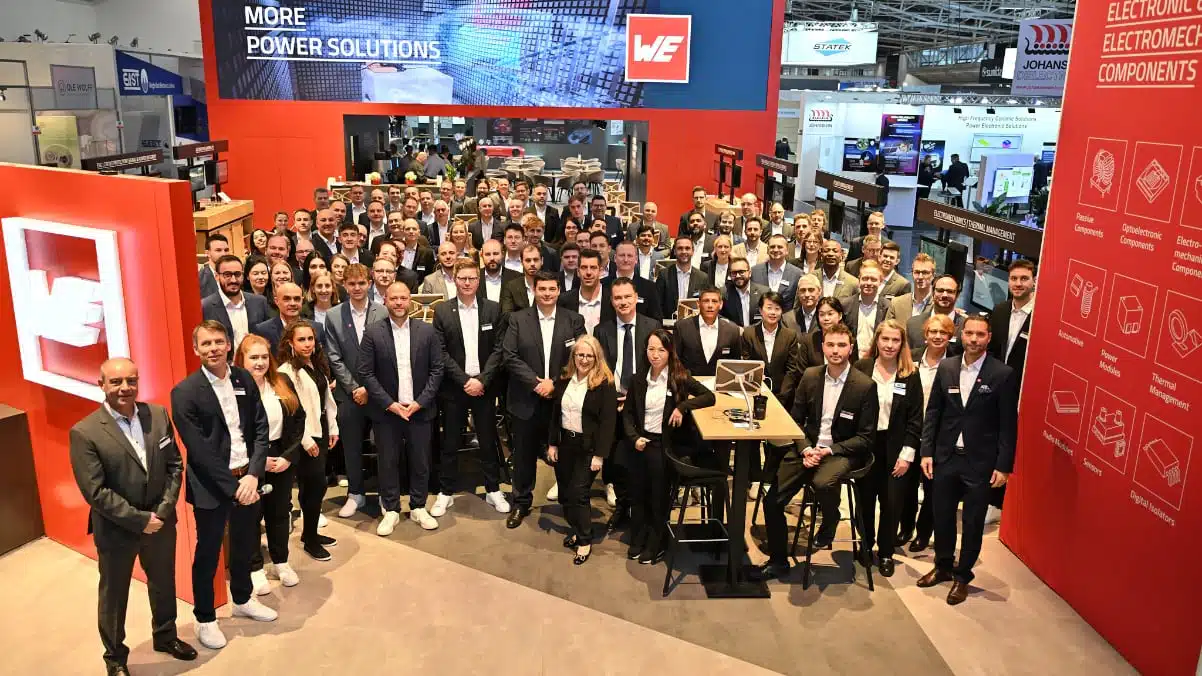
The exhibition takes place from 10 to 13 November 2026. Würth Elektronik eiSos will exhibit in Hall B6, Booth 101, Würth Elektronik CBT will be located next door in Hall B6, Booth 102, and Würth Elektronik ICS will present high-current PCB connection technology in Hall A3, Booth 334.
New components for isolation, lighting and EMC
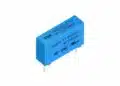
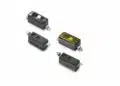
Würth Elektronik eiSos plans to introduce several component developments aimed at electronics designers addressing signal integrity, electromagnetic compatibility, power density and specialised lighting applications.
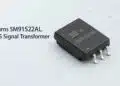
The announced portfolio includes a new series of high-speed optocouplers supporting data rates of up to 10 MBd. These devices are intended for digital signal transmission between galvanically isolated circuit sections, where designers must balance data-rate requirements with insulation coordination, common-mode transient immunity and noise robustness.
The company will also introduce a new generation of horticultural LEDs intended to enable more precisely controlled lighting conditions for plant-growth systems. Supporting this application area, Würth Elektronik offers its Horticalculator online tool for evaluating horticultural-lighting configurations.
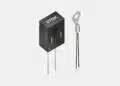
For power-conversion and filtering applications, the company will show new nanocrystalline cable cores for broadband EMC filtering. Nanocrystalline magnetic materials can provide high permeability and useful attenuation over a wide frequency range, making them relevant to cable-borne interference suppression in industrial, automotive and power-electronics systems. Designers working with conducted emissions can also review the fundamentals of EMI filters and common-mode chokes.
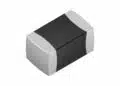
Another highlight is the expanded WE-MXGI inductor family. Würth Elektronik positions the series for higher power density while maintaining low DC resistance. Low RDC is important in high-current converter stages because winding losses increase with the square of current, directly affecting thermal performance and achievable system efficiency. For more background, see the Passive Components Blog guide to power inductors and their key parameters.
Design support beyond the component
Alongside physical components, Würth Elektronik will highlight its measurement-data-based REDEXPERT calculation platform, customised design-in support and digital engineering services. The company also plans to present reference designs developed with partners.
This combination is increasingly relevant as component selection is no longer limited to nominal inductance, capacitance or current ratings. Practical design decisions need to consider parasitics, temperature behaviour, losses, saturation margins, EMC performance, availability and manufacturing constraints. Simulation and calculation tools can shorten early-stage evaluation, but final validation still requires application-specific measurement under realistic electrical and thermal conditions.
High-current PCB connections up to 150 A
At its Hall A3 booth, Würth Elektronik ICS will focus on PCB connection technologies for high-current applications. Its presentation will include the lead-free LF PowerBasket power elements, PowerBusbar PCB busbars and the new PowerBusbar PF vertical press-fit busbar.
The LF PowerBasket is specified for pluggable high-current connections of up to 150 A and is aimed particularly at compact board-to-board connections. In these systems, contact resistance, current distribution, temperature rise and mechanical assembly all become critical design factors.
The PowerBusbar platform addresses high-current distribution directly on PCBs. While the established PowerBusbar PCB products provide busbar-based current paths, the new PowerBusbar PF is a vertical press-fit design intended to reinforce high-current paths and increase current-carrying capability where board area is restricted.
For power-electronics developers, such solutions can help address a recurring layout challenge: conventional PCB copper alone may become impractical as current increases because wide traces consume valuable area and may create excessive resistive loss or thermal gradients. Integrating dedicated busbars, press-fit connections and appropriate thermal paths can support more compact and robust power-distribution architectures.
PCB technologies for more integrated electronics
Würth Elektronik CBT will display its PCB technology range, from conventional rigid boards to HDI, flex and rigid-flex constructions. The company will also feature higher-end technologies including component embedding and its s.mask technology.
The focus is on responding to higher integration levels, growing power demand and continuing miniaturisation. These demands often converge in applications such as wearables, compact industrial equipment, medical devices, automotive electronics and connected sensors, where electrical performance, manufacturability and mechanical constraints must be considered simultaneously.
Würth Elektronik CBT plans to show several application examples, including an Infineon payment ring, an open-source smartwatch and a dermatoscope. The company will also provide information on PCB design and engineering services, its WEdirekt online shop and international sourcing capabilities.
Its production and sourcing footprint in Germany and Asia is intended to support projects from the early design phase and prototype builds through to series production and international sourcing. For developers, this type of support can be valuable where PCB stack-up, impedance control, flex construction, embedded components or high-current copper structures need to be evaluated before release to production.
A combined approach to electronics development
The three Würth Elektronik business units represent complementary parts of an electronics design chain: passive and electromechanical components, printed circuit boards, and high-current connection systems. At electronica 2026, the group will use this combined presence to discuss application-specific development and sourcing requirements with visitors.
The broader message is that modern electronics design increasingly requires system-level optimisation. A high-density power design, for example, must align the choice of inductors, EMI suppression components and interconnect technology with PCB layout, heat dissipation, manufacturing processes and supply continuity. Bringing these disciplines together early can reduce late-stage redesign risk and improve the path from prototype to volume production.
Further reading
- Inductors and Coils
- EMI Filters and Common Mode Chokes
- PCB Design Guidelines for Power Electronics
- Buck Converter Design and Calculation
Source
This article is based on the Würth Elektronik press release announcing the company’s three-booth presence at electronica 2026, including planned component, PCB and high-current connection demonstrations.