




LeanBOM has expanded its capacitor search and comparison catalogue to 710,100 base part numbers, including new KYOCERA AVX multilayer ceramic capacitor coverage.
The update also adds clearer alternative-part matching, CSV exports and a DC-bias chart intended to help engineers assess effective capacitance at actual voltage and temperature conditions.
Key features and benefits
- The catalogue now contains 710,100 base capacitor part numbers and 1.86 million orderable part numbers when packaging variants are included.
- KYOCERA AVX MLCC coverage adds 103,946 base part numbers to the search catalogue.
- Dimensions and characteristic curves are available for 37,005 of the newly added KYOCERA AVX parts.
- The Alternative Parts function now compares 15 specifications, including polarity.
- Thickness is now assessed in alternative-part matching. Taller candidates are placed in an “Alternatives to Check” group rather than excluded solely because of their build height.
- Each Alternative Parts results section has its own export function.
- The Most Recommended search results can now be exported as CSV.
- A DC-bias overlay chart is available above Working Conditions search results for registered users.
Technical highlights
LeanBOM is a cross-technology capacitor search and comparison platform covering MLCC, aluminium-electrolytic, tantalum and film capacitor technologies. Its Working Conditions search is structured around effective capacitance at the applied voltage and temperature rather than nominal capacitance alone, which is particularly relevant for class-2 MLCCs where DC bias and temperature can materially change the capacitance available in circuit.
| Parameter | Value | Notes |
|---|---|---|
| Base part numbers | 710,100 | As of 29 September 2026 |
| Orderable part numbers | 1.86 million | Includes packaging variants |
| New KYOCERA AVX parts | 103,946 | MLCC base part numbers |
| New parts with curves | 37,005 | Dimensions and characteristics |
| Alternative comparison fields | 15 | Includes polarity |
| Catalogue growth since June | 103,979 | Base part numbers |
| Packaging-variant growth | 288,572 | Orderable part numbers |
A base part number identifies the electrical and mechanical component variant. Packaging options, such as reel quantity, create distinct orderable part numbers without necessarily changing the component’s electrical characteristics. That distinction is useful for purchasing teams, where reel configuration, order quantity and approved distributor stock may determine which ordering code enters a production BOM.
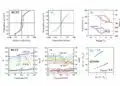
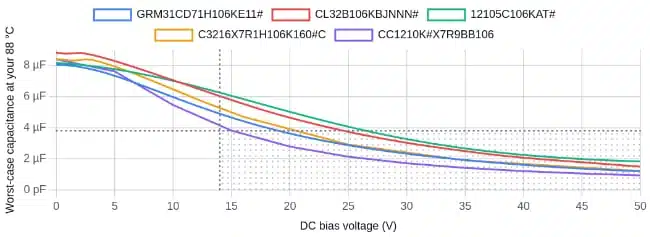
The new DC-bias chart displays worst-case capacitance curves at the selected operating temperature against applied DC voltage. In the cited example, the search target is at least 3.8 µF effective capacitance at 14 V and 88 °C, using industrial-grade capacitors across MLCC, aluminium-electrolytic and tantalum technologies. Dotted reference lines show the specified working voltage and required capacitance, allowing a quick visual check of whether an individual curve remains outside the non-qualifying region.
Typical applications
LeanBOM is applicable where engineers need to select, compare or qualify capacitors against operating requirements rather than nominal catalogue values.
- Power-rail decoupling and bulk capacitance: The Working Conditions search can screen candidates against an effective capacitance requirement at the real rail voltage and operating temperature. This is important when class-2 MLCC capacitance loss under DC bias would otherwise reduce the available decoupling margin.
- Cross-technology capacitor selection: MLCC, tantalum, aluminium-electrolytic and film technologies can be compared for the same capacitance, voltage and temperature target. This supports early evaluation of footprint, electrical behaviour, qualification requirements and sourcing options.
- Second sourcing and supply-risk review: Alternative Parts now exposes the criteria used for candidate selection and compares 15 fields. The added thickness handling helps identify mechanically taller alternatives that may remain electrically relevant but require enclosure or assembly clearance checks.
- BOM preparation and purchasing review: Separate exports for Alternative Parts results and CSV export from Most Recommended results allow comparison data to be moved into internal BOM, sourcing and component-approval workflows.
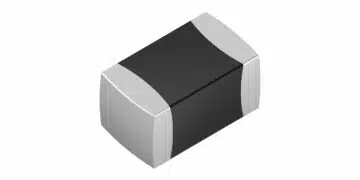
- MLCC selection: The added KYOCERA AVX catalogue coverage increases the number of ceramic capacitor candidates available for comparison, including searchable dimensions and characteristic curves for 37,005 of the new entries.
Application fit
| Design task | Relevant LeanBOM feature | Engineering check |
|---|---|---|
| Effective-capacitance selection | Working Conditions search | DC bias and temperature |
| MLCC candidate comparison | Curves and dimensions | Dielectric and case size |
| Alternative-part review | 15-specification comparison | Height and polarity |
| Cross-technology trade-off | MLCC, tantalum, aluminium, film | Electrical and mechanical limits |
| BOM and sourcing workflow | CSV and section exports | Ordering-code verification |
The platform’s new chart is particularly relevant when nominal capacitance is an insufficient screening criterion. A capacitor that meets a nominal-value requirement may not maintain the required capacitance at its intended DC operating voltage and hot-spot temperature. MLCC and ceramic capacitors are especially sensitive to this distinction when class-2 dielectrics are used.
Alternative candidates should also be separated into electrical and mechanical decisions. A taller component can still be a valid electrical candidate, but its use depends on board clearance, enclosure limits, pick-and-place capability, reflow profile, keep-out zones and any vibration or mechanical-stress requirements. The updated thickness classification makes that difference visible instead of treating height as a simple pass/fail filter.
Design-in notes for engineers
- Start with the required effective capacitance at the real DC bias voltage and worst-case operating temperature, rather than the nominal capacitance printed in the part description.
- Check the original manufacturer datasheet before approving any candidate. Confirm voltage rating, capacitance tolerance, dielectric, temperature range, case dimensions, terminations, reliability qualification and applicable mounting guidance.
- Review the curves behind a search result. A DC-bias plot is a screening aid; it does not replace validation of capacitance, impedance, ESR, ripple heating or transient performance under the final system mission profile.
- Treat a taller alternative as a mechanical review item. Verify component height, land pattern, solder-joint geometry, assembly clearance and enclosure constraints before layout release.
- Confirm the exact orderable code before purchasing. Packaging variants can change reel quantity and logistics without changing the underlying base component.
- Compare technologies only against the requirement of the circuit position. MLCC, tantalum, aluminium-electrolytic and film capacitors have different behaviour with voltage, frequency, temperature, ripple current, lifetime and mechanical stress.
- Use the Capacitor Data Sheet Navigation guide to review electrical ratings, characteristic curves, dimensions and mounting information before component qualification.
Further reading
- LeanBOM: Practical Cross‑Technology Capacitor Search by Real Working Conditions
- MLCC and Ceramic Capacitors
- How to Interpret Capacitor Datasheet Values and Specification
- Capacitor Technology Dossier
Source
This article is based on the LeanBOM v2.4 press release and official LeanBOM product and release documentation. Engineers should consult the current LeanBOM service information together with the original component manufacturer datasheets and qualification documentation before final component approval, layout release or production sourcing.