


Recent Posts

Samsung Electro-Mechanics Downsizes 220pF 50V Automotive C0G MLCCs into 0201 Size

25.10.2024
12

Littelfuse Releases Residual Current Monitor Series for High Current Charging Stations

24.10.2024
21

Researchers Propose BNNS/TiO2 High Electric Field Composite Dielectric

23.10.2024
32

October 24 – Interconnect, Passives and Electromechanical Components Market Insights

22.10.2024
65

Würth Elektronik’s Oval Ferrite Ring Supress Interference at Low Frequencies

22.10.2024
34

Enhancing Mechanical and Electrochemical Properties of Flexible Supercapacitors

22.10.2024
39

Bourns Unveils Automotive MLV Multilayer Varistors

21.10.2024
32

SCHURTER Releases High Inductance Vertical Mount Chokes

21.10.2024
31

Vishay Extends Voltage Ratings of its Four-Terminal Snap-in Aluminum Capacitors

16.10.2024
27
Load More
  • Home
  • Privacy Policy
  • EPCI Membership & Advertisement
  • About
No Result
View All Result
NEWSLETTER
Passive Components Blog
  • Home
  • NewsFilter
    • All
    • Aerospace & Defence
    • Antenna
    • Applications
    • Automotive
    • Capacitors
    • Circuit Protection Devices
    • Filters
    • Fuses
    • Inductors
    • Industrial
    • Integrated Passives
    • Market & Supply Chain
    • Market Insights
    • Medical
    • Modelling and Simulation
    • New Materials & Supply
    • New Technologies
    • Non-linear Passives
    • Oscillators
    • Passive Sensors
    • Relay & Switch
    • Resistors
    • RF & Microwave
    • Telecommunication
    • Weekly Digest

    Samsung Electro-Mechanics Downsizes 220pF 50V Automotive C0G MLCCs into 0201 Size

    Littelfuse Releases Residual Current Monitor Series for High Current Charging Stations

    Researchers Propose BNNS/TiO2 High Electric Field Composite Dielectric

    October 24 – Interconnect, Passives and Electromechanical Components Market Insights

    Würth Elektronik’s Oval Ferrite Ring Supress Interference at Low Frequencies

    Enhancing Mechanical and Electrochemical Properties of Flexible Supercapacitors

    Bourns Unveils Automotive MLV Multilayer Varistors

    SCHURTER Releases High Inductance Vertical Mount Chokes

    Vishay Extends Voltage Ratings of its Four-Terminal Snap-in Aluminum Capacitors

    Trending Tags

    • Ripple Current
    • RF
    • Leakage Current
    • Tantalum vs Ceramic
    • Snubber
    • Low ESR
    • Feedthrough
    • Derating
    • Dielectric Constant
    • New Products
    • Market Reports
  • VideoFilter
    • All
    • Antenna videos
    • Capacitor videos
    • Circuit Protection Video
    • Filter videos
    • Fuse videos
    • Inductor videos
    • Non-linear passives videos
    • Oscillator videos
    • Passive sensors videos
    • Resistor videos
    • Sensors

    Input Capacitance and Input Charge of MOSFET Gates

    Overvoltage Protection Selection Guidelines: TVS Diodes, MOVs, and ESD MOV Varistors

    DC BIAS Voltage Dependence of Ferroelectric Class 2 MLCC Multilayer Ceramic Capacitors

    EMI Explanation

    How to Implement Protection and Power Management ICs for Supercapacitors

    How to Improve Efficiency of Back Converter at Low Power Using Controlled Inductor.

    Aging of Molded Inductors; WE video

    Aging of Class II MLCC Ceramic Capacitors; Video Presentation

    Potential Benefits and Limitations of Amorphous Core for APFC inductors

    Trending Tags

    • Capacitors explained
    • Inductors explained
    • Resistors explained
    • Filters explained
    • Application Video Guidelines
    • EMC
    • New Products
    • Ripple Current
    • Simulation
    • Tantalum vs Ceramic
  • Knowledge Blog
  • Suppliers
    • Preferred Suppliers
    • Who is Who
  • Events
  • Home
  • NewsFilter
    • All
    • Aerospace & Defence
    • Antenna
    • Applications
    • Automotive
    • Capacitors
    • Circuit Protection Devices
    • Filters
    • Fuses
    • Inductors
    • Industrial
    • Integrated Passives
    • Market & Supply Chain
    • Market Insights
    • Medical
    • Modelling and Simulation
    • New Materials & Supply
    • New Technologies
    • Non-linear Passives
    • Oscillators
    • Passive Sensors
    • Relay & Switch
    • Resistors
    • RF & Microwave
    • Telecommunication
    • Weekly Digest

    Samsung Electro-Mechanics Downsizes 220pF 50V Automotive C0G MLCCs into 0201 Size

    Littelfuse Releases Residual Current Monitor Series for High Current Charging Stations

    Researchers Propose BNNS/TiO2 High Electric Field Composite Dielectric

    October 24 – Interconnect, Passives and Electromechanical Components Market Insights

    Würth Elektronik’s Oval Ferrite Ring Supress Interference at Low Frequencies

    Enhancing Mechanical and Electrochemical Properties of Flexible Supercapacitors

    Bourns Unveils Automotive MLV Multilayer Varistors

    SCHURTER Releases High Inductance Vertical Mount Chokes

    Vishay Extends Voltage Ratings of its Four-Terminal Snap-in Aluminum Capacitors

    Trending Tags

    • Ripple Current
    • RF
    • Leakage Current
    • Tantalum vs Ceramic
    • Snubber
    • Low ESR
    • Feedthrough
    • Derating
    • Dielectric Constant
    • New Products
    • Market Reports
  • VideoFilter
    • All
    • Antenna videos
    • Capacitor videos
    • Circuit Protection Video
    • Filter videos
    • Fuse videos
    • Inductor videos
    • Non-linear passives videos
    • Oscillator videos
    • Passive sensors videos
    • Resistor videos
    • Sensors

    Input Capacitance and Input Charge of MOSFET Gates

    Overvoltage Protection Selection Guidelines: TVS Diodes, MOVs, and ESD MOV Varistors

    DC BIAS Voltage Dependence of Ferroelectric Class 2 MLCC Multilayer Ceramic Capacitors

    EMI Explanation

    How to Implement Protection and Power Management ICs for Supercapacitors

    How to Improve Efficiency of Back Converter at Low Power Using Controlled Inductor.

    Aging of Molded Inductors; WE video

    Aging of Class II MLCC Ceramic Capacitors; Video Presentation

    Potential Benefits and Limitations of Amorphous Core for APFC inductors

    Trending Tags

    • Capacitors explained
    • Inductors explained
    • Resistors explained
    • Filters explained
    • Application Video Guidelines
    • EMC
    • New Products
    • Ripple Current
    • Simulation
    • Tantalum vs Ceramic
  • Knowledge Blog
  • Suppliers
    • Preferred Suppliers
    • Who is Who
  • Events
No Result
View All Result
Passive Components Blog
No Result
View All Result

Class-II MLCC DC-Bias Aging Issues in Automotive Applications

2.3.2023
Reading Time: 7 mins read
A A

An update on what has been going on at Continental Automotive since we got to know this Phenomenon.

Full paper pdf download

The trend in our technology is always towards higher power density and miniaturization. We know that this brings not only advantages like space and cost savings but can also entail disadvantages – sometimes even unexpected behavior. We at Continental have been faced with a phenomenon on class-II ceramic capacitors which we haven’t recognized so far, I call it “DC-Bias Aging” capacitance loss. Two years ago, at the 2nd PCNS held in Bucharest, “DC-Bias Aging” was brought on stage as a hot topic panel discussion with some MLCC-manufacturers and Continental as user. The aim was to start thinking about how this behavior of a capacitor can be described. This paper will show you what we at Continental and our suppliers of MLCCs have done so far.

RelatedPosts

Advancement of Ceramic Safety Y-Capacitor Technology for EV and Power Applications

Capabilities of the Latest Generation EMI Suppression Film Capacitors for xEV Systems

Development of High-Voltage 450 V Polymer Aluminum Electrolytic Capacitors

The paper was presented by Ladislav Vindiš, Continental Automotive GmbH, Regensburg, Germany at the 3rd PCNS 7-10th September 2021, Milano, Italy as paper No.3.3.

History

Continental has been producing parts for the automotive industry for exactly 150 years. It started with rubber tires and meanwhile we also develop and produce almost all electronic control units that can be found in a modern car. One of these many applications is a radar-based distance control unit which controls actively the distance of the car to its vehicles ahead. During the development of this safety relevant control unit, we noticed a malfunction. And this malfunction brought up this topic on the stage to be discussed and improved.

link to PCNS 2019 MLCC DC BIAS article:

MLCC DC BIAS EXPLAINED

First experience with „DC-Bias Aging“ on MLCCs

The reason for the malfunction of the control unit was to be found in a voltage regulator which could no longer supply the circuit with the required voltage due to a too low capacitance on its input side. We already knew that when DC-voltage is applied to a class-II-MLCC, its capacitance would be reduced – and we had included that in our worst-case calculations. But it was new for us to find out that the capacity also decreases even further with time – which means, in minutes and hours.
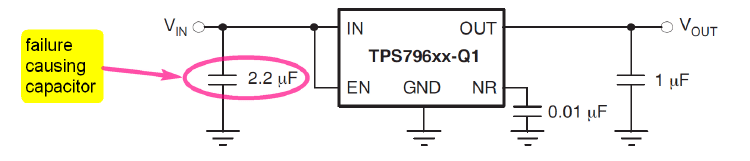
Fig. 1: Voltage Regulator [1] with typical Application Circuit and failure causing Capacitor (marked)

All our MLCC-suppliers have been informed about this – at that time we called it “phenomenon” of class-II ceramic capacitors and we asked them for detailed information and to improve this situation. After intensive research, suppliers and we found out that this phenomenon is described somewhere in the internet but cannot be found in any data sheet of a Multi-Layer Ceramic Capacitor. So, we had to act immediately to avoid further occurrences, to protect all our other projects from such an incident.

How do we manage this “phenomenon” in our company?

Immediately after we have recognized this kind of behavior, we made several brainstorming together with our suppliers to find out how we can describe DC-Bias Aging characteristic for each single component. We found out that HighCaps are most affected by this phenomenon and we should focus on them first. We decided to request graphs from our suppliers that show the capacitance decrease at 3 different DC-voltages, measured for 24 hours at room temperature. But we refrained from requesting measurements at different temperatures or for a longer duration than 24h as they would be too time-consuming – although we found out that at low temperatures the capacitance loss goes slower. These graphs are now part of our Component Specifications. So, every HW-engineer has access to this information and can use them to estimate the drop in capacitance at a specific DC-voltage.

Fig. 2: Examples of DC-Bias-Aging Graphs requested by Continental from Suppliers.

In addition to our improved component specifications, for each new ceramic capacitor to be introduced, our HW-engineers are actively asked to check whether their schematic is sensitive to a minimum capacitance. If so, the individual conditions for the minimum capacitance value e.g. temperature, DC-Bias voltage or the measurement duration will be part of the component specification. Unfortunately, this minimum capacitance value and the graphs for DC-Bias aging can’t be guaranteed by suppliers. Thus, we always have to add a safety margin. Another way to make many of our HW engineers aware of this additional loss of capacitance in class-II-capacitors is to offer a training. Therefore, we have created a learning video that can be viewed on-demand via our internal eLearning tool that shows the basics of DC-Bias Aging.
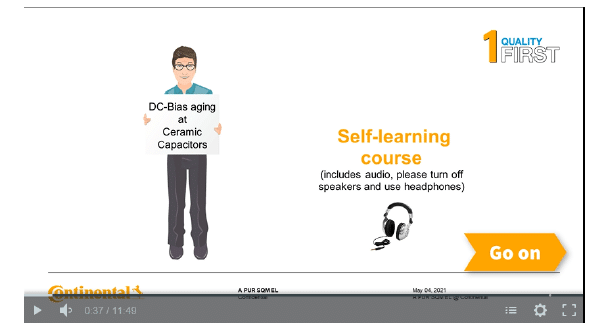
Fig. 3: E-Learning about basics of DC-Bias Aging available at Continental.

How do our suppliers manage “DC-Bias Aging”?

Most of our suppliers offered their support immediately after being confronted with this phenomenon. Some of them already had the foresight to foresee the need to provide such graphs for every single one of their capacitors in their large portfolio. And that’s why they decided to start investigation for a mathematical formula to be able to simulate each combination of voltage, temperature, and duration to calculate the remaining capacitance value. This would have the advantage of being able to provide the remaining capacity for individual conditions in a short time instead of spending time for measurements. It turned out that many (millions) measurements are necessary to be able to offer such a simulation tool. In the meantime, 2 of our suppliers are already using their self-created simulation tool to provide Continental with the requested DC-Bias Aging data. Other suppliers are still investigating or decided not to do such investigations but perform DC-Bias Aging measurements on demand. As E-Learning becomes very popular at this time, more and more suppliers are offering workshops/technical trainings, some even about DC bias aging at MLCCs. This is a good tool to reach and teach people from R&D or quality. And maybe the personal network can be expanded at the same time.

Current challenges and our wishes

One problem is still to get comparable measurement results because either the measurement conditions are not precisely indicated or are left disregarded. For instance, it is important to indicate that the component should be de-aged and then stored for 1 to 3 days before doing measurements. Otherwise, we don’t know how much the aging process has progressed. Therefore, all parameters which do influence the measurement result should be stated there to make the conditions clear.
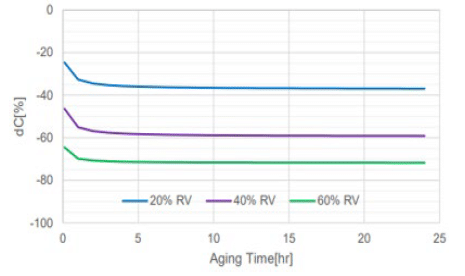
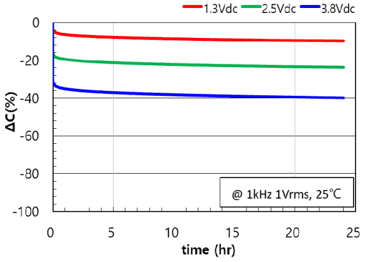
Fig. 4a: only a few parameters are stated
Fig. 4b: frequency, voltage and temperature conditions stated in addition to Fig. 4a

Another problem are the differences between manufacturers. Of course, components from different manufacturers will show different electrical characteristics. For some well-known parameters we use codes to classify the component, e.g. “K” for the tolerance of ±10% of the nominal capacitance value or “X7R” for the temperature characteristic of ±15% within the temperature range. But what about the characteristic at a certain DC-bias voltage or the DC-bias aging? Unfortunately, there is no standard to make this visible. We detected up to 40% difference in the remaining capacitance at a given DC-voltage between different suppliers. Therefore, every manufacturer should make such data available on its homepage. We as the users of these class-II ceramic capacitors, need and want more information in the datasheets or on the supplier homepage where simulation tools could cover the individual needs.

Conclusion

For our HW-developers it is difficult to find the right capacitor for the individual application because more and more influencing factors have to be considered. Higher frequencies, miniaturization or harsher environmental conditions are some examples. To reduce the risk of choosing the wrong component that could end up causing a car to malfunction or, in the worst case, cost human lives, we add a safety margin to our worst-case calculation, which leads to over-engineering and additional costs. With better and more detailed information about ceramic capacitors e.g. in simulation tools, we should be able to reduce costs and maybe even the time for development. In addition, the data offered by suppliers should be standardized, on the one hand to make them easier to use and, on the other hand, to make them easier to compare between all suppliers. Means, for example, the same precondition for measurements or the same format for the offered data.

References

[1] Datasheet Texas Instruments, www.ti.com

Source: EPCI

Recent Posts

Capacitors

Samsung Electro-Mechanics Downsizes 220pF 50V Automotive C0G MLCCs into 0201 Size

25.10.2024
12
Capacitors

Researchers Propose BNNS/TiO2 High Electric Field Composite Dielectric

23.10.2024
32
Market & Supply Chain

October 24 – Interconnect, Passives and Electromechanical Components Market Insights

22.10.2024
65
Inductors

Würth Elektronik’s Oval Ferrite Ring Supress Interference at Low Frequencies

22.10.2024
34

Upcoming Events

Oct 29
16:00 - 17:00 CET

Galvanically isolated voltage measurement made easy with digital isolators

Nov 6
11:00 - 12:00 CET

PCB Cost-efficient flexibility: Physical PCB sample

Nov 12
November 12 - November 15

electronica 2024

View Calendar

Popular Posts

  • What is a Dielectric Constant of Plastic Materials?

    4 shares
    Share 4 Tweet 0
  • Murata Releases the World’s Smallest 006003 Multilayer Ceramic Capacitor

    0 shares
    Share 0 Tweet 0
  • Ripple Current and its Effects on the Performance of Capacitors

    3 shares
    Share 3 Tweet 0
  • October 24 – Interconnect, Passives and Electromechanical Components Market Insights

    0 shares
    Share 0 Tweet 0
  • MLCC and Ceramic Capacitors

    0 shares
    Share 0 Tweet 0
  • Samsung Electro-Mechanics Downsizes 220pF 50V Automotive C0G MLCCs into 0201 Size

    0 shares
    Share 0 Tweet 0
  • Buck Converter Design and Calculation

    0 shares
    Share 0 Tweet 0
  • Enhancing Mechanical and Electrochemical Properties of Flexible Supercapacitors

    0 shares
    Share 0 Tweet 0
  • Inductors and RF Chokes Basics

    0 shares
    Share 0 Tweet 0
  • Modular AC line EMI filters explained

    0 shares
    Share 0 Tweet 0

Newsletter Subscription


Archive

2023
2022
2021
2020
2019
2018
2017

Symposium

Passive Components Networking Symposium

Passives e-Learning

Knowledge Blog

  • Home
  • Privacy Policy
  • EPCI Membership & Advertisement
  • About

© EPCI - Premium Passive Components Educational and Information Site

No Result
View All Result
  • Home
  • Knowledge Blog
  • Premium Suppliers

© EPCI - Premium Passive Components Educational and Information Site

This website uses cookies. By continuing to use this website you are giving consent to cookies being used. Visit our Privacy and Cookie Policy.
Go to mobile version