













Passive Components Blog
No Result
View All Result
  • Home
  • NewsFilter
    • All
    • Aerospace & Defence
    • Antenna
    • Applications
    • Automotive
    • Capacitors
    • Circuit Protection Devices
    • electro-mechanical news
    • Filters
    • Fuses
    • Inductors
    • Industrial
    • Integrated Passives
    • inter-connect news
    • Market & Supply Chain
    • Market Insights
    • Medical
    • Modelling and Simulation
    • New Materials & Supply
    • New Technologies
    • Non-linear Passives
    • Oscillators
    • Passive Sensors News
    • Resistors
    • RF & Microwave
    • Telecommunication
    • Weekly Digest

    Vishay Releases Compact 0806 Low‑DCR Power Inductor

    Murata Opens New Ceramic Capacitor Manufacturing and R&D Center in Japan

    Murata Publishes Power Delivery Guide for AI Servers

    Selecting Current Sense Transformers with Würth Elektronik REDEXPERT

    Mechanical Drift Indicator of Tantalum Capacitor Anodes Degradation under Reverse Bias

    Enabling Software‑Defined Vehicle Architectures: Automotive Ethernet and Zonal Smart Power

    Calculating Resistance Value of a Flyback RC Snubber 

    Wk 5 Electronics Supply Chain Digest

    Top 10 Connector Vendors by Product Type

    Trending Tags

    • Ripple Current
    • RF
    • Leakage Current
    • Tantalum vs Ceramic
    • Snubber
    • Low ESR
    • Feedthrough
    • Derating
    • Dielectric Constant
    • New Products
    • Market Reports
  • VideoFilter
    • All
    • Antenna videos
    • Capacitor videos
    • Circuit Protection Video
    • Filter videos
    • Fuse videos
    • Inductor videos
    • Inter-Connect Video
    • Non-linear passives videos
    • Oscillator videos
    • Passive sensors videos
    • Resistor videos

    Enabling Software‑Defined Vehicle Architectures: Automotive Ethernet and Zonal Smart Power

    Calculating Resistance Value of a Flyback RC Snubber 

    One‑Pulse Characterization of Nonlinear Power Inductors

    Thermistor Linearization Challenges

    Coaxial Connectors and How to Connect with PCB

    PCB Manufacturing, Test Methods, Quality and Reliability

    Transformer Behavior – Current Transfer and Hidden Feedback

    Choosing the Right Capacitor: The Importance of Accurate Measurements

    RF Inductors: Selection and Design Challenges for High-Frequency Circuits

    Trending Tags

    • Capacitors explained
    • Inductors explained
    • Resistors explained
    • Filters explained
    • Application Video Guidelines
    • EMC
    • New Products
    • Ripple Current
    • Simulation
    • Tantalum vs Ceramic
  • Knowledge Blog
  • DossiersNew
  • Suppliers
    • Who is Who
  • PCNS
    • PCNS 2025
    • PCNS 2023
    • PCNS 2021
    • PCNS 2019
    • PCNS 2017
  • Events
  • Home
  • NewsFilter
    • All
    • Aerospace & Defence
    • Antenna
    • Applications
    • Automotive
    • Capacitors
    • Circuit Protection Devices
    • electro-mechanical news
    • Filters
    • Fuses
    • Inductors
    • Industrial
    • Integrated Passives
    • inter-connect news
    • Market & Supply Chain
    • Market Insights
    • Medical
    • Modelling and Simulation
    • New Materials & Supply
    • New Technologies
    • Non-linear Passives
    • Oscillators
    • Passive Sensors News
    • Resistors
    • RF & Microwave
    • Telecommunication
    • Weekly Digest

    Vishay Releases Compact 0806 Low‑DCR Power Inductor

    Murata Opens New Ceramic Capacitor Manufacturing and R&D Center in Japan

    Murata Publishes Power Delivery Guide for AI Servers

    Selecting Current Sense Transformers with Würth Elektronik REDEXPERT

    Mechanical Drift Indicator of Tantalum Capacitor Anodes Degradation under Reverse Bias

    Enabling Software‑Defined Vehicle Architectures: Automotive Ethernet and Zonal Smart Power

    Calculating Resistance Value of a Flyback RC Snubber 

    Wk 5 Electronics Supply Chain Digest

    Top 10 Connector Vendors by Product Type

    Trending Tags

    • Ripple Current
    • RF
    • Leakage Current
    • Tantalum vs Ceramic
    • Snubber
    • Low ESR
    • Feedthrough
    • Derating
    • Dielectric Constant
    • New Products
    • Market Reports
  • VideoFilter
    • All
    • Antenna videos
    • Capacitor videos
    • Circuit Protection Video
    • Filter videos
    • Fuse videos
    • Inductor videos
    • Inter-Connect Video
    • Non-linear passives videos
    • Oscillator videos
    • Passive sensors videos
    • Resistor videos

    Enabling Software‑Defined Vehicle Architectures: Automotive Ethernet and Zonal Smart Power

    Calculating Resistance Value of a Flyback RC Snubber 

    One‑Pulse Characterization of Nonlinear Power Inductors

    Thermistor Linearization Challenges

    Coaxial Connectors and How to Connect with PCB

    PCB Manufacturing, Test Methods, Quality and Reliability

    Transformer Behavior – Current Transfer and Hidden Feedback

    Choosing the Right Capacitor: The Importance of Accurate Measurements

    RF Inductors: Selection and Design Challenges for High-Frequency Circuits

    Trending Tags

    • Capacitors explained
    • Inductors explained
    • Resistors explained
    • Filters explained
    • Application Video Guidelines
    • EMC
    • New Products
    • Ripple Current
    • Simulation
    • Tantalum vs Ceramic
  • Knowledge Blog
  • DossiersNew
  • Suppliers
    • Who is Who
  • PCNS
    • PCNS 2025
    • PCNS 2023
    • PCNS 2021
    • PCNS 2019
    • PCNS 2017
  • Events
No Result
View All Result
Passive Components Blog
No Result
View All Result

Coilcraft Releases Ultra Low Loss Power Inductors in Compact Package

24.1.2025
Reading Time: 3 mins read
A A

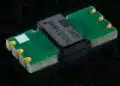
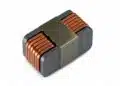
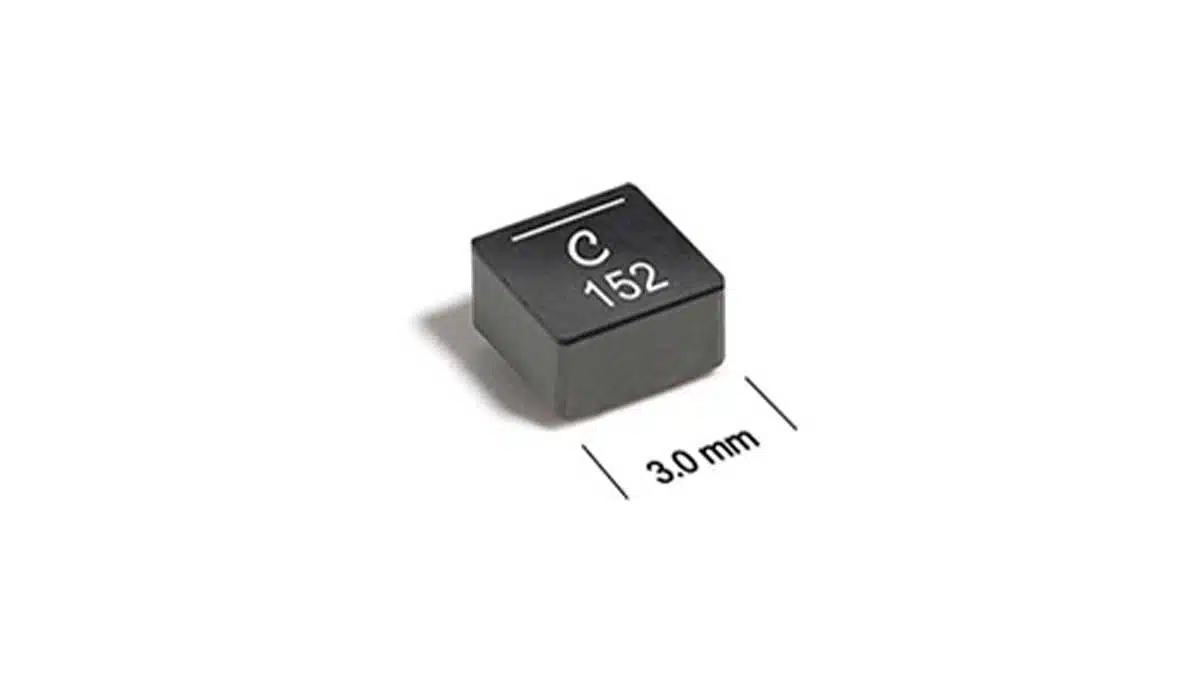
The ultra-low profile, compact 3×3 mm Coilcraft XGL3020 power inductor series offers the lowest DC losses and extremely low AC losses, positioning them as ideal solutions for a broad spectrum of DC-DC converters.

These components are particularly beneficial for applications where space is at a premium and efficient power management is a high priority. Their versatile design supports various non-isolated converter topologies, point-of-load (POL) applications, IoT devices, and numerous other high-demand environments.

RelatedPosts

Coilcraft Introduces Ultra-Low Loss Shielded Power Inductors

Coilcraft Introduces LLC Half-Bridge Transformers for High-Frequency Applications

Coilcraft Unveils 165C High-Temperature Coupled Inductors

These inductors are engineered with an industry-leading 80 V voltage rating, which broadens their applicability to wide Vin DC-DC converters and other demanding applications. Their AEC-Q200 qualification further enhances their credibility, ensuring they are reliable and robust enough to perform in automotive and other challenging environments.

Among their standout features are the industry’s lowest direct current resistance (DCR) and exceptionally low alternating current (AC) losses. This results in superior efficiency and performance, making them a top choice for power-sensitive applications. The soft saturation characteristics ensure superior current handling capabilities, allowing for consistent performance across a wide range of currents.

The XGL3020 Series covers a substantial inductance range from 0.10 to 4.5 µH, offering flexibility to meet various design requirements. Constructed from composite materials, these inductors effectively minimize core and winding losses. Environmentally, these components are RoHS compliant and free of halogens, aligning with global environmental safety standards. They feature tin-silver (96.5/3.5) over copper terminations, with alternative terminations available upon request at additional cost.

The components are lightweight, weighing only 0.10 grams, and operate within a wide voltage range of 0 to 80 volts. They are capable of functioning in ambient temperatures ranging from -40°C to +125°C, with a permissible rise of up to 40°C with Irms current. The maximum part temperature can reach up to +165°C, including ambient temperature and temperature rise, with appropriate derating considerations. Storage temperatures can vary between -55°C to +165°C for the components themselves, and -55°C to +80°C for tape and reel packaging.

In terms of durability, the XGL3020 Series is designed to withstand high soldering heat, enduring up to three 40-second reflows at +260°C, with cooling to room temperature between cycles. This resilience ensures their continued performance and reliability, even under frequent high-temperature soldering conditions, making them an excellent choice for various industrial and commercial applications.

Features

  • Industry’s lowest DCR and ultra low AC losses 
  • AEC-Q200 qualified
  • Superior current handling with soft saturation characteristics
  • Wide inductance range from 0.10 to 4.5 µH

Core material Composite 
Core and winding loss See www.coilcraft.com/coreloss 
Environmental RoHS compliant, halogen free 
Terminations RoHS compliant tin-silver (96.5/3.5) over copper. Other terminations available at additional cost. 
Weight: 0.10 g 
Operating voltage: 0 – 80 V 
Ambient temperature –40°C to +125°C with (40°C rise) Irms current. 
Maximum part temperature +165°C (ambient + temp rise). Derating. Storage temperature Component: –55°C to +165°C.  Tape and reel packaging: –55°C to +80°C 
Resistance to soldering heat Max three 40 second reflows at +260°C, parts cooled to room temperature between cycles 
Moisture Sensitivity Level (MSL) 1 (unlimited floor life at <30°C / 85% relative humidity)
Packaging 1000/7″ reel; 3500/13″ reel Plastic tape: 12 mm wide, 0.25 mm thick, 8 mm pocket spacing, 2.2 mm pocket depth 
PCB washing Tested to MIL-STD-202 Method 215 plus an additional aqueous wash. See Doc787_PCB_Washing.pdf.

Related

Source: Coilcraft

Recent Posts

Vishay Releases Compact 0806 Low‑DCR Power Inductor

5.2.2026
0

Murata Publishes Power Delivery Guide for AI Servers

4.2.2026
30

Selecting Current Sense Transformers with Würth Elektronik REDEXPERT

3.2.2026
11

Enabling Software‑Defined Vehicle Architectures: Automotive Ethernet and Zonal Smart Power

2.2.2026
19

Bourns Releases High‑Q Air Coil Inductors for RF Aplications

29.1.2026
39

CMSE 2026 Announces Call for Presentations on High-Reliability Military and Space Electronics

28.1.2026
47

ESA Call for Papers 6th Space Passive Component Days – SPCD 2026

28.1.2026
42

Binder Unveils M8 Flange Solder Connectors for Flexible Cabling

28.1.2026
17

Stackpole Releases AlN High‑Power Thick Film Chip Resistors

26.1.2026
36

Upcoming Events

Feb 24
16:00 - 17:00 CET

Designing Qi2 Wireless Power Systems: Practical Development and EMC Optimization

Mar 3
16:00 - 17:00 CET

Cybersecurity at the Eleventh Hour – from RED to CRA – Information and Discussion

Mar 21
All day

PSMA Capacitor Workshop 2026

View Calendar

Popular Posts

  • Buck Converter Design and Calculation

    0 shares
    Share 0 Tweet 0
  • Boost Converter Design and Calculation

    0 shares
    Share 0 Tweet 0
  • LLC Resonant Converter Design and Calculation

    0 shares
    Share 0 Tweet 0
  • Flyback Converter Design and Calculation

    0 shares
    Share 0 Tweet 0
  • Ripple Current and its Effects on the Performance of Capacitors

    3 shares
    Share 3 Tweet 0
  • How Metal Prices Are Driving Passive Component Price Hikes

    0 shares
    Share 0 Tweet 0
  • MLCC and Ceramic Capacitors

    0 shares
    Share 0 Tweet 0
  • Dual Active Bridge (DAB) Topology

    0 shares
    Share 0 Tweet 0
  • What is a Dielectric Constant and DF of Plastic Materials?

    4 shares
    Share 4 Tweet 0
  • Degradation of Capacitors and its Failure Mechanisms

    0 shares
    Share 0 Tweet 0

Newsletter Subscription


Passive Components Blog

© EPCI - Leading Passive Components Educational and Information Site

  • Home
  • Privacy Policy
  • EPCI Membership & Advertisement
  • About

No Result
View All Result
  • Home
  • Knowledge Blog
  • PCNS

© EPCI - Leading Passive Components Educational and Information Site

This website uses cookies. By continuing to use this website you are giving consent to cookies being used. Visit our Privacy and Cookie Policy.
Go to mobile version