






Passive Components Blog
No Result
View All Result
  • Home
  • NewsFilter
    • All
    • Aerospace & Defence
    • Antenna
    • Applications
    • Automotive
    • Capacitors
    • Circuit Protection Devices
    • electro-mechanical news
    • Filters
    • Fuses
    • Inductors
    • Industrial
    • Integrated Passives
    • inter-connect news
    • Market & Supply Chain
    • Market Insights
    • Medical
    • Modelling and Simulation
    • New Materials & Supply
    • New Technologies
    • Non-linear Passives
    • Oscillators
    • Passive Sensors News
    • Resistors
    • RF & Microwave
    • Telecommunication
    • Weekly Digest

    Coilcraft Unveils Molded Power Inductors for High‑Current VRMs

    Murata Automotive MLCCs Push Capacitance Limits for ADAS and Power Lines

    TDK Releases Ultra‑small EMI Noise Suppression Filters

    Littelfuse Presents Ultra-Miniature Half-Pitch SMT DIP Switches

    SCHURTER Releases Compact SMT DIP Switches

    TDK and Nippon Chemical Launch Joint Venture for MLCC Materials

    Wk 14 Electronics Supply Chain Digest

    Bourns Releases Compact High Current Shielded Power Inductors

    March 2026 Interconnect, Passives and Electromechanical Components Market Insights

    Trending Tags

    • Ripple Current
    • RF
    • Leakage Current
    • Tantalum vs Ceramic
    • Snubber
    • Low ESR
    • Feedthrough
    • Derating
    • Dielectric Constant
    • New Products
    • Market Reports
  • VideoFilter
    • All
    • Antenna videos
    • Capacitor videos
    • Circuit Protection Video
    • Filter videos
    • Fuse videos
    • Inductor videos
    • Inter-Connect Video
    • Non-linear passives videos
    • Oscillator videos
    • Passive sensors videos
    • Resistor videos

    Transformer-Based Power-Line Harvester Magnetic Design

    Thermal Modeling of Magnetics

    Standard vs Planar LLC transformers Comparison for Battery Chargers

    How Modern Tools Model Magnetic Components for Power Electronics

    Advanced Loss Modeling for Planar Magnetics in the Frenetic Planar Tool

    2026 Power Magnetics Design Trends: Flyback, DAB and Planar

    Enabling Software‑Defined Vehicle Architectures: Automotive Ethernet and Zonal Smart Power

    Calculating Resistance Value of a Flyback RC Snubber 

    One‑Pulse Characterization of Nonlinear Power Inductors

    Trending Tags

    • Capacitors explained
    • Inductors explained
    • Resistors explained
    • Filters explained
    • Application Video Guidelines
    • EMC
    • New Products
    • Ripple Current
    • Simulation
    • Tantalum vs Ceramic
  • Knowledge Blog
  • DossiersNew
  • Suppliers
    • Who is Who
  • PCNS
    • PCNS 2025
    • PCNS 2023
    • PCNS 2021
    • PCNS 2019
    • PCNS 2017
  • Events
  • Home
  • NewsFilter
    • All
    • Aerospace & Defence
    • Antenna
    • Applications
    • Automotive
    • Capacitors
    • Circuit Protection Devices
    • electro-mechanical news
    • Filters
    • Fuses
    • Inductors
    • Industrial
    • Integrated Passives
    • inter-connect news
    • Market & Supply Chain
    • Market Insights
    • Medical
    • Modelling and Simulation
    • New Materials & Supply
    • New Technologies
    • Non-linear Passives
    • Oscillators
    • Passive Sensors News
    • Resistors
    • RF & Microwave
    • Telecommunication
    • Weekly Digest

    Coilcraft Unveils Molded Power Inductors for High‑Current VRMs

    Murata Automotive MLCCs Push Capacitance Limits for ADAS and Power Lines

    TDK Releases Ultra‑small EMI Noise Suppression Filters

    Littelfuse Presents Ultra-Miniature Half-Pitch SMT DIP Switches

    SCHURTER Releases Compact SMT DIP Switches

    TDK and Nippon Chemical Launch Joint Venture for MLCC Materials

    Wk 14 Electronics Supply Chain Digest

    Bourns Releases Compact High Current Shielded Power Inductors

    March 2026 Interconnect, Passives and Electromechanical Components Market Insights

    Trending Tags

    • Ripple Current
    • RF
    • Leakage Current
    • Tantalum vs Ceramic
    • Snubber
    • Low ESR
    • Feedthrough
    • Derating
    • Dielectric Constant
    • New Products
    • Market Reports
  • VideoFilter
    • All
    • Antenna videos
    • Capacitor videos
    • Circuit Protection Video
    • Filter videos
    • Fuse videos
    • Inductor videos
    • Inter-Connect Video
    • Non-linear passives videos
    • Oscillator videos
    • Passive sensors videos
    • Resistor videos

    Transformer-Based Power-Line Harvester Magnetic Design

    Thermal Modeling of Magnetics

    Standard vs Planar LLC transformers Comparison for Battery Chargers

    How Modern Tools Model Magnetic Components for Power Electronics

    Advanced Loss Modeling for Planar Magnetics in the Frenetic Planar Tool

    2026 Power Magnetics Design Trends: Flyback, DAB and Planar

    Enabling Software‑Defined Vehicle Architectures: Automotive Ethernet and Zonal Smart Power

    Calculating Resistance Value of a Flyback RC Snubber 

    One‑Pulse Characterization of Nonlinear Power Inductors

    Trending Tags

    • Capacitors explained
    • Inductors explained
    • Resistors explained
    • Filters explained
    • Application Video Guidelines
    • EMC
    • New Products
    • Ripple Current
    • Simulation
    • Tantalum vs Ceramic
  • Knowledge Blog
  • DossiersNew
  • Suppliers
    • Who is Who
  • PCNS
    • PCNS 2025
    • PCNS 2023
    • PCNS 2021
    • PCNS 2019
    • PCNS 2017
  • Events
No Result
View All Result
Passive Components Blog
No Result
View All Result

Empower Releases High-Density Embedded Silicon Capacitors

11.2.2026
Reading Time: 7 mins read
A A

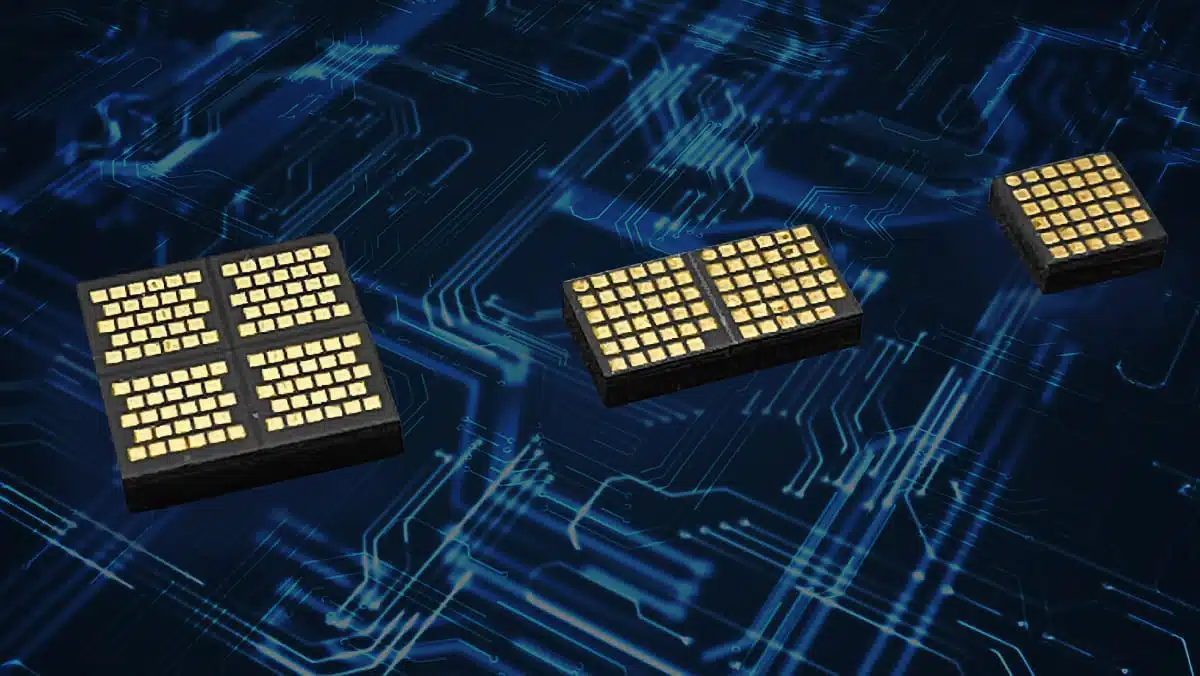
Empower Semiconductor has introduced a new generation of embedded silicon capacitors (ECAPs) aimed at improving power delivery networks in high‑current AI and high‑performance computing (HPC) processors.

The silicon capacitor devices integrate high capacitance density directly into the processor package to address power integrity limits that are increasingly difficult to solve with conventional board‑level MLCCs and bulk capacitors.

RelatedPosts

Empower Extends Embedded Silicon Capacitors for AI

Empower’s Low ESL 1pH Silicon Capacitor Meets Tight AI Chip Requirements

Empower E-CAP Silicon Capacitors vs MLCC

Key features and benefits

The new ECAP portfolio currently consists of three embedded silicon capacitor devices: EC2005P, EC2025P and EC2006P. These components are designed for integration into AI and HPC processor substrates rather than standard PCB mounting, which shifts the decoupling function physically closer to the die and reduces parasitic effects.

Key characteristics highlighted by Empower include:

  • Embedded silicon capacitor technology optimized for package‑level integration in AI‑class and HPC processors.
  • Capacitance density up to tens of microfarads in a few square millimeters of silicon footprint, supporting aggressive power integrity targets in advanced SoCs.
  • Ultralow equivalent series inductance (ESL), which reduces voltage spikes and droop during fast load transients by minimizing parasitic inductance in the power delivery path.
  • Ultralow equivalent series resistance (ESR), helping to reduce ripple and losses, and improving stability of the power delivery network (PDN).
  • Wide bandwidth, ultralow impedance behavior, enabling effective decoupling over a broad frequency range from VR switching frequencies up into the GHz range relevant for on‑die load steps.
  • Package engineering tuned to meet strict dimensional and tolerance requirements for embedded use within processor substrates and advanced packaging flows.

From an engineering standpoint, the main benefit of this ECAP approach is the ability to concentrate a relatively large effective capacitance in very close proximity to the die’s power pins. This shortens current paths, reduces loop inductance, and allows the PDN to meet tighter noise specifications without excessive numbers of board‑level capacitors.

Typical applications

These ECAP devices are clearly targeted at high‑end digital processing where current densities and transient demands exceed what traditional PCB decoupling can practically handle.

Typical application domains include:

  • AI accelerators and AI‑class processors used in data‑center inference and training platforms.
  • High‑performance computing CPUs, GPUs and custom SoCs where power delivery is a limiting factor for achievable clock speeds and core counts.
  • Advanced chiplet‑based systems where multiple dies share a package, making vertical power delivery and embedded decoupling attractive for managing multi‑rail PDNs.
  • Network, storage and other infrastructure ASICs that run at high current and need tight voltage regulation at very fast edge rates.

In these systems, the ECAP devices act as the last, high‑bandwidth decoupling stage at the package level, complementing PCB‑mounted bulk capacitors and MLCC arrays. Designers can therefore view them as an additional PDN layer between on‑die capacitance and board‑level components.

Technical highlights

Empower’s initial ECAP lineup offers three capacitance/size combinations intended to give substrate and package designers flexibility in how they distribute embedded capacitance:

  • EC2005P: 9.34 µF nominal capacitance in a 2 mm × 2 mm package.
  • EC2025P: 18.68 µF nominal capacitance in a 4 mm × 2 mm package.
  • EC2006P: 36.8 µF nominal capacitance in a 4 mm × 4 mm form factor.

Compared to prior silicon‑capacitor generations around ~1 µF/mm² and to advanced MLCC solutions, these new embedded ECAP devices move the density into roughly the 2+ µF/mm² range at the package footprint level, roughly doubling Empower’s previously cited E‑CAP density and staying several times higher than typical MLCC implementations used for decoupling.

All three parts are silicon‑based embedded capacitors tailored for integration into processor substrates rather than standard discrete SMD assembly. Exact electrical and mechanical tolerances, voltage ratings and operating temperature ranges should be taken from the manufacturer’s datasheet for each device.

From a PDN design perspective, the combination of relatively high capacitance per device with ultralow ESL and ESR enables designers to push the package‑level decoupling pole to higher frequencies while keeping impedance below the target profile for the processor rail. This can reduce the number of discrete MLCCs, simplify PCB layout and help keep the PDN impedance envelope within budget even as load steps become faster and more severe.

Design‑in notes for engineers

Embedded silicon capacitors such as Empower’s ECAPs change the way decoupling is partitioned between the die, package and PCB. When considering these parts for new designs or platform updates, engineers may want to focus on a few practical aspects:

  • PDN stack planning
    • Treat ECAP devices as the package‑level high‑bandwidth decoupling layer, sitting between on‑die capacitance and PCB MLCC/bulk stages.
    • Start with the processor vendor’s PDN target impedance and allocate how much of that budget is handled by die, package (ECAPs) and board levels.
  • Capacitance budgeting and placement
    • Use EC2005P, EC2025P and EC2006P as modular building blocks to reach the total embedded capacitance requirement, trading off number of sites versus substrate area.
    • Placement within the substrate should minimize loop inductance to the relevant power bumps and maintain symmetry where needed for multi‑rail or multi‑die layouts.
  • ESL/ESR interaction with VRM and MLCCs
    • Ultralow ESL and ESR help flatten the impedance profile but can also interact with board‑level MLCCs and voltage regulators; transient simulations are recommended to avoid unwanted resonances.
    • Include realistic models of the ECAP devices (from Empower’s datasheets or application notes) in PDN simulation tools to verify impedance across frequency and under worst‑case load steps.
  • Substrate and assembly considerations
    • Because these capacitors are embedded, mechanical and dimensional tolerances of the packages must align with the substrate manufacturing process; layout rules and stack‑up details should be confirmed with the substrate vendor.
    • Thermal design should consider any power dissipation in the embedded capacitors, especially in very high‑current rails or when operating at elevated junction temperatures.
  • Migration from board‑level decoupling
    • For existing platforms, ECAP‑based designs may allow a reduction in high‑count MLCC arrays close to the processor footprint, easing PCB congestion and potentially improving manufacturability.
    • For new AI/HPC platforms, early coordination between silicon, package and PDN teams can maximize the benefit of embedded capacitors and reduce redesign risk late in the project.

As AI‑class processors continue to push current density and transient response requirements, package‑integrated decoupling such as Empower’s ECAP family is likely to become an increasingly important part of the PDN toolbox for system architects and power integrity engineers.

Source

This article summarizes and interprets information released by Empower Semiconductor in an official press release announcing its ECAP embedded silicon capacitor portfolio for next‑generation AI and HPC processors.

References

  1. Empower introduces high‑density embedded silicon capacitors to advance next‑generation AI and HPC performance
  2. Empower Semiconductor – products and technology overview

Related

Recent Posts

Murata Automotive MLCCs Push Capacitance Limits for ADAS and Power Lines

8.4.2026
2

TDK and Nippon Chemical Launch Joint Venture for MLCC Materials

7.4.2026
13

March 2026 Interconnect, Passives and Electromechanical Components Market Insights

2.4.2026
59

APEC 2026 Power Electronics Trends and Implications for Passive Components

1.4.2026
81

Hydra Enhances Film Capacitor Robustness by Novel Gel Filler

1.4.2026
26

Indias ECMS Wave Brings New Capacity For Passive Components Manufacturing in India

31.3.2026
41

Samsung Introduces 35V MLCCs Flying Capacitors for USB PD Fast Charging

27.3.2026
35

New J‑STD‑075B Standard Elevates Process Sensitivity Classification for Passive and Solid-State Components

27.3.2026
55

Modelithics Expands COMPLETE+3D Library for Ansys HFSS

27.3.2026
9

Upcoming Events

Apr 8
17:00 - 18:00 CEST

Trade Secrets of the Flyback Converter

Apr 21
16:00 - 17:00 CEST

Heatsink Solutions: Thermal Management in electronic devices

May 5
16:00 - 17:00 CEST

Understanding and Selecting Capacitors – Fundamentals, Technologies and Latest Trends

View Calendar

Popular Posts

  • Buck Converter Design and Calculation

    0 shares
    Share 0 Tweet 0
  • Boost Converter Design and Calculation

    0 shares
    Share 0 Tweet 0
  • Flyback Converter Design and Calculation

    0 shares
    Share 0 Tweet 0
  • LLC Resonant Converter Design and Calculation

    0 shares
    Share 0 Tweet 0
  • Dual Active Bridge (DAB) Topology

    0 shares
    Share 0 Tweet 0
  • MLCC and Ceramic Capacitors

    0 shares
    Share 0 Tweet 0
  • Capacitor Charging and Discharging

    0 shares
    Share 0 Tweet 0
  • Ripple Current and its Effects on the Performance of Capacitors

    3 shares
    Share 3 Tweet 0
  • Plastic Materials Dielectric Constant and DF

    4 shares
    Share 4 Tweet 0
  • MLCC Case Sizes Standards Explained

    0 shares
    Share 0 Tweet 0

Newsletter Subscription


Passive Components Blog

© EPCI - Leading Passive Components Educational and Information Site

  • Home
  • Privacy Policy
  • EPCI Membership & Advertisement
  • About

No Result
View All Result
  • Home
  • Knowledge Blog
  • PCNS

© EPCI - Leading Passive Components Educational and Information Site

This website uses cookies. By continuing to use this website you are giving consent to cookies being used. Visit our Privacy and Cookie Policy.
Go to mobile version