






Passive Components Blog
No Result
View All Result
  • Home
  • NewsFilter
    • All
    • Aerospace & Defence
    • Antenna
    • Applications
    • Automotive
    • Capacitors
    • Circuit Protection Devices
    • electro-mechanical news
    • Filters
    • Fuses
    • Inductors
    • Industrial
    • Integrated Passives
    • inter-connect news
    • Market & Supply Chain
    • Market Insights
    • Medical
    • Modelling and Simulation
    • New Materials & Supply
    • New Technologies
    • Non-linear Passives
    • Oscillators
    • Passive Sensors News
    • Resistors
    • RF & Microwave
    • Telecommunication
    • Weekly Digest

    Top 10 Connector Vendors by Product Type

    Bourns Releases High‑Q Air Coil Inductors for RF Aplications

    CMSE 2026 Announces Call for Presentations on High-Reliability Military and Space Electronics

    ESA Call for Papers 6th Space Passive Component Days – SPCD 2026

    Würth Elektronik Offers Halogen‑Free EMC Gaskets for Displays and Housings

    Component Distribution Supply Chain January 2026

    Binder Unveils M8 Flange Solder Connectors for Flexible Cabling

    Power Electronics Tools for Passives and Magnetic Designs

    Modelithics Releases Component Model Library for SIMULIA CST Studio Suite

    Trending Tags

    • Ripple Current
    • RF
    • Leakage Current
    • Tantalum vs Ceramic
    • Snubber
    • Low ESR
    • Feedthrough
    • Derating
    • Dielectric Constant
    • New Products
    • Market Reports
  • VideoFilter
    • All
    • Antenna videos
    • Capacitor videos
    • Circuit Protection Video
    • Filter videos
    • Fuse videos
    • Inductor videos
    • Inter-Connect Video
    • Non-linear passives videos
    • Oscillator videos
    • Passive sensors videos
    • Resistor videos

    One‑Pulse Characterization of Nonlinear Power Inductors

    Thermistor Linearization Challenges

    Coaxial Connectors and How to Connect with PCB

    PCB Manufacturing, Test Methods, Quality and Reliability

    Transformer Behavior – Current Transfer and Hidden Feedback

    Choosing the Right Capacitor: The Importance of Accurate Measurements

    RF Inductors: Selection and Design Challenges for High-Frequency Circuits

    Transformer Safety IEC 61558 Standard

    3-Phase EMI Filter Design, Simulation, Calculation and Test

    Trending Tags

    • Capacitors explained
    • Inductors explained
    • Resistors explained
    • Filters explained
    • Application Video Guidelines
    • EMC
    • New Products
    • Ripple Current
    • Simulation
    • Tantalum vs Ceramic
  • Knowledge Blog
  • DossiersNew
  • Suppliers
    • Who is Who
  • PCNS
    • PCNS 2025
    • PCNS 2023
    • PCNS 2021
    • PCNS 2019
    • PCNS 2017
  • Events
  • Home
  • NewsFilter
    • All
    • Aerospace & Defence
    • Antenna
    • Applications
    • Automotive
    • Capacitors
    • Circuit Protection Devices
    • electro-mechanical news
    • Filters
    • Fuses
    • Inductors
    • Industrial
    • Integrated Passives
    • inter-connect news
    • Market & Supply Chain
    • Market Insights
    • Medical
    • Modelling and Simulation
    • New Materials & Supply
    • New Technologies
    • Non-linear Passives
    • Oscillators
    • Passive Sensors News
    • Resistors
    • RF & Microwave
    • Telecommunication
    • Weekly Digest

    Top 10 Connector Vendors by Product Type

    Bourns Releases High‑Q Air Coil Inductors for RF Aplications

    CMSE 2026 Announces Call for Presentations on High-Reliability Military and Space Electronics

    ESA Call for Papers 6th Space Passive Component Days – SPCD 2026

    Würth Elektronik Offers Halogen‑Free EMC Gaskets for Displays and Housings

    Component Distribution Supply Chain January 2026

    Binder Unveils M8 Flange Solder Connectors for Flexible Cabling

    Power Electronics Tools for Passives and Magnetic Designs

    Modelithics Releases Component Model Library for SIMULIA CST Studio Suite

    Trending Tags

    • Ripple Current
    • RF
    • Leakage Current
    • Tantalum vs Ceramic
    • Snubber
    • Low ESR
    • Feedthrough
    • Derating
    • Dielectric Constant
    • New Products
    • Market Reports
  • VideoFilter
    • All
    • Antenna videos
    • Capacitor videos
    • Circuit Protection Video
    • Filter videos
    • Fuse videos
    • Inductor videos
    • Inter-Connect Video
    • Non-linear passives videos
    • Oscillator videos
    • Passive sensors videos
    • Resistor videos

    One‑Pulse Characterization of Nonlinear Power Inductors

    Thermistor Linearization Challenges

    Coaxial Connectors and How to Connect with PCB

    PCB Manufacturing, Test Methods, Quality and Reliability

    Transformer Behavior – Current Transfer and Hidden Feedback

    Choosing the Right Capacitor: The Importance of Accurate Measurements

    RF Inductors: Selection and Design Challenges for High-Frequency Circuits

    Transformer Safety IEC 61558 Standard

    3-Phase EMI Filter Design, Simulation, Calculation and Test

    Trending Tags

    • Capacitors explained
    • Inductors explained
    • Resistors explained
    • Filters explained
    • Application Video Guidelines
    • EMC
    • New Products
    • Ripple Current
    • Simulation
    • Tantalum vs Ceramic
  • Knowledge Blog
  • DossiersNew
  • Suppliers
    • Who is Who
  • PCNS
    • PCNS 2025
    • PCNS 2023
    • PCNS 2021
    • PCNS 2019
    • PCNS 2017
  • Events
No Result
View All Result
Passive Components Blog
No Result
View All Result

Hybrid Electrochemical Electrolytic Capacitor Provides High Frequency and High Capacitance Performance

25.4.2025
Reading Time: 4 mins read
A A

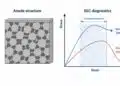
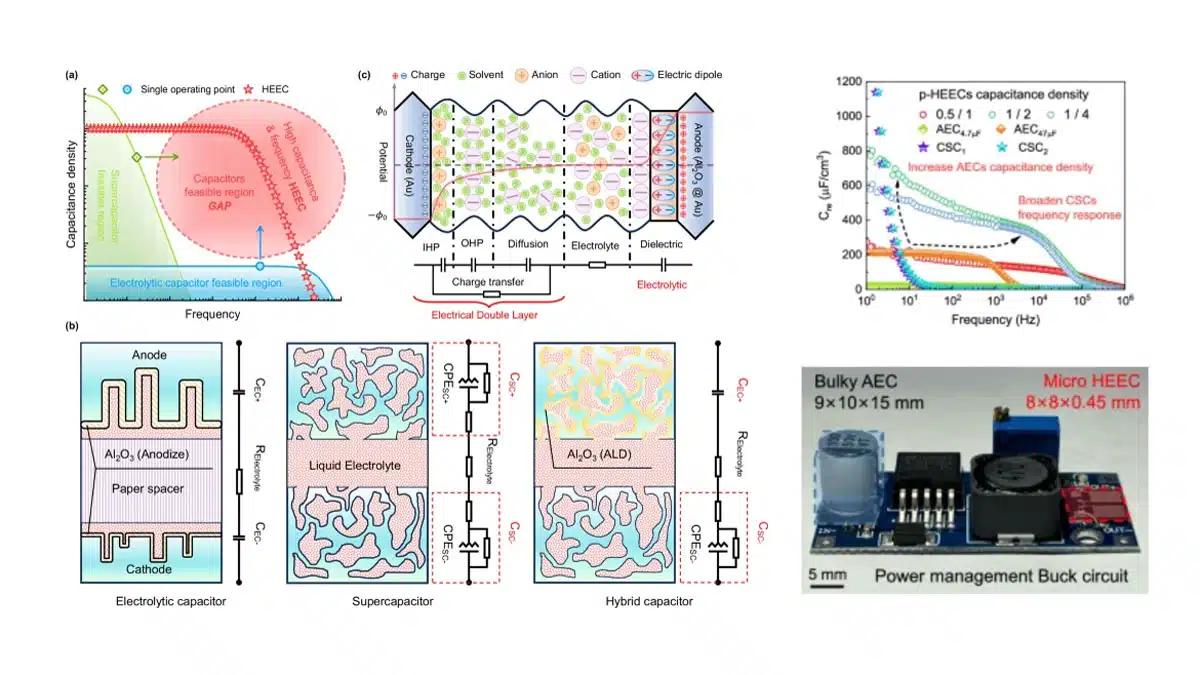
This article published in Nature Communications Journal discusses advancements in high-frequency capacitors development by combining EDLC supercapacitors with electrolytic capacitors, addressing the limitations imposed by slow ion dynamics in traditional electrochemical supercapacitors.

Researchers developed a Hybrid Electrochemical Electrolytic Capacitor (HEEC) that combines electrochemical and dielectric effects to achieve both high capacitance and broad frequency range performance.

RelatedPosts

Top 10 Connector Vendors by Product Type

Bourns Releases High‑Q Air Coil Inductors for RF Aplications

CMSE 2026 Announces Call for Presentations on High-Reliability Military and Space Electronics

The design features a thin dielectric layer and perfect conducting electrodes with mesopores, enabling high characteristic frequency and stable volume capacitance density.

Key points:

  • Challenge: Traditional electrochemical supercapacitors suffer from poor frequency response due to the electrical double layer effect, limiting their characteristic frequency.
  • Innovation: The HEEC design integrates monolayer graphene as a working electrode and introduces a hybrid approach to enhance both capacitance and frequency response.
  • Results: The device achieved a characteristic frequency of 44 kHz with a volume capacitance density of 800 µF/cm³, outperforming conventional electrolytic capacitors in miniaturized electronic systems.
  • Applications: The HEEC was successfully integrated into microsystem power management, demonstrating significant size reduction while maintaining performance comparable to commercial capacitors.

The HEEC design combines the advantages of both electrochemical and dielectric effects, providing high capacitance density at low frequencies and extending the frequency range to surpass 10 kHz. A planar micro HEEC with a characteristic frequency of 44 kHz and a stable volume capacitance density of 800 μF/cm3 was fabricated using a selective atomic layer deposition technique.

Hybrid Electrochemical Electrolytic Capacitors (HEECs) combine the high-frequency performance of electrolytic capacitors with the high capacitance of supercapacitors. The design features interdigital electrodes with different widths to balance capacitance density and a parallel circuit layout to enhance frequency response. The HEECs are fabricated using standard semiconductor processes, including lithography, PVD, ALD, and metal lift-off, and demonstrate improved performance compared to traditional hybrid capacitors.

A hybrid electrochemical energy capacitor (HEEC) is fabricated using a CMOS-compatible process, enabling wafer-level production and circuit integration. The HEEC exhibits a porous Au cathode and an Al2O3 dielectric layer on the anode, resulting in a high characteristic frequency exceeding 1 MHz and a capacitance density of 600 μF/cm3 at low frequencies. This performance surpasses commercial electrolytic, ceramic, tantalum, and film capacitors, making it suitable for high-frequency applications.

Parallel-connected HEECs (p-HEECs) are designed to improve high-frequency performance by doubling capacitance density and reducing ESR. Simulation and experimental results show a near-ideal fit, with p-HEECs exhibiting a higher characteristic frequency and lower dissipation factor compared to s-HEECs and commercial capacitors. p-HEECs demonstrate superior high-frequency capacitive behavior, outperforming commercial supercapacitors and bridging the gap between supercapacitors and aluminum capacitors (AEC) in terms of frequency response and capacitance density.

A Hybrid Electrochemical Electrolytic Capacitor (HEEC) design is presented, combining electrolytic and electrochemical capacitors to achieve a 44 kHz characteristic frequency and 800 μF/cm3 volume capacitance density. The HEEC is integrated into a compact power module and a buck circuit, demonstrating its practical utility in power management applications. The HEEC’s potential to revolutionize high-frequency power management for portable electronics is evident.

HEECs are fabricated using wafer-level CMOS-compatible processes, ensuring mass production and chip integration. The fabrication involves depositing electrodes, etching, and applying a gel electrolyte. The capacitance density and dissipation factor of HEECs are calculated based on impedance spectroscopy data, and equivalent circuit simulations are performed using ZView software.

AECs and Conventional SCs are directly purchased from different manufacturers. AECs are tested with the same equipment as HEECs under the same circumstances. The data availability and references are provided.

High-frequency supercapacitors surpassing the dynamic limit of electrical double layer effects are demonstrated. The supercapacitors, based on a hybrid structure of carbon nano-onion and graphene, exhibit ultrahigh-rate performance and are suitable for compact alternating current filtering. The research highlights the potential of these supercapacitors for advanced energy storage applications.

Discussion

This research initiates a great span bridge between commercial electrolytic and electrochemical capacitors, which meets requirements for micro capacitors operating at over kilohertz frequencies, filling the blank of this frequency region in the Ragone Plot. The Hybrid Electrochemical Electrolytic Capacitor (HEEC) design successfully overcomes the frequency limitations of micro capacitors, achieving an impressive 44 kHz characteristic frequency with 800 μF/cm3

volume capacitance density by hybrid incorporation of electrolytic and electrochemical capacitors at the circuit level. By integrating the HEEC into a compact power module and replacing the commercial AEC in the buck circuit, we demonstrate its practical utility in power management applications. The HEEC’s potential to revolutionize high-frequency power management for portable and integratable electronics is evident, offering a promising pathway for more efficient and compact microelectronic devices.

This breakthrough in capacitor design holds potential for future miniaturized electronics, enabling more efficient power solutions for wearable and portable devices.

Read the full original paper:

Li, Z., Xu, M., Xia, Y. et al. High-frequency supercapacitors surpassing dynamic limit of electrical double layer effects. Nat Commun 16, 3704 (2025). https://doi.org/10.1038/s41467-025-59015-7

Related

Source: Nature Communications Journal

Recent Posts

CMSE 2026 Announces Call for Presentations on High-Reliability Military and Space Electronics

28.1.2026
30

ESA Call for Papers 6th Space Passive Component Days – SPCD 2026

28.1.2026
23

Power Electronics Tools for Passives and Magnetic Designs

27.1.2026
60

Samsung Q4 2025 Results: MLCC focus for AI, Server and Automotive

26.1.2026
73

Capacitor Technology Dossier

26.1.2026
86

Passive Components in Quantum Computing

22.1.2026
126

Miniaturization of MLCCs and Electrolytics, KAVX Tech Chat

21.1.2026
71

Researchers Demonstrated 32nm Aluminum Vacuum Gap Capacitor

20.1.2026
41

Conductive Polymer Capacitor Market and Design‑In Guide to 2035

20.1.2026
145

Upcoming Events

Feb 24
16:00 - 17:00 CET

Designing Qi2 Wireless Power Systems: Practical Development and EMC Optimization

Mar 3
16:00 - 17:00 CET

Cybersecurity at the Eleventh Hour – from RED to CRA – Information and Discussion

Mar 21
All day

PSMA Capacitor Workshop 2026

View Calendar

Popular Posts

  • Buck Converter Design and Calculation

    0 shares
    Share 0 Tweet 0
  • Boost Converter Design and Calculation

    0 shares
    Share 0 Tweet 0
  • LLC Resonant Converter Design and Calculation

    0 shares
    Share 0 Tweet 0
  • Flyback Converter Design and Calculation

    0 shares
    Share 0 Tweet 0
  • Ripple Current and its Effects on the Performance of Capacitors

    3 shares
    Share 3 Tweet 0
  • How Metal Prices Are Driving Passive Component Price Hikes

    0 shares
    Share 0 Tweet 0
  • MLCC and Ceramic Capacitors

    0 shares
    Share 0 Tweet 0
  • Dual Active Bridge (DAB) Topology

    0 shares
    Share 0 Tweet 0
  • Degradation of Capacitors and its Failure Mechanisms

    0 shares
    Share 0 Tweet 0
  • What is a Dielectric Constant and DF of Plastic Materials?

    4 shares
    Share 4 Tweet 0

Newsletter Subscription


Passive Components Blog

© EPCI - Leading Passive Components Educational and Information Site

  • Home
  • Privacy Policy
  • EPCI Membership & Advertisement
  • About

No Result
View All Result
  • Home
  • Knowledge Blog
  • PCNS

© EPCI - Leading Passive Components Educational and Information Site

This website uses cookies. By continuing to use this website you are giving consent to cookies being used. Visit our Privacy and Cookie Policy.
Go to mobile version