












Passive Components Blog
No Result
View All Result
  • Home
  • NewsFilter
    • All
    • Aerospace & Defence
    • Antenna
    • Applications
    • Automotive
    • Capacitors
    • Circuit Protection Devices
    • electro-mechanical news
    • Filters
    • Fuses
    • Inductors
    • Industrial
    • Integrated Passives
    • inter-connect news
    • Market & Supply Chain
    • Market Insights
    • Medical
    • Modelling and Simulation
    • New Materials & Supply
    • New Technologies
    • Non-linear Passives
    • Oscillators
    • Passive Sensors News
    • Resistors
    • RF & Microwave
    • Telecommunication
    • Weekly Digest

    Smoltek CNF-MIM Capacitors Hit 1,000x Lower Leakage

    DigiKey Expands Line Card with 108K Stock Parts and 364 Suppliers

    Würth Elektronik Announces Partner Program

    Vishay Releases Compact 0806 Low‑DCR Power Inductor

    Murata Opens New Ceramic Capacitor Manufacturing and R&D Center in Japan

    Murata Publishes Power Delivery Guide for AI Servers

    Selecting Current Sense Transformers with Würth Elektronik REDEXPERT

    Mechanical Drift Indicator of Tantalum Capacitor Anodes Degradation under Reverse Bias

    Enabling Software‑Defined Vehicle Architectures: Automotive Ethernet and Zonal Smart Power

    Trending Tags

    • Ripple Current
    • RF
    • Leakage Current
    • Tantalum vs Ceramic
    • Snubber
    • Low ESR
    • Feedthrough
    • Derating
    • Dielectric Constant
    • New Products
    • Market Reports
  • VideoFilter
    • All
    • Antenna videos
    • Capacitor videos
    • Circuit Protection Video
    • Filter videos
    • Fuse videos
    • Inductor videos
    • Inter-Connect Video
    • Non-linear passives videos
    • Oscillator videos
    • Passive sensors videos
    • Resistor videos

    Enabling Software‑Defined Vehicle Architectures: Automotive Ethernet and Zonal Smart Power

    Calculating Resistance Value of a Flyback RC Snubber 

    One‑Pulse Characterization of Nonlinear Power Inductors

    Thermistor Linearization Challenges

    Coaxial Connectors and How to Connect with PCB

    PCB Manufacturing, Test Methods, Quality and Reliability

    Transformer Behavior – Current Transfer and Hidden Feedback

    Choosing the Right Capacitor: The Importance of Accurate Measurements

    RF Inductors: Selection and Design Challenges for High-Frequency Circuits

    Trending Tags

    • Capacitors explained
    • Inductors explained
    • Resistors explained
    • Filters explained
    • Application Video Guidelines
    • EMC
    • New Products
    • Ripple Current
    • Simulation
    • Tantalum vs Ceramic
  • Knowledge Blog
  • DossiersNew
  • Suppliers
    • Who is Who
  • PCNS
    • PCNS 2025
    • PCNS 2023
    • PCNS 2021
    • PCNS 2019
    • PCNS 2017
  • Events
  • Home
  • NewsFilter
    • All
    • Aerospace & Defence
    • Antenna
    • Applications
    • Automotive
    • Capacitors
    • Circuit Protection Devices
    • electro-mechanical news
    • Filters
    • Fuses
    • Inductors
    • Industrial
    • Integrated Passives
    • inter-connect news
    • Market & Supply Chain
    • Market Insights
    • Medical
    • Modelling and Simulation
    • New Materials & Supply
    • New Technologies
    • Non-linear Passives
    • Oscillators
    • Passive Sensors News
    • Resistors
    • RF & Microwave
    • Telecommunication
    • Weekly Digest

    Smoltek CNF-MIM Capacitors Hit 1,000x Lower Leakage

    DigiKey Expands Line Card with 108K Stock Parts and 364 Suppliers

    Würth Elektronik Announces Partner Program

    Vishay Releases Compact 0806 Low‑DCR Power Inductor

    Murata Opens New Ceramic Capacitor Manufacturing and R&D Center in Japan

    Murata Publishes Power Delivery Guide for AI Servers

    Selecting Current Sense Transformers with Würth Elektronik REDEXPERT

    Mechanical Drift Indicator of Tantalum Capacitor Anodes Degradation under Reverse Bias

    Enabling Software‑Defined Vehicle Architectures: Automotive Ethernet and Zonal Smart Power

    Trending Tags

    • Ripple Current
    • RF
    • Leakage Current
    • Tantalum vs Ceramic
    • Snubber
    • Low ESR
    • Feedthrough
    • Derating
    • Dielectric Constant
    • New Products
    • Market Reports
  • VideoFilter
    • All
    • Antenna videos
    • Capacitor videos
    • Circuit Protection Video
    • Filter videos
    • Fuse videos
    • Inductor videos
    • Inter-Connect Video
    • Non-linear passives videos
    • Oscillator videos
    • Passive sensors videos
    • Resistor videos

    Enabling Software‑Defined Vehicle Architectures: Automotive Ethernet and Zonal Smart Power

    Calculating Resistance Value of a Flyback RC Snubber 

    One‑Pulse Characterization of Nonlinear Power Inductors

    Thermistor Linearization Challenges

    Coaxial Connectors and How to Connect with PCB

    PCB Manufacturing, Test Methods, Quality and Reliability

    Transformer Behavior – Current Transfer and Hidden Feedback

    Choosing the Right Capacitor: The Importance of Accurate Measurements

    RF Inductors: Selection and Design Challenges for High-Frequency Circuits

    Trending Tags

    • Capacitors explained
    • Inductors explained
    • Resistors explained
    • Filters explained
    • Application Video Guidelines
    • EMC
    • New Products
    • Ripple Current
    • Simulation
    • Tantalum vs Ceramic
  • Knowledge Blog
  • DossiersNew
  • Suppliers
    • Who is Who
  • PCNS
    • PCNS 2025
    • PCNS 2023
    • PCNS 2021
    • PCNS 2019
    • PCNS 2017
  • Events
No Result
View All Result
Passive Components Blog
No Result
View All Result

Premo Improves Heat Dissipation of High-Current DC Chokes

15.3.2023
Reading Time: 3 mins read
A A

PREMO has announced recent advances achieved regarding heat dissipation in the company’s 3DPower™ integrated magnetics components in combination with new techniques to produce iron powder magnetic core (FeSi6) to increase the impedance versus frequency and at the same time extend the saturation level of the core.

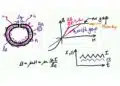
PREMO 3DPower is the first product to integrate two magnetics components that share the same core and feature two orthogonal magnetic fields at all points within the core, thus continuing improvement in high current chokes from thermal, insertion losses and saturation level point of view.

RelatedPosts

Premo Releases PLC Transformer for EV and Smart Grid Applications

Premo Unveils 50KW Off Board Charger Transformer with Embedded LLC Resonant Choke Achieving 99% Efficiency

Premo Extends Flyback Signal Transformer Offering for e-mobility Applications

This innovation is designed for on-board chargers (OBC) and dc-dc converters where filtering at the output is mandatory and the increasing of power delivered cause heating in the power inductive components and other critical failures such as magnetic core saturation.
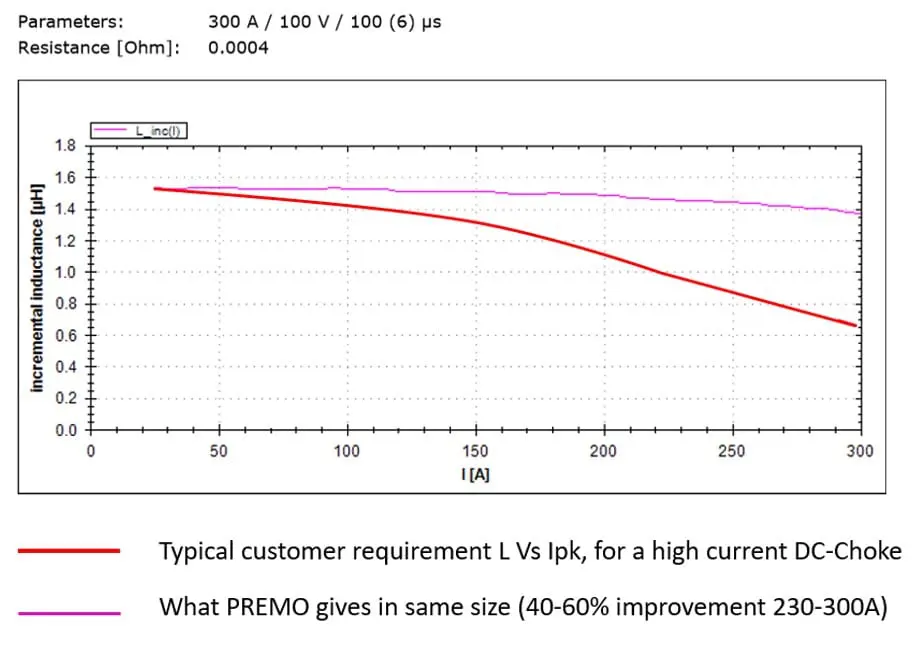
In the graph above, the red shows inductance versus current when a Core Set FeSi6 is used (standard component) and the pink one is the same curve but with a complete iron powder core (FeSi6) covering flat wire winding.

This improvement is possible thanks to the distributed gap (FeSi6), isolated grain by grain, and a convenient compaction level of iron powder, while respecting the original size of output inductor.

On the other hand, there are also other kinds of output chokes where the power dissipation is really critical, considering copper heating (joule effect) and core heating (core losses) and consequently the temperature rise during operation (also Bsat decrease as temperature increase), especially at high temperature range, where the final temperature value can be close to curie temperature and make operation more unstable.

CoolMag™ makes extending the operation temperature range possible, increasing the reliability of power inductive components as well as of OBC and dc-dc converters. With every 10ºC of temperature decrease, the reliability or MTBF (mean time between failures) is multiplied by 2.

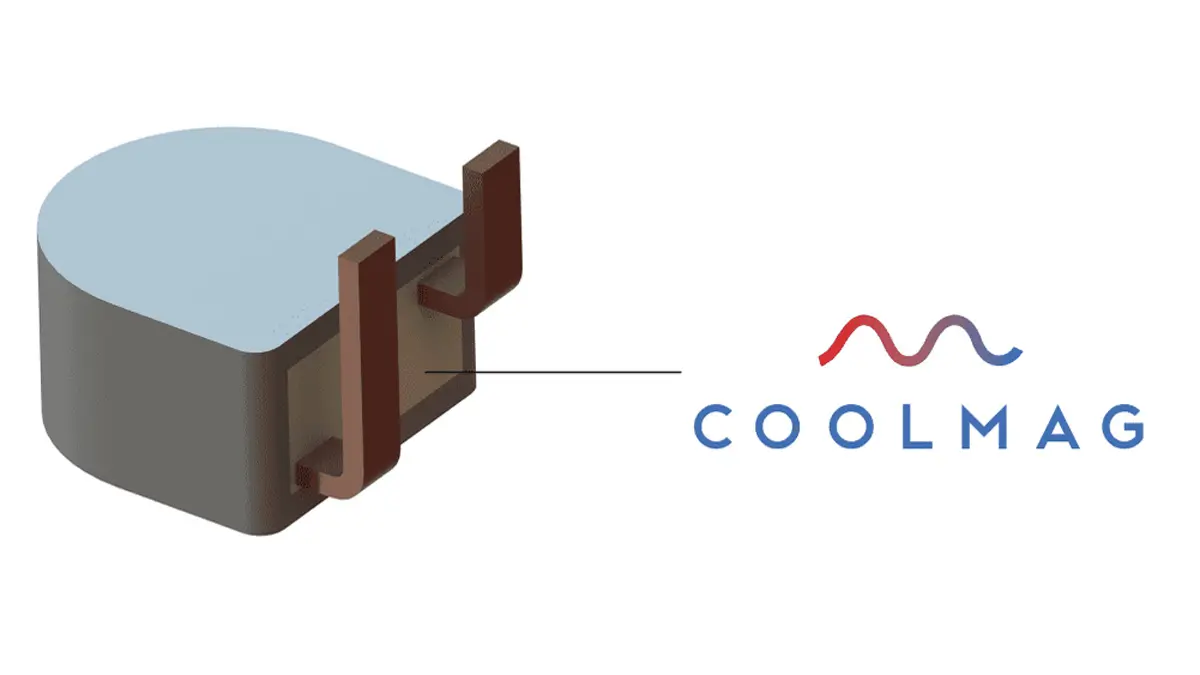
CoolMag is a thermally conductive compound able to fill any space between winding and core (and between core and heat-sink in case of use aluminum or magnesium dissipation).

The thermal conductivity of CoolMag can be between 1.5 and 1.8 W/mK, which is enough to reduce the temperature gradient in more than 40ºC.

One of the first observed impacts of using CoolMag is on the Inductance value versus temperature (after stabilization) as exemplified in the following graph.
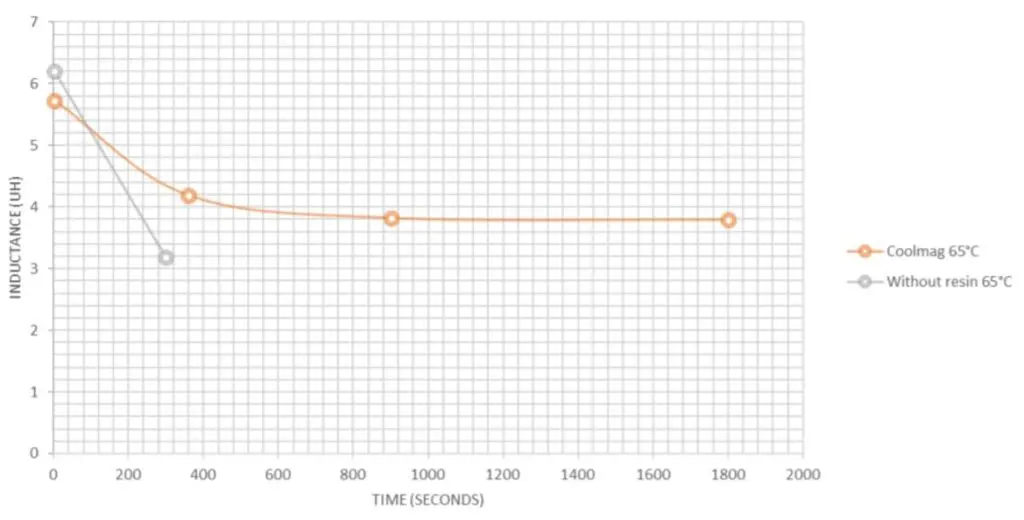
The grey line is the inductance variation without CoolMag. The core reaches saturation in only 5-6 minutes. The orange curve shows the inductance variation with CoolMag, which remains within the nominal value throughout time. The temperature gradient with and without CoolMag is above 40ºC.


Related

Source: Premo

Recent Posts

Vishay Releases Compact 0806 Low‑DCR Power Inductor

5.2.2026
17

Murata Publishes Power Delivery Guide for AI Servers

4.2.2026
72

Selecting Current Sense Transformers with Würth Elektronik REDEXPERT

3.2.2026
18

Enabling Software‑Defined Vehicle Architectures: Automotive Ethernet and Zonal Smart Power

2.2.2026
25

Bourns Releases High‑Q Air Coil Inductors for RF Aplications

29.1.2026
41

CMSE 2026 Announces Call for Presentations on High-Reliability Military and Space Electronics

28.1.2026
50

ESA Call for Papers 6th Space Passive Component Days – SPCD 2026

28.1.2026
43

Würth Elektronik Developed a Custom Transformer for Active Hand Orthosis

26.1.2026
45

Passive Components in Quantum Computing

22.1.2026
160

Upcoming Events

Feb 11
16:00 - 17:00 CET

What’s Next in Power Electronics Design

Feb 24
16:00 - 17:00 CET

Designing Qi2 Wireless Power Systems: Practical Development and EMC Optimization

Mar 3
16:00 - 17:00 CET

Cybersecurity at the Eleventh Hour – from RED to CRA – Information and Discussion

View Calendar

Popular Posts

  • Buck Converter Design and Calculation

    0 shares
    Share 0 Tweet 0
  • Boost Converter Design and Calculation

    0 shares
    Share 0 Tweet 0
  • LLC Resonant Converter Design and Calculation

    0 shares
    Share 0 Tweet 0
  • Flyback Converter Design and Calculation

    0 shares
    Share 0 Tweet 0
  • How Metal Prices Are Driving Passive Component Price Hikes

    0 shares
    Share 0 Tweet 0
  • Ripple Current and its Effects on the Performance of Capacitors

    3 shares
    Share 3 Tweet 0
  • Dual Active Bridge (DAB) Topology

    0 shares
    Share 0 Tweet 0
  • MLCC and Ceramic Capacitors

    0 shares
    Share 0 Tweet 0
  • What is a Dielectric Constant and DF of Plastic Materials?

    4 shares
    Share 4 Tweet 0
  • Degradation of Capacitors and its Failure Mechanisms

    0 shares
    Share 0 Tweet 0

Newsletter Subscription


Passive Components Blog

© EPCI - Leading Passive Components Educational and Information Site

  • Home
  • Privacy Policy
  • EPCI Membership & Advertisement
  • About

No Result
View All Result
  • Home
  • Knowledge Blog
  • PCNS

© EPCI - Leading Passive Components Educational and Information Site

This website uses cookies. By continuing to use this website you are giving consent to cookies being used. Visit our Privacy and Cookie Policy.
Go to mobile version