





YAGEO is implementing a broad, cross-portfolio capacitor price increase effective July 1, 2026, with official list prices up around 50% and even sharper moves in the spot market.
Price increases are spreading across the passive component industry as YAGEO moves ahead with its most extensive capacitor price adjustment in recent years. According to industry reports, the company has notified customers that new pricing will apply from July 1, 2026, across its full capacitor solutions portfolio.
Scope of products and applications
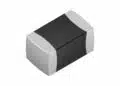
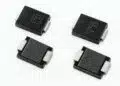
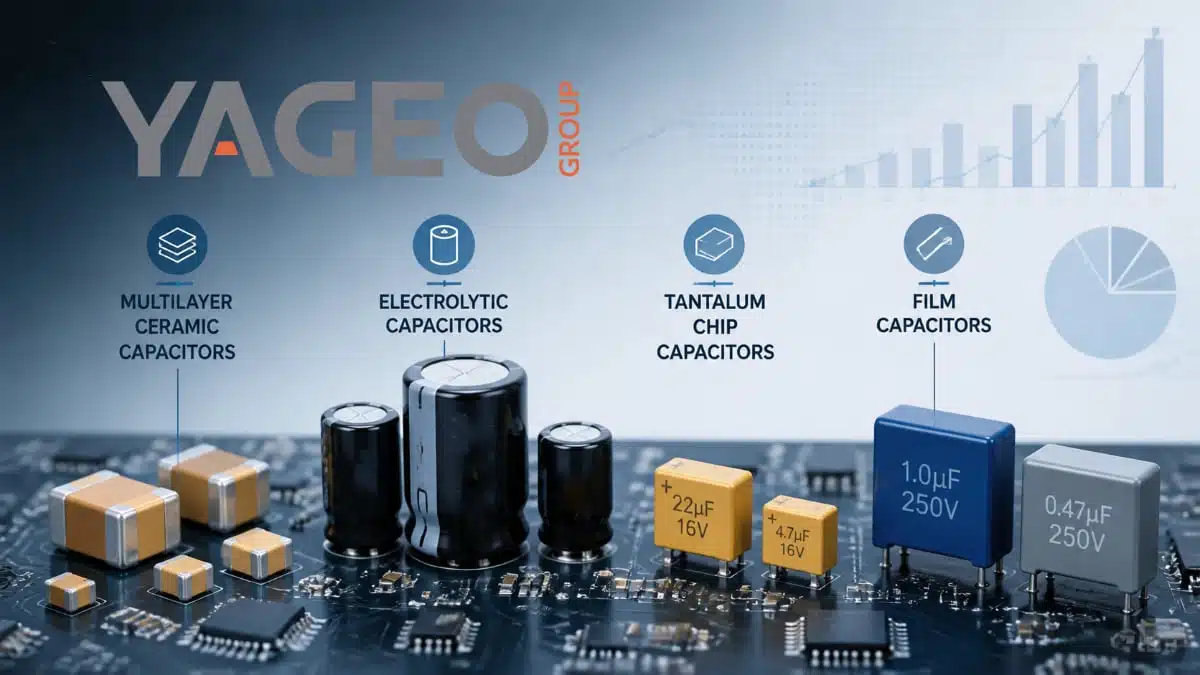
The price hike covers MLCC multilayer ceramic capacitors, aluminum electrolytic capacitors, tantalum capacitors, polymer aluminum capacitors, film capacitors and supercapacitors. These product families support a wide span of end markets including AI servers, consumer electronics, automotive, industrial, renewable energy, aerospace, power conversion and energy storage.
Direct customer pricing change
Industry coverage highlights that YAGEO is raising MLCC prices not only for distributors but also for direct customers for the first time in this cycle. Since direct customers account for more than half of YAGEO’s revenue, extending the increase to contract and spot pricing at these accounts is expected to deliver a meaningful uplift to sales.
Magnitude of price increases and market impact
Official and spot-market pricing
Reports citing industry sources indicate that official prices for capacitor products are up by roughly 50% following the adjustment. In parallel, spot-market quotations have been climbing since May, with prices for some high-end capacitor products reported to have surged by up to nearly ten times within a month.
Lead times and supply conditions
Delivery delays are becoming more frequent as demand converges on high-specification capacitor lines and manufacturing capacity remains tight. These extended lead times are observed not only at YAGEO but also across major MLCC brands, signaling a broader supply–demand rebalancing in the passive component segment.
Cost pressures behind the adjustment
Geopolitics, energy and materials
The current round of price increases is closely linked to rising manufacturing costs driven by geopolitical risk, elevated energy prices and higher raw material costs. YAGEO has previously mitigated these pressures through process optimization and supply-chain integration, but ongoing tensions in the Middle East and volatile freight rates have reached levels where price adjustments are considered necessary.
Structural rather than speculative move
Market analysis points out that recent passive component price actions reflect a structural correction rather than a short-lived speculative cycle. In particular, products with high precious metal content and constrained design flexibility are most exposed to cost inflation, which translates into selective but sizeable price increases.
AI-driven demand reshapes MLCC economics
Rising specification and capacity intensity
Institutional investors note that continued growth in AI servers, high-performance computing and electric vehicles is pushing demand toward higher-capacitance, higher-voltage and higher-reliability passive components. High-capacitance MLCCs typically require 500–1,300 ceramic layers compared with roughly 50–100 layers for low-capacitance parts, making them significantly more capacity-intensive and more sensitive to yield-loss in manufacturing.
MLCC position in AI server BOM
With thermal design power and rack-level power requirements rising in AI data centers, passive components play an increasingly critical role in emerging 800 V HVDC power architectures. In this context, passive components have moved from near the bottom of the bill of materials cost ranking to a position second only to GPUs and memory in AI server platforms.
Competitive dynamics and order transfers
Capacity shifts at Japanese and Korean suppliers
Industry reports note that leading Japanese and South Korean MLCC manufacturers, including Murata and Samsung Electro-Mechanics, are reallocating capacity toward higher-value AI-focused MLCC lines. As these suppliers operate at high utilization, the available output of conventional, lower-capacitance MLCCs is becoming increasingly constrained.
YAGEO’s positioning as a beneficiary
Against this backdrop, YAGEO is expected to be a major beneficiary of MLCC order transfers, as customers look for additional capacity outside Japan and Korea. The company’s broad capacitor portfolio and global footprint position it to capture incremental demand in both AI-related and traditional electronics applications.
Outlook for passive component buyers
Purchasing and design implications
For OEMs, EMS providers and distributors, the July 1 price changes underscore the need to revisit capacitor cost assumptions, buffer budgets and sourcing strategies for the second half of 2026. Engineering teams may increasingly consider second-source qualifications, design-to-cost initiatives and closer alignment between component selection and long-term availability when specifying capacitors in new platforms.
Monitoring further adjustments
Given ongoing raw material volatility and strong AI-related demand, additional selective price adjustments across passive components cannot be ruled out over the coming quarters. Market participants are monitoring capacity expansions, material cost trends and AI server deployment curves to gauge whether the current pricing represents a new equilibrium or an intermediate step in a longer adjustment cycle.
Source
This news article is based on information reported by TrendForce News and the cited financial and industry media covering YAGEO’s July 1, 2026 capacitor price increase.
References
- TrendForce News – Passive Component Prices Rise as YAGEO Reportedly Begins Broadest Capacitor Hike in Years on July 1
- Economic Daily News – Passive Component Price Increase Report
- Commercial Times – YAGEO MLCC Price Adjustment Coverage
- Shanghai Securities News – Capacitor Price and Spot-Market Trend Report