









Passive Components Blog
No Result
View All Result
  • Home
  • NewsFilter
    • All
    • Aerospace & Defence
    • Antenna
    • Applications
    • Automotive
    • Capacitors
    • Circuit Protection Devices
    • electro-mechanical news
    • Filters
    • Fuses
    • Inductors
    • Industrial
    • Integrated Passives
    • inter-connect news
    • Market & Supply Chain
    • Market Insights
    • Medical
    • Modelling and Simulation
    • New Materials & Supply
    • New Technologies
    • Non-linear Passives
    • Oscillators
    • Passive Sensors News
    • Resistors
    • RF & Microwave
    • Telecommunication
    • Weekly Digest

    Tapped Inductor Buck Converter Fundamentals

    TAIYO YUDEN Releases Mini Metal Power Inductors

    Molecular Memristor Shows Record 145 kH Emergent Inductance

    Planar vs Conventional Transformer: When it Make Sense

    Researchers Propose Next‑Gen Compact Memory Using Ultra-thin Ferroelectric Capacitors

    Nichicon ADN Automotive Hybrid Aluminum Capacitors Now Available in EMEA

    Wk 19 Electronics Supply Chain Digest

    Electrocaloric Multilayer Capacitors: Towards Quiet, Solid‑State Cooling Around Room Temperature

    High-Crystallinity Nanocrystalline Composites for MHz Chip Inductors

    Trending Tags

    • Ripple Current
    • RF
    • Leakage Current
    • Tantalum vs Ceramic
    • Snubber
    • Low ESR
    • Feedthrough
    • Derating
    • Dielectric Constant
    • New Products
    • Market Reports
  • VideoFilter
    • All
    • Antenna videos
    • Capacitor videos
    • Circuit Protection Video
    • Filter videos
    • Fuse videos
    • Inductor videos
    • Inter-Connect Video
    • Non-linear passives videos
    • Oscillator videos
    • Passive sensors videos
    • Resistor videos

    Tapped Inductor Buck Converter Fundamentals

    Planar vs Conventional Transformer: When it Make Sense

    Modeling Fringing Field Losses in Inductors & Transformers

    Why Power Inductors Use a Ferrite Core With an Air Gap

    Transformer-Based Power-Line Harvester Magnetic Design

    Thermal Modeling of Magnetics

    Standard vs Planar LLC transformers Comparison for Battery Chargers

    How Modern Tools Model Magnetic Components for Power Electronics

    Advanced Loss Modeling for Planar Magnetics in the Frenetic Planar Tool

    Trending Tags

    • Capacitors explained
    • Inductors explained
    • Resistors explained
    • Filters explained
    • Application Video Guidelines
    • EMC
    • New Products
    • Ripple Current
    • Simulation
    • Tantalum vs Ceramic
  • Knowledge Blog
  • DossiersNew
  • Suppliers
    • Who is Who
  • PCNS
    • PCNS 2025
    • PCNS 2023
    • PCNS 2021
    • PCNS 2019
    • PCNS 2017
  • Events
  • Home
  • NewsFilter
    • All
    • Aerospace & Defence
    • Antenna
    • Applications
    • Automotive
    • Capacitors
    • Circuit Protection Devices
    • electro-mechanical news
    • Filters
    • Fuses
    • Inductors
    • Industrial
    • Integrated Passives
    • inter-connect news
    • Market & Supply Chain
    • Market Insights
    • Medical
    • Modelling and Simulation
    • New Materials & Supply
    • New Technologies
    • Non-linear Passives
    • Oscillators
    • Passive Sensors News
    • Resistors
    • RF & Microwave
    • Telecommunication
    • Weekly Digest

    Tapped Inductor Buck Converter Fundamentals

    TAIYO YUDEN Releases Mini Metal Power Inductors

    Molecular Memristor Shows Record 145 kH Emergent Inductance

    Planar vs Conventional Transformer: When it Make Sense

    Researchers Propose Next‑Gen Compact Memory Using Ultra-thin Ferroelectric Capacitors

    Nichicon ADN Automotive Hybrid Aluminum Capacitors Now Available in EMEA

    Wk 19 Electronics Supply Chain Digest

    Electrocaloric Multilayer Capacitors: Towards Quiet, Solid‑State Cooling Around Room Temperature

    High-Crystallinity Nanocrystalline Composites for MHz Chip Inductors

    Trending Tags

    • Ripple Current
    • RF
    • Leakage Current
    • Tantalum vs Ceramic
    • Snubber
    • Low ESR
    • Feedthrough
    • Derating
    • Dielectric Constant
    • New Products
    • Market Reports
  • VideoFilter
    • All
    • Antenna videos
    • Capacitor videos
    • Circuit Protection Video
    • Filter videos
    • Fuse videos
    • Inductor videos
    • Inter-Connect Video
    • Non-linear passives videos
    • Oscillator videos
    • Passive sensors videos
    • Resistor videos

    Tapped Inductor Buck Converter Fundamentals

    Planar vs Conventional Transformer: When it Make Sense

    Modeling Fringing Field Losses in Inductors & Transformers

    Why Power Inductors Use a Ferrite Core With an Air Gap

    Transformer-Based Power-Line Harvester Magnetic Design

    Thermal Modeling of Magnetics

    Standard vs Planar LLC transformers Comparison for Battery Chargers

    How Modern Tools Model Magnetic Components for Power Electronics

    Advanced Loss Modeling for Planar Magnetics in the Frenetic Planar Tool

    Trending Tags

    • Capacitors explained
    • Inductors explained
    • Resistors explained
    • Filters explained
    • Application Video Guidelines
    • EMC
    • New Products
    • Ripple Current
    • Simulation
    • Tantalum vs Ceramic
  • Knowledge Blog
  • DossiersNew
  • Suppliers
    • Who is Who
  • PCNS
    • PCNS 2025
    • PCNS 2023
    • PCNS 2021
    • PCNS 2019
    • PCNS 2017
  • Events
No Result
View All Result
Passive Components Blog
No Result
View All Result

Smiths Interconnect Extends Space-Qualified, High-Reliability Fixed Chip Attenuators 

30.10.2025
Reading Time: 2 mins read
A A

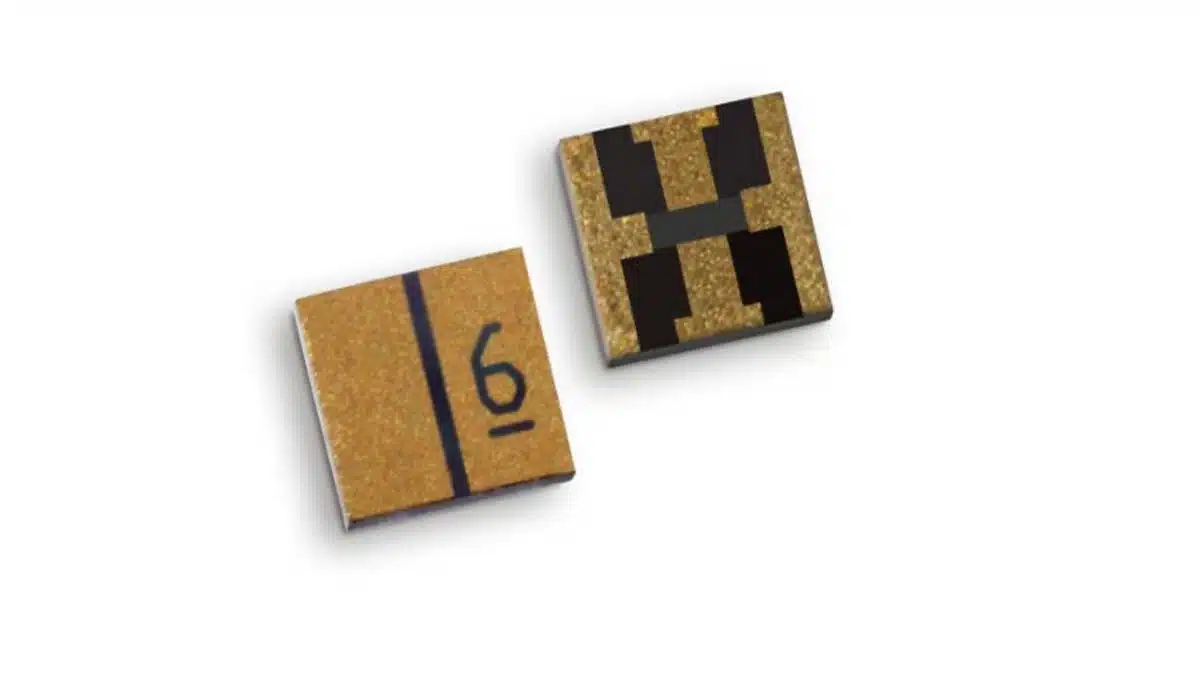
Smiths Interconnect, a leading provider of technically differentiated electronic components, cables and connectors, optical transceivers, microwave and radio frequency products, announced the release of its HR TSX Wire Bond 2 Series – a new range of space-qualified, high-reliability fixed chip attenuators optimised to combine high frequency and power in a small package.

As the global demand for faster data transmission and broadband connectivity contiues to grow, engineers face increasing challenges around space, power, and performance. 

RelatedPosts

Smiths Interconnect invests £2m in Costa Rica electronics plant

Smiths Interconnect Expands Cable Harness Production Capacity

RF mmWave Resistive and Wilkinson Power Dividers for Space Applications

The new HR TSX WB2 Series is designed to solve these challenges by offering excellent broadband performance up to 50 GHz, while delivering increased power handling in a small 0404 wire bond package.

It allows wider coverage than traditional components while providing optimised return loss for multiple frequency ranges. The HR TSX WB2 Series offers a broadband product that can be used in multiple frequency ranges and many applications reducing the need for customer’s to buy multiple components. The standard parts eliminate the need for costly and time-consuming drawings and specifications as they already meet the specification and testing requirements of MIL-PRF-55342. 

Tullio Panarello, Vice President and General Manager of the Fibre Optics and RF Components Business Unit at Smiths Interconnect said:

“The HR TSX WB2 Series pushes the boundaries of Size, Weight and Power in a cost effective, small wire bond package that is easy to implement in a wide array of applications. It provides excellent attenuation accuracy and reduces overall design footprint, saving valuable space on mission-critical applications.”

Built using a robust, thin-film technology on an alumina substrate, the HR TSX WB2 Series provides reliable and stable performance in critical industries such as aerospace, space, and defence.

Key features and benefits:

  • Compact 0404 form factor – saves valuable board space
  • Space-qualified – compliant with MIL-PRF-55342 standards
  • Wire bondable – easy to install in high-reliability assemblies
  • Broad frequency range (up to 50 GHz) – reduces the need for multiple components
  • Low Voltage Standing Wave Ratio (VSWR) – increases transmitted power
  • Multiple attenuation values – available in 1-10dB, 15dB and 20dB options
  • Up to 1 watt power handling – reliable performance in demanding environments
  • Available in waffle packs or optional tape-and-reel formats for streamlined assembly

Related

Source: Smith Interconnect

Recent Posts

binder Releases Tool‑Tightenable M12 Connectors for Improved Reliability

30.4.2026
12

Vishay Introduced Thin Film Submount Platform for Optical and RF Modules

30.4.2026
33

Kyocera Developed Multilayer Ceramic Core Substrate for AI Packages

30.4.2026
48

Heatsink Design and Thermal Interface Materials for Reliable Electronics

27.4.2026
34

Exxelia Introduces SMD High‑Voltage Mica Capacitors

28.4.2026
40

Amphenol Explanded Liquid Cooling Connectors for AI, ESS and EV Systems

17.4.2026
32

Hirose Introduced BGA connector for PCIe Gen6 for AI and Edge Computing

17.4.2026
28

YAGEO Introduces High Rel MLCCs Beyond MIL-Spec Limits

16.4.2026
82

KYOCERA AVX MIL-PRF-32535 BME NP0 MLCCs Approved to the DLA QPD

16.4.2026
38

Upcoming Events

May 13
17:00 - 17:30 CEST

Winding Loss Modeling for Toroidal Magnetics – Including Gapped Cores

May 19
16:00 - 17:00 CEST

Designing Qi2 Wireless Power Systems: Practical Development and EMC Optimization

Jun 2
16:00 - 17:00 CEST

Calculation, Simulation and Measurement of 800V EMC Filters

View Calendar

Popular Posts

  • Buck Converter Design and Calculation

    0 shares
    Share 0 Tweet 0
  • Boost Converter Design and Calculation

    0 shares
    Share 0 Tweet 0
  • Flyback Converter Design and Calculation

    0 shares
    Share 0 Tweet 0
  • LLC Resonant Converter Design and Calculation

    0 shares
    Share 0 Tweet 0
  • MLCC and Ceramic Capacitors

    0 shares
    Share 0 Tweet 0
  • Dual Active Bridge (DAB) Topology

    0 shares
    Share 0 Tweet 0
  • What Electronics Engineer Needs to Know About Passive Low Pass Filters

    0 shares
    Share 0 Tweet 0
  • Capacitor Charging and Discharging

    0 shares
    Share 0 Tweet 0
  • Ripple Current and its Effects on the Performance of Capacitors

    3 shares
    Share 3 Tweet 0
  • MLCC Case Sizes Standards Explained

    0 shares
    Share 0 Tweet 0

Newsletter Subscription


Passive Components Blog

© EPCI - Leading Passive Components Educational and Information Site

  • Home
  • Privacy Policy
  • EPCI Membership & Advertisement
  • About

No Result
View All Result
  • Home
  • Knowledge Blog
  • PCNS

© EPCI - Leading Passive Components Educational and Information Site

This website uses cookies. By continuing to use this website you are giving consent to cookies being used. Visit our Privacy and Cookie Policy.
Go to mobile version