










Passive Components Blog
No Result
View All Result
  • Home
  • NewsFilter
    • All
    • Aerospace & Defence
    • Antenna
    • Applications
    • Automotive
    • Capacitors
    • Circuit Protection Devices
    • electro-mechanical news
    • Filters
    • Fuses
    • Inductors
    • Industrial
    • Integrated Passives
    • inter-connect news
    • Market & Supply Chain
    • Market Insights
    • Medical
    • Modelling and Simulation
    • New Materials & Supply
    • New Technologies
    • Non-linear Passives
    • Oscillators
    • Passive Sensors News
    • Resistors
    • RF & Microwave
    • Telecommunication
    • Weekly Digest

    Binder Hybrid Connector Simplifies One Cable Automation

    Tapped Inductor Buck Converter Fundamentals

    TAIYO YUDEN Releases Mini Metal Power Inductors

    Molecular Memristor Shows Record 145 kH Emergent Inductance

    Planar vs Conventional Transformer: When it Make Sense

    Researchers Propose Next‑Gen Compact Memory Using Ultra-thin Ferroelectric Capacitors

    Nichicon ADN Automotive Hybrid Aluminum Capacitors Now Available in EMEA

    Wk 19 Electronics Supply Chain Digest

    Electrocaloric Multilayer Capacitors: Towards Quiet, Solid‑State Cooling Around Room Temperature

    Trending Tags

    • Ripple Current
    • RF
    • Leakage Current
    • Tantalum vs Ceramic
    • Snubber
    • Low ESR
    • Feedthrough
    • Derating
    • Dielectric Constant
    • New Products
    • Market Reports
  • VideoFilter
    • All
    • Antenna videos
    • Capacitor videos
    • Circuit Protection Video
    • Filter videos
    • Fuse videos
    • Inductor videos
    • Inter-Connect Video
    • Non-linear passives videos
    • Oscillator videos
    • Passive sensors videos
    • Resistor videos

    Tapped Inductor Buck Converter Fundamentals

    Planar vs Conventional Transformer: When it Make Sense

    Modeling Fringing Field Losses in Inductors & Transformers

    Why Power Inductors Use a Ferrite Core With an Air Gap

    Transformer-Based Power-Line Harvester Magnetic Design

    Thermal Modeling of Magnetics

    Standard vs Planar LLC transformers Comparison for Battery Chargers

    How Modern Tools Model Magnetic Components for Power Electronics

    Advanced Loss Modeling for Planar Magnetics in the Frenetic Planar Tool

    Trending Tags

    • Capacitors explained
    • Inductors explained
    • Resistors explained
    • Filters explained
    • Application Video Guidelines
    • EMC
    • New Products
    • Ripple Current
    • Simulation
    • Tantalum vs Ceramic
  • Knowledge Blog
  • DossiersNew
  • Suppliers
    • Who is Who
  • PCNS
    • PCNS 2025
    • PCNS 2023
    • PCNS 2021
    • PCNS 2019
    • PCNS 2017
  • Events
  • Home
  • NewsFilter
    • All
    • Aerospace & Defence
    • Antenna
    • Applications
    • Automotive
    • Capacitors
    • Circuit Protection Devices
    • electro-mechanical news
    • Filters
    • Fuses
    • Inductors
    • Industrial
    • Integrated Passives
    • inter-connect news
    • Market & Supply Chain
    • Market Insights
    • Medical
    • Modelling and Simulation
    • New Materials & Supply
    • New Technologies
    • Non-linear Passives
    • Oscillators
    • Passive Sensors News
    • Resistors
    • RF & Microwave
    • Telecommunication
    • Weekly Digest

    Binder Hybrid Connector Simplifies One Cable Automation

    Tapped Inductor Buck Converter Fundamentals

    TAIYO YUDEN Releases Mini Metal Power Inductors

    Molecular Memristor Shows Record 145 kH Emergent Inductance

    Planar vs Conventional Transformer: When it Make Sense

    Researchers Propose Next‑Gen Compact Memory Using Ultra-thin Ferroelectric Capacitors

    Nichicon ADN Automotive Hybrid Aluminum Capacitors Now Available in EMEA

    Wk 19 Electronics Supply Chain Digest

    Electrocaloric Multilayer Capacitors: Towards Quiet, Solid‑State Cooling Around Room Temperature

    Trending Tags

    • Ripple Current
    • RF
    • Leakage Current
    • Tantalum vs Ceramic
    • Snubber
    • Low ESR
    • Feedthrough
    • Derating
    • Dielectric Constant
    • New Products
    • Market Reports
  • VideoFilter
    • All
    • Antenna videos
    • Capacitor videos
    • Circuit Protection Video
    • Filter videos
    • Fuse videos
    • Inductor videos
    • Inter-Connect Video
    • Non-linear passives videos
    • Oscillator videos
    • Passive sensors videos
    • Resistor videos

    Tapped Inductor Buck Converter Fundamentals

    Planar vs Conventional Transformer: When it Make Sense

    Modeling Fringing Field Losses in Inductors & Transformers

    Why Power Inductors Use a Ferrite Core With an Air Gap

    Transformer-Based Power-Line Harvester Magnetic Design

    Thermal Modeling of Magnetics

    Standard vs Planar LLC transformers Comparison for Battery Chargers

    How Modern Tools Model Magnetic Components for Power Electronics

    Advanced Loss Modeling for Planar Magnetics in the Frenetic Planar Tool

    Trending Tags

    • Capacitors explained
    • Inductors explained
    • Resistors explained
    • Filters explained
    • Application Video Guidelines
    • EMC
    • New Products
    • Ripple Current
    • Simulation
    • Tantalum vs Ceramic
  • Knowledge Blog
  • DossiersNew
  • Suppliers
    • Who is Who
  • PCNS
    • PCNS 2025
    • PCNS 2023
    • PCNS 2021
    • PCNS 2019
    • PCNS 2017
  • Events
No Result
View All Result
Passive Components Blog
No Result
View All Result

AVX Introduces New Lambda-Bridge Thermal Conductors

11.11.2019
Reading Time: 2 mins read
A A

Source: AVX news

Exhibiting high thermal conductivity, low thermal resistance, & capacitance so low that the devices are virtually transparent at RF/microwave frequencies, the series provides efficient, compact, & cost-effective thermal management solutions
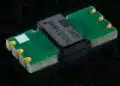
FOUNTAIN INN, S.C. (October 17, 2018) – AVX Corporation, a leading manufacturer and supplier of advanced electronic components and interconnect, sensor, control, and antenna solutions, has released the new λ-Bridge (Lambda-Bridge) Series thermal conductors. Constructed with high-quality aluminum nitride (AlN) or beryllium oxide (BeO) materials, Lambda-Bridge thermal conductors provide efficient, cost-effective thermal management solutions with reliable, repeatable performance in four small EIA form factors: 0302, 0402, 0603, and 0805. Designed to direct heat to thermal ground planes, heat sinks, or other points of thermal interest, help protect adjacent components from hot-spot thermal loads, and improve overall circuit reliability, the series exhibits high thermal conductivity, low thermal resistance, and capacitance so low that the devices are virtually transparent at RF/microwave frequencies.

RelatedPosts

Binder Hybrid Connector Simplifies One Cable Automation

Tapped Inductor Buck Converter Fundamentals

TAIYO YUDEN Releases Mini Metal Power Inductors

The new Lambda-Bridge thermal conductors also feature RoHS-compliant SMT packages that are fully compatible with automated pick-and-place processing, and are ideal for use between active-device and adjacent ground planes, between a specific contact pad and case or between contact pads, and as direct component contacts in GaN power amplifiers, high-power RF amplifiers, filters, synthesizers, industrial computers, switch-mode power supplies, and pin and laser diodes.

“Our new Lambda-Bridge thermal conductors provide efficient, compact, and cost-effective thermal management solutions, improve overall circuit reliability, and offer an additional layer of protection for adjacent components in a wide range of RF, microwave, and power applications,” said Larry Eisenberger, principal technical marketing engineer at AVX.

Standard configurations for the new Lambda-Bridge thermal conductors currently include 0302, 0402, 0603, and 0805 EIA packages with two standard thicknesses ranging from 20–40mils (T1) and 15–25mils (T2), in edge-wrap (fully-metalized edge) and no-wrap styles, and with either gold-over non-magnetic barrier terminations or gold-over-magnetic terminations. Custom configurations are also available.

AlN Lambda-Bridge thermal conductors exhibit thermal resistance values spanning 10°C/W to 25°C/W (T1) and 16°C/W to 32°C/W (T2); thermal conductivity values spanning 40mW/°C to 100mW/°C (T1) and 30mW/°C to 60mW/°C (T2); and capacitance values spanning 0.06–0.13pF (T1) and 0.05–0.08pF for edge-wrap versions. Non-wrapped versions have even lower capacitance values.

BeO Lambda-Bridge thermal conductors exhibit thermal resistance values spanning 7°C/W to 16°C/W (T1) and 11°C/W to 21°C/W (T2); thermal conductivity values spanning 61mW/°C to 153mW/°C (T1) and 46mW/°C to 92mW/°C (T2); and capacitance values spanning 0.05–0.10pF (T1) and 0.04–0.07pF for edge-wrap versions.

Packing options include: 1,000 pieces on a 7” reel, 500 pieces on a 7” reel, and matrix tray, and lead-time for the series is currently 12 weeks.

Related

Recent Posts

Binder Hybrid Connector Simplifies One Cable Automation

13.5.2026
4

Planar vs Conventional Transformer: When it Make Sense

11.5.2026
35

Nichicon ADN Automotive Hybrid Aluminum Capacitors Now Available in EMEA

11.5.2026
23

Stackpole Expanded its AlN Thick Film Chip Resistors

6.5.2026
23

Würth Elektronik Introduces Compact Flat-wire SMT Power Inductors for Automotive

5.5.2026
50

KYOCERA AVX Extends MLV Varistors for 48V Automotive Protection

5.5.2026
27

YAGEO Introduces C0G Flexible Termination Automotive MLCCs

30.4.2026
41

SCHURTER Releases SMT Micro Switch for Compact HMIs

30.4.2026
14

binder Releases Tool‑Tightenable M12 Connectors for Improved Reliability

30.4.2026
12

Upcoming Events

May 19
16:00 - 17:00 CEST

Designing Qi2 Wireless Power Systems: Practical Development and EMC Optimization

Jun 2
16:00 - 17:00 CEST

Calculation, Simulation and Measurement of 800V EMC Filters

Jun 16
16:00 - 17:00 CEST

EMC with EMC – EMC‑compliant design with electromechanical connectors

View Calendar

Popular Posts

  • Buck Converter Design and Calculation

    0 shares
    Share 0 Tweet 0
  • Boost Converter Design and Calculation

    0 shares
    Share 0 Tweet 0
  • Flyback Converter Design and Calculation

    0 shares
    Share 0 Tweet 0
  • LLC Resonant Converter Design and Calculation

    0 shares
    Share 0 Tweet 0
  • MLCC and Ceramic Capacitors

    0 shares
    Share 0 Tweet 0
  • Dual Active Bridge (DAB) Topology

    0 shares
    Share 0 Tweet 0
  • Capacitor Charging and Discharging

    0 shares
    Share 0 Tweet 0
  • What Electronics Engineer Needs to Know About Passive Low Pass Filters

    0 shares
    Share 0 Tweet 0
  • Ripple Current and its Effects on the Performance of Capacitors

    3 shares
    Share 3 Tweet 0
  • MLCC Case Sizes Standards Explained

    0 shares
    Share 0 Tweet 0

Newsletter Subscription


Passive Components Blog

© EPCI - Leading Passive Components Educational and Information Site

  • Home
  • Privacy Policy
  • EPCI Membership & Advertisement
  • About

No Result
View All Result
  • Home
  • Knowledge Blog
  • PCNS

© EPCI - Leading Passive Components Educational and Information Site

This website uses cookies. By continuing to use this website you are giving consent to cookies being used. Visit our Privacy and Cookie Policy.
Go to mobile version