





Passive Components Blog
No Result
View All Result
  • Home
  • NewsFilter
    • All
    • Aerospace & Defence
    • Antenna
    • Applications
    • Automotive
    • Capacitors
    • Circuit Protection Devices
    • electro-mechanical news
    • Filters
    • Fuses
    • Inductors
    • Industrial
    • Integrated Passives
    • inter-connect news
    • Market & Supply Chain
    • Market Insights
    • Medical
    • Modelling and Simulation
    • New Materials & Supply
    • New Technologies
    • Non-linear Passives
    • Oscillators
    • Passive Sensors News
    • Resistors
    • RF & Microwave
    • Telecommunication
    • Weekly Digest

    Vishay Releases Sulfur‑Resistant Chip Resistors

    Würth Elektronik Introduces Lead-Free SMT Spacers

    Schurter Releases EKO HV Fuses up to 1000 VDC, 1100 A

    Empower Releases High-Density Embedded Silicon Capacitors

    TDK Unveils 125C Compact DC Link Film Capacitors

    SCHURTER Releases Coin Cell Supercapacitors for Backup Power

    Skeleton Technologies Expands in U.S. to Power AI Data Centers

    TDK Releases Stackable µPOL 25A Power Modules

    Wk 6 Electronics Supply Chain Digest

    Trending Tags

    • Ripple Current
    • RF
    • Leakage Current
    • Tantalum vs Ceramic
    • Snubber
    • Low ESR
    • Feedthrough
    • Derating
    • Dielectric Constant
    • New Products
    • Market Reports
  • VideoFilter
    • All
    • Antenna videos
    • Capacitor videos
    • Circuit Protection Video
    • Filter videos
    • Fuse videos
    • Inductor videos
    • Inter-Connect Video
    • Non-linear passives videos
    • Oscillator videos
    • Passive sensors videos
    • Resistor videos

    Enabling Software‑Defined Vehicle Architectures: Automotive Ethernet and Zonal Smart Power

    Calculating Resistance Value of a Flyback RC Snubber 

    One‑Pulse Characterization of Nonlinear Power Inductors

    Thermistor Linearization Challenges

    Coaxial Connectors and How to Connect with PCB

    PCB Manufacturing, Test Methods, Quality and Reliability

    Transformer Behavior – Current Transfer and Hidden Feedback

    Choosing the Right Capacitor: The Importance of Accurate Measurements

    RF Inductors: Selection and Design Challenges for High-Frequency Circuits

    Trending Tags

    • Capacitors explained
    • Inductors explained
    • Resistors explained
    • Filters explained
    • Application Video Guidelines
    • EMC
    • New Products
    • Ripple Current
    • Simulation
    • Tantalum vs Ceramic
  • Knowledge Blog
  • DossiersNew
  • Suppliers
    • Who is Who
  • PCNS
    • PCNS 2025
    • PCNS 2023
    • PCNS 2021
    • PCNS 2019
    • PCNS 2017
  • Events
  • Home
  • NewsFilter
    • All
    • Aerospace & Defence
    • Antenna
    • Applications
    • Automotive
    • Capacitors
    • Circuit Protection Devices
    • electro-mechanical news
    • Filters
    • Fuses
    • Inductors
    • Industrial
    • Integrated Passives
    • inter-connect news
    • Market & Supply Chain
    • Market Insights
    • Medical
    • Modelling and Simulation
    • New Materials & Supply
    • New Technologies
    • Non-linear Passives
    • Oscillators
    • Passive Sensors News
    • Resistors
    • RF & Microwave
    • Telecommunication
    • Weekly Digest

    Vishay Releases Sulfur‑Resistant Chip Resistors

    Würth Elektronik Introduces Lead-Free SMT Spacers

    Schurter Releases EKO HV Fuses up to 1000 VDC, 1100 A

    Empower Releases High-Density Embedded Silicon Capacitors

    TDK Unveils 125C Compact DC Link Film Capacitors

    SCHURTER Releases Coin Cell Supercapacitors for Backup Power

    Skeleton Technologies Expands in U.S. to Power AI Data Centers

    TDK Releases Stackable µPOL 25A Power Modules

    Wk 6 Electronics Supply Chain Digest

    Trending Tags

    • Ripple Current
    • RF
    • Leakage Current
    • Tantalum vs Ceramic
    • Snubber
    • Low ESR
    • Feedthrough
    • Derating
    • Dielectric Constant
    • New Products
    • Market Reports
  • VideoFilter
    • All
    • Antenna videos
    • Capacitor videos
    • Circuit Protection Video
    • Filter videos
    • Fuse videos
    • Inductor videos
    • Inter-Connect Video
    • Non-linear passives videos
    • Oscillator videos
    • Passive sensors videos
    • Resistor videos

    Enabling Software‑Defined Vehicle Architectures: Automotive Ethernet and Zonal Smart Power

    Calculating Resistance Value of a Flyback RC Snubber 

    One‑Pulse Characterization of Nonlinear Power Inductors

    Thermistor Linearization Challenges

    Coaxial Connectors and How to Connect with PCB

    PCB Manufacturing, Test Methods, Quality and Reliability

    Transformer Behavior – Current Transfer and Hidden Feedback

    Choosing the Right Capacitor: The Importance of Accurate Measurements

    RF Inductors: Selection and Design Challenges for High-Frequency Circuits

    Trending Tags

    • Capacitors explained
    • Inductors explained
    • Resistors explained
    • Filters explained
    • Application Video Guidelines
    • EMC
    • New Products
    • Ripple Current
    • Simulation
    • Tantalum vs Ceramic
  • Knowledge Blog
  • DossiersNew
  • Suppliers
    • Who is Who
  • PCNS
    • PCNS 2025
    • PCNS 2023
    • PCNS 2021
    • PCNS 2019
    • PCNS 2017
  • Events
No Result
View All Result
Passive Components Blog
No Result
View All Result

FT CAP optimize its GW series of aluminum electrolytic capacitors for better heat dissipation

1.10.2019
Reading Time: 1 min read
A A

Source: FT CAP news

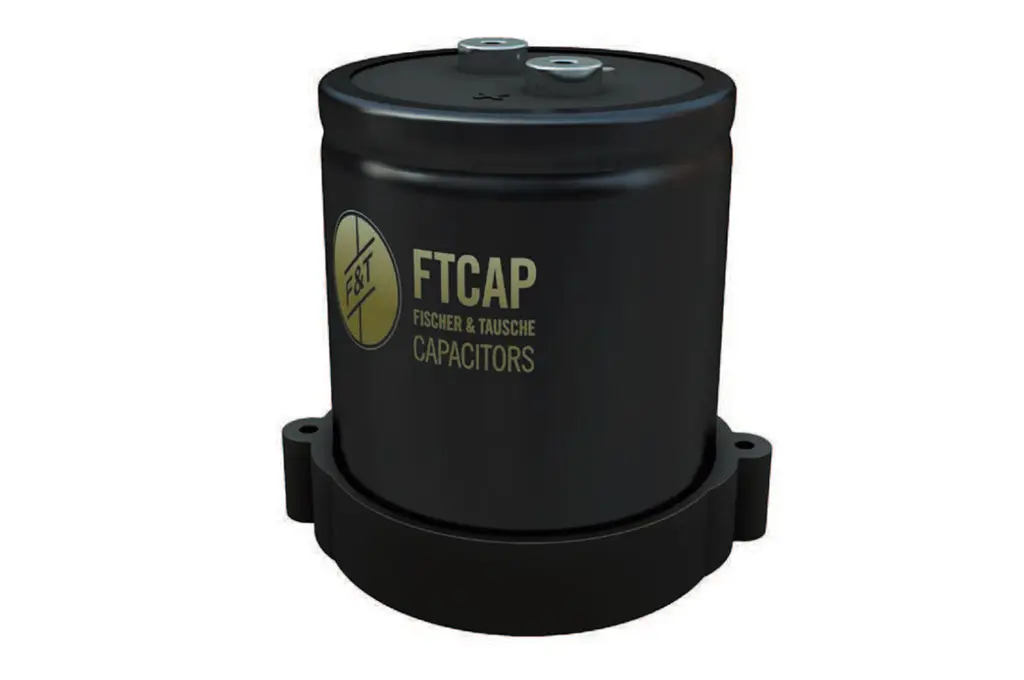
A special stepped base, in combination with a Sil-Pad, ensures optimal thermal dissipation in the capacitors of the GW series. The use of a ring clamp allows virtually seamless mounting of the capacitors on a heat sink.

RelatedPosts

Vishay Releases Sulfur‑Resistant Chip Resistors

Würth Elektronik Introduces Lead-Free SMT Spacers

Schurter Releases EKO HV Fuses up to 1000 VDC, 1100 A

The aluminium electrolytic capacitors with a threaded connection are insensitive to high ripple currents, which however cause increased temperatures. Special winding constructions therefore guarantee optimal heat dissipation at the capacitor base.

In addition, FTCAP (part of the Mersen Group) has optimised the GW series with optional base cooling by means of a Sil-Pad that dissipates the heat. The patented stepped base ensures that the base of the capacitor is flat despite the adjacent heat shrink tube.

Air inclusions are therefore reduced, which would hinder dissipation of heat from the capacitor to the heat sink. An outer bead, in combination with a ring clamp manufactured in-house by FTCAP, allows virtually seamless mounting of GW capacitors on a heat sink.

The result: optimally cooled capacitors that prove themselves in demanding applications such as auxiliary power converters of urban rail cars, or in welding inverters.

GW Series Features

  • All contacts welded
  • High ripple current
  • Thermal conducting pad
  • Best suited for heat sink industry mounting

Applications

  • Inverter/drives
  • Traction
  • Industrial
  • Welding

Related

Recent Posts

Vishay Releases Sulfur‑Resistant Chip Resistors

12.2.2026
6

Schurter Releases EKO HV Fuses up to 1000 VDC, 1100 A

11.2.2026
5

Empower Releases High-Density Embedded Silicon Capacitors

11.2.2026
30

TDK Unveils 125C Compact DC Link Film Capacitors

11.2.2026
17

SCHURTER Releases Coin Cell Supercapacitors for Backup Power

10.2.2026
16

Skeleton Technologies Expands in U.S. to Power AI Data Centers

9.2.2026
21

TDK Releases Stackable µPOL 25A Power Modules

9.2.2026
20

Smoltek CNF-MIM Capacitors Hit 1,000x Lower Leakage

6.2.2026
21

Vishay Releases Compact 0806 Low‑DCR Power Inductor

5.2.2026
33

Upcoming Events

Feb 24
16:00 - 17:00 CET

Designing Qi2 Wireless Power Systems: Practical Development and EMC Optimization

Mar 3
16:00 - 17:00 CET

Cybersecurity at the Eleventh Hour – from RED to CRA – Information and Discussion

Mar 21
All day

PSMA Capacitor Workshop 2026

View Calendar

Popular Posts

  • Buck Converter Design and Calculation

    0 shares
    Share 0 Tweet 0
  • Boost Converter Design and Calculation

    0 shares
    Share 0 Tweet 0
  • LLC Resonant Converter Design and Calculation

    0 shares
    Share 0 Tweet 0
  • Flyback Converter Design and Calculation

    0 shares
    Share 0 Tweet 0
  • Ripple Current and its Effects on the Performance of Capacitors

    3 shares
    Share 3 Tweet 0
  • Dual Active Bridge (DAB) Topology

    0 shares
    Share 0 Tweet 0
  • MLCC and Ceramic Capacitors

    0 shares
    Share 0 Tweet 0
  • What is a Dielectric Constant and DF of Plastic Materials?

    4 shares
    Share 4 Tweet 0
  • How Metal Prices Are Driving Passive Component Price Hikes

    0 shares
    Share 0 Tweet 0
  • MLCC Case Sizes Standards Explained

    0 shares
    Share 0 Tweet 0

Newsletter Subscription


Passive Components Blog

© EPCI - Leading Passive Components Educational and Information Site

  • Home
  • Privacy Policy
  • EPCI Membership & Advertisement
  • About

No Result
View All Result
  • Home
  • Knowledge Blog
  • PCNS

© EPCI - Leading Passive Components Educational and Information Site

This website uses cookies. By continuing to use this website you are giving consent to cookies being used. Visit our Privacy and Cookie Policy.
Go to mobile version