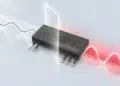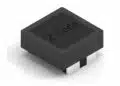






IQD, part of the Würth Elektronik eiSos Group, has introduced the IQXT-601 and IQXT-602 clipped-sine temperature-compensated crystal oscillators for GNSS and RF-sensitive timing applications.
Both provide frequencies from 10 MHz to 55 MHz and frequency stability of ±0.5 ppm over −40 °C to +85 °C. Ceramic surface-mount packages and a 1.71 V to 3.63 V supply range address the board-space and power-rail requirements of positioning and wireless electronics.
Key features and benefits
- Frequency range of 10 MHz to 55 MHz, with frequency options developed for GNSS and RF reference requirements.
- Frequency stability of ±0.5 ppm across −40 °C to +85 °C.
- Supply operation from 1.71 V to 3.63 V, encompassing nominal 1.8 V and 3.3 V rails.
- Clipped-sine output for compatible reference-clock inputs.
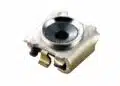
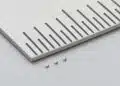
- Ceramic SMT packages measuring 2.5 × 2.0 mm for IQXT-601 and 2.0 × 1.6 mm for IQXT-602.
Technical highlights
Two package sizes with shared headline ratings
The main selection distinction between Würth Elektronik IQD IQXT-601 and IQXT-602 is package size. Both cover the same frequency range, supply-voltage range and operating-temperature range.
| Parameter | IQXT-601 | IQXT-602 |
|---|---|---|
| Package dimensions | 2.5 × 2.0 mm | 2.0 × 1.6 mm |
| Package type | Ceramic SMT | Ceramic SMT |
| Frequency range | 10–55 MHz | 10–55 MHz |
| Output waveform | Clipped sine | Clipped sine |
| Frequency stability | ±0.5 ppm | ±0.5 ppm |
| Operating temperature | −40 to +85 °C | −40 to +85 °C |
| Supply voltage | 1.71–3.63 V | 1.71–3.63 V |
The two package options allow mechanical selection to follow the available PCB space while retaining the same headline electrical requirements. Package dimensions should be considered alongside the PCB land pattern and assembly clearances before layout is fixed.
Temperature stability and timing accuracy
These crystal oscillators use temperature compensation to reduce output-frequency variation as ambient temperature changes. The ±0.5 ppm stability rating applies across the −40 °C to +85 °C operating range.
Temperature stability, initial frequency tolerance and ageing are separate contributors to timing accuracy. The stability rating therefore belongs within the system frequency-error budget rather than replacing it. Ageing introduces frequency drift over time, while initial tolerance concerns the starting frequency deviation.
Supply and output interface
The 1.71 V to 3.63 V operating range supports integration with nominal 1.8 V and 3.3 V supplies. Rail selection should account for the voltage actually reaching the oscillator across operating conditions, rather than the nominal regulator setting.
Both devices use a clipped-sine output. Output compatibility is a selection requirement alongside frequency, temperature stability and supply voltage; the receiving reference-clock input and its load requirements should be assessed together.
Typical applications
GNSS receivers, navigation and telematics
GNSS receivers, positioning systems and navigation electronics use the oscillators as frequency references. The 10 MHz to 55 MHz range includes frequency options developed for GNSS reference requirements, while ±0.5 ppm stability controls temperature-related frequency variation across the industrial operating range.
Telematics is another target application. Selection should follow the reference-frequency and environmental requirements of the individual system.
Wireless and RF electronics
RF front ends and wireless networks are target applications for the clipped-sine devices. The available frequency options address RF-sensitive timing requirements, and the supply range accommodates nominal 1.8 V or 3.3 V architectures.
Smartphones, wearables, low-power wide-area network modules and IoT modules are additional target applications. The 2.0 × 1.6 mm and 2.5 × 2.0 mm package options address designs with restricted component-placement space. IQXT-601 also targets sports tracking and timing equipment.
Design-in notes for engineers
- Match the exact oscillator frequency to the receiver or RF timing architecture before selecting the package.
- Include temperature stability, initial frequency tolerance and ageing in the frequency-error budget.
- Check clipped-sine output compatibility and the receiving circuit’s load requirements during schematic development.
- Assess supply-voltage limits and power consumption against the selected rail and system power budget.
- Use the selected model’s land pattern, terminal arrangement and assembly requirements when preparing the PCB layout.
- Validate final selection under the actual operating conditions before production release.
Further reading
Source
This article is based on the IQD product announcement and official product documentation. Engineers should refer to the current manufacturer datasheet for final design and qualification.
References
- TCXOs for GNSS and RF System Design, Würth Elektronik, 9 November 2026.
- Frequency Products Selection Guide, IQD Frequency Products, August 2026.
- How to Specify TCXO Temperature Compensated Crystal Oscillators, IQD Frequency Products.
- TCXO & VCTCXO, IQD Frequency Products.
- A-Z of Frequency, Crystals & Oscillators, IQD Frequency Products.
- New Clipped Sine TCXOs from IQD, IQD Frequency Products, 25 September 2026.