




Passive Components Blog
No Result
View All Result
  • Home
  • NewsFilter
    • All
    • Aerospace & Defence
    • Antenna
    • Applications
    • Automotive
    • Capacitors
    • Circuit Protection Devices
    • electro-mechanical news
    • Filters
    • Fuses
    • Inductors
    • Industrial
    • Integrated Passives
    • inter-connect news
    • Market & Supply Chain
    • Market Insights
    • Medical
    • Modelling and Simulation
    • New Materials & Supply
    • New Technologies
    • Non-linear Passives
    • Oscillators
    • Passive Sensors News
    • Resistors
    • RF & Microwave
    • Telecommunication
    • Weekly Digest

    Modelithics Releases COMPLETE Library v26.2 for Keysight Genesys

    Why Isolated DC/DC Power Supplies Fail Late, Würth Elektronik Podcast

    Wk 23 Electronics Supply Chain Digest

    Power Converter Dossier: Passive Components Design and Selection Guide 2026

    Evans Group Unifies Four High-Rel Capacitor Leaders

    Skeleton Releases Graphene‑Based UPS for AI Data Centers

    Designing 800 V DC EMC Filters: Calculation, Simulation and Measurement

    TDK Releases DC-link Film Capacitors with Ultra-low Inductance for SiC Power Converters

    Murata Introduces World First 2.2uF 100V Soft‑Term MLCC in 0805 Size for Automotive

    Trending Tags

    • Ripple Current
    • RF
    • Leakage Current
    • Tantalum vs Ceramic
    • Snubber
    • Low ESR
    • Feedthrough
    • Derating
    • Dielectric Constant
    • New Products
    • Market Reports
  • VideoFilter
    • All
    • Antenna videos
    • Capacitor videos
    • Circuit Protection Video
    • Filter videos
    • Fuse videos
    • Inductor videos
    • Inter-Connect Video
    • Non-linear passives videos
    • Oscillator videos
    • Passive sensors videos
    • Resistor videos

    Why Isolated DC/DC Power Supplies Fail Late, Würth Elektronik Podcast

    Designing 800 V DC EMC Filters: Calculation, Simulation and Measurement

    Current Sense Transformer Datasheet and Design‑in Guide

    Designing a USB Type‑C Flyback Planar Transformer with Frenetic’s Planar Tool

    Magnetics Design in High‑Frequency GaN Converters

    Qi2 Wireless Charging: Inductors, Capacitors and EMC Filters

    Two‑capacitor paradox explained for engineers

    Capacitances of Nonlinear MLCCs: What Datasheets Don’t Tell You

    Tapped Inductor Buck Converter Fundamentals

    Trending Tags

    • Capacitors explained
    • Inductors explained
    • Resistors explained
    • Filters explained
    • Application Video Guidelines
    • EMC
    • New Products
    • Ripple Current
    • Simulation
    • Tantalum vs Ceramic
  • Knowledge Blog
  • DossiersNew
  • Suppliers
    • Who is Who
  • PCNS
    • PCNS 2025
    • PCNS 2023
    • PCNS 2021
    • PCNS 2019
    • PCNS 2017
  • Events
  • Home
  • NewsFilter
    • All
    • Aerospace & Defence
    • Antenna
    • Applications
    • Automotive
    • Capacitors
    • Circuit Protection Devices
    • electro-mechanical news
    • Filters
    • Fuses
    • Inductors
    • Industrial
    • Integrated Passives
    • inter-connect news
    • Market & Supply Chain
    • Market Insights
    • Medical
    • Modelling and Simulation
    • New Materials & Supply
    • New Technologies
    • Non-linear Passives
    • Oscillators
    • Passive Sensors News
    • Resistors
    • RF & Microwave
    • Telecommunication
    • Weekly Digest

    Modelithics Releases COMPLETE Library v26.2 for Keysight Genesys

    Why Isolated DC/DC Power Supplies Fail Late, Würth Elektronik Podcast

    Wk 23 Electronics Supply Chain Digest

    Power Converter Dossier: Passive Components Design and Selection Guide 2026

    Evans Group Unifies Four High-Rel Capacitor Leaders

    Skeleton Releases Graphene‑Based UPS for AI Data Centers

    Designing 800 V DC EMC Filters: Calculation, Simulation and Measurement

    TDK Releases DC-link Film Capacitors with Ultra-low Inductance for SiC Power Converters

    Murata Introduces World First 2.2uF 100V Soft‑Term MLCC in 0805 Size for Automotive

    Trending Tags

    • Ripple Current
    • RF
    • Leakage Current
    • Tantalum vs Ceramic
    • Snubber
    • Low ESR
    • Feedthrough
    • Derating
    • Dielectric Constant
    • New Products
    • Market Reports
  • VideoFilter
    • All
    • Antenna videos
    • Capacitor videos
    • Circuit Protection Video
    • Filter videos
    • Fuse videos
    • Inductor videos
    • Inter-Connect Video
    • Non-linear passives videos
    • Oscillator videos
    • Passive sensors videos
    • Resistor videos

    Why Isolated DC/DC Power Supplies Fail Late, Würth Elektronik Podcast

    Designing 800 V DC EMC Filters: Calculation, Simulation and Measurement

    Current Sense Transformer Datasheet and Design‑in Guide

    Designing a USB Type‑C Flyback Planar Transformer with Frenetic’s Planar Tool

    Magnetics Design in High‑Frequency GaN Converters

    Qi2 Wireless Charging: Inductors, Capacitors and EMC Filters

    Two‑capacitor paradox explained for engineers

    Capacitances of Nonlinear MLCCs: What Datasheets Don’t Tell You

    Tapped Inductor Buck Converter Fundamentals

    Trending Tags

    • Capacitors explained
    • Inductors explained
    • Resistors explained
    • Filters explained
    • Application Video Guidelines
    • EMC
    • New Products
    • Ripple Current
    • Simulation
    • Tantalum vs Ceramic
  • Knowledge Blog
  • DossiersNew
  • Suppliers
    • Who is Who
  • PCNS
    • PCNS 2025
    • PCNS 2023
    • PCNS 2021
    • PCNS 2019
    • PCNS 2017
  • Events
No Result
View All Result
Passive Components Blog
No Result
View All Result

Heraeus Electronics Develops New Production Friendly Flexible End Termination Ink

29.6.2023
Reading Time: 2 mins read
A A

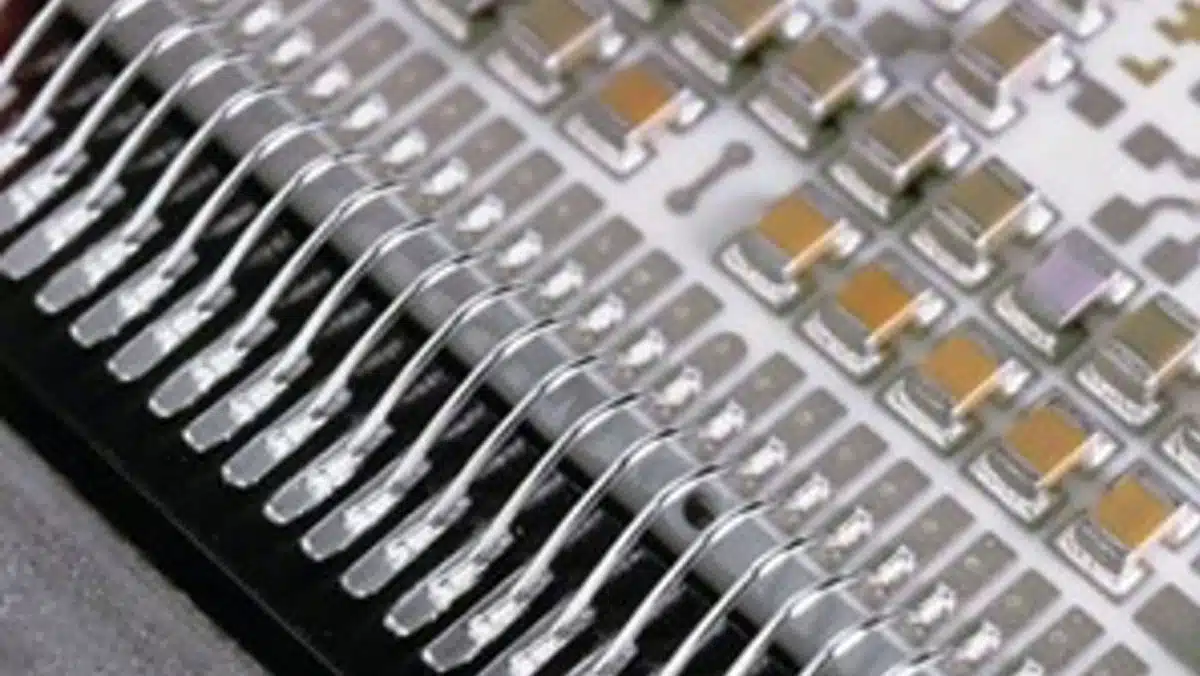
Heraeus Electronics is pleased to announce the development of a production friendly, flexible passive component termination ink.

ET2010 Flexible End Termination Ink is a first of its kind material in the market utilizing advanced polymer technology. When compared to current thermoset, epoxy-based inks in the market, Heraeus’ solution offers easier shipping, storage, and handling at room temperatures.

RelatedPosts

Advancements in Flexible End Terminations for Robust MLCCs in EV

Heraeus Electronics Expands Electronic Inks Portfolio Through Acquisition of PriElex

Understanding The Power of Magnetic Fusion

Manufacturers of passive electronic components, such as multi-layer ceramic capacitors, chip inductors, chip varistors, chip resistors and chip fuses are accustomed to handling electrode and termination inks in room temperature conditions, except for their flexible termination inks. Current flexible termination inks use epoxy based, thermoset polymers that require deep freezing and special handling conditions to keep the epoxy from reacting.

Passive component requirements continue to grow with increased usage especially in the Automotive, Consumer, and Industrial electronics industries. In Automotive, current ICE automobiles contain 2000-3000 capacitors for example. This will grow by 5-10x (15-20k capacitors) in EV, and brings further focus on reliability and safety given media and financial impacts from product recalls. This also is applicable for nearly all other high reliability applications where impact testing, vibration, or thermal stability are concerns. The value (pricing) of these high-reliability components is expected to increase as well.

Heraeus’ new ET2010 can provide these improvements in reliability as well as provide a production friendly solution to the industry standard epoxy materials. Cost of ownership for the customer was kept fully in mind during development – shelf life, shipping, storage, paste utilization, and scrap savings on silver are all improved compared to current materials.

The easy-to-use, reworkable ET2010 ink offers room temperature stability for six months, a significant benefit compared to epoxy-based pastes that need to be frozen or refrigerated. The optimized chemistry is composed of high temperature thermoplastic instead of thermoset (epoxy) – making it more tolerant to thermal cycling and offering enhanced flexibility. With ET2010 there is no need for ice packs/dry ice, which translates to lower shipping costs, a low scrap rate (Ag savings), as well as eliminating costly storage. Additionally, its low silver (Ag) content – approximately 5-10% lower Ag content – provides significant savings given today’s Ag market pricing.

A drop in solution, ET2010 stands for improved reliability with superior bend test capability of up to 10 mm with minimal electrical property change, in addition to providing excellent moisture resistance and solder heat resistance.

Related

Source: Heraeus

Recent Posts

Power Converter Dossier: Passive Components Design and Selection Guide 2026

5.6.2026
24

Evans Group Unifies Four High-Rel Capacitor Leaders

5.6.2026
21

Murata and Xona Partner on LEO Satellite Navigation for Industrial Applications

3.6.2026
36

Nvidia Vera Rubin: Why One AI Rack Needs So Many More MLCC Capacitors

2.6.2026
194

Passive Components in 2026: From Invisible Commodity to Design Parameter

2.6.2026
64

May 2026 Interconnect, Passives and Electromechanical Components Market Insights

29.5.2026
113

ECIA Industry Pulse April 2026: Sentiment Cools but Stays Strong

21.5.2026
79

Industrial Passive Components Markets and Technologies 2026

21.5.2026
166

Automotive Passive Components Technology Dossier

5.6.2026
92

Upcoming Events

Jun 16
16:00 - 17:00 CEST

EMC with EMC – EMC‑compliant design with electromechanical connectors

Jul 14
16:00 - 17:00 CEST

EMC Design Essentials: Mastering Varistors and Common Mode Chokes

Jul 21
16:00 - 17:00 CEST

Safety by design: X and Y Interference suppression capacitors for power line filters

View Calendar

Popular Posts

  • Buck Converter Design and Calculation

    0 shares
    Share 0 Tweet 0
  • Boost Converter Design and Calculation

    0 shares
    Share 0 Tweet 0
  • MLCC and Ceramic Capacitors

    0 shares
    Share 0 Tweet 0
  • Flyback Converter Design and Calculation

    0 shares
    Share 0 Tweet 0
  • LLC Resonant Converter Design and Calculation

    0 shares
    Share 0 Tweet 0
  • What Electronics Engineer Needs to Know About Passive Low Pass Filters

    0 shares
    Share 0 Tweet 0
  • Dual Active Bridge (DAB) Topology

    0 shares
    Share 0 Tweet 0
  • Capacitor Charging and Discharging

    0 shares
    Share 0 Tweet 0
  • SEPIC Converter Design and Calculation

    0 shares
    Share 0 Tweet 0
  • Earthing Systems and IEC Classification Explained

    0 shares
    Share 0 Tweet 0

Newsletter Subscription


Passive Components Blog

© EPCI - Leading Passive Components Educational and Information Site

  • Home
  • Privacy Policy
  • EPCI Membership & Advertisement
  • About

No Result
View All Result
  • Home
  • Knowledge Blog
  • Dossiers
  • PCNS

© EPCI - Leading Passive Components Educational and Information Site

This website uses cookies. By continuing to use this website you are giving consent to cookies being used. Visit our Privacy and Cookie Policy.
Go to mobile version