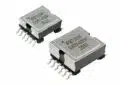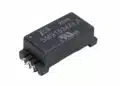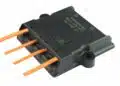


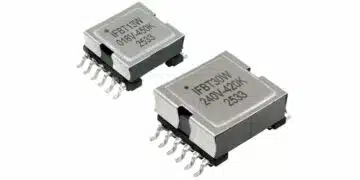
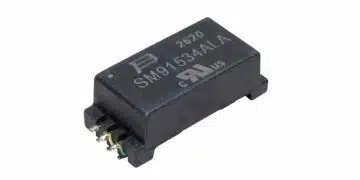




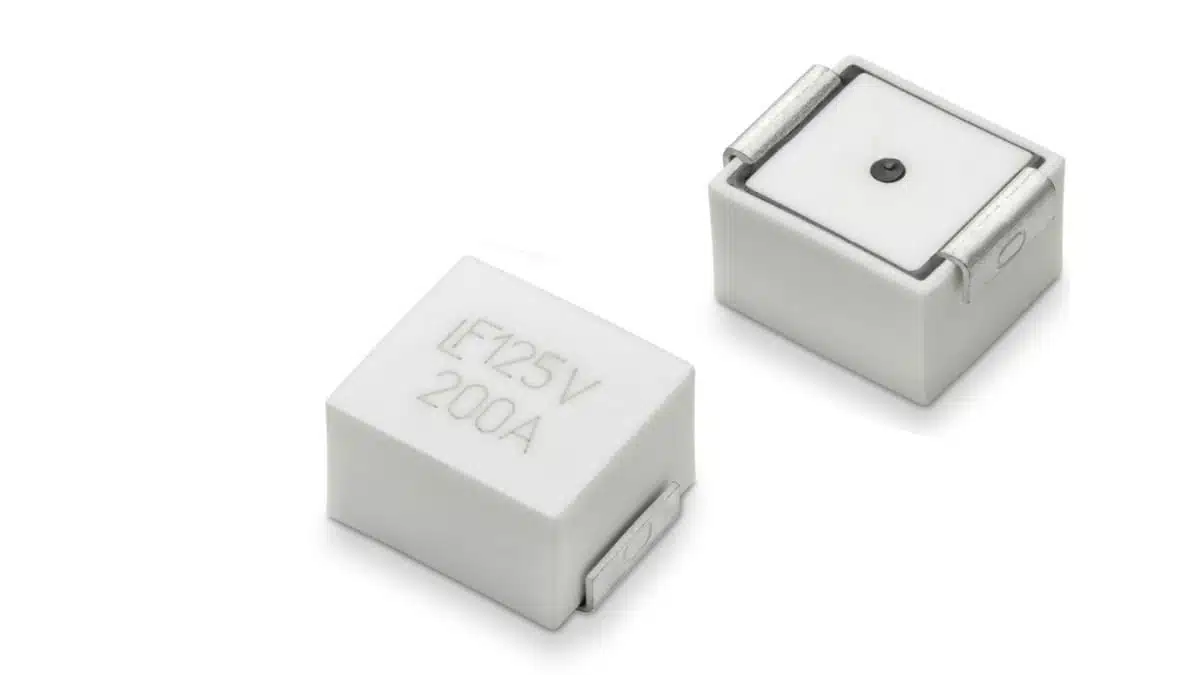
Littelfuse introduces NANO² SMD 708 Series – a compact, surface‑mount fuse family designed for high‑current 48 VDC power architectures in AI servers and hyperscale data centers.
The Littelfuse NANO² SMD fuse 708 Series brings an unusually high interrupting rating into an SMT form factor, giving power designers a realistic alternative to traditional through‑hole or bolt‑down fuse solutions.
By combining 60–200 A current ratings with a 14 kA interrupting rating at 80 VDC, the 708 Series targets demanding protection requirements in dense power distribution, while supporting fully automated assembly and improved manufacturing economics.
Key features and benefits
- Industry‑first SMT interrupting rating
The 708 Series offers an interrupting rating of 14 kA at 80 VDC in a surface‑mount package, a level typically associated with larger cartridge or bolt‑down fuses. - High‑current capability for 48 V buses
Current ratings from 60 A up to 200 A allow protection of high‑power 48 VDC rails used in modern server and data center power distribution. - Compact NANO² surface‑mount footprint
The NANO² SMD platform helps shrink fuse area on the PCB, supporting high‑density layouts in power shelves, PDUs and PSUs. - Automation‑friendly assembly
Surface‑mount packaging enables standard pick‑and‑place and reflow soldering, reducing manual operations compared to legacy through‑hole and bolt‑down fuses. - Robust performance for fault conditions
The series is positioned for high fault current environments, with high pulse resistance and compliance to global safety standards according to the manufacturer datasheet. - Migration path from legacy formats
The 708 Series can serve as a drop‑in functional alternative to many cartridge or bolt‑down fuses when moving to fully SMT boards in power electronics.
Typical applications
The primary target environment is high‑power 48 VDC architectures, especially where fault current levels can be substantial and uptime is critical.
- AI servers and accelerator nodes in high‑density racks
- Hyperscale and cloud data center infrastructure
- Power distribution units (PDUs) and rack‑level power shelves
- Power supply units (PSUs) for 48 VDC distribution
- Battery backup units (BBUs) and 48 V energy storage interfaces
- Networking equipment and high‑current 48 V line cards
- Renewable energy and battery management systems where compact, high‑power protection is needed
In these systems, the fuse is typically placed in series with the main 48 V bus or branch circuit to provide supplemental overcurrent protection, ensuring controlled interruption under short‑circuit or severe overload conditions.
Technical highlights
The table below summarizes key technical positioning of the NANO² SMD 708 Series based on the press release and manufacturer information.
| Parameter | NANO² SMD 708 Series description |
|---|---|
| Fuse type | Surface‑mount NANO² overcurrent protection fuse |
| Rated voltage | 80 VDC (interrupting rating specified at this voltage) |
| Interrupting rating | 14,000 A at 80 VDC |
| Current rating range | 60 A to 200 A |
| Package style | Compact surface‑mount footprint (NANO² SMD) |
| Mounting | SMT, tape‑and‑reel for automated pick‑and‑place |
| Application role | Supplemental overcurrent protection in high fault current environments |
| Compliance and safety | Designed to meet global safety standards (see datasheet for exact details) |
From a design perspective, the standout parameter is the 14 kA interrupting rating at 80 VDC in an SMT package, which allows designers to handle high prospective short‑circuit currents on 48 V rails without resorting to large through‑hole devices. In practice, this can simplify creepage/clearance planning and mechanical layout around the fuse while still meeting safety and reliability requirements.
For exact electrical characteristics such as time‑current curves, resistance values, pre‑arcing I²t and derating versus temperature, engineers should refer directly to the manufacturer datasheet for the specific part number selected within the 708 family.
Availability and part numbers
The 708 Series is supplied in tape‑and‑reel packaging for high‑volume SMT assembly.
- Packaging: tape‑and‑reel, 500 pieces per reel
- Ordering: available through Littelfuse authorized distributors worldwide
- Accessory tools: online stock checking, sample requests and cross‑reference tools are provided by the manufacturer via their website
Individual part numbers in the NANO² SMD 708 Series correspond to specific current ratings (for example 60 A, 80 A, 100 A up to 200 A), each with its own detailed specifications and time‑current characteristics. Exact ordering codes, marking and recommended land pattern details are given in the official Littelfuse documentation for the 708 Series.
Design‑in notes for engineers
Selecting the right fuse rating
- Start from worst‑case load current, including peak operating conditions, and choose a fuse current rating that avoids nuisance openings while respecting recommended derating from the datasheet.
- For 48 V bus applications with large inrush currents (such as bulk capacitors or hot‑swap events), review the pulse endurance and I²t ratings of the chosen 708 Series variant against system transient profiles.
- Ensure the interrupting rating at 80 VDC (14 kA) comfortably exceeds the maximum prospective fault current provided by the upstream supply and distribution network.
PCB layout and thermal considerations
- Place the fuse in a region of the PCB with adequate copper area and thermal relief to manage power dissipation at high operating currents.
- Follow the recommended land pattern for the NANO² 708 package to ensure proper solder fillets and thermal conduction, and consider additional copper “heat spreading” where continuous currents are near the upper rating.
- Maintain clearances and creepage distances in line with safety standards and internal design rules around the fuse pads, especially for high‑energy fault events.
System‑level coordination
- Coordinate the 708 Series fuse with upstream protection such as breakers or fuses to ensure proper selectivity; the fuse should open before more expensive or less accessible elements are stressed.
- In AI server racks and PDUs, verify coordination with branch protection devices and busbars, using manufacturer time‑current curves and I²t data as the basis for calculations.
- For battery‑based systems (BBUs, BMS), consider worst‑case short‑circuit energy from the battery and cable harness, and confirm that the chosen 708 variant remains within its specified interrupting capability.
Manufacturing and reliability
- The SMT format allows integration into the standard reflow process, which can reduce assembly variability compared to manual insertion and bolting of traditional fuses.
- Design reliability plans should include solder joint inspection criteria and periodic verification in qualification builds, as the fuse will see both thermal cycling and potential surge events over life.
- For multi‑source strategies, use the 708 Series as a benchmark for required interrupt rating and footprint when assessing alternative protection components.
Source
This article is based on information from the official Littelfuse press release and associated product documentation for the NANO² SMD 708 Series, complemented with general engineering context for 48 VDC power distribution protection.