





Passive Components Blog
No Result
View All Result
  • Home
  • NewsFilter
    • All
    • Aerospace & Defence
    • Antenna
    • Applications
    • Automotive
    • Capacitors
    • Circuit Protection Devices
    • electro-mechanical news
    • Filters
    • Fuses
    • Inductors
    • Industrial
    • Integrated Passives
    • inter-connect news
    • Market & Supply Chain
    • Market Insights
    • Medical
    • Modelling and Simulation
    • New Materials & Supply
    • New Technologies
    • Non-linear Passives
    • Oscillators
    • Passive Sensors News
    • Resistors
    • RF & Microwave
    • Telecommunication
    • Weekly Digest

    Bourns Releases Custom SiC AFE/PFC Power Inductor for High‑Voltage Designs

    Littelfuse Releases Toggle Safety Covers for Reliable Control Panels

    Bourns Expanded Blend‑Balance Guitar Potentiometers Resistance Range

    TDK Extends Vibration‑Resistant Axial Aluminum Capacitors for Compact DC‑links

    YAGEO Releases SMD 0402 Pt Temperature Sensors for Space‑Constrained Designs

    Bourns Introduces Automotive Wide Terminal Metal Foil Current Sense Resistors for High‑Reliability Designs

    Current Sense Transformers: Ferrite vs Nanocrystalline Cores for Accurate Current Measurement

    Wk 30 Electronics Supply Chain Digest

    YAGEO Extends Automotive Tantalum Polymer Capacitors for AI and ADAS Controllers

    Trending Tags

    • Ripple Current
    • RF
    • Leakage Current
    • Tantalum vs Ceramic
    • Snubber
    • Low ESR
    • Feedthrough
    • Derating
    • Dielectric Constant
    • New Products
    • Market Reports
  • VideoFilter
    • All
    • Antenna videos
    • Capacitor videos
    • Circuit Protection Video
    • Filter videos
    • Fuse videos
    • Inductor videos
    • Inter-Connect Video
    • Non-linear passives videos
    • Oscillator videos
    • Passive sensors videos
    • Resistor videos

    Current Sense Transformers: Ferrite vs Nanocrystalline Cores for Accurate Current Measurement

    EMC Design Fundamentals: Safe Use of Varistors and Common Mode Chokes in Mains and Data-Line Filters

    Ferrite versus Nanocrystalline Power Inductor Cores: Turns, Gap and Size

    KYOCERA AVX Presents Antenna Integrator Studio Tutorial for Antenna Placement and RF Design

    Power Design Simulation Tools for Faster Inductor Selection and Loss Optimization

    EMC‑Compliant PCB and Connector Design Guidelines

    Why Isolated DC/DC Power Supplies Fail Late, Würth Elektronik Podcast

    Designing 800 V DC EMC Filters: Calculation, Simulation and Measurement

    Current Sense Transformer Datasheet and Design‑in Guide

    Trending Tags

    • Capacitors explained
    • Inductors explained
    • Resistors explained
    • Filters explained
    • Application Video Guidelines
    • EMC
    • New Products
    • Ripple Current
    • Simulation
    • Tantalum vs Ceramic
  • Knowledge Blog
  • Dossiers
    • AI Hardware Dossier
    • Power Converter Dossier
    • Automotive Dossier
    • Capacitor Dossier
    • Resistor Dossier
    • Inductor Dossier
    • Circuit Protection Dossier
  • Suppliers
    • Who is Who
  • PCNS
    • PCNS 2025
    • PCNS 2023
    • PCNS 2021
    • PCNS 2019
    • PCNS 2017
  • Events
  • Home
  • NewsFilter
    • All
    • Aerospace & Defence
    • Antenna
    • Applications
    • Automotive
    • Capacitors
    • Circuit Protection Devices
    • electro-mechanical news
    • Filters
    • Fuses
    • Inductors
    • Industrial
    • Integrated Passives
    • inter-connect news
    • Market & Supply Chain
    • Market Insights
    • Medical
    • Modelling and Simulation
    • New Materials & Supply
    • New Technologies
    • Non-linear Passives
    • Oscillators
    • Passive Sensors News
    • Resistors
    • RF & Microwave
    • Telecommunication
    • Weekly Digest

    Bourns Releases Custom SiC AFE/PFC Power Inductor for High‑Voltage Designs

    Littelfuse Releases Toggle Safety Covers for Reliable Control Panels

    Bourns Expanded Blend‑Balance Guitar Potentiometers Resistance Range

    TDK Extends Vibration‑Resistant Axial Aluminum Capacitors for Compact DC‑links

    YAGEO Releases SMD 0402 Pt Temperature Sensors for Space‑Constrained Designs

    Bourns Introduces Automotive Wide Terminal Metal Foil Current Sense Resistors for High‑Reliability Designs

    Current Sense Transformers: Ferrite vs Nanocrystalline Cores for Accurate Current Measurement

    Wk 30 Electronics Supply Chain Digest

    YAGEO Extends Automotive Tantalum Polymer Capacitors for AI and ADAS Controllers

    Trending Tags

    • Ripple Current
    • RF
    • Leakage Current
    • Tantalum vs Ceramic
    • Snubber
    • Low ESR
    • Feedthrough
    • Derating
    • Dielectric Constant
    • New Products
    • Market Reports
  • VideoFilter
    • All
    • Antenna videos
    • Capacitor videos
    • Circuit Protection Video
    • Filter videos
    • Fuse videos
    • Inductor videos
    • Inter-Connect Video
    • Non-linear passives videos
    • Oscillator videos
    • Passive sensors videos
    • Resistor videos

    Current Sense Transformers: Ferrite vs Nanocrystalline Cores for Accurate Current Measurement

    EMC Design Fundamentals: Safe Use of Varistors and Common Mode Chokes in Mains and Data-Line Filters

    Ferrite versus Nanocrystalline Power Inductor Cores: Turns, Gap and Size

    KYOCERA AVX Presents Antenna Integrator Studio Tutorial for Antenna Placement and RF Design

    Power Design Simulation Tools for Faster Inductor Selection and Loss Optimization

    EMC‑Compliant PCB and Connector Design Guidelines

    Why Isolated DC/DC Power Supplies Fail Late, Würth Elektronik Podcast

    Designing 800 V DC EMC Filters: Calculation, Simulation and Measurement

    Current Sense Transformer Datasheet and Design‑in Guide

    Trending Tags

    • Capacitors explained
    • Inductors explained
    • Resistors explained
    • Filters explained
    • Application Video Guidelines
    • EMC
    • New Products
    • Ripple Current
    • Simulation
    • Tantalum vs Ceramic
  • Knowledge Blog
  • Dossiers
    • AI Hardware Dossier
    • Power Converter Dossier
    • Automotive Dossier
    • Capacitor Dossier
    • Resistor Dossier
    • Inductor Dossier
    • Circuit Protection Dossier
  • Suppliers
    • Who is Who
  • PCNS
    • PCNS 2025
    • PCNS 2023
    • PCNS 2021
    • PCNS 2019
    • PCNS 2017
  • Events
No Result
View All Result
Passive Components Blog
No Result
View All Result

Littelfuse Releases Toggle Safety Covers for Reliable Control Panels

6.8.2026
Reading Time: 6 mins read
A A

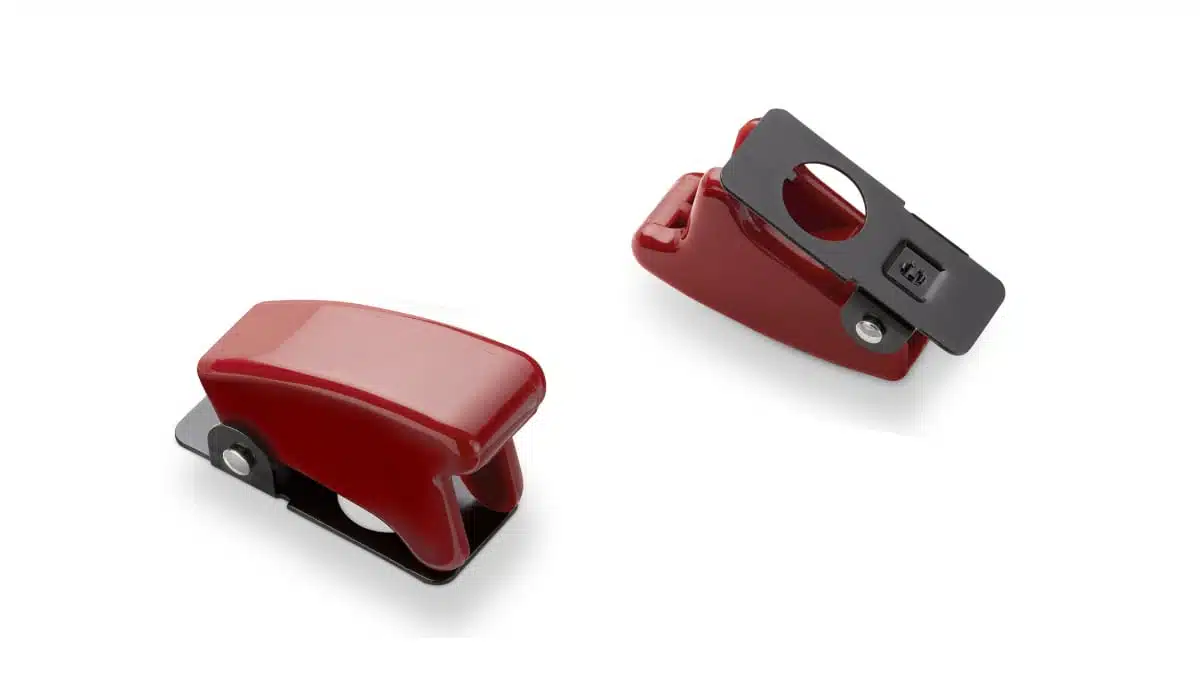
Spring-loaded toggle safety covers may look like a small mechanical accessory, but in high‑energy and industrial control panels they can significantly reduce the risk of unintended equipment operation.

The Littelfuse/C&K TSC Series Toggle Safety Covers provide a straightforward way to add mechanical protection and clearer operator guidance around existing toggle switches without redesigning the electrical hardware.

RelatedPosts

Littelfuse Announced TVS Diodes for 48 V Automotive Systems

Littelfuse Unveils High‑Current 48V SMD Fuse for AI Data Center Protection

Littelfuse Expands High-Voltage TVS Diodes

Key features and benefits

  • Prevention of accidental actuation – spring‑loaded cover mechanically guards the toggle lever, helping avoid unintended switching events that can lead to equipment damage, safety incidents, or costly downtime.
  • One‑handed, intuitive operation – the cover is designed to be opened and closed with a single hand so intentional switching remains fast and practical in normal operation.
  • Rugged mechanical construction – stainless‑steel faceplate with glossy black finish combined with a durable ABS housing supports long‑term reliability in industrial and transportation environments.
  • Clear visual identification of functions – multiple cover color options allow engineers to visually distinguish critical functions (for example, emergency, maintenance, or mode selection) directly on the panel.
  • Drop‑in compatibility with standard cutouts – designed for common 12.0 mm (15/32”) mounting holes, making retrofits on existing panels possible without re‑machining the front plate.
  • Suitable for harsh environments – intended for use in demanding settings such as industrial systems, commercial and off‑road vehicles, marine equipment, aerospace platforms, and military electronics.
  • Supports higher lever heights – accommodates toggle switch lever heights up to approximately 25 mm, which covers a wide range of standard toggle switch designs.

Typical applications

These covers sit at the interface between the human operator and control circuitry that often includes fuses, surge protection, EMI filters, and power converters. They are particularly relevant wherever a single unintended toggle operation could bypass protections or switch power stages unexpectedly.

Typical application areas include:

  • Industrial control equipment and machine panels, especially where toggles select operating modes, enable power stages, or override interlocks.
  • Commercial and off‑road vehicles with auxiliary electrical systems (lighting, PTO, winches, pumps) controlled by toggle switches near the driver or operator.
  • Marine systems, where vibration, moisture, and cramped panels can increase the chance of accidental switch contact.
  • Aerospace and military equipment, where mechanical robustness and clear indication of critical functions are essential, and panel density is high.

In many of these systems, toggle switches are used to enable or disable protection paths, connect capacitive banks, or configure converter operating modes, so preventing unintended actuation is directly linked to safe operation of passive component networks and power stages.

Technical highlights

The press release positions the TSC Series as a mechanical add‑on compatible with a wide range of toggle switches rather than a full switch assembly. Key construction and dimensional aspects include:

Mechanical construction

  • Stainless‑steel faceplate with glossy black finish for mechanical strength and a clean, professional appearance on modern control panels.
  • ABS cover housing for impact resistance and long‑term durability, available in several colors for function coding.
  • Spring‑loaded mechanism that closes the cover over the toggle lever when not in use, providing a physical barrier against accidental touch or snag.

Panel and lever compatibility

  • Panel mounting hole: compatible with standard 12.0 mm (15/32”) toggle switch cutouts, simplifying drop‑in upgrades on existing front panels.
  • Lever height: supports toggle lever heights up to approximately 25 mm, according to manufacturer documentation, which is sufficient for many common C&K and other brand toggles.

These values are mechanical rather than electrical ratings, but in practice they define whether the cover can be added around existing switch hardware in a dense panel that also hosts passives such as RC snubbers, filter chokes, and surge protection devices.

Example compatibility overview

The following simple table summarizes the key mechanical compatibility parameters for the TSC Series:

ParameterTSC Series value
Panel mounting hole12.0 mm (15/32″)
Max lever heightup to ~25 mm (according to datasheet)
Faceplate materialStainless steel, glossy black finish
Cover materialABS, multiple color options

Values beyond those explicitly mentioned in the press release should be confirmed in the official manufacturer datasheet before design‑in.

Design‑in notes for engineers

For design engineers and panel builders focusing on reliable passive networks and power conversion stages, these mechanical covers are a small but effective addition to overall system safety. A few practical design‑in considerations:

  • Map covers to risk level – reserve colored covers for functions where unintended switching would have the highest impact: enabling main DC bus contactors, bypassing surge protection, enabling parallel capacitor banks, or disabling safety interlocks.
  • Combine with electrical interlocks – use the mechanical cover alongside electrical interlocks, such as series contacts or logic conditions, to avoid relying on operator behavior alone in high‑energy systems.
  • Check lever height and clearance – verify the actual toggle lever height and panel thickness against the manufacturer datasheet to ensure the cover closes fully without interfering with neighboring components (for example, terminal blocks, large film capacitors, or EMI filters mounted close to the front plate).
  • Consider ergonomics and labeling – pair the cover color with clear text or symbol labeling on the panel to reduce cognitive load for operators under time pressure, especially in maintenance modes or emergency situations.
  • Plan for retrofit scenarios – in existing installations where you already have passive networks and switchgear in place, the 12.0 mm compatibility makes it realistic to retrofit safety covers during scheduled maintenance without re‑routing wiring or re‑machining panels.
  • Account for environment – for marine, outdoor industrial, or vehicle applications, consider additional sealing or panel enclosure measures if contamination or fluid ingress is a concern, and verify that the combination of cover and switch meets the required environmental specifications.

From a BOM and procurement standpoint, treating the safety covers as a separate, coded mechanical part allows you to standardize on a small set of colors and variants while keeping underlying toggle switch part numbers unchanged.

Source

The information in this article is based on the official Littelfuse press release for the TSC Series Toggle Safety Covers and associated Littelfuse product documentation and resources.
References

  1. Littelfuse/C&K TSC Series Toggle Safety Covers press release
  2. TSC Series Toggle Safety Covers product page
  3. Littelfuse main website

Related

Recent Posts

Bourns Releases Custom SiC AFE/PFC Power Inductor for High‑Voltage Designs

6.8.2026
2

TDK Extends Vibration‑Resistant Axial Aluminum Capacitors for Compact DC‑links

4.8.2026
20

YAGEO Releases SMD 0402 Pt Temperature Sensors for Space‑Constrained Designs

3.8.2026
46

Bourns Introduces Automotive Wide Terminal Metal Foil Current Sense Resistors for High‑Reliability Designs

3.8.2026
24

YAGEO Extends Automotive Tantalum Polymer Capacitors for AI and ADAS Controllers

31.7.2026
95

Knowles Introduces PP Film Capacitors for High‑Stress Power Electronics

30.7.2026
58

High‑Power Current Sensing with YAGEO PK Metal Current Sensors

30.7.2026
23

Würth Elektronik Coupled Inductors Harnessing Leakage Inductance in SEPIC, ZETA and Ćuk Converters

29.7.2026
94

Knowles Presents Pulse Power Capacitors for Demanding MedTech, Industrial and Defense Applications

29.7.2026
46

Upcoming Events

Sep 29
16:00 - 17:00 CEST

Cybersecurity 2026

Nov 24
16:00 - 17:00 CET

Component selection with the WE REDEXPERT® DC-DC Converter Designer Tool

View Calendar

Popular Posts

  • Buck Converter Design and Calculation

    0 shares
    Share 0 Tweet 0
  • Boost Converter Design and Calculation

    0 shares
    Share 0 Tweet 0
  • LLC Resonant Converter Design and Calculation

    0 shares
    Share 0 Tweet 0
  • YAGEO Announces July 2026 Capacitor Price Increase

    0 shares
    Share 0 Tweet 0
  • Flyback Converter Design and Calculation

    0 shares
    Share 0 Tweet 0
  • MLCC and Ceramic Capacitors

    0 shares
    Share 0 Tweet 0
  • MLCCs in the Age of AI: Q2 2026 Market Tightness

    0 shares
    Share 0 Tweet 0
  • Earthing Systems and IEC Classification Explained

    0 shares
    Share 0 Tweet 0
  • Dual Active Bridge (DAB) Topology

    0 shares
    Share 0 Tweet 0
  • Ripple Current and its Effects on the Performance of Capacitors

    3 shares
    Share 3 Tweet 0

Newsletter Subscription


Passive Components Blog

© EPCI - Leading Passive Components Educational and Information Site

  • Home
  • Privacy Policy
  • EPCI Membership & Advertisement
  • About

No Result
View All Result
  • Home
  • Knowledge Blog
  • Dossiers
  • PCNS

© EPCI - Leading Passive Components Educational and Information Site

This website uses cookies. By continuing to use this website you are giving consent to cookies being used. Visit our Privacy and Cookie Policy.