




Passive Components Blog
No Result
View All Result
  • Home
  • News
    • All
    • Aerospace & Defence
    • Antenna
    • Applications
    • Automotive
    • Capacitors
    • Circuit Protection Devices
    • electro-mechanical news
    • Filters
    • Fuses
    • Inductors
    • Industrial
    • Integrated Passives
    • inter-connect news
    • Market & Supply Chain
    • Market Insights
    • Medical
    • Modelling and Simulation
    • New Materials & Supply
    • New Technologies
    • Non-linear Passives
    • Oscillators
    • Passive Sensors News
    • Resistors
    • RF & Microwave
    • Telecommunication
    • Weekly Digest

    Bourns Extends Current Sense Resistors for High-Current Power Designs with 0.1 mΩ, 15 W

    KYOCERA AVX Releases Vibration-Proof SMD Aluminum Electrolytic Capacitors for Harsh Industrial Designs

    Vishay Introduces Automotive Low Loss SMD Common-Mode Chokes

    YAGEO Adds X8 Flexible-Termination Automotive MLCCs for 150°C Designs

    Current-Dependent Inductors: Using Non-Linear Inductance in Buck Converters and PFC Stages

    Vishay Releases High-Power Thick Film Resistors for Compact Power Modules

    Wk 32 Electronics Supply Chain Digest

    Passive Components for Industrial Automation and Robotics (Dossier Report 08/26)

    Advanced Electronics Markets Reshape Capacitor Demand for 2026/2027

    Trending Tags

    • Ripple Current
    • RF
    • Leakage Current
    • Tantalum vs Ceramic
    • Snubber
    • Low ESR
    • Feedthrough
    • Derating
    • Dielectric Constant
    • New Products
    • Market Reports
  • Video
    • All
    • Antenna videos
    • Capacitor videos
    • Circuit Protection Video
    • Filter videos
    • Fuse videos
    • Inductor videos
    • Inter-Connect Video
    • Non-linear passives videos
    • Oscillator videos
    • Passive sensors videos
    • Resistor videos

    Current-Dependent Inductors: Using Non-Linear Inductance in Buck Converters and PFC Stages

    Current Sense Transformers: Ferrite vs Nanocrystalline Cores for Accurate Current Measurement

    EMC Design Fundamentals: Safe Use of Varistors and Common Mode Chokes in Mains and Data-Line Filters

    Ferrite versus Nanocrystalline Power Inductor Cores: Turns, Gap and Size

    KYOCERA AVX Presents Antenna Integrator Studio Tutorial for Antenna Placement and RF Design

    Power Design Simulation Tools for Faster Inductor Selection and Loss Optimization

    EMC‑Compliant PCB and Connector Design Guidelines

    Why Isolated DC/DC Power Supplies Fail Late, Würth Elektronik Podcast

    Designing 800 V DC EMC Filters: Calculation, Simulation and Measurement

    Trending Tags

    • Capacitors explained
    • Inductors explained
    • Resistors explained
    • Filters explained
    • Application Video Guidelines
    • EMC
    • New Products
    • Ripple Current
    • Simulation
    • Tantalum vs Ceramic
  • Knowledge Blog
  • Dossiers
    • AI Hardware Dossier
    • Automotive Dossier
    • Industrial Robotics Dossier
    • Power Converter Dossier
    • Capacitor Dossier
    • Resistor Dossier
    • Inductor Dossier
    • Circuit Protection Dossier
  • Suppliers
    • Who is Who
  • PCNS
    • PCNS 2025
    • PCNS 2023
    • PCNS 2021
    • PCNS 2019
    • PCNS 2017
  • Events
  • Home
  • News
    • All
    • Aerospace & Defence
    • Antenna
    • Applications
    • Automotive
    • Capacitors
    • Circuit Protection Devices
    • electro-mechanical news
    • Filters
    • Fuses
    • Inductors
    • Industrial
    • Integrated Passives
    • inter-connect news
    • Market & Supply Chain
    • Market Insights
    • Medical
    • Modelling and Simulation
    • New Materials & Supply
    • New Technologies
    • Non-linear Passives
    • Oscillators
    • Passive Sensors News
    • Resistors
    • RF & Microwave
    • Telecommunication
    • Weekly Digest

    Bourns Extends Current Sense Resistors for High-Current Power Designs with 0.1 mΩ, 15 W

    KYOCERA AVX Releases Vibration-Proof SMD Aluminum Electrolytic Capacitors for Harsh Industrial Designs

    Vishay Introduces Automotive Low Loss SMD Common-Mode Chokes

    YAGEO Adds X8 Flexible-Termination Automotive MLCCs for 150°C Designs

    Current-Dependent Inductors: Using Non-Linear Inductance in Buck Converters and PFC Stages

    Vishay Releases High-Power Thick Film Resistors for Compact Power Modules

    Wk 32 Electronics Supply Chain Digest

    Passive Components for Industrial Automation and Robotics (Dossier Report 08/26)

    Advanced Electronics Markets Reshape Capacitor Demand for 2026/2027

    Trending Tags

    • Ripple Current
    • RF
    • Leakage Current
    • Tantalum vs Ceramic
    • Snubber
    • Low ESR
    • Feedthrough
    • Derating
    • Dielectric Constant
    • New Products
    • Market Reports
  • Video
    • All
    • Antenna videos
    • Capacitor videos
    • Circuit Protection Video
    • Filter videos
    • Fuse videos
    • Inductor videos
    • Inter-Connect Video
    • Non-linear passives videos
    • Oscillator videos
    • Passive sensors videos
    • Resistor videos

    Current-Dependent Inductors: Using Non-Linear Inductance in Buck Converters and PFC Stages

    Current Sense Transformers: Ferrite vs Nanocrystalline Cores for Accurate Current Measurement

    EMC Design Fundamentals: Safe Use of Varistors and Common Mode Chokes in Mains and Data-Line Filters

    Ferrite versus Nanocrystalline Power Inductor Cores: Turns, Gap and Size

    KYOCERA AVX Presents Antenna Integrator Studio Tutorial for Antenna Placement and RF Design

    Power Design Simulation Tools for Faster Inductor Selection and Loss Optimization

    EMC‑Compliant PCB and Connector Design Guidelines

    Why Isolated DC/DC Power Supplies Fail Late, Würth Elektronik Podcast

    Designing 800 V DC EMC Filters: Calculation, Simulation and Measurement

    Trending Tags

    • Capacitors explained
    • Inductors explained
    • Resistors explained
    • Filters explained
    • Application Video Guidelines
    • EMC
    • New Products
    • Ripple Current
    • Simulation
    • Tantalum vs Ceramic
  • Knowledge Blog
  • Dossiers
    • AI Hardware Dossier
    • Automotive Dossier
    • Industrial Robotics Dossier
    • Power Converter Dossier
    • Capacitor Dossier
    • Resistor Dossier
    • Inductor Dossier
    • Circuit Protection Dossier
  • Suppliers
    • Who is Who
  • PCNS
    • PCNS 2025
    • PCNS 2023
    • PCNS 2021
    • PCNS 2019
    • PCNS 2017
  • Events
No Result
View All Result
Passive Components Blog
No Result
View All Result

Bourns Extends Current Sense Resistors for High-Current Power Designs with 0.1 mΩ, 15 W

26.8.2026
Reading Time: 7 mins read
A A

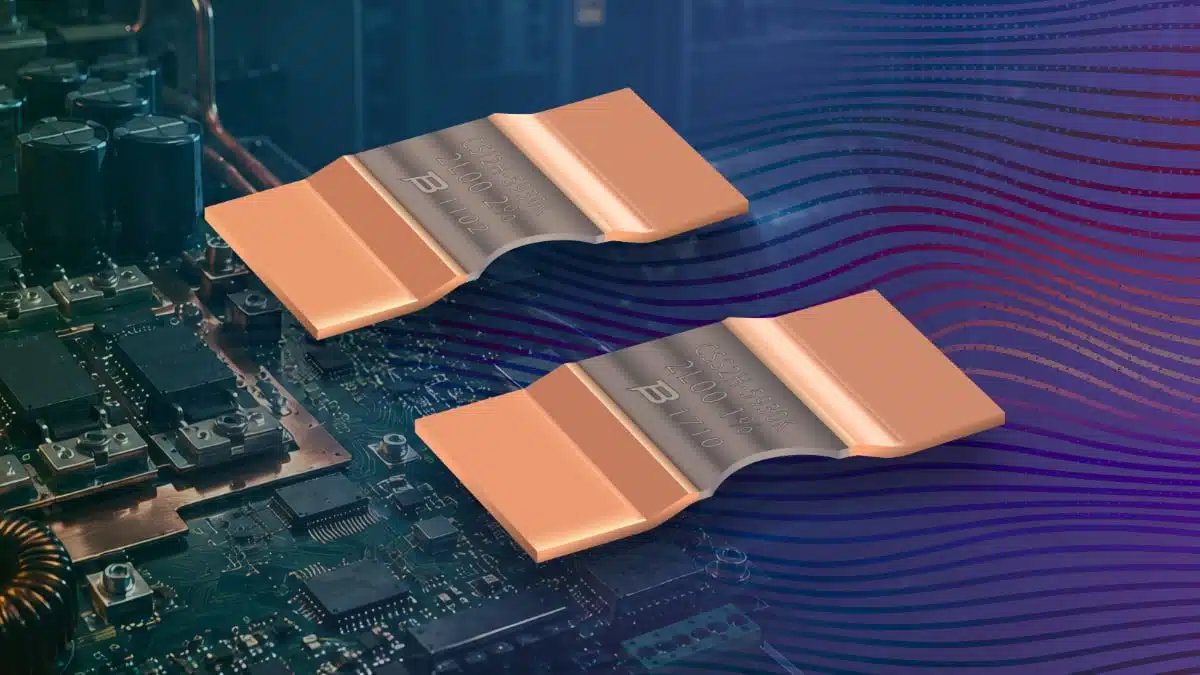
Bourns has extended its CSS2H-5930 and CSI2H-5930 current sense resistor families with 0.1 mΩ models rated at 15 W.

The ultra-low-resistance SMD shunts target applications where high current must be measured with minimal insertion loss, low inductance and controlled thermal drift.

RelatedPosts

Bourns Transformer and Inductor Target 600 W GaN Cycloconverters

Bourns Releases Custom SiC AFE/PFC Power Inductor for High‑Voltage Designs

Bourns Expanded Blend‑Balance Guitar Potentiometers Resistance Range

The new devices use an electron-beam-welded metal-strip construction. In practice, the 0.1 mΩ value reduces the sense-voltage burden and dissipation in demanding battery, converter and industrial power paths, while still providing a measurable signal for an appropriate current-sense amplifier or ADC.

Key features and benefits

  • 0.1 mΩ resistance and 15 W rating: This combination is intended for high-current paths where a conventional milliohm-range resistor would create excessive voltage drop and heat.
  • Low inductance: Bourns specifies less than 3 nH for Material Type R, supporting use in switching power stages and control loops where fast current transients must be measured with limited parasitic effects.
  • Electron-beam-welded metal-strip element: The construction is specified to provide low resistance, low thermal EMF and long-term stability.
  • Low TCR alloy: The resistive alloy is specified at ±50 ppm/°C from 20 °C to 60 °C, helping reduce resistance drift caused by changing operating temperature.
  • Wide operating-temperature range: Both new models are rated from −55 °C to +170 °C.
  • Automotive option: The CSS2H-5930R-L100x is stated to be AEC-Q200 compliant and automotive grade, making it relevant for qualified vehicle electronics programmes.
  • Environmental compliance: Bourns specifies RoHS compliance and halogen-free construction for the series.

A current sense shunt resistor converts load current into a small voltage drop. At very low resistance values, the practical design trade-off shifts toward measurement-chain offset, layout resistance and thermal gradients rather than simple resistor dissipation alone.

Technical highlights

ParameterCSS2H-5930R-L100xCSI2H-5930R-L100x
Resistance value0.1 mΩ0.1 mΩ
Power rating at 70 °C15 W15 W
Operating temperature−55 °C to +170 °C−55 °C to +170 °C
Resistive-alloy TCR, 20 °C to 60 °C±50 ppm/°C±50 ppm/°C
TCR including copper terminals, 20 °C to 60 °C±275 ppm/°C±275 ppm/°C
Inductance, Material Type R<3 nH<3 nH
Resistance tolerance±1%, ±5%±1%, ±2%, ±5%
Automotive qualificationAEC-Q200 compliant, automotive gradeNot stated

The difference between the alloy-only TCR and the TCR including copper terminals is important in sub-milliohm sensing. At 0.1 mΩ, terminal and PCB interconnect contributions can become a meaningful part of the total measurement error, particularly where current and temperature vary widely.

For a nominal 0.1 mΩ shunt, 100 A produces a 10 mV sense voltage and dissipates 1 W. At 300 A, the nominal voltage is 30 mV and dissipation is 9 W; final suitability still depends on the manufacturer’s derating data, PCB copper area, airflow, ambient temperature and overload conditions.

Typical applications

Bourns identifies the new 0.1 mΩ variants for:

  • Current sensing in high-current power paths
  • Battery management systems, specifically for the CSS2H-5930R-L100x
  • Power modules
  • Frequency converters
  • Industrial power systems
  • Voltage-divider functions where the electrical and power requirements are appropriate

The combination of a 15 W rating and sub-milliohm resistance is particularly relevant to battery charge/discharge monitoring, inverter phase-current measurement, motor drives, power-distribution monitoring and DC/DC converter protection functions.

Application fit

Design environmentWhy the 0.1 mΩ option may fitMain verification priority
Battery management systemLow loss in high-current charge and discharge paths; automotive-qualified CSS2H optionFull error budget across temperature, current range and connector/copper resistance
Inverter or frequency converterLow parasitic inductance supports fast switching-current measurementPulse performance, layout-induced noise and sense-amplifier bandwidth
Industrial power module15 W rating supports comparatively high continuous current with low burden voltageThermal spreading through PCB copper and system-level derating
Power-distribution monitoringLow voltage drop helps preserve rail efficiencyADC resolution and amplifier offset at low sense voltages

Design-in notes for engineers

  • Calculate the real operating point: Use P=I2RP=I2R for continuous dissipation, then apply the datasheet derating conditions. A 15 W nominal rating is not a substitute for checking the actual board-level thermal environment.
  • Account for low sense voltage: A 0.1 mΩ resistor produces only millivolt-level signals at many operating currents. Confirm that amplifier offset, gain error, ADC resolution and reference accuracy meet the required current-measurement error budget.
  • Use Kelvin sense routing: Route the voltage-sense pair from the inner edges of the resistor pads, separately from the high-current copper path. This is essential because milliohm and sub-milliohm measurements are easily distorted by trace and solder-joint voltage drops.
  • Keep the thermal environment symmetrical: Unequal heating of terminals, copper pours or nearby switching devices can add thermal EMF and resistance-related offset. Avoid placing sensitive sense traces near hot MOSFETs, inductors or switching nodes.
  • Check the complete temperature coefficient: The specified alloy TCR is only one contributor. For board-level accuracy, include the stated terminal-inclusive TCR, copper resistance and self-heating in the calculation.
  • Validate transient conditions: Evaluate start-up, battery fault, inrush, motor stall and short-circuit events against the manufacturer’s pulse and overload data according to the manufacturer datasheet.
  • Select tolerance deliberately: CSS2H offers ±1% and ±5% options, while CSI2H adds ±2%. Tighter initial tolerance can reduce calibration requirements, but it does not eliminate temperature-related and layout-related errors.
  • Confirm qualification status by exact part number: Bourns specifically identifies CSS2H-5930R-L100x as AEC-Q200 compliant and automotive grade. Do not extend that statement to other variants without checking the current manufacturer documentation.

For additional layout and error-budget guidance, see Overcoming the Challenges of Using Sub-Milliohm SMD Current Sense Chip Resistors.

Further reading

  • Current Sense Shunt Resistor
  • How to Choose Current Sense Resistor
  • Current Sense Resistor Selection Tradeoffs
  • Performance of AEC-Q200 Rated Power Resistors for Automotive Use

Source

This article is based on the Bourns manufacturer press release covering the CSS2H-5930 and CSI2H-5930 Series extensions. Engineers should consult the current manufacturer datasheet, derating curves, ordering information and qualification documentation before final component selection and design release.


  1. Bourns press release: Current Sense Resistors Add 0.1 mΩ Option for High-Current Sensing Applications
  2. Bourns CSS2H-5930 Series datasheet
  3. Bourns CSI2H-5930 Series datasheet
  4. Bourns current sense resistors and shunts

Related

Recent Posts

KYOCERA AVX Releases Vibration-Proof SMD Aluminum Electrolytic Capacitors for Harsh Industrial Designs

26.8.2026
2

Vishay Introduces Automotive Low Loss SMD Common-Mode Chokes

26.8.2026
4

Vishay Releases High-Power Thick Film Resistors for Compact Power Modules

24.8.2026
14

Passive Components for Industrial Automation and Robotics (Dossier Report 08/26)

20.8.2026
93

Advanced Electronics Markets Reshape Capacitor Demand for 2026/2027

20.8.2026
85

Panasonic Introduces Metallized Polypropylene Film Capacitors for Industrial and Automotive DC Applications

19.8.2026
63

Single Pair Ethernet for Humanoid Robot In-Robot Networks

17.8.2026
134

Panasonic Thick-Film Current Sense Resistors: Cost-Effective Alternatives to Metal Shunts

17.8.2026
43

Bourns Transformer and Inductor Target 600 W GaN Cycloconverters

13.8.2026
68

Upcoming Events

Sep 10
11:00 - 12:00 CEST

Equipment models and model strategies for Space Missions

Sep 29
16:00 - 17:00 CEST

Cybersecurity 2026

Nov 24
16:00 - 17:00 CET

Component selection with the WE REDEXPERT® DC-DC Converter Designer Tool

View Calendar

Popular Posts

  • Buck Converter Design and Calculation

    0 shares
    Share 0 Tweet 0
  • Boost Converter Design and Calculation

    0 shares
    Share 0 Tweet 0
  • LLC Resonant Converter Design and Calculation

    0 shares
    Share 0 Tweet 0
  • Earthing Systems and IEC Classification Explained

    0 shares
    Share 0 Tweet 0
  • MLCC and Ceramic Capacitors

    0 shares
    Share 0 Tweet 0
  • Flyback Converter Design and Calculation

    0 shares
    Share 0 Tweet 0
  • MLCCs in the Age of AI: Q2 2026 Market Tightness

    0 shares
    Share 0 Tweet 0
  • Capacitor Charging and Discharging

    0 shares
    Share 0 Tweet 0
  • Audio Capacitors: Choosing Capacitors for Crossover Circuits

    0 shares
    Share 0 Tweet 0
  • Ripple Current and its Effects on the Performance of Capacitors

    3 shares
    Share 3 Tweet 0

Newsletter Subscription


Passive Components Blog

© EPCI - Leading Passive Components Educational and Information Site

  • Home
  • Privacy Policy
  • EPCI Membership & Advertisement
  • About

No Result
View All Result
  • Home
  • Knowledge Blog
  • Dossiers
  • PCNS

© EPCI - Leading Passive Components Educational and Information Site