






Passive Components Blog
No Result
View All Result
  • Home
  • NewsFilter
    • All
    • Aerospace & Defence
    • Antenna
    • Applications
    • Automotive
    • Capacitors
    • Circuit Protection Devices
    • electro-mechanical news
    • Filters
    • Fuses
    • Inductors
    • Industrial
    • Integrated Passives
    • inter-connect news
    • Market & Supply Chain
    • Market Insights
    • Medical
    • Modelling and Simulation
    • New Materials & Supply
    • New Technologies
    • Non-linear Passives
    • Oscillators
    • Passive Sensors News
    • Resistors
    • RF & Microwave
    • Telecommunication
    • Weekly Digest

    Ultrahigh Energy Storage in Lead‑Free BiFeO₃‑Based Ceramic Capacitors via Local Polar Structure Design

    Molex Expanded AirBorn SInergy Hybrid Connectors with 25 A Power Modules

    Murata Expands Ansys Simulation Models for RF inductors, MLCCs, and Power Inductors

    Sumida Introduces SMD Metal Inductors for High‑Current Automotive DC/DC Converters

    Hirose Releases 0.5 mm Floating Board-to-Board Connector for EV Powertrain Designs

    Imec Presents High-density MIMCAP RF interposer for III-V chiplets

    Wk 24 Electronics Supply Chain Digest

    Bourns Completes Rakon Acquisition, Enters Timing Market

    Knowles Releases 3825 X1/Y2 Safety MLCCs for High‑Voltage Applications

    Trending Tags

    • Ripple Current
    • RF
    • Leakage Current
    • Tantalum vs Ceramic
    • Snubber
    • Low ESR
    • Feedthrough
    • Derating
    • Dielectric Constant
    • New Products
    • Market Reports
  • VideoFilter
    • All
    • Antenna videos
    • Capacitor videos
    • Circuit Protection Video
    • Filter videos
    • Fuse videos
    • Inductor videos
    • Inter-Connect Video
    • Non-linear passives videos
    • Oscillator videos
    • Passive sensors videos
    • Resistor videos

    Why Isolated DC/DC Power Supplies Fail Late, Würth Elektronik Podcast

    Designing 800 V DC EMC Filters: Calculation, Simulation and Measurement

    Current Sense Transformer Datasheet and Design‑in Guide

    Designing a USB Type‑C Flyback Planar Transformer with Frenetic’s Planar Tool

    Magnetics Design in High‑Frequency GaN Converters

    Qi2 Wireless Charging: Inductors, Capacitors and EMC Filters

    Two‑capacitor paradox explained for engineers

    Capacitances of Nonlinear MLCCs: What Datasheets Don’t Tell You

    Tapped Inductor Buck Converter Fundamentals

    Trending Tags

    • Capacitors explained
    • Inductors explained
    • Resistors explained
    • Filters explained
    • Application Video Guidelines
    • EMC
    • New Products
    • Ripple Current
    • Simulation
    • Tantalum vs Ceramic
  • Knowledge Blog
  • DossiersNew
  • Suppliers
    • Who is Who
  • PCNS
    • PCNS 2025
    • PCNS 2023
    • PCNS 2021
    • PCNS 2019
    • PCNS 2017
  • Events
  • Home
  • NewsFilter
    • All
    • Aerospace & Defence
    • Antenna
    • Applications
    • Automotive
    • Capacitors
    • Circuit Protection Devices
    • electro-mechanical news
    • Filters
    • Fuses
    • Inductors
    • Industrial
    • Integrated Passives
    • inter-connect news
    • Market & Supply Chain
    • Market Insights
    • Medical
    • Modelling and Simulation
    • New Materials & Supply
    • New Technologies
    • Non-linear Passives
    • Oscillators
    • Passive Sensors News
    • Resistors
    • RF & Microwave
    • Telecommunication
    • Weekly Digest

    Ultrahigh Energy Storage in Lead‑Free BiFeO₃‑Based Ceramic Capacitors via Local Polar Structure Design

    Molex Expanded AirBorn SInergy Hybrid Connectors with 25 A Power Modules

    Murata Expands Ansys Simulation Models for RF inductors, MLCCs, and Power Inductors

    Sumida Introduces SMD Metal Inductors for High‑Current Automotive DC/DC Converters

    Hirose Releases 0.5 mm Floating Board-to-Board Connector for EV Powertrain Designs

    Imec Presents High-density MIMCAP RF interposer for III-V chiplets

    Wk 24 Electronics Supply Chain Digest

    Bourns Completes Rakon Acquisition, Enters Timing Market

    Knowles Releases 3825 X1/Y2 Safety MLCCs for High‑Voltage Applications

    Trending Tags

    • Ripple Current
    • RF
    • Leakage Current
    • Tantalum vs Ceramic
    • Snubber
    • Low ESR
    • Feedthrough
    • Derating
    • Dielectric Constant
    • New Products
    • Market Reports
  • VideoFilter
    • All
    • Antenna videos
    • Capacitor videos
    • Circuit Protection Video
    • Filter videos
    • Fuse videos
    • Inductor videos
    • Inter-Connect Video
    • Non-linear passives videos
    • Oscillator videos
    • Passive sensors videos
    • Resistor videos

    Why Isolated DC/DC Power Supplies Fail Late, Würth Elektronik Podcast

    Designing 800 V DC EMC Filters: Calculation, Simulation and Measurement

    Current Sense Transformer Datasheet and Design‑in Guide

    Designing a USB Type‑C Flyback Planar Transformer with Frenetic’s Planar Tool

    Magnetics Design in High‑Frequency GaN Converters

    Qi2 Wireless Charging: Inductors, Capacitors and EMC Filters

    Two‑capacitor paradox explained for engineers

    Capacitances of Nonlinear MLCCs: What Datasheets Don’t Tell You

    Tapped Inductor Buck Converter Fundamentals

    Trending Tags

    • Capacitors explained
    • Inductors explained
    • Resistors explained
    • Filters explained
    • Application Video Guidelines
    • EMC
    • New Products
    • Ripple Current
    • Simulation
    • Tantalum vs Ceramic
  • Knowledge Blog
  • DossiersNew
  • Suppliers
    • Who is Who
  • PCNS
    • PCNS 2025
    • PCNS 2023
    • PCNS 2021
    • PCNS 2019
    • PCNS 2017
  • Events
No Result
View All Result
Passive Components Blog
No Result
View All Result

Murata Expands Ansys Simulation Models for RF inductors, MLCCs, and Power Inductors

16.6.2026
Reading Time: 6 mins read
A A

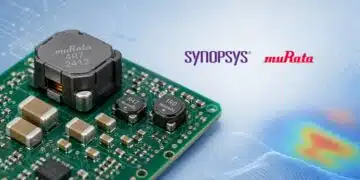
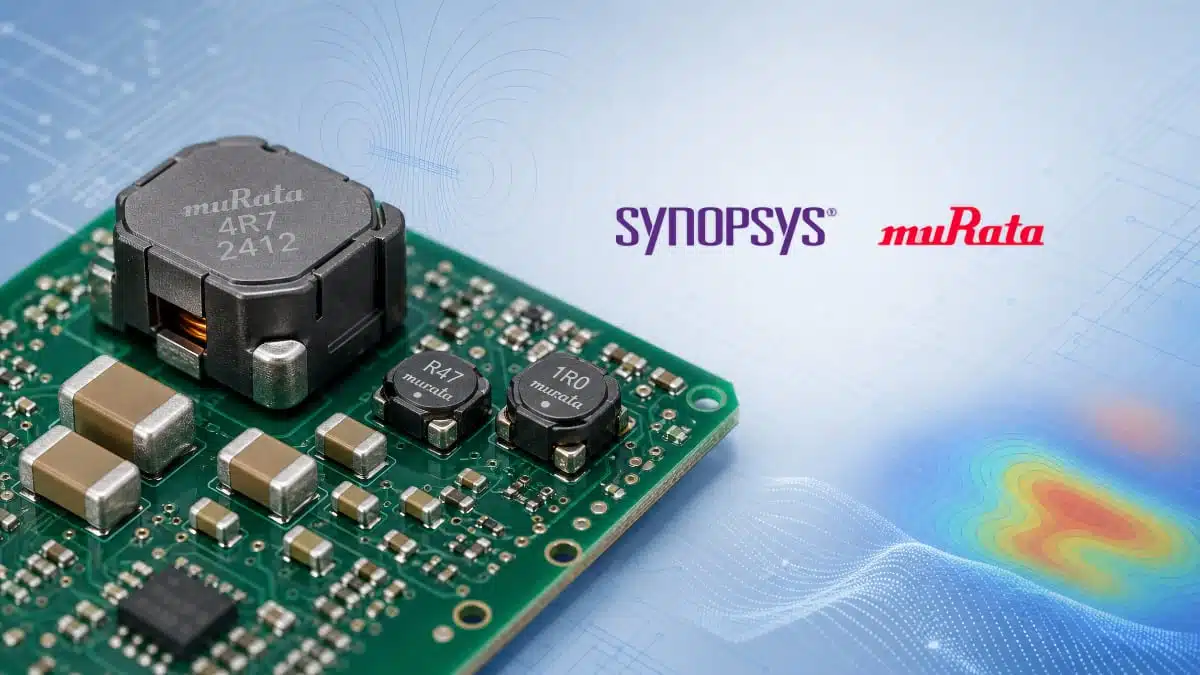
Murata has expanded its simulation support for engineers using Ansys tools by making downloadable component models available directly through its website.

The new Murata collaboration with Synopsys is aimed at shortening the loop between circuit design, electromagnetic analysis, and thermal validation. The collaboration covers Synopsys’ Ansys HFSS and Ansys Icepak environments, with the goal of making it easier for users to access the latest Murata simulation models from the manufacturer’s own site. The company positions this as a workflow improvement for engineers who need to account for both EMI behavior and temperature rise earlier in design.

RelatedPosts

Murata Introduces World First 2.2uF 100V Soft‑Term MLCC in 0805 Size for Automotive

Murata and Xona Partner on LEO Satellite Navigation for Industrial Applications

Murata Expands Thermistor Production Capacity at Yokaichi Plant

Murata also states that it is the first company to offer passive component simulation models through Ansys Icepak, based on its own research as of June 15, 2026.

Key features and benefits

  • Direct access from Murata’s site. Engineers can navigate from the simulation environment to Murata-hosted model downloads, which should reduce friction when updating component data.
  • Two analysis domains covered. Ansys HFSS is used for electromagnetic field analysis, while Ansys Icepak is used for thermal analysis.
  • Model coverage matched to component type. HFSS covers Murata RF inductors and MLCCs; Icepak covers Murata power inductors.
  • Built for early-stage design. The main value is not just convenience, but earlier detection of EMI and thermal issues before prototype spins.
  • Compatible with Ansys 2026 R1. That is the release level named in the announcement.

Why this matters

For passive component users, simulation quality often determines whether a design is stable on the first or second build. A realistic inductor or capacitor model can help predict parasitics, coupling, heating, and layout sensitivity before hardware is assembled.

That is especially useful in compact power stages, RF front ends, and dense digital boards where component behavior changes with frequency, current, and local temperature. In practical terms, this kind of model support can reduce rework in PFC stages, DC/DC converters, wireless modules, and other space-constrained designs.

Supported component families

Analysis toolComponent familyTypical design use
Ansys HFSSRF inductorsRF matching, filtering, antenna-related circuits
Ansys HFSSMLCCsDecoupling, filtering, high-frequency bypassing
Ansys IcepakPower inductorsPower conversion, thermal validation, current handling

Murata does not publish detailed electrical or mechanical ratings in the press release itself, so exact part-level values should be checked in the relevant manufacturer datasheet or model download page. That is important because simulation behavior depends on the specific package, case size, and operating condition.

Technical background

Murata says the models are built from its vertically integrated process, spanning raw material development, manufacturing, and final product processing. In practice, that usually matters because passive components are sensitive to construction details that are not obvious from a simple schematic symbol.

The announcement also emphasizes that electromagnetic behavior and temperature distribution vary significantly with design conditions. For engineers, that is a reminder that a “good enough” generic model can miss the exact corner cases that matter most in high-density boards.

Typical applications

These models are likely to be most useful in design flows that combine RF performance and thermal constraints. Common examples include:

  • High-speed communications hardware.
  • Compact power supplies and converters.
  • EMI-sensitive industrial electronics.
  • Dense consumer devices where layout space is limited.
  • Modules where heat flow through nearby copper and components affects reliability.

In purchasing and design-in terms, the benefit is less about one single component and more about reducing uncertainty around the full assembly. That can help when comparing candidate parts from different package sizes or when checking whether a lower-profile component still meets thermal and EMI targets.

Design-in notes for engineers

  • Use the correct model family. RF inductors, MLCCs, and power inductors are not interchangeable in simulation; each is mapped to the analysis type Murata specifies.
  • Validate against the exact part number. The announcement is model-family level, so final design work should still be tied to the selected catalog part.
  • Check operating point sensitivity. Inductor loss and temperature rise can change meaningfully with current, airflow, copper area, and board stack-up.
  • Treat simulation as a guide, not a substitute. Final verification still needs bench measurements, especially in high-frequency or high-power applications.
  • Watch version compatibility. Murata names Ansys 2026 R1, so teams using earlier tool versions should confirm support before integrating the models.

Availability and downloads

Murata says the following data is available for download from its website:

  • Electromagnetic field analysis data for Ansys HFSS – RF inductors.
  • Electromagnetic field analysis data for Ansys HFSS – MLCCs.
  • Thermal analysis data for Ansys Icepak – Power inductors.

For product data inquiries, Murata directs users to its contact forms for inductor and capacitor products. That suggests the company expects the new model access to complement, not replace, the normal datasheet and support flow.

Source

This article is based on Murata’s official press release announcing the Synopsys collaboration and the associated model downloads. Product-level electrical and mechanical details are not expanded in the release, so part-specific confirmation should be taken from the relevant Murata datasheet or model page.

References

  1. Murata press release
  2. Murata HFSS RF inductor models
  3. Murata HFSS MLCC models
  4. Murata Icepak power inductor models

Related

Recent Posts

Ultrahigh Energy Storage in Lead‑Free BiFeO₃‑Based Ceramic Capacitors via Local Polar Structure Design

16.6.2026
7

Sumida Introduces SMD Metal Inductors for High‑Current Automotive DC/DC Converters

15.6.2026
13

Bourns Completes Rakon Acquisition, Enters Timing Market

12.6.2026
29

Knowles Releases 3825 X1/Y2 Safety MLCCs for High‑Voltage Applications

11.6.2026
35

Knowles Expands High Q Ceramic Core Inductors

11.6.2026
31

TAIYO YUDEN Releases 220uF 1210 Automotive MLCC

11.6.2026
49

HEICO’s Exxelia Expands High-Voltage Ceramic Capacitor Portfolio with CalRamic Acquisition

10.6.2026
44

Vishay Extends Automotive Ferrite Beads for High‑Current EMC Noise Filtering

10.6.2026
30

CapXon Earns EcoVadis Bronze Medal for Sustainability Performance

10.6.2026
27

Upcoming Events

Jun 16
16:00 - 17:00 CEST

EMC with EMC – EMC‑compliant design with electromechanical connectors

Jul 14
16:00 - 17:00 CEST

EMC Design Essentials: Mastering Varistors and Common Mode Chokes

Jul 21
16:00 - 17:00 CEST

Safety by design: X and Y Interference suppression capacitors for power line filters

View Calendar

Popular Posts

  • Buck Converter Design and Calculation

    0 shares
    Share 0 Tweet 0
  • Boost Converter Design and Calculation

    0 shares
    Share 0 Tweet 0
  • LLC Resonant Converter Design and Calculation

    0 shares
    Share 0 Tweet 0
  • MLCC and Ceramic Capacitors

    0 shares
    Share 0 Tweet 0
  • Flyback Converter Design and Calculation

    0 shares
    Share 0 Tweet 0
  • Earthing Systems and IEC Classification Explained

    0 shares
    Share 0 Tweet 0
  • SEPIC Converter Design and Calculation

    0 shares
    Share 0 Tweet 0
  • Dual Active Bridge (DAB) Topology

    0 shares
    Share 0 Tweet 0
  • What Electronics Engineer Needs to Know About Passive Low Pass Filters

    0 shares
    Share 0 Tweet 0
  • MLCC Case Sizes Standards Explained

    0 shares
    Share 0 Tweet 0

Newsletter Subscription


Passive Components Blog

© EPCI - Leading Passive Components Educational and Information Site

  • Home
  • Privacy Policy
  • EPCI Membership & Advertisement
  • About

No Result
View All Result
  • Home
  • Knowledge Blog
  • Dossiers
  • PCNS

© EPCI - Leading Passive Components Educational and Information Site

This website uses cookies. By continuing to use this website you are giving consent to cookies being used. Visit our Privacy and Cookie Policy.
Go to mobile version