









Passive Components Blog
No Result
View All Result
  • Home
  • NewsFilter
    • All
    • Aerospace & Defence
    • Antenna
    • Applications
    • Automotive
    • Capacitors
    • Circuit Protection Devices
    • electro-mechanical news
    • Filters
    • Fuses
    • Inductors
    • Industrial
    • Integrated Passives
    • inter-connect news
    • Market & Supply Chain
    • Market Insights
    • Medical
    • Modelling and Simulation
    • New Materials & Supply
    • New Technologies
    • Non-linear Passives
    • Oscillators
    • Passive Sensors News
    • Resistors
    • RF & Microwave
    • Telecommunication
    • Weekly Digest

    Current Sense Transformer Datasheet and Design‑in Guide

    Designing a USB Type‑C Flyback Planar Transformer with Frenetic’s Planar Tool

    YMIN Releases Square Supercapacitors for AI Server Power System

    Exxelia Extends Temperature Range of its PP Film Capacitors to 140C

    How Long-Term Storage Causes Aging in Electronic Components

    Nichicon Presents Self-Charging LTO Board for Maintenance-Free IoT Nodes

    Mechanical SSC Testing as a Structural Diagnostic Tool for Tantalum Capacitor Anodes

    Stackpole Introduces High‑Voltage Low VCR Chip Resistors

    GDT Gas Discharge Tubes: Surge Protection Fundamentals, Selection, and Design‑in Tips

    Trending Tags

    • Ripple Current
    • RF
    • Leakage Current
    • Tantalum vs Ceramic
    • Snubber
    • Low ESR
    • Feedthrough
    • Derating
    • Dielectric Constant
    • New Products
    • Market Reports
  • VideoFilter
    • All
    • Antenna videos
    • Capacitor videos
    • Circuit Protection Video
    • Filter videos
    • Fuse videos
    • Inductor videos
    • Inter-Connect Video
    • Non-linear passives videos
    • Oscillator videos
    • Passive sensors videos
    • Resistor videos

    Current Sense Transformer Datasheet and Design‑in Guide

    Designing a USB Type‑C Flyback Planar Transformer with Frenetic’s Planar Tool

    Magnetics Design in High‑Frequency GaN Converters

    Qi2 Wireless Charging: Inductors, Capacitors and EMC Filters

    Two‑capacitor paradox explained for engineers

    Capacitances of Nonlinear MLCCs: What Datasheets Don’t Tell You

    Tapped Inductor Buck Converter Fundamentals

    Planar vs Conventional Transformer: When it Make Sense

    Modeling Fringing Field Losses in Inductors & Transformers

    Trending Tags

    • Capacitors explained
    • Inductors explained
    • Resistors explained
    • Filters explained
    • Application Video Guidelines
    • EMC
    • New Products
    • Ripple Current
    • Simulation
    • Tantalum vs Ceramic
  • Knowledge Blog
  • DossiersNew
  • Suppliers
    • Who is Who
  • PCNS
    • PCNS 2025
    • PCNS 2023
    • PCNS 2021
    • PCNS 2019
    • PCNS 2017
  • Events
  • Home
  • NewsFilter
    • All
    • Aerospace & Defence
    • Antenna
    • Applications
    • Automotive
    • Capacitors
    • Circuit Protection Devices
    • electro-mechanical news
    • Filters
    • Fuses
    • Inductors
    • Industrial
    • Integrated Passives
    • inter-connect news
    • Market & Supply Chain
    • Market Insights
    • Medical
    • Modelling and Simulation
    • New Materials & Supply
    • New Technologies
    • Non-linear Passives
    • Oscillators
    • Passive Sensors News
    • Resistors
    • RF & Microwave
    • Telecommunication
    • Weekly Digest

    Current Sense Transformer Datasheet and Design‑in Guide

    Designing a USB Type‑C Flyback Planar Transformer with Frenetic’s Planar Tool

    YMIN Releases Square Supercapacitors for AI Server Power System

    Exxelia Extends Temperature Range of its PP Film Capacitors to 140C

    How Long-Term Storage Causes Aging in Electronic Components

    Nichicon Presents Self-Charging LTO Board for Maintenance-Free IoT Nodes

    Mechanical SSC Testing as a Structural Diagnostic Tool for Tantalum Capacitor Anodes

    Stackpole Introduces High‑Voltage Low VCR Chip Resistors

    GDT Gas Discharge Tubes: Surge Protection Fundamentals, Selection, and Design‑in Tips

    Trending Tags

    • Ripple Current
    • RF
    • Leakage Current
    • Tantalum vs Ceramic
    • Snubber
    • Low ESR
    • Feedthrough
    • Derating
    • Dielectric Constant
    • New Products
    • Market Reports
  • VideoFilter
    • All
    • Antenna videos
    • Capacitor videos
    • Circuit Protection Video
    • Filter videos
    • Fuse videos
    • Inductor videos
    • Inter-Connect Video
    • Non-linear passives videos
    • Oscillator videos
    • Passive sensors videos
    • Resistor videos

    Current Sense Transformer Datasheet and Design‑in Guide

    Designing a USB Type‑C Flyback Planar Transformer with Frenetic’s Planar Tool

    Magnetics Design in High‑Frequency GaN Converters

    Qi2 Wireless Charging: Inductors, Capacitors and EMC Filters

    Two‑capacitor paradox explained for engineers

    Capacitances of Nonlinear MLCCs: What Datasheets Don’t Tell You

    Tapped Inductor Buck Converter Fundamentals

    Planar vs Conventional Transformer: When it Make Sense

    Modeling Fringing Field Losses in Inductors & Transformers

    Trending Tags

    • Capacitors explained
    • Inductors explained
    • Resistors explained
    • Filters explained
    • Application Video Guidelines
    • EMC
    • New Products
    • Ripple Current
    • Simulation
    • Tantalum vs Ceramic
  • Knowledge Blog
  • DossiersNew
  • Suppliers
    • Who is Who
  • PCNS
    • PCNS 2025
    • PCNS 2023
    • PCNS 2021
    • PCNS 2019
    • PCNS 2017
  • Events
No Result
View All Result
Passive Components Blog
No Result
View All Result

Skeleton Focuses on Flexible Ultracapacitors Development for Space Applications

17.6.2020
Reading Time: 2 mins read
A A

Researchers at TalTech’s Polymers and Textile Technology Laboratory are working with Skeleton Technologies and the Institute of Chemistry at the University of Tartu to develop ultracapacitors with special durability properties. The project is supported by the European Space Agency (ESA).

„Skeleton is at the forefront of ultracapacitor technology. Working with universities and the European Space Agency is instrumental in keeping our technological edge by pushing us to explore new development pathways“, says Egert Valmra, Programme Director at Skeleton.

RelatedPosts

Current Sense Transformer Datasheet and Design‑in Guide

Designing a USB Type‑C Flyback Planar Transformer with Frenetic’s Planar Tool

YMIN Releases Square Supercapacitors for AI Server Power System

These new types of ultracapacitors are specifically being developed for space technology because they are flexible, light and at the same time very strong. Researchers are using Curved Graphene to make bendable electrodes, which can be made into any shape. It can be useful in applications with extreme space constraints where you need to shape energy storage according to what kind of volume shapes you have.

“The importance of supercapacitors in today’s technology is growing. By their nature, ultracapacitors are used primarily in situations where a large amount of electricity needs to be released quickly, “ explains Andres Krumme, head of the working group and professor at TalTech’s Polymers and Textile Technology Laboratory.

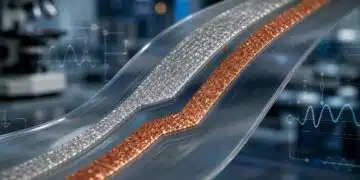
These ultracapacitors are made by electrospinning and consist of nanofibrous nonwovens. The fibers in these materials are 10 to 100 times thinner than a hair. Inside the fibers one can find Skeleton’s proprietary Curved Graphene material that stores electricity and are held together by a polymeric binder. The fibrous structure developed by the researchers is flexible and up to 20 times stronger than the materials used in conventional supercapacitors. Curved Graphene has two important properties for storing electricity: an exceptionally large specific surface area (area per unit mass) and a particularly good energy storage capacity.

The ultracapacitors under development could be used to provide a strong short-term current pulse in rocket engine launchers and controls, cyclic power to satellites when exposed to sunlight, and to open and mechanically move satellite panels.

The working group has managed to turn the idea to laboratory prototype, and hopes to have the first products in the next 3-5 years with the support of ESA.

Related

Source: Skeleton Technologies

Recent Posts

YMIN Releases Square Supercapacitors for AI Server Power System

27.5.2026
20

Exxelia Extends Temperature Range of its PP Film Capacitors to 140C

27.5.2026
15

How Long-Term Storage Causes Aging in Electronic Components

26.5.2026
41

Nichicon Presents Self-Charging LTO Board for Maintenance-Free IoT Nodes

26.5.2026
16

Mechanical SSC Testing as a Structural Diagnostic Tool for Tantalum Capacitor Anodes

25.5.2026
27

YMIN Introduces Vibration Resistant Compact Low ESR Aluminum Capacitors for Home Appliances

25.5.2026
25

Industrial Passive Components Markets and Technologies 2026

21.5.2026
121

Automotive Passive Components Technology Dossier

21.5.2026
69

Samsung Electro-Mechanics Signs 1.5T KRW Silicon Capacitor AI Contract

21.5.2026
92

Upcoming Events

Jun 2
16:00 - 17:00 CEST

Calculation, Simulation and Measurement of 800V EMC Filters

Jun 16
16:00 - 17:00 CEST

EMC with EMC – EMC‑compliant design with electromechanical connectors

View Calendar

Popular Posts

  • Buck Converter Design and Calculation

    0 shares
    Share 0 Tweet 0
  • Boost Converter Design and Calculation

    0 shares
    Share 0 Tweet 0
  • Flyback Converter Design and Calculation

    0 shares
    Share 0 Tweet 0
  • LLC Resonant Converter Design and Calculation

    0 shares
    Share 0 Tweet 0
  • MLCC and Ceramic Capacitors

    0 shares
    Share 0 Tweet 0
  • Capacitor Charging and Discharging

    0 shares
    Share 0 Tweet 0
  • What Electronics Engineer Needs to Know About Passive Low Pass Filters

    0 shares
    Share 0 Tweet 0
  • Dual Active Bridge (DAB) Topology

    0 shares
    Share 0 Tweet 0
  • Ripple Current and its Effects on the Performance of Capacitors

    3 shares
    Share 3 Tweet 0
  • Samsung Electro-Mechanics Releases High-Capacitance MLCCs for AI Server Applications

    0 shares
    Share 0 Tweet 0

Newsletter Subscription


Passive Components Blog

© EPCI - Leading Passive Components Educational and Information Site

  • Home
  • Privacy Policy
  • EPCI Membership & Advertisement
  • About

No Result
View All Result
  • Home
  • Knowledge Blog
  • Dossiers
  • PCNS

© EPCI - Leading Passive Components Educational and Information Site

This website uses cookies. By continuing to use this website you are giving consent to cookies being used. Visit our Privacy and Cookie Policy.
Go to mobile version